In the extreme: This wine’s from where?
Three adventurous winemakers are braving unlikely regions – from French Polynesia and Patagonia to Sweden and Iran – to prove that some grapes can thrive against the odds.


Three adventurous winemakers are braving unlikely regions – from French Polynesia and Patagonia to Sweden and Iran – to prove that some grapes can thrive against the odds. Welcome to extreme winemaking.
Winemakers have long been known and admired for their intrepid spirit; the willingness to push both boundaries and envelopes, creating wines in ways and locations that defy logic. Here is a trio of the very finest at work today…
Scroll down to see tasting notes and scores of two fabulous, extreme wines
Otronia
Argentinian Patagonia
Story Amanda Barnes
Patagonia is itself extreme. The claw-like peninsula that unites Chile and Argentina at the fin del mundo (‘end of the world’), Patagonia remains one of the sparsest-populated regions on the planet.
Its pervasive climate, dramatic beauty and remote nature has made it the subject of adventures and pioneering tales for centuries. South America’s winemakers don’t lack thirst for adventure, either, and their pioneering projects in Patagonia make extreme viticulture feel like a sport.
Aurelio Montes’ new vineyard in the watery archipelago of Chiloé, a remote set of islands better known for whale-watching, is only reached by boat or air, while Fernando Alameda’s new project in Chile Chico breaks all records for southerly viticulture at 46° south.
On the Argentinian side of the border, new vineyards in Chubut province extend east from the Andean foothills to the coast. One in Bahia Bustamante has water lapping at its feet and rheas, penguins and sea lions as companions. These are just a handful of the extreme vineyards that are set to see fruit in the coming vintages.
Ferocious winds
One intrepid project, though, is already seeing results, and they are nothing short of thrilling.
Otronia is currently the world’s southernmost commercial vineyard and winery, at 45°33 south, beating all the vineyards of Central Otago in New Zealand. But it isn’t just the latitude that makes this 51ha vineyard at Sarmiento in the steppes of Argentinian Patagonia extreme.
The winds here can hurtle through at above 100kph. Extreme projects such as Otronia – in the far south of Chubut – require guts and, let’s be honest, money. The man with both is Argentinian billionaire and oil magnate Alejandro Bulgheroni.
His dream team of consultants – soil and terroir expert Pedro Parra and oenologist-producer Alberto Antonini – were sceptical when he asked them to plant there in 2011. But the vines not only survived, they surpassed all expectations.

‘Otronia’s terroir is extreme in many ways,’ explains winemaker Juan Pablo Murgia, who also manages Bulgheroni’s estate in Mendoza, Bodega Argento, some 2,000km away. ‘Our average annual temperature is just 11.5°C. We’re also in the heart of Patagonia, and winds sweep through with ferocity and frequency.’
Frost protection has been a major outlay, but a greater challenge lay in the wind breaks. After a couple of years of trial and error, defence lines of cherry trees and nets have made it possible for the vines to withstand the gales. Murgia sees that wind, now it has been tempered, as an asset: ‘It allows us to work organically, which is great.’
Brilliant south
While the team knew even before planting that the lakeside soils of clay, gravels, fragmented mother rock and sand would proffer distinctive wines, it is the luminosity that has been the greatest surprise.
‘At first we thought we would only be able to make sparkling wine here,’ admits Murgia. ‘But in fact, all varieties ripen well, even Merlot. We have a really high luminosity at this latitude, so despite the cold temperatures we get great phenolic maturation and alcohol levels.’
The Chardonnay is the perfect case in point – thrilling with its laser-like acidity, but ripe and full-bodied with an intensity rarely seen in cool climates. There’s nothing lean about it.
Otronia’s 45° Rugientes white blend of Gewürztraminer, Chardonnay and Pinot Gris is a far-flung doppelgänger for Alsace; and its Pinot Noir is resplendent in forest floor, floral and tart, red cherry nuances. The original hunch for good sparkling wine was also spot on, proved by an excellent duo of vibrant, traditional-method brut nature wines.
Otronia is no doubt extreme, but it is also quite brilliant. And it has set the benchmark for what looks to be a brilliant future for Patagonian wine. ‘The wines continue to surprise me,’ adds Murgia. ‘They are unlike any others, and have a unique personality which reflects extreme Patagonia.’
Vin de Tahiti
Tuamoto Archipelago, South Pacific
Story Anna Lee C Iijima
From the air, Rangiroa looks like a necklace of thin, cylindrical beads cast haphazardly into the ocean.
An hour’s flight from Tahiti or Bora Bora, Rangiroa is the largest atoll island of French Polynesia, best known for its pearl farms, scuba diving and coconut groves. It’s also one of the most unlikely winemaking regions in the world.
Atolls are the ring-shaped reefs of coral that form over millions of years along the periphery of oceanic volcanoes. After the ancient volcano recedes into the sea, the coral remains, forming a string of islets that circle a lagoon.
Vin de Tahiti, the only winery in French Polynesia, is situated on one of these narrow islets and is accessible only by boat. Its estate, Domaine Ampélidacées, is a patch of vineyards and coconut groves that nearly kiss the water at their fringes. The lagoon is just 100m away, the ocean only a little further at 400m.
The winery was conceived by Dominique Auroy, a French engineer who was sent to French Polynesia late in 1965 and settled there from the following year at the age of 23. Auroy’s entrepreneurial ventures extend from the production of hydroelectric energy in French Polynesia and Africa to wine imports, bottled water, wine and, most recently, rum.
Auroy ‘likes to do what’s impossible’, says Sébastien Thépénier, an oenologist and partner in the venture, who joined the domaine in 2002. ‘Dominique could buy grand cru Burgundy or Bordeaux, but he felt it would be even better to make wine here.’

Exceptional circumstances
Auroy began testing cuttings of European grape vines throughout the five archipelagos of French Polynesia in the early 1990s. Despite Rangiroa’s tropical climate, its relatively drier conditions make it one of the few places in French Polynesia suitable for viticulture. ‘There’s less humidity in the soil here and, while the climate is very hot, less sun.’
Key to Rangiroa’s viticultural viability is its exceptionally well-draining limestone soils – coral skeletons degraded over millennia into fine sand and rock. ‘We have perhaps the chalkiest soil in the world,’ says Thépénier, who came to Rangiroa from Burgundy after answering an online ad for a viticulturist. ‘In some ways, the soil resembles the Kimmeridgian marl of Chablis; you can taste a similar minerality.’
But beyond similar soils, Rangiroa could be a different planet from Burgundy. There’s no winter here. Temperatures rarely drop below 24°C, so vines ignore their normal vegetative cycle and remain evergreen instead of going dormant. New growth must be triggered by pruning, which is often done simultaneous with harvest. And harvest is every five months.
In the early days, vineyard workers battled wild pigs and land crabs that tunnel into the vineyard from the water table underneath to eat young vines and grapes.
The pigs have been culled by hunters, but the domaine has eased into coexistence with the crabs.‘Growing vines on an atoll seems crazy,’ says Thépénier. ‘I wasn’t sure what to expect, but I had to see for myself whether it was viable. If it wasn’t, I figured at least I’d get to visit Tahiti.’
The first commercial vintage, of just 600 bottles, was 2002. Today, the vineyard has doubled in size to 6ha, typically producing 35,000 bottles of white and rosé. Plantings are mainly Carignan, which is vinified as a white wine, along with Muscat Hamburg, also known as Black Muscat, and Italia – a cross of Bicane and Muscat Hamburg that’s popular as a table grape.
Harvests are timed early to maintain good acidity. ‘It’s a difficult balance in a tropical climate,’ says Thépénier, ‘but we’ve never had to acidify.’

Sustainability commitment
Many of the vines are now 20-25 years old, ungrafted because there is no threat of phylloxera in coral sand. Because of the low humidity ‘there’s no mildew, only a touch of oidium’, says Thépénier. ‘We don’t need many treatments because the environment is in a good balance.’
Viticulture on an atoll requires a deep commitment to ecological sustainability, suggests Thépénier, which is why the domaine began a conversion to organics in 2010. ‘The vineyard is not certified yet, but all the treatments are organic,’ he says. The soil is given structure by pruned grape vines that are shredded at the end of each harvest, and fertilised with seaweed and other organic enhancements.
Still, no wine region can totally escape the effects of climate change. Rangiroa and other atoll islands face the threat of marine flooding and coastal erosion as the level of both the sea and lagoon are rising.
Last year ‘the level of the lagoon rose by 1.5m’, recounts Thépénier. ‘Suddenly all the vines were underwater during their green cycle.’ The water receded a week later, he says, but the vines stopped growing, making it challenging to ripen grapes to maturity.
In response, the domaine planted a 200m barrier of vetiver, a perennial grass, and wheat. Thus far, it’s proving an effective defence against the flooding.
Vin de Tahiti is intentionally scarce beyond French Polynesia, with 90% of the wine marketed and consumed within the territory (so scarce in fact, that we were unable to source a sample in time to write a tasting note for this article – and sadly editorial budgets don’t stretch to a trip to Tahiti to try it). ‘Our priorities are local production and distribution,’ says Thépénier.
Drood
Persian wine made in Sweden
Story Åsa Johansson
Making wine in Sweden may seem crazy enough; making wine in Sweden with grapes from Iran even more so.
Meet Shahram Soltani, the owner of Drood, who makes Persian wine in Sweden – showing that crazy ideas can become a reality. ‘When I asked my brother in Iran to pick the grapes, freeze them and send them to Sweden, he thought I had lost my mind,’ laughs Soltani.
A petrol engineer by trade, he came to Sweden from Iran with his wife, who studied at the university in Kalmar, a city in southern Sweden. There is a great interest in wine production in Scandinavia currently – including several ambitious projects where Swedish wineries are cultivating mostly PIWI varieties (hybrid, with varying properties of resistance) – but one can’t help but wonder what sparked the idea of bringing grapes from Iran to Sweden.

Honouring tradition
‘I had opened a cafe in Sweden, but I started to dream about continuing my family’s – and country’s – winemaking tradition in some way,’ Soltani says.
He explains that, before the revolution in 1979, which transformed the country into an Islamic republic, the wine industry was thriving in Iran.
Today, wine production and consumption of alcoholic beverages are forbidden, and grapes are grown in Iran only for making raisins or grape juice. Consequently, many vineyards have been abandoned since 1979, as investment in the wine industry disappeared.
Soltani sources his grapes from the Zagros mountains in southwestern Iran, from high-altitude vineyards (2,000m-2,400m). The harvested grapes are loaded onto trucks, frozen to -25°C and transported to Sweden, a two-week journey. ‘We use native grapes including Samarghandi and Lorkosh, from pre-phylloxera old vines, to make two red wines, a white and an orange wine,’ Soltani explains.
Bureaucratic hurdles
There have been many challenges along the way. ‘Everyone thinks the hardest part has to do with the Islamic Republic, but we have no problems in Iran – we’re just exporting grapes to Sweden,’ Soltani says. However: ‘The biggest challenge has been the bureaucracy with the Swedish monopoly and the European Union.’
Grapes sourced from countries outside the EU but transformed into alcoholic beverages inside the EU cannot be called wine. ‘In the end, we decided to write “Winery of Persia” on the label, instead of “Persian wine”, and “alcoholic beverage made from grapes” instead of “wine”.’

The name Drood means ‘cheers’ in the Persian language, and the winery in Sweden is located in a former paper mill. ‘The owners wanted to taste our wine first, and luckily they liked it,’ Soltani says, smiling.
They aren’t the only ones. Since the first vintage in 2021, Drood has found its way onto wine lists at 30 restaurants in Sweden, primarily non-Persian, and into new export markets including the US and UK.
Soltani makes 20,000 bottles and has the capacity to make five times that. The wines are rustic, tasty and have character – and they are anything but mainstream. ‘To me, this project is a peaceful and silent resistance to what is happening in my country, showing that we will not let go of our traditions or freedom that easily,’ Soltani says.
See notes and scores for two wines which are setting new rules
Related articles
Best offbeat sparkling: 15 wines to try
Best rosé wines: 20 under £20 to try
Calabria travel guide: ‘Untapped wine potential’
Otronia, Block 3 & 6 Chardonnay, Patagonia, Argentina, 2019
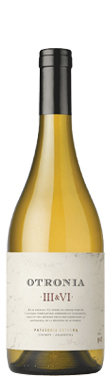

This Chardonnay and region are redefining the wines of Argentina. Undeniably cool-climate in character with bracing acidity, but sunny intensity of citrus peel, white peach and spring blossom backed by gunflint and sophisticated oak spice. Vibrant, ageworthy, impressive
2019
Otronia

Drood, Irdabama, Iran, Iran, 2021
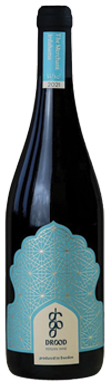
Black and red fruit nose, cassis and cherries, kirsch and rose pepper. To taste, it’s broad on the mid-palate with generous fruit, high chalky tannins balanced by the ripe, well-defined fruit, with a fresh acidic backbone to lean on. And there’s an intense and long finish. A fruit-driven wine made with natural yeasts and aged in steel tank.
2021
Drood
