
Languedoc gems: 24 Minervois-La Livinière wines tasted
Spanning such a large area, the Languedoc has historically been seen as providing quantity over quality, but there are several pockets that are producing increasingly outstanding wines. Georgina Hindle tastes and rates 24 wines from Minervois La Livinière...

A proud Languedoc cru, La Livinière was the first of its kind to be officially recognised in 1999 after a 12-year-campaign to convince appellation law makers of the distinctiveness of its terroir.
Scroll down to see the top-rated Cru La Livinière wines
A commune within a commune, akin to a more Burgundian-style quality classification, La Livinière is an appellation of powerful and elegant red wines with high acidity and ‘wild-country complexity’ according to Andrew Jefford.
Situated in the heart of the Minervois, between Toulouse and Montpellier, La Livinière spans 2,700ha with 400ha under vine over six districts that share the territory of the limestone plateau known as the Petit Causse. This distinguishing feature gives a mountainous feel to the region and provides the quality markers for the region’s wines.
Terroir markers
On the horizon to the north is the peak of the Montagne Noir (Black Mountains) the most southern part of the Cévennes mountain range, while the southerly aspect reveals the expanse of the Minervois terrace marked in the distance by the Corbières and Pyrenees mountain ranges.
The region gets minimal rain, between 400-500mm annually, though the sun’s heat is tempered by the cold air breezing down from the causse giving a large diurnal range essential for the slow maturation of grapes providing a natural balance and softness to the resulting tannins.
Alluvial deposit and erosion have hollowed our gorges in the causse, shaping a number of sandstone hills and carpeting the terraces with a mixture of limestone, pebbles, sand, clay, marl and schist at elevations up to 400m above sea level.
See all the Cru La Livinière wines tasted

Grape varieties
Vines are planted around woodland areas and among the fragrant garrigue herb giving the wines a Mediterranean intensity and wildness. The combination of relative altitude and soil provides the viticultural conditions in which grapes attain their distinctive marked acidity – differentiating them from wines made elsewhere in the Minervois and offering a sense of finessed freshness on the palate.
The traditional pairing of Carignan (often old vine) and Cinsault grapes are assisted by a trio of classic Rhône varietals Syrah, Mourvèdre and Grenache, that are used to improve the approachability and complexity of the appellation’s Carignan-focused wines.
Taking the upper hand as it has, Syrah along with Grenache and Carignan now represents 90% of the grape varieties under vine.
A minimum of 40% of each La Livinière wine must be made from Syrah and Mourvèdre while Carignan and Cinsault are limited to a maximum of 40%. Terret, Piquepoul and Aspiran are also planted and can be used.
La Livinière at a glance
Appellation status: AOC Minervois-La Livinière since 1999
Delimited area: 2,700ha of classified vines, of which 350ha are in production.
Geographic area: Six districts including Azillanet, Cesseras, Félines-Minervois, La Livinière, Siran (in the Hérault département) et Azille (in the Aude département)
Average production: About 10,000hl
Number of privately-owned wineries: 41
Number of co-operatives: 2
Maximum yield: 45hl/ha
Minimum density: 4,000 vines per ha
Grape varieties: Syrah, Mourvèdre and Grenache must represent at least 60% of the varieties planted (of which at least 40% of Syrah or Mourvèdre) with a possible complement of Carignan, Cinsault, Terret, Piquepoul and Aspiran.
Vinification: The product of long macerations, either traditional or whole-grape macerations, the wines must be matured on the property, in vats or barrels or bottles.
Commercialisation: They can’t be sold as an AOC Minervois-Livinière until after 1st January of the second year following the harvest; that is at least 13 months of maturation, during which follow-up tastings are organised by the syndicate. Finally, as well as at the bottling stage, all the wines of the appellation are tested by the body that manages and looks after the interests of the appellation in the framework of certification by an independent body.
*data from the Syndicat du cru Minervois-La Livinière
Languedoc vintages
2014: Driest winter for 20 years in the Languedoc. A dry spring was followed by cataclysmic hail storms that compromised yields in July. A cool, humid summer delayed harvest with heavy rains at the end of September compromising yields again for later picking zones and for those reliant on the later-ripening Grenache and Mourvèdre.
2015: A cold and wet winter and spring gave way to warm and dry conditions from mid-May with an especially hot July. Violent storms hit in mid-August benefiting some vines with water. Warm weather resumed towards the end of August to give way to beautiful harvest conditions for September and October. Ample and ripe red grapes were harvested with high-quality and fine ageing potential.
2016: Driest spring season in the Languedoc since 1944 reducing average yields in some regions by 10%. In general, conditions were warm and dry throughout the summer with cool evenings to retain freshness in the grapes. Quality is considered high for the reds.
2017: A cold winter followed unusually by warm spring conditions was then unexpectedly hit with frost that reduced crop levels by 20-30% particularly hitting lower-lying IGP vineyards. A warm and sunny summer gave the remaining grapes favourable growing conditions and led to an early harvest. Quality varies from good to excellent across the region.
2018: A mild, wet winter and spring was followed by warm and humid spring conditions leading to mildew problems for some producers. July and August were hot, dry and sunny easing the pressure of disease and led to ideal harvest conditions in September. Fortunately all producers had safely picked their grapes before a catastrophic storm hit on October 15 causing the worst floods since 1891.
Flavour profile
The best wines showcase a paradoxical mix of power and elegance, freshness and complexity, with precise but wild flavours of garrigue, juicy blackcurrant, crunchy black cherries, pepper spice, sweet balsamic notes, liquorice and savoury olive tapenade.
The tasting
The tasting comprised 24 wines spanning the vintages 2014-2018. Of the top-rated wines the majority were from 2016 with the one 2014 wine entered and the three 2015 wines taking the top four spots.
It is here, between 5-6 years after bottling, that perhaps the sweet-spot of La Livinière lies – wines aged enough for high acidities, and rich, sumptuous flavours to settle and integrate but still young enough to be lively and fruit-forward. Look to these older vintages for immediate enjoyment – alongside hearty meals and roasted meats, while the younger ones remain in the cellar.
The 2016s and 17s however were still enjoyable with many offering signature freshness and complexity. The one wine from 2018 scored lowest, and while not conclusive, suggests these characterful wines need at least a few years before being opened.
Top picks
Particular highlights were Clos Centeilles 2014 from mother and daughter team Patricia and Cécile who produce lively, fruit-forward wines without the use of oak as well as a rare Grenache-dominant wine from Guy Vanlancker called Clos du Causse which is made from a 1.5ha plot on the slopes of the village Félines. The 2015 was fragrant, rich and juicy with a delicious mineral streak.
Cuvée Axel by Domaine Les Combes Cachées also impressed. A limited production of 730 bottles were made in 2015 – a blend of the best three barrels from the vintage. The wine, made from Carignan (5%), Cinsault (10%), Grenache (20%) and Syrah (65%), is well-structured with aromatic power and great personality.
Building on ancestral knowledge, seventh-generation winemakers at Château Cesseras have produced a wonderful Vieilles Vignes from the 2016 vintage producing a wine that is complex, round, elegant and velvety.
Only a handful of the bottles tasted are easily available so it’s worth contacting producers directly for pricing and shipping inquiries.
See the top-rated Cru La Livinière wine tasting notes and scores
You may also like
Regional profile: St-Chinian plus 59 wines tastedDiversity and innovation in southwest France: Foncalieu plus six wines tastedMaison Ventenac: Forging a new Languedoc identityUnderstanding IGP Pays d’Oc
Patricia Boyer-Domergue, Clos Centeilles, Minervois, La Livinière, Languedoc-Roussillon, France, 2014
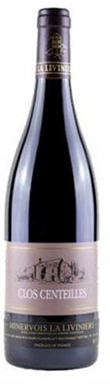

Made by mother and daughter team Patricia and Cécile who work their 14ha of vines, many of them planted traditional Languedoc varieties, by hand while...
2014
Patricia Boyer-DomergueMinervois

Domaine Ancely, Les Vignes Oubliées, Minervois, La Livinière, Languedoc-Roussillon, France, 2015
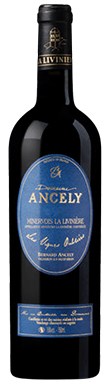
Deep and intense flavours on the nose, dark cherries, hawthorn and blackberries with touches of tobacco and spicy liquorice on the finish. This feels rounded...
2015
Domaine AncelyMinervois
Guy Vanlancker, Clos du Causse, Minervois, La Livinière, Languedoc-Roussillon, France, 2015
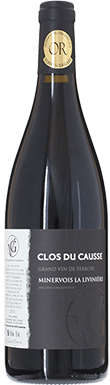
A Grenache dominant blend made from grapes planted in north-facing vineyards on clay-limestone terraces. A wonderfully fragrant nose here, violets and damsons with blackcurrants and...
2015
Guy VanlanckerMinervois
Domaine Les Combes Cachées, Cuvée Axel, Minervois, La Livinière, Languedoc-Roussillon, France, 2015
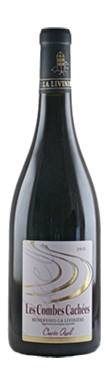
Garrigue and black cherry notes on the nose with liquorice and blackcurrant too. The palate is silky and fresh giving generous and bright cherry flavours...
2015
Domaine Les Combes CachéesMinervois
Château Cesseras, Vieilles Vignes, Minervois, La Livinière, Languedoc-Roussillon, France, 2016
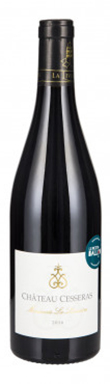
<p>Complex and round, elegant and velvety this is a blend of Grenache, Syrah, Carignan and Mourvèdre aged in oak barrels to give a wine with...
2016
Château CesserasMinervois
Le Clos du Marbrier, Cuvée Haute Main, Minervois, La Livinière, Languedoc-Roussillon, France, 2016
Made with indigenous yeasts, aged in oak barrels and unfiltered this has cherry and wild bush notes on the nose. This is less intense than...
2016
Le Clos du MarbrierMinervois
Domaine de L'Ostal, Grand Vin, Minervois, La Livinière, Languedoc-Roussillon, France, 2016
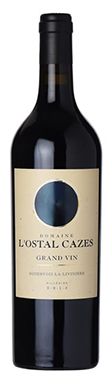
Concentrated dark fruits on the nose but with such a lovely delicate fragrance to it - so inviting and appealing. This Syrah dominant blend is...
2016
Domaine de L'OstalMinervois
Château Mignan, Oeil du Temps, Minervois, La Livinière, Languedoc-Roussillon, France, 2016
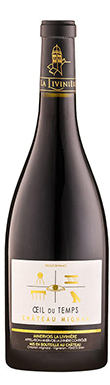
Made with Syrah, 100-year-old Carignan and old Grenache vines from over 20ha in the heart of the Mediterranean Languedoc landscape. . Notes of violet and...
2016
Château MignanMinervois
Gérard Bertrand, Le Viala, Minervois, La Livinière, Languedoc-Roussillon, France, 2017
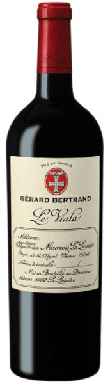
Lovely floral aromas on the nose, violet scented with wild thyme in the background. Known locally as the 'King' of the Languedoc with holdings in...
2017
Gérard BertrandMinervois
Domaine La Siranière, Cuvée Excelsus, Minervois, La Livinière, Languedoc-Roussillon, France, 2016
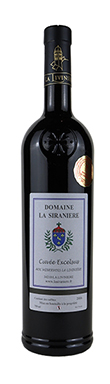
Truffled-herb notes on the nose coupled with dark cherries and damsons. This has a lovely freshness of ripe and concentrated fruits but with gourmet cocoa...
2016
Domaine La SiranièreMinervois
Les Clos Des Pères, Le Rouge de Vents, Minervois, La Livinière, Languedoc-Roussillon, France, 2017
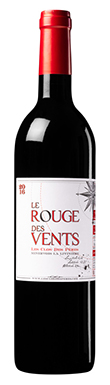
A spicy and inviting nose, immediate liquorice and garrigue notes with fresh and ripe blackberries and blackcurrants on the palate. This top cuvée is smooth,...
2017
Les Clos Des PèresMinervois
Château Faîteau, Cuvée Gaston, Minervois, La Livinière, Languedoc-Roussillon, France, 2017
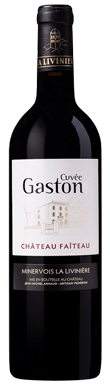
Wild garrigue on the nose followed on the palate by a richly textured, deep, complex and sumptuous wine. This is full bodied with fresh and...
2017
Château FaîteauMinervois
Clos des Roques, Minervois, La Livinière, Languedoc-Roussillon, France, 2017
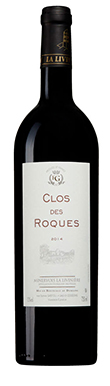
Jammy red cherries on the nose, this is soft and smooth, velvety in texture with fine tannins and a rich core of dark fruits. There...
2017
Clos des RoquesMinervois