
Languedoc under the lens: Vintages and voices from a region in flux
Having tasted more than 700 wines over the past year in the Languedoc, Decanter's France editor Natalie Earl charts the region's evolution and reports on the 2022 and 2023 vintages in its key appellations. Meet the noteworthy and new producers that make this region tick and discover the best bottles to buy.


At the end of 2023, in an article about the 10 reasons to rediscover Languedoc, I argued that the region has entered a new era.
It’s never been more obvious that the region has turned a page, yet remains in a state of evolution.
Scroll down for 30 Languedoc showstoppers from 2022 and 2023
This is a testament to increasingly honed – and in some cases pared back – winemaking techniques, better understanding of vine material and improved viticultural practices.
All this against a backdrop of climate crisis, changing consumption behaviours and global political and social insecurity.
Having tasted more than 700 wines from the Languedoc over the past year, my selection below is a window into wine quality from predominantly the 2022 and 2023 vintages.
Many of these wines represent the positive influence of newcomers and younger generations, and how that interplays with experience and tradition, the renewed appreciation of local varieties and the search for true terroir expression.

See all 300 Languedoc 2022 and 2023 wines reviewed here
Highlights and what to expect
Long periods of drought and soaring heatwaves across Languedoc marked both 2022 and 2023.
In some instances this has led to intensely concentrated wines; in others a green streak where blocked maturity stopped grapes ripening. There are widespread successes, however.
Whites from St-Chinian and La Clape in 2023 are beautiful. Reds from Boutenac and Pic St-Loup in 2022 are profound and detailed.
These vintages tested even the best vignerons. It brought into question the use of cover crops, raised concerns over irrigation and water access, and forced last-minute adaptations.

See reviews of Languedoc 2022 and 2023 wines by appellation:
Faugères | Minervois | Corbières | St-Chinian | Pic St-Loup | Fitou | Terrasses du Larzac | Picpoul de Pinet | La Clape
Heavy bottle alert!
The many very heavy bottles throughout my tastings of Languedoc 2022 and 2023 wines disappointed me, especially from appellations such as Boutenac and La Livinière. Cru status doesn’t warrant increased carbon emissions.
Producers should let the quality of the wine speak for itself, rather than leaning on outdated methods of indicating quality. Readers should not be fooled by this excessive, energy-intensive packaging.

2022: Weather and style
Apart from some spring rain, 2022 was a very dry, hot vintage across the region.
Rain during the preceding winter meant vines had water reserves to draw on, and vignerons were happy that there was little disease pressure. Almost every appellation felt the drought and high temperatures intensely.
After 2021’s devastating frosts and crop losses, vines had stored energy reserves which they put into producing a large crop of grapes in 2022 in some areas.
As a generalisation, there are warm, concentrated red wines, but grapes were healthy at harvest, delivering distinct fruit purity.
Around the appellations
Hear from the vignerons themselves in the crus of Boutenac and La Livinière about their experience of the 2022 vintage:
In Faugères yields were smaller than usual. Adèle Arnaud of Mas Lou says it was her domaine’s smallest-ever production. The lack of water throughout the growing season led to tiny grapes: Brigitte Chevalier of Domaine de Cébène says ‘lots of berries, but 30% less yield’. The wines are concentrated, with fairly low acidity, but a positive bitterness and mid-palate minerality.
Sun baked the Minervois. Wines fall into two camps: overripe and stewed, or gorgeously sumptuous with brilliant aromatics, playful textures and great drinkability. Choose carefully here.
Successful St-Chinian reds are on the charming, drinkable side with sage and thyme coming through beautifully, but many also had tough tannins and overripe fruit. Martin Perolari of Domaine de Cambis says it was a fight to harvest at the right time and avoid overly concentrated wines, and Luc Bettoni of Domaine les Eminades concurs: ‘Maturity had to be managed through very precise harvest dates.’
Corbières had varied outcomes: there was some greenness here, perhaps due to blocked maturity. But also bright, rich, mouth-coating reds with satin tannins, although they may not be very long lived.
In Pic St-Loup, Languedoc’s wettest area, localised hail at the end of June caused loss of yield. This was followed by a very hot summer, but then cleansing rains in mid-August. These saved the vintage, and the wines have an open and buoyant fruit character, peppery aromatics, good concentration, as well as freshness and notably velvety tannins.
Terrasses du Larzac had the best consistency overall in terms of style: soaring aromatics, lip-smacking succulence and supple textures. This was hard won, though. The vines suffered. Flo Busch started harvesting very early, around 10 August. A rainstorm in mid-August, as in Pic St-Loup, brought some relief.
Producer spotlight: Mas Lou, Faugères

Adèle Arnaud, originally from the Gers countryside in southwest France, did not grow up around vines. Instead, it was her father’s keen appreciation for wine that led her down this path. She also found that it corresponded with her personality: ‘I’m a rural person, from the countryside, I grew up in nature,’ she says, ‘and compared to other agriculture, wine has a particular extra aura.’ She feels that the act of working the vines, harvesting the grapes, transforming them, and presenting it as a handmade product brings a great sense of personal achievement. ‘It’s hard, but there are few jobs that can give such intensity to life.’
She met her partner Olivier Gil, who is from a line of growers near Pézenas in Languedoc, at winemaking school, where they both achieved the national oenology diploma. Before settling in Faugères and launching their own domaine in 2014, they travelled the world, then worked for a number of winemakers in Collioure and Banyuls. Their far-flung adventures inspired their wine names.
2023: Weather and style
The cumulative effect of the dry preceding vintages, and a raging late August heatwave which saw four days above 40°C, meant this was a particularly alarming season for many vignerons as they watched berries completely shrivel on the vine and yields collapse.
Around the appellations
Somewhat surprising, and although quantities were down significantly, the whites of St-Chinian are some of the highlights of the vintage, with consistently high scores because they were just so exquisite. Bettoni says that his vines benefitted from maritime winds and morning mists which brought brightness and freshness.
Sarah Frissant of Château Coupe-Roses in Minervois says they had only 250mm rainfall this growing season. They’d already picked some fruit by the time the heatwave hit, but ‘it was a frustrating and difficult harvest’. She recalls: ‘The heat was intense; we had days without running water in late August and early September.’ The whites are mixed, I found many to be too chewy and tannic, while the successes were mineral and herbal.
Whites from La Clape are certainly worth seeking out this vintage. The characteristic notes of citrus and sea spray are charmingly present, although sometimes blanketed by round creamy fruit.
Among the Picpoul de Pinets from 2023 some are zesty and thirst quenching, and others are intriguingly rich and complex, leaning into waxy, honeyed notes. Cyril Payon, director of the Ormarine cooperative, says that the harvest was early due to the heat, and there were lots of very concentrated grapes, leading to this opulence and generosity in the wines.
Corbières whites are ripe, but there’s lots of good citrus intensity and distinct floral aromas, with a positive bitterness on the palate. There were already many reds from 2023 available too, which are fleshy and generous with lots of spice and some raised alcohol levels.
Producer spotlight: Domaine la Cendrillon, Corbières
Hubert Joyeux begins a new chapter in the history of Domaine la Cendrillon, one that spans eight generations, although it was only in 2008 that the first wines were bottled at the estate. The penultimate of eight children, initially Hubert wasn’t really sure if he wanted to be involved. ‘It was a culture we sort of lost, I came here just during my holidays,’ he says.
But after working in Asia and Paris, in 2017 he was at a point in his life, married without children, where it made sense to give it a go. His father has since retired, and Hubert took over vinification fully in 2022. He’s steering things towards a more natural outlook. That means trialling reduced sulphur levels, avoiding fining and filtration where possible, and the 2023 vintage is the first with indigenous yeast fermentations. The priority is clean, straight, well-made wines, but with the least intervention and additions as possible.
The world is tilting
It is impossible to visit Languedoc and not have a conversation (indeed, many conversations) about water.
While lack of rain during summer months has been a big problem in the last few vintages, a widespread concern is reduced rainfall over the winter period, meaning water reserves are not being replenished.
Changing timeframes of rainfall are introducing problems, too. Increased spring rain has brought disease pressure where there wasn’t any before.
Extreme drought has called into question vineyard practices such as cover cropping, even for producers who have long practised it.
‘We’ve had to give up leaving part of the vineyards grassed over during the driest periods due to too much competition with the vine,’ says Magali Quartironi of Domaine Pradels-Quartironi in St-Chinian. But she says this creates a further dilemma: leaving the soil exposed potentially increases water evaporation from the soil, exacerbating the issue.
To counterbalance this, they have taken to leaving more vegetation on the vines during the summer. This brings shade to both the grape bunches and the exposed soil below.
It seems part of a general trend of less leaf stripping and shoot trimming, thus protecting bunches from the sun.
Producer spotlight: Domaine Cailhol Gautran, Minervois

Olivia and Nicolas Gautran are part of a small group of winemakers getting behind the terroir of Cazelles as a potential cru of the Minervois. The majority of their 70ha of vineyards fall within this area. From 2026 they’ll be able to write Minervois Cazelles on their labels.
Nicolas loves that the Cazelles terroir is particularly homogenous, made up of clay-limestone soils. This terroir is supposedly most evident in their Carretal cuvée, which has a mineral core beneath the black fruit and garrigue herbs. The domaine’s full production is organic, and since 2014 most of their cuvées have no added sulphites.
Adaptations and key trends
Etienne Besancenot, director of Château de Caraguilhes in Boutenac, is forthright: ‘We must adapt viticulture and oenology to these climatic trends,’ he says.
And it’s not just vineyards benefitting from quick-fire adaptations.
Following the 2023 heatwave, Frissant says they had to adapt quickly in the winery and change their approach to extraction. ‘We went from two to three weeks of maceration to just two to five days,’ she says.
‘It was a bit stressful. But it marked the beginning of a new technique, learning how to make light and fresh wines under extreme conditions.’

These rapid learning curves are echoed by Brunnhilde Claux of Domaine de Courbissac, also in the Minervois, who in 2022 compensated for higher alcohols in her Syrah and Grenache by adding direct-press Carignan and Mourvèdre. In 2023 she took this a step further by doing whole-bunch co-fermentations.
Her experience at Domaine Gauby in Roussillon just after the heatwave of 2003 has put her ahead of the game.
‘Mediterranean drought is omnipresent in my construction as a winemaker,’ she says. ‘I know being very quickly confronted with the lack of water will help me to build tactics to continue making fresh wines even in heatwave vintages.’
Claux also feels they should look to appellations like Châteauneuf-du-Pape, towards co-planted vineyards of multiple and myriad varieties, both late and early ripening, to bring both ripeness and acidity to the wines.
François Fabre of Domaine du Somail says they trialled harvesting Syrah, Mourvèdre and Merlot early in 2022 to make a fruity wine of 12% alcohol. It was such a success that they’ve rolled this practice out to all of their cuvées in 2023 and 2024.

Producers can work at an individual level, but some responsibility is also on the appellation bodies themselves to help. And change is happening – albeit slowly.
As of late 2024, St-Chinian amended its rule book to allow Carignan and Cinsault, two varieties better adapted to heat and drought, a much higher percentage of the blend.
Faugères is rethinking its reliance on Roussanne as a dominant white variety in blends, as it suffers in drought conditions.
Boutenac is considering Cinsault for inclusion alongside its signature Carignan, to bring freshness, finesse and softness.
Changing fortunes

Data from the CIVL (the Languedoc wine body) shows how dramatically red wine sales have decreased: 41% in 10 years.
Whites have increased marginally, by 2.6%.
What this data doesn’t show is the vast amount of over production in this region, increasing producers’ economic woes.
On the flip side, the increasing number of Languedoc wines of supposed ‘cult status’ – the likes of Grange des Pères, Mas de Daumas Gassac, La Pèira, Roc d’Anglade – is testament not only to the work of vignerons seeking out the best terroirs and making world-class wines, but also to wider recognition from in-the-know drinkers that many of Languedoc’s producers have the potential to become the astute collector’s wines of tomorrow.
Despite the challenging 2022 and 2023 vintages in the Languedoc, the wines are remarkably consistent, with showstoppers in most appellations.
Sign up to our France newsletter to stay up to date with all the latest news and articles all about French wine!
Languedoc: The best of 2022 and 2023
The wines selected here are not necessarily all the top scorers from the 2022 and 2023 vintages in the Languedoc. They instead offer something for everyone: a mix of showstoppers, up-and-coming names, and wines with true character.
Related articles
- Terrasses du Larzac: The untamed freshness of the high Languedoc
- Languedoc whites: Panel tasting results
- Ten reasons to rediscover Languedoc plus the wines to seek out
Château Castigno, Trait de Lune No 4, St-Chinian, Languedoc-Roussillon, France, 2023
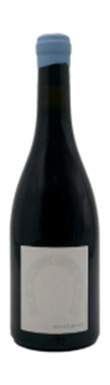

A producer that's flown somewhat under the radar, the focus being centred mainly on wine tourism, yet under the guidance of winemaker Clément Mengus since...
2023
Château CastignoSt-Chinian

Château Pech Redon, La Centaurée, La Clape, Languedoc-Roussillon, France, 2023
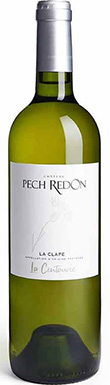
La Centaurée in 2023 is fantastically complex, it's like throwing bundles of richly perfumed flowers against crumbled rock and stone. It's already lightly honeyed with...
2023
Château Pech RedonLa Clape
Domaine d'Aupilhac, La Boda, Languedoc, Languedoc-Roussillon, France, 2022
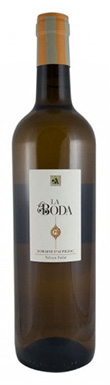
The white from this pioneering estate, led by Sylvain Fadat, is in a class of its own. There's lots of weight and concentration here, but...
2022
Domaine d'AupilhacLanguedoc
Domaine Les Eminades, Montmajou, St-Chinian, Languedoc-Roussillon, France, 2022
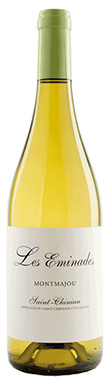
Tasted on more than one occasion this year, sometimes blind sometimes not, this was perhaps one of the most fantastic discoveries of my tastings. Made...
2022
Domaine Les EminadesSt-Chinian
Clos du Gravillas, Retour aux Origines, Côtes du Brian, Languedoc-Roussillon, France, 2023
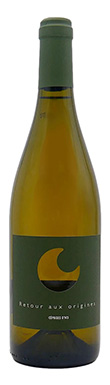
Gloriously luminous! This is a gently aromatic white that speaks of sunshine and light, with notes of wildflower honey, dried hay, rolled oats and citrus...
2023
Clos du GravillasCôtes du Brian
Mas Jullien, Blanc, Pays d'Hérault, Languedoc-Roussillon, France, 2022
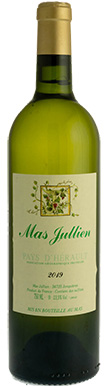
Such a complex and beguiling wine, hinting at lemon curd, wet stones, gunflint, lemon peel and linden flower. Texture, energy and a sensation of crushed...
2022
Mas JullienPays d'Hérault
Château Coupe-Roses, Schiste, Minervois, Languedoc-Roussillon, France, 2023
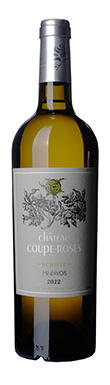
I really liked the 2022 vintage of this Roussanne cuvée, Schiste, but I think I like 2023 even more. It's golden and sunny, with aromas...
2023
Château Coupe-RosesMinervois
Domaine du Grès Vaillant, Les Chênes, Limoux, Languedoc-Roussillon, France, 2022
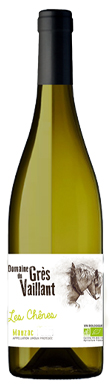
If you want to experience a true and pure expression of the area's local Muazac variety, look no further. There's lots of squashed apples here,...
2022
Domaine du Grès VaillantLimoux
Les Vignes Oubliées, Languedoc, Languedoc-Roussillon, France, 2022
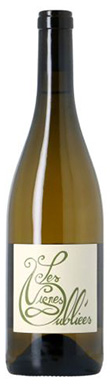
A blend of Grenache Blanc, Carignan Blanc, Clairette and Roussanne, this has rich aromas of crème patissière, marzipan and honeysuckle. It's silky in texture, with...
2022
Les Vignes OubliéesLanguedoc
Château d'Anglès, Classique Blanc, La Clape, Languedoc-Roussillon, France, 2023
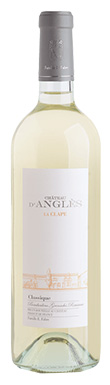
Château d'Anglès continues to sound the horn for La Clape whites, and its Classique Blanc is consistently delicious. It's both lemony and saline, in the...
2023
Château d'AnglèsLa Clape
Château Maris, Les Anciens, Minervois, La Livinière, Languedoc-Roussillon, France, 2022
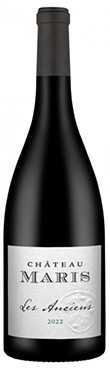
Made predominantly from Carignan vines planted in 1904, with 15% of Grenache, this is a masterpiece of southern soul. While the aromatics start dainty and...
2022
Château MarisMinervois
Château Ollieux Romanis, Atal Sia, Corbieres, Boutenac, Languedoc-Roussillon, France, 2022
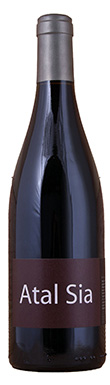
Deep and brooding, with so much power and sweet fruit. This wine beckons you in with its promise of delectable fruit, and delivers in spades....
2022
Château Ollieux RomanisCorbieres
Domaine de l'Hortus, Dit de l'Hortus l'Ombrée, Pic St-Loup, Languedoc-Roussillon, France, 2022
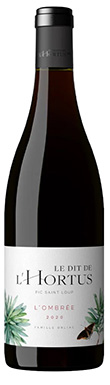
A particularly mineral iteration of this stand-out cuvée, it's showing notes of flint, iron and rust, pounded herbs, blackened meat. Take a sip and be...
2022
Domaine de l'HortusPic St-Loup
Mas Bruguière, La Grenadière, Pic St-Loup, Languedoc-Roussillon, France, 2022
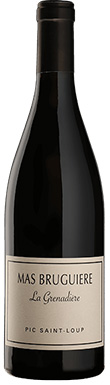
There's a surprising lightness of aroma here, a strawberry clarity and delicate notes of red-fleshed apple. But in the mouth you encounter a dense mass...
2022
Mas BruguièrePic St-Loup
Mas Cal Demoura, Les Combariolles, Terrasses du Larzac, Languedoc-Roussillon, France, 2022
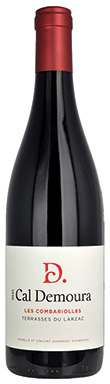
Spectacular and enchanting aromatics of bramble, iris, juniper, smoky thyme. This is mouth filling and refined in texture. Fluid and energetic, with red apple skin...
2022
Mas Cal DemouraTerrasses du Larzac
Mas des Chimères, Nuit Grave, Terrasses du Larzac, Languedoc-Roussillon, France, 2022
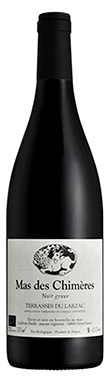
Gorgeously pure fruited nose, squashed strawberry, raspberry pip, squishy fruit, racy acid, flowing and fresh, lifted and juicy but also deep
2022
Mas des ChimèresTerrasses du Larzac
Alain Chabanon, Campredon, Terrasses du Larzac, Languedoc-Roussillon, France, 2022
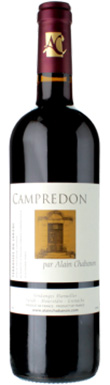
This is open and ready to please, perfumed and fruity on the nose. Both the flavours and the texture are like crushed petals: floral, delicate...
2022
Alain ChabanonTerrasses du Larzac
Domaine Clavel, Bonne Pioche, Pic St-Loup, Languedoc-Roussillon, France, 2022

Deep and brooding, this dark mysterious wine is a dense mass of brambly hedgerow. A thicket of dried herbs, wild blackberries and wild plants. The...
2022
Domaine ClavelPic St-Loup
Domaine les Mille Vignes, L'Idyllique, Fitou, Languedoc-Roussillon, France, 2022
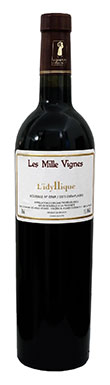
A charming tribute to a near-forgotten local southern variety, Lledoner Pelut, which makes up 80% of the blend and comes from 90-year-old vines, alongside Mourvèdre...
2022
Domaine les Mille VignesFitou
Mas de Daumas Gassac, St-Guilhem-le-Désert, Languedoc-Roussillon, France, 2022
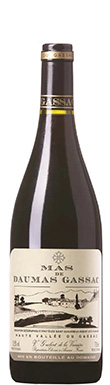
The 2022 vintage from this iconic domaine is brimming with plump black fruit, deep and tar-like. The palate wraps mint and eucalyptus clarity around earthy...
2022
Mas de Daumas GassacSt-Guilhem-le-Désert
Château de Caraguilhes, Trou de l'Ermite, Corbieres, Boutenac, Languedoc-Roussillon, France, 2022
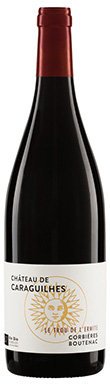
This has you gripped immediately with its mix of blueberry, raspberry and blackberry aromas, a densely packed hedgerow of temptation that keeps you coming back...
2022
Château de CaraguilhesCorbieres
Domaine de Courbissac, Roc Suzadou, Minervois, Languedoc-Roussillon, France, 2022
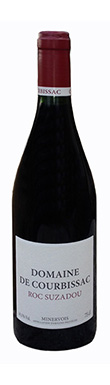
This feels lighter in style than many in its class, benefitting from a feathery, soft structure. It's smooth and silky, fluid and flowing, with tantalising...
2022
Domaine de CourbissacMinervois
Domaine Cailhol Gautran, Sinequano, Côtes du Brian, Languedoc-Roussillon, France, 2023
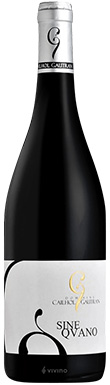
A wine made from 100% Carignan that just bursting with fruit and light. Youthful and playful, it's super charged with blackberries, blueberries and violets, which...
2023
Domaine Cailhol GautranCôtes du Brian
Domaine de Cambis, Caudomato, St-Chinian, Languedoc-Roussillon, France, 2022
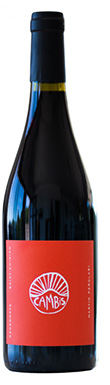
Upfront in its jammy fruit aromas and engaging in its energy and charm, this juicy, drinkable St-Chinian rouge is a must-try. Satin-textured and oozing with...
2022
Domaine de CambisSt-Chinian
Domaine La Cendrillon, Les Vieilles Pierres, Corbieres, Languedoc-Roussillon, France, 2023
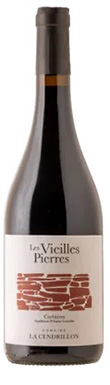
Here we have a deep blue fruit profile, it's youthful and lifted with floral high notes. The extraction is clearly well managed, as the fruit...
2023
Domaine La CendrillonCorbieres
Mas Lumen, In Amphora, Languedoc, Languedoc-Roussillon, France, 2023
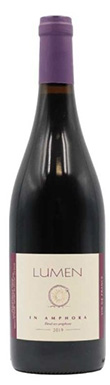
Dark in colour, this is floral with darker notes of liquorice and black fruit. It's feral and gamey, with savoury spice, soy and umami.
2023
Mas LumenLanguedoc
Château Pech-Latt, Le Maquis des Corbes, Corbieres, Languedoc-Roussillon, France, 2023
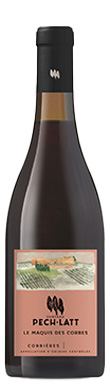
Fragrant and floral, this is pulsing with black fruit and violets. I like the high level of spicing here, in the form of both spiced...
2023
Château Pech-LattCorbieres
Domaine du Vent, Comme Un Souffle, Une Caresse, Fitou, Languedoc-Roussillon, France, 2022
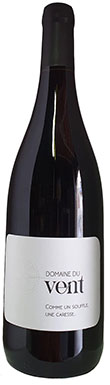
Lifted and red fruited, the fruit is soft and welcoming, plump red cherries sitting in a basket in the sun. It's a sunny wine, in...
2022
Domaine du VentFitou
