
Lilian Bérillon: vine supplier to the stars
Where do vines come from? Matt Walls answers this question and explores a subject not often addressed, speaking to Lilian Bérillon, expert nurseryman and leading light in the production of grapevines.


You don’t need a state-of-the-art winery to make wine. You don’t need rows of pristine oak barrels. One thing you do need to make good wine is good vines.
Have you ever asked yourself where all these vines come from? How do they find their way into the ground?
But phylloxera put a stop to that. What was a simple process acquired layers of complexity: winemakers had to cultivate American rootstocks alongside their vines, and they had to master the art of grafting. Eventually, the production of young vines became a separate craft in itself.
During the 1900s, professional vine nurseries proliferated, many of which were located in the Rhône. Today, the vast majority of wineries still buy their vines from a nursery.
But not all nurseries are created equal. While visiting some of the best winemakers in the Rhône recently, one important name kept cropping up: Lilian Bérillon.
Scroll down to see tasting notes and scores for two wines made from Lilian Bérillon’s vines
In demand
Lilian Bérillon came up in conversation when visiting Hélène Thibon at the excellent Mas de Libian in the Ardèche.
‘He works exceptionally well,’ said Thibon, ‘I have huge admiration for his work. I don’t know how we’d do it without him.’
A couple of days later, Lionel Fraisse of Domaine Alain Voge was singing his praises. Others in the Rhône who also use his services include Domaine Clape, Domaine Jean-Louis Chave and Domaine Georges Vernay.
Outside of the Rhône, Bérillon works with Château Cheval Blanc in Bordeaux and Lalou Bize-Leroy in Burgundy. He now works all over Europe, and has just supplied his first vines to England, in the vineyard of Christina Rasmussen, in Oxfordshire.
What makes his expertise so sought-after? I paid him a visit to find out.
Lilian Bérillon’s turbulent career
Both Bérillon’s grandfathers and his father were nurserymen, so it is no great surprise that he followed in their footsteps. He went well beyond, in fact; while they made an acceptable living, Lilian excelled in his sales job for a large nursery.
Before long, he found himself selling 2 million plants a year. He became president of the Professional Federation of Nurserymen of Vaucluse, and vice-president of the National Federation of French Nurserymen. But, after suffering a crisis of conscience, he set out on his own in 2007 with a very different approach.
Attack of the clones
Slim and athletic with a shaved head, Lilian is zealous about the quality of his plants. There’s no doubt he has found his calling, and during my visit he’s keen to relay his uncompromising vision.
While working with big nurseries, Bérillon became increasingly aware of the poor health of French vineyards, and the numbers of vines dying while still young, at around 20 years old. He realised he, in his role as nurseryman, was part of the problem. He puts this down to a combination of factors, but it begins with the reliance on clones.
In the 1940s, government agencies began selecting and breeding certain superior vines with a view to improving the country’s vineyards. They were chosen for their lack of viruses, and additional factors such as high yields and high alcohol – back then, such characteristics were advantageous.
Clones were produced from these mother plants, and from the 1970s nurseries were encouraged to use this plant material that was certified healthy.
‘They came at the same time as agrochemicals and machine harvesters,’ says Bérillon, and the clones had similarly mixed results.
Clones did improve the nation’s vineyard health. But as the climate has continued to heat up, and achieving ripeness is rarely an issue, clones that favour high alcohols are now more of a hindrance than a help. And as today’s winemakers become more concerned about quality rather than quantity, high-yielding clones aren’t helping either.
Bérillon says that vine diseases are more easily transmitted between clones, which is why we are seeing such an epidemic of trunk diseases and premature vine death. Problems that he’s keen to tackle.
‘With clones, you close the door to diversity,’ he says. ‘I have a different offering.’

Clonal selection vs massale selection – strength in diversity
The cornerstone to Lilian Bérillon’s work is a commitment to only using massale selection instead of using clones. ‘I’m the only one to work this way,’ he says.
To illustrate the idea, let’s compare a vineyard to a classroom. A vineyard planted with clones would be like a classroom with 30 identical John Smiths. A vineyard planted with massale selection would be like a classroom containing 30 different children.
So instead of having his vineyards populated with replicas of the same individual plant, he has dozens if not hundreds of genetically different plants for each of the 65 varieties he offers.
Among grapes such as Grenache and Syrah, he also offers ancient local specialities that have almost died out entirely, such as Piquepoul Gris.
He sources all of them from old vines that date back to a time before clones were introduced, and ensures they have a clean bill of health before introducing them to the pool.
‘And healthy 100-year-old vines are genetically interesting,’ he points out.

Though currently only 5% of France’s vineyard area is planted using massale selection, Lilian believes this genetic diversity makes for stronger, healthier vineyards and produces wines with more complexity and personality. And his clients agree.
‘But we don’t want to just sell plants,’ he says. ‘We have a very privileged relationship with the winemaker… it can’t just be a commercial relationship, it needs to be a real relationship… We support them before, during and after.’
There is also an option to create a private collection. For this service, Lilian’s team visits a private domaine, takes cuttings from old vines and creates a private conservatory populated exclusively with plants from that domaine.
At every estate, a certain number of vines die of natural causes every year. This option means they can replant their vineyards with vines of the same heritage.
Grafting techniques – a unique approach
Though massale selection is the cornerstone of his approach, his commitment to quality doesn’t end there.
Another issue that Bérillon believes has led to poor vineyard health is the use of poor quality grafting techniques.
He uses exclusively a whip-and-tongue graft. They can graft up to 2,000 plants a day by hand this way, compared to the more common omega graft, which can produce 12,000 a day using a machine. But he’s confident whip-and-tongue grafting creates a stronger plant.
Whip-and-tongue graft vs Omega graft:

All of his rootstocks and vines are grown organically and biodynamically, and he has invested in 170ha of his own land so he can be confident of the health of his soils. And they only sell their own plants – they don’t buy vines to sell on from elsewhere.
All of this doesn’t come cheap, however. To buy an inexpensive clone might cost just over €1. Subsidies are available if you plant certified clones which makes them cheaper still.
Lilian’s plants cost around €4.50 each. But what could be more vital to a winery than its vines? And as Lilian says, ‘you can’t make great wine for zero euros’.
We don’t often talk about vine nurseries. It’s not the most glamorous facet of wine. But it’s vines that produce the wine we drink – and hope to continue to drink – so their importance shouldn’t be underestimated. Especially when it comes to mavericks like Lilian Bérillon.
Tasting notes and scores for two wines made from Lilian Bérillon’s vines:
Related content:
Walls’ hidden gems: Mas de Libian, Ardèche
What’s the Difference Between Crosses, Clones, Mutations & Hybrids? – Ask Decanter
What is grafting, and why is it important in the vineyard?
Domaine Cros de la Mûre, Côtes du Rhône Villages, Massif d'Uchaux, Rhône, France, 2016
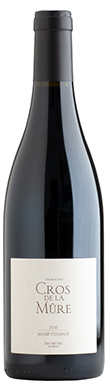

This has that characteristic piquant Szechuan pepper nose of wines from Massif d'Uchaux. Smooth, fine and generous on the palate, with bright acidity and a...
2016
Domaine Cros de la MûreCôtes du Rhône Villages

Domaine la Barroche, Julien Barrot, Châteauneuf-du-Pape, Rhône, France, 2016
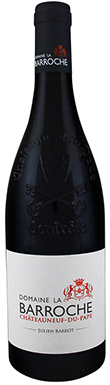
Starting to be ready to drink now, this still needs a little time, but shows great potential. Very full-bodied, generous, and full of flavour and...
2016
Domaine la BarrocheChâteauneuf-du-Pape
