
Limestone soul: Mapping the St-Emilion plateau
The secret’s in the soil – or under it, in the case of St-Emilion, where the region’s limestone bedrock plateau really does lie at the heart of the identity of many of its best wines. Discover the magic of the plateau, and the differences it makes.


In recent years with warmer vintages, it has become easier to appreciate the freshening power of St-Emilion’s famous limestone plateau.
The beating heart of Bordeaux’s Right Bank, this geological marvel is defined by its calcium-rich, asteriated limestone (calcaire à astéries, or ‘starfish limestone’), forming the backbone of wines known for freshness, salinity and ageworthy elegance: a rocky hotspot that’s essentially grape royalty!
Scroll down for notes and scores of 14 gems from the plateau of St-Emilion
Lay of the land
While the plateau stretches 17km from St-Emilion to Castillon, just 8.2km fall within the appellation.
Its porous limestone beneath clay or loam acts like a sponge – draining excess moisture in wet seasons and releasing it during drought.
This fosters balanced vine growth and low pH/ vibrant acidity in wines, yielding reds with notes of mint, chalk and graphite.
Historically, the western plateau near St-Emilion town centre (see map, below, light yellow section), where top estates such as Châteaux Beau-Séjour Bécot, Canon and Clos Fourtet reside, benefited from early recognition in the 1950s classification. With its eroded quarries and thinner topsoils, it produces refined, ageworthy wines.
The eastern plateau, generally cooler, with thicker soils and later harvests, is now catching up in acclaim, home to estates such as grand cru Château Rocheyron, grands crus classés Châteaux de Pressac and Laroque, and premier grand cru classé Château Valandraud.
But a tasting of 14 wines for this article – mostly western plateau, some a mix of plateau with clay-limestone slopes – confirmed how, until recently, winemaking often masked terroir.
Bordeaux consultant in soils, viticulture and winemaking Xavier Choné highlighted Valandraud’s previously modern, oaky style as an example. Similarly, a recent tasting of Beau-Séjour Bécot 2010 showed how too much oak dulled the limestone freshness.
Recent vintages, however, especially since the arrival of consultant Thomas Duclos (from the 2017 vintage), now express the plateau’s finesse more transparently.
This shift toward more hands-off winemaking and lighter oak use across the appellation has allowed the limestone terroir to shine.

St-Emilion plateau origins
The plateau’s limestone formed from marine sediments laid down millions of years ago. Tectonic uplift exposed the seabed, creating the current landscape.
Erosion is greater on the western side, resulting in a purer limestone profile, according to experts.
Tasting the plateau

The tasting revealed nuanced differences between eastern and western plateau wines. Also present, French sommelier Ilona Garnier praised the ‘sheer freshness and delicate salinity’ of the Château Canon 2016, from vineyards near the village.
By contrast, the 2020 from Château Rocheyron – just 6km east near St-Christophe-des-Bardes – offered refinement but with more noticeable acidity.
Why such contrast? Mathieu Raveraud, property manager at Rocheyron, attributes it to its cooler brown, calcareous loam over limestone and clay, which leads to later ripening – about a week behind western areas.
Viticulture professor Cornelis (Kees) van Leeuwen, who worked with Château Cheval Blanc and created detailed vineyard maps, notes that later-ripening, cooler soils likely contributed to the east’s lower initial rankings back in the 1950s.
Describing the limestone’s ‘aromatic signature’ can be elusive.
While ‘wet stone’ and ‘mineral’ seem too vague, Edouard Moueix of Château Bélair-Monange offers a more evocative palette: ‘Gun flint, stone, graphite, pebble, shell, sand, stone dust, metallic notes and salinity,’ with textures like ‘chalk, talc, sandpaper… and powder.’
Nicolas Audebert, director of Château Canon, favours ‘minty freshness’ and ‘elegant tension’, while Matthieu Cuvelier (pictured, above), second-generation owner of Clos Fourtet, has it as ‘chalky’, ‘saline’ and ‘freshening acidity’.
The four terroirs of St-Emilion
The St-Emilion wine council notes that the appellation boasts about 700 wine-growers across nearly 5,500ha.
Its vineyards span four main soil types: the limestone plateau; clay-limestone slopes; a gravel terrace in the region’s northwest (home to top estates such as Château Cheval Blanc and Château Figeac), near Pomerol; and a sandy plain by the Dordogne river, where simpler wines are often produced.
Underground advantage

Duclos emphasises the role of centuries-old underground quarries in the west.
‘It’s very clear that the quarries buffer the soil temperature and water to an enormous degree,’ he explains, meaning that their presence enables soil temperatures to remain more stable and allows for the extraction of excess water.
These ‘perforated’ plots, he adds, begin their annual growth cycle early, regardless of winter weather, and ‘a vine that lives regularly produces fine and aromatic things – with style and robustness’.
Canon’s Audebert concurs that the starfish limestone acts as a ‘natural sponge’, regulating water via capillary action. ‘The result is a rather low but remarkably well-regulated water supply,’ he says.
Thinner topsoil on the western side allows roots easier access to limestone, promoting moderate vine growth and concentrated aromas.
At Clos Saint-Martin, with one of the appellation’s smallest grand cru classé vineyards at 1.33ha, director Sophie Fourcade says western limestone is ‘deeper and more porous’.
Other plateau zones may have harder rock and more clay, which influences both water management and mineral breakdown. Still, both sides benefit from low-pH (acidic) soils.
According to van Leeuwen, this not only brightens wines’ colour, but enhances freshness. Clos Fourtet’s Cuvelier believes the acidity boosts ageing potential while adding balance and ‘ethereal finesse’.
Limestone also aids nitrogen regulation. Arnaud d’Arfeuille of Château La Serre (just east of the town, but on the edge of the plateau) explains that calcium carbonate slows organic mineralisation, ensuring just enough nitrogen for healthy vines and strong bud formation.
Elevation helps, too: the plateau vines of Canon and Bélair-Monange (both in the west), perched at up to 87m and 88m respectively, enjoy drying winds that help prevent disease.
Estates with at least 85% limestone plateau
All western plateau except where marked as eastern (E) or both
• Château Beau-Séjour Bécot (85% plateau) • Château Canon (90% plateau) • Château Grandes Murailles (final vintage in 2021, thereafter part of Clos Fourtet) • Château La Clotte • Château La Couspaude • Château La Serre • Château Rochebelle (E) • Château Sansonnet (E/W) • Château Trotte Vieille (W/E) • Château Villemaurine • Clos Fourtet • Clos Saint-Julien (90% plateau) • Clos Saint-Martin • Les Astéries (JCP Maltus; made at Château Teyssier)
Limestone & climate change

As climate change accelerates, the St-Emilion plateau’s water retention becomes even more valuable. ‘It helps the vines effectively resist water stress,’ says Audebert.
Its cooling effect during hot summers and draining capacity in wet years ensure that grape quality remains high. Eastern-side estates once considered too cool now benefit.
‘Cooler clay is no longer a handicap,’ says van Leeuwen, citing estates such as Châteaux Gaubert and Rocheyron.
‘These terroirs, sometimes considered [to ripen] too late in the past, now provide us with grapes with a crisp fruitiness not marked by overripeness – particularly helpful for Merlot,’ adds Raveraud at Rocheyron.
Plotting the plateau: the role of limestone
Philippe Raymond of the St-Emilion wine council wasn’t able to compile a complete list of the châteaux that have limestone plateau soils.
As he explains, many producers have plots on the plateau and the hillsides, meaning it’s difficult to estimate the plateau or hillside share in a blend.
In addition, some châteaux have plots on the plateau to make a cuvée and vinify elsewhere (for example, the JCP Maltus Les Astéries bottling, vinified at Château Teyssier further south).
But he confirms at least eight châteaux have ‘verified’ 100% limestone plateau vineyards: Clos Fourtet, Clos SaintMartin, Gaubert, La Couspaude, La Serre, Le Chatelet, Sansonnet and Villemaurine.
Scores of St-Emilion estates include plateau grapes to varying degrees, from the likes of Châteaux Beau-Séjour Bécot, Canon and Trotte Vieille with mostly limestone plateau grapes, to estates such as Château Bellevue with about 10% limestone plateau grapes – and many in between.
From the ground up
The tasting underscored how subtle differences can emerge even between similar blends from vineyards just kilometres apart.
Comparisons included estates fully on the western plateau, such as Clos Fourtet, with others, such as Châteaux Ausone, Bélair-Monange and Fonplégade, that mix plateau and slope-grown grapes.
As viticulture and winemaking increasingly prioritise terroir expression, the role of the limestone plateau has become unmistakable.
Fonplégade co-owner Denise Adams describes the limestone as ‘not just another prominent component of our blend – it is the guiding thread’.
While clay-limestone slopes bring ‘roundness, richness and notes of red and black fruits’, the plateau contributes ‘tension, freshness and a more exotic floral and fruity aromatic profile’.
Ageing: how do St-Emilion wines with grapes from the limestone plateau mature?

Matthieu Cuvelier, Clos Fourtet: ‘The limestone plateau undeniably produces wines with excellent ageing potential. These wines are built on acid balances that always yield freshness and length, and aromas range from fruit to flowers, with the appearance over time of truffle, camphor and saffron notes.’
Edouard Moueix, Château BélairMonange (pictured, above): ‘After a few years in bottle, the stone notes keep supporting the dominating fruit notes of redcurrant, strawberry and blackberry, but also more floral ones such as hawthorn, lime blossom and acacia. With time the palate gains length, with powdery and rock crystal sensations.’
Nicolas Audebert, Château Canon: ‘Distinctive characteristics include minty freshness. Regardless of the vintage, bottle ageing allows for optimal wine development, preserving its original essence.
‘The terroir always takes over, allowing the expression of the limestone to develop over time, but with complex and evolved tertiary aromas appearing, albeit subtly, after 10 years of ageing, which will become more dominant over time.’
Rock of ages: 14 wines from St-Emilion’s plateau
Related articles
- Expert’s Choice: Montagne St-Emilion
- Wine investment: Taking the pulse of Bordeaux 2024 en primeur
- Bordeaux newsletter: Sign up today
Château Ausone, St-Émilion, 1er Grand Cru Classé A, Bordeaux, France, 2015
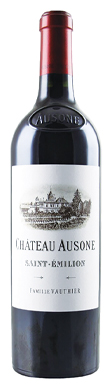

Wet stone aromas leap from the glass, reflecting the asteriated limestone of the plateau where some of the estate's 7ha of vines grow. Bright ripe...
2015
Château AusoneSt-Émilion

Château Canon, St-Émilion, 1er Grand Cru Classé, Bordeaux, France, 2016
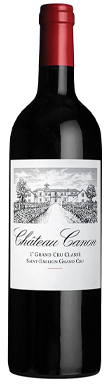
The sheer iodine freshness and gorgeous fruit succulence go hand in glove with a tannic frame that has softened since I had tried this vintage...
2016
Château CanonSt-Émilion
Château Bélair-Monange, St-Émilion, 1er Grand Cru Classé, Bordeaux, France, 2019
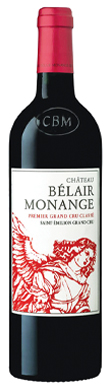
A textbook example of wine that combines the saline freshness of the limestone plateau with the dark fruit depth of clay over limestone slopes, this...
2019
Château Bélair-MonangeSt-Émilion
Clos Fourtet, St-Émilion, 1er Grand Cru Classé, Bordeaux, France, 2009
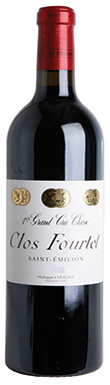
A gorgeous wine mirroring the superb vintage, both charming and powerful revealing opulence while maintaining what owner Mattheiu Cuvelier calls the 'ethereal finesse' of the...
2009
Clos FourtetSt-Émilion
Château La Serre, St-Émilion, Grand Cru Classé, Bordeaux, France, 2001
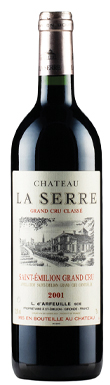
One need not spend an arm and a leg to enjoy aged wine from the limestone plateau. With finesse and elegance expressed in supple tannins,...
2001
Château La SerreSt-Émilion
Château Beauséjour Duffau-Lagarrosse, St-Émilion, 1er Grand Cru Classé, Bordeaux, France, 2014

The high-toned fruit with airy salinity reflect a cooler vintage, and yet such a pure and fresh expression of the limestone terroir, reflecting vines grown...
2014
Château Beauséjour Duffau-LagarrosseSt-Émilion
Château Fonplégade, St-Émilion, Grand Cru Classé, Bordeaux, France, 2020
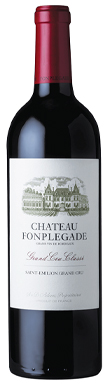
With its refined aromas of violet, blackberry, plum and salty freshness marked by a touch of vanilla, this reflects the limestone plateau (40% of the...
2020
Château FonplégadeSt-Émilion
Château Rochebelle, St-Émilion, Grand Cru Classé, Bordeaux, France, 2016
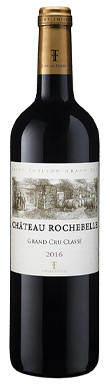
Giving some 1GCC wines a run for their money, especially in more recent vintages, with more winemaking precision by talented co-owner Emilie Faniest. While there...
2016
Château RochebelleSt-Émilion
Château Trotte Vieille, St-Émilion, 1er Grand Cru Classé, Bordeaux, France, 2019
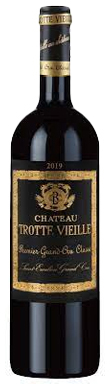
Planted on the limestone plateau, with just 30cm of overlying clay, Trotte Vieille exudes pleasing mint freshness from the 49% Cabernet Franc in the blend....
2019
Château Trotte VieilleSt-Émilion
Les Astéries, St-Émilion, Grand Cru, Bordeaux, France, 2007
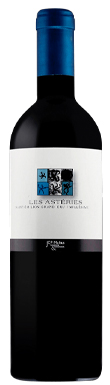
This tiny single vineyard (under 0.8ha) of vines up to 80 years old on a thin layer of clay over astéries limestone shows how well...
2007
Les AstériesSt-Émilion
Clos St-Martin, St-Émilion, Grand Cru Classé, Bordeaux, France, 2019
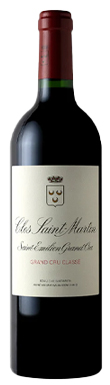
A crowdpleasing wine with much finesse. It's hard not to love the expressive aromas and flavours of violet, dark wild berry, liquorice and ripe plum,...
2019
Clos St-MartinSt-Émilion
Château Berliquet, St-Émilion, Grand Cru Classé, Bordeaux, France, 2020
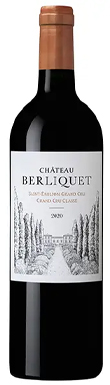
A wine of subtle elegance reflecting both the richness of the vintage and the spread of the vines equally across the limestone plateau, the slopes...
2020
Château BerliquetSt-Émilion
Château Rocheyron, St-Émilion, Grand Cru, Bordeaux, France, 2020
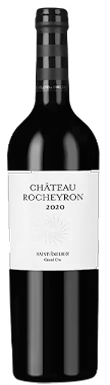
Give this wine time and it will reward your patience. With vines planted on the St-Christophe-des-Bardes plateau composed of calcareous soils on limestone, the tannins...
2020
Château RocheyronSt-Émilion
Château Gaubert, St-Émilion, Grand Cru, Bordeaux, France, 2019

Young vintages from this estate need to be decanted and aerated, as evidenced by a far better showing the day after our tasting. While initially...
2019
Château GaubertSt-Émilion
