
What makes a 100-point Hermitage?
The concept of a ‘100-point wine’ is a multifaceted one. Does it mean a wine is perfect? Is such a thing even possible? Matt Walls considers what a 100-point wine represents, drawing on a recent tasting of Hermitage...


Some tasters have been know to avoid awarding a wine 100 point on ideological grounds. But all publications that score wines have some kind of guide to scoring, and Decanter uses the 100-point scale – not a 99-point scale – so I do, albeit very rarely, award a wine 100 points.
These rare wines tend to be of a classic style that’s proved itself over the decades, perhaps centuries, expressed by countless different producers. These wines should be exceptional examples of their type – so the idea of typicité, or typicality, is an important factor. They also tend to be wines of terroir, wines that bear the unmistakable stamp of where they are from that cannot be reproduced elsewhere.
When I give a wine 100 points, there can be no doubt. If I find myself questioning whether it deserves a perfect score, then I know that it doesn’t.
100-point Hermitage
The Legendary (H)Ermitage tasting held on 17 June Tain L’Hermitage was a great opportunity to seek out some potential 100-point Hermitage, both red and white. You can read my in-depth reports and tasting notes below:
Getting to know white Hermitage
Getting to know red Hermitage
Hermitage is one of the greatest appellations of the Rhône Valley, and some would argue its reds are the ultimate expression of the Syrah grape. It’s also one of those rare appellations whose white wines are as good as its reds.
The terroir itself is breathtaking: a steep, south-facing, sun-drenched slope on the east bank of the Rhône. It’s a diminutive appellation, just 137ha, all fully planted. It may be small, but the soils are highly complex, a conglomeration of different types and eras that give markedly different expressions across various lieux-dits.
While its red wines are almost always 100% Syrah, and account for 70% of production, its whites can be made from Marsanne and/or Roussanne, although Marsanne is considerably more common. Most are dry, but a tiny proportion of white Hermitage is sweet ‘vin de paille’.
On the back of 20 years’ professional experience tasting wines from around the world, there’s no doubt in my mind that Hermitage can provide some of the most indelible, thrilling and profound wine experiences. So it’s no surprise that some of the wines I was lucky enough to taste were worthy of 100 points.
Standing out from the crowd
The three reds that I awarded 100 points at this recent tasting were Domaine JL Chave’s Hermitage 1989 and 1998, and Paul Jaboulet Aîné’s Hermitage ‘La Chapelle’ 1990.
Though slightly different in style, they are, aromatically and texturally speaking, the essence of Hermitage. The three wines demonstrate balanced acidity and alcohol, and aren’t overripe, overextracted or overoaked.
Maturity is a factor too, the 1989 and 1990 especially having fulfilled their youthful potential – though they will continue to develop and last for many years. In addition, these wines all have great complexity and persistence of flavour.
The same is true of Domaine JL Chave’s Hermitage Blanc 1998, which I also awarded 100 points. It doesn’t suffer from any of the occasional shortcomings of white Hermitage: unlike some other whites, this has good balancing acidity and isn’t overly full-bodied or overoaked.
Like great works of art, all three were captivating, stopping me in my tracks and making my heart beat faster. But unlike a statue or painting, great wines have that altogether more personal dimension – you consume them, you become one with the wine. What an extraordinary privilege that is.
It’s worth remembering however that a score isn’t something that belongs to a wine. It’s an attempt to express, in some way, an encounter between a taster and one specific bottle.
Different bottles of wine, sometimes even from the same case, can follow subtly different arcs as they age and develop. There’s truth in the old saying, ‘there’s no great wines, only great bottles’. And these were truly great bottles.
Recap: What makes a 100-point wine?
- An exceptional example of its type
- It bears the unique character of its terroir
- Provides a profound and emotional experience
- Balanced, complex and persistent
Matt’s 100-point Hermitage wines:
You may also like:
Future wine legends: Decanter 100-point wines
Best French wines: 100 point scores
Best Italian wines: A selection of the greatest
Domaine JL Chave, Blanc, Hermitage, Rhône, France, 1998
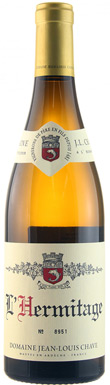

An unforgettable and totally brilliant wine that could come from no other terroir – and no other producer. The aromas of citrus oils and ripe...
1998
Domaine JL ChaveHermitage

Domaine JL Chave, Hermitage, Rhône, France, 1989
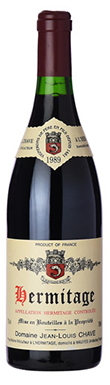
1990 is rightly touted as one of the greatest Rhône vintages, but it overshadows the excellent preceding year. Chave's 1989 is masterful. Still with a...
1989
Domaine JL ChaveHermitage
Paul Jaboulet Aîné, La Chapelle, Hermitage, Rhône, France, 1990
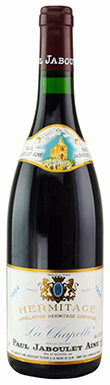
The subtle smokiness of cured speck is mellowed on the nose by a touch of balsamic sweetness, edged with earthiness and a hint of juniper....
1990
Paul Jaboulet AînéHermitage
Domaine JL Chave, Hermitage, Rhône, France, 1998
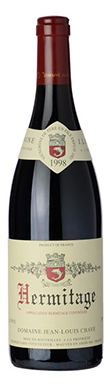
Wow – immediately as you lift the glass it's clear that this is the essence of Hermitage. Smoky berry fruits soar from the glass, joined...
1998
Domaine JL ChaveHermitage
