
Marchesi di Barolo discovery tasting at the Decanter London Fine Wine Encounter 2022
Exploring the 'shades of Nebbiolo' with Marchesi di Barolo at Decanter's London Fine Wine Encounter 2022.


Valentina Abbona was excited to show guests at this year’s Decanter London Fine Wine Encounter sold-out discovery tasting (entitled ‘Shades of Nebbiolo’) just what makes her family’s winery tick.
It’s largely the work of Marchese di Barolo which put the small town of Barolo on the map. The town became so entwined with Nebbiolo that it later lent its name to the entire Barolo DOCG area.
Early years
Marchesi di Barolo have been making wine for two centuries. The first ‘Barolo’ were vinified and matured by Marchese Carlo Tancredi Falletti di Barolo and his wife, Giulia, a French noblewoman.
In 1820, they began building cellars beneath their Cascina del Pillone residence in the centre of Barolo town. The insulation provided by the stone walls and subterranean design had the effect of turning what was traditionally a sweet wine into a dry wine by preventing the yeast from shutting down during the cold winters.
The wines, instead, fermented to dryness in large casks and were stored for a long time, according to records. They were sent to the Royal Court as well as new overseas markets, and the wine’s reputation soon began to flourish. Lorenzo Fantini, in his Monograph on Viticulture and Enology in the Province of Cuneo, published in 1883, wrote, ‘Moreover, who made this Nebbiolo famous? Everybody knows that the credit goes to the wines of the late Marchese di Barolo. When there was not even talk of exportation, thanks to his means and to his vast and high connections, he was able to make his wines known in countries that nobody else could reach. It was called simply Barolo because that was the village where it came from.’
Carlo and Giulia left no heirs, and so the estate passed to Opera Pia Barolo, a charity that Giulia had founded. In 1929, local Pietro Abbona purchased the property and ran it along with his brother, Ernesto and sisters, Marina and Celestina.
Marchesi di Barolo was one of the first to bottle cru Barolo, back in 1973, and today they produce a range of Nebbiolo wines from across the Langhe, some of which are matured in the remaining restored original 19th century casks – including the six wines in this Discovery Tasting lineup.
Shades of Nebbiolo
Like many producers in this region, Marchesi di Barolo don’t just produce Barolo: ‘It’s all about the shades,’ said Valentina on the varying expressions of Nebbiolo the estate produces. Valentina and her brother Davide are the sixth generation of the Abbonas at Marchese di Barolo, and she seems quite clear about the direction of the property: ‘Twenty years ago, the greatest innovations were in the cellar; today, the greatest innovations are surely in the vineyard.’

The tasting
The tasting began with Roccheri Nebbiolo d’Alba, from sandy soils in Roero. Fresh and bright, elegant but intense, it’s just as good Nebbiolo d’Alba should be, giving an idea of the style of the winery at a reasonable price.
Next, we skipped across the Tanaro River to taste a Barbaresco from the cru of Serragrilli in Neive. A gentle southwest-facing slope, the soils are sandy and silty over clay and limestone. Vinified in steel and cement then matured for 12 months in a combination of Slavonian oak and small French oak barrels, the wine is then blended and matured further in the large 19th century vessels before bottling. Succulent and tight with fine, chalky tannins, it’s a fairly transparent take on both location and vintage.
Valentina then introduced the first of the estate’s three Barolo crus, Coste di Rose. The steep east-facing site in the municipality of Barolo on calcareous, sandy and silty soils captures the cooler morning sun, avoiding the intense midday light for a more fragrant expression of Nebbiolo. Like the other crus, this matures for 18 months in a variety of barrel sizes, including the restored 19th century wood. Floral, structured yet elegant, this morning-sun Barolo features delicate, almost-racy cherry fruits.
The large hillside of Cannubi is one of Barolo’s best-known crus, situated on ‘Sant’Agata fossil marls’ comprised of clay, sand and limestone. It’s more earthy in character compared to Coste di Rose, rich and chewy with some balsamic freshness.
Southeast-facing Sarmassa in Barolo is situated on stony clay and limestone soils, which naturally limits the vigour of the vines. Sticky black fruits combine with big, grippy tannins for a powerfully structured rendition of Nebbiolo.
The final wine is a special bottling of Sarmassa released 10 years after the harvest; Valentina wanted to demonstrate the ageing potential of this great cru. The current release is 2012 but we tasted the 2007, an exotically spiced melting pot of fragrance, freshness and balance.
With the exception of the final wine, everything tasted was from the 2018 vintage. Valentina explained that, following the dry and very hot 2017, 2018 was a cooler, wet vintage. The soils of Coste di Rose retained a lot of this water, while the soils of Sarmassa were more efficient at draining it away.
Speaking of the characters of Serragrilli and Coste di Rose, she noted that, ‘sometimes we can say that Serragrilli is more like a Barolo and Coste di Rose is more like a Barbaresco.’
Questions
Fielding questions from the audience at the end of the tasting, Valentina was asked about how climate change is affecting them. She replied that one issue is that ‘it’s not just a difference in temperature but extremes in everything – when it’s dry, it’s very dry; when it’s wet, it can be like monsoons!’ She explained that one example of changes they have made is grassing between rows, to help retain water in the soil.
Another question on food matching led Valentina to answer, ‘with Barolo you can be creative because of the tannins and acidity.’ She cited Mexican cuisine as a good example, where the creamy textures of the food are cut through by the acidity in the wine. Valentina also singled out Chinese cuisine as a ‘creative’ example, saying that Barolo can be a great ‘palate cleanser’ as you go from dish to dish.
Marchesi di Barolo discovery tasting
Related articles
- Planeta discovery tasting at Decanter’s London Fine Wine Encounter 2022
- Sassicaia masterclass at Decanter’s London Fine Wine Encounter 2022
- Barolo 2018 vintage report plus top-scoring wines
Marchesi di Barolo, Roccheri, Nebbiolo d’Alba, Piedmont, Italy, 2018
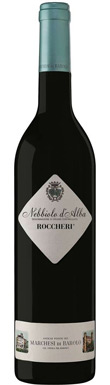

In keeping with Marchesi di Barolo's 'cru' philosophy, Roccheri Nebbiolo d’Alba is a single-vineyard wine sourced from vines on sandy soils in Roero, on the...
2018
Marchesi di BaroloNebbiolo d’Alba

Marchesi di Barolo, Serragrilli, Barbaresco, Neive, Piedmont, Italy, 2018
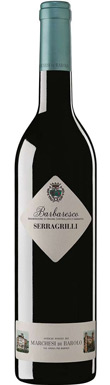
The cru of Serragrilli in Neive is a gentle southwest-facing slope with sandy and silty soils over clay and limestone. This 2018 is vinified in...
2018
Marchesi di BaroloBarbaresco
Marchesi di Barolo, Coste di Rose, Barolo, Barolo, Piedmont, Italy, 2018
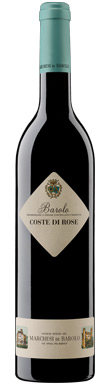
The steep east-facing site of Coste di Rose in the municipality of Barolo on calcareous, sandy and silty soils captures the cooler morning sun, avoiding...
2018
Marchesi di BaroloBarolo
Marchesi di Barolo, Cannubi, Barolo, Barolo, Piedmont, Italy, 2018
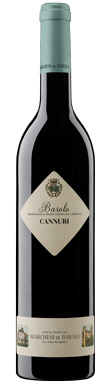
The large hillside of Cannubi is one of Barolo’s best-known crus, situated on ‘Sant’Agata fossil marls’ comprised of clay, sand and limestone. This 2018 is...
2018
Marchesi di BaroloBarolo
Marchesi di Barolo, Sarmassa, Barolo, Barolo, Piedmont, Italy, 2018
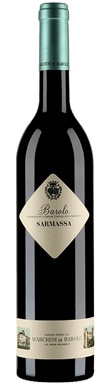
Southeast-facing Sarmassa in Barolo is situated on stony clay and limestone soils, which naturally limits the vigour of the vines. Concentrated and sticky black fruits...
2018
Marchesi di BaroloBarolo
Marchesi di Barolo, Sarmassa 10 Years Limited Edition, Barolo, Barolo, Piedmont, Italy, 2007
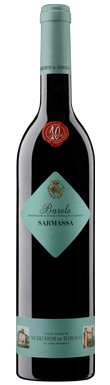
A special bottling of Sarmassa released 10 years after the harvest. It's melting pot of fragrance, freshness and balance, displaying scented potpourri, exotic spices, cigar...
2007
Marchesi di BaroloBarolo
