
Mas Doix: prouducer profile and latest releases tasted
Based in Priorat, Mas Doix created a sensation with its inaugural release of Cariñena in 2009. Sarah Jane Evans MW charts the evolution of the winery and its wines, and recommends bottles from a vertical tasting of past vintages and new releases.


Just three Priorat wines qualified for the new top ‘grand cru’ classification of Gran Vinya Classificada (GVC) when it was launched in 2019. They were Alvaro Palacios L’Ermita, Vall-Llach Mas de la Rosa and Mas Doix Tossal d’en Bou.
Earlier this year I visited Mas Doix to take part in the winery’s most comprehensive verticals of Tossal d’en Bou and Coma de Cases, which will become a Vinya Classificada.
Scroll down to see tasting notes and scores for 13 Mas Doix wines
The GVC are the pinnacle of a Burgundian-style quality pyramid, built upon villages and vineyard parcels. Alvaro Palacios has been active in driving the new classification through – and there are a number of wineries in the queue to qualify. The Antología Miguel Torres collection for instance also has a Mas de la Rosa parcel, with a different aspect. It means that in due course there will be two GVCs named Mas de la Rosa.
Tossal d’en Bou

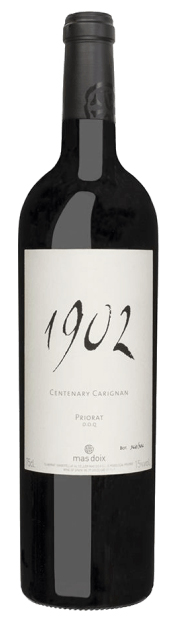
Mas Doix’s Tossal d’en Bou first appeared in the market in 2009, under the name 1902 Centenary Cariñena. The vineyard was planted in 1902 on the steep slatey slopes known in the region as ‘costers’ by the local Subirats family. Mas Doix had a long-term contract with this family to work the vineyard and harvest the grapes, and finally purchased it from them.
With the arrival of GVC, the next 2019 release will be renamed after the vineyard parcel, and relaunched in a Burgundy bottle, rather than the traditional claret shape.
At this point I must make a confession. Mas Doix Centenary Carignan 1902 is one of my top wines of all time. I first encountered it at one of the wonderful Espai Priorat events in the ruins of the monastery of Scala Dei, where the DOCa’s producers come together to show their wines. It’s the wine that opened my eyes to Cariñena, with its unparalleled blend of elegance counterpointed by rusticity. Mas Doix tames the rusticity brilliantly, and it’s a variety that flourishes in Priorat.
I’m not blind to its failings: in many regions of the world Cariñena can be hard to love. Nevertheless thanks to 1902 it has become a favourite variety that I will seek out. Discovering 1902 almost supplanted my affection for Garnacha in Priorat, which up until then had always been my preferred variety. It’s what prompted me to write an article on my Top 20 Cariñenas.
In the vineyard

My love of 1902 led me to the Tossal d’en Bou vineyard. Reader, I have scrambled up those steep costers quite a few times. Each time I have tumbled back down, somehow managing not to break or uproot the ancient vines by grabbing them to slow my slide down the slate slopes.
The nimble person who always makes sure I don’t break either my neck, or his precious vines, is the genial former economist Valentí Llagostera (pronounced Yagostera). He will be familiar to any visitors to the Decanter Fine Wine Encounters in London, or the recent New York Encounter, talking and tasting the wines.
As I slither down the slope Valentí points out that growing indigenous varieties on costers as bush vines – or as vines up a single stake – rather than on trellises is the best way to work in Priorat. It may seem counterintuitive but is essential for drainage and avoiding erosion.
The vineyard is located in Poboleda, one of Priorat’s 12 villages, named in a Dits del Terra document that identifies the denomination’s individual villages and parcels. Is it possible to identify these villages in a blind tasting of their wines, as one might in Burgundy? Not yet perhaps, for all 12, but some are becoming ever more distinctive.
Poboleda itself lies to the northeast of the denomination, in the Siurana Valley at the foot of Montsant mountain. The microclimate here is cooler, with more rain, and a longer growing cycle. All of this contributes to a different profile – fresher, with more pronounced acidity – and one that’s certainly clearly identifiable in the Mas Doix wines. Winemaker Sergi Batet comments that Cariñena has a pH typically of 3.3 to 3.5, and Garnacha potentially even lower at 3.2.
The winery
Batet hosted the tasting, together with Valentí and his brother Ramón Llagostera. The selection of wines went back to 2005. We had been discussing this event since 2019, but it had been impossible to meet. It was held in the impressive Mas Doix slate and glass winery, designed by Valentí and Ramón’s architect brother Xavier Llagostera.
It’s a transformation for those who work there. The former winery, located at the entrance to the village of Poboleda, had a charming tasting room but the workspace itself was tiny. Now there’s a chance to experiment with fermentation and ageing in different materials and sizes.
The winery was carved out of the slate, which in turn was used in the construction. As one might expect, the design is built on sustainable principles, including elements such as photovoltaic panels and rainwater collection. It is gloriously sited with a tasting room overlooking Poboleda village.
The transformation at Mas Doix was enabled by taking on a new partner. The Llagosteras and the Doix are cousins. The original Mas Doix was founded by them in 1998, reviving a family wine-growing tradition that dates back to the 19th century.
In 2019 the Llagosteras acquired the Doix share, and went into a 50:50 partnership with Cliff Lede, owner of the eponymous winery in Stag’s Leap, Napa Valley. By chance Lede’s CEO was in Europe, looking for a possible acquisition for the business. She was considering Italy, but called in at Doix, because she liked their Salanques red. Her search stopped there.

A retrospective
The new winery launched in 2019. After the months of Covid isolation the tasting was a great opportunity to look back on a remarkable achievement in little more than 20 years. Reflecting on the launch of 1902, Valentí recalls: ‘It arrived like a bomb in the market. There was certainly a before and an after.’
In 2009, the leading Spanish wine guide, Peñín Guide, gave the new wine the ‘Revelation of the Year’ award. In 2019 the Peñín Guide voted the 2014 vintage ‘Best red wine in Spain’ with 99 points.
‘In 2004 nobody made Cariñena. Nobody believed in it,’ says Valentí. From 2004 they started bottling it. At this vertical tasting I was lucky enough to taste Mas Doix’s trial bottlings of 2005 and 2006 which were never commercialised. I quickly understood how early the Mas Doix Cariñena revealed its real pedigree. While Garnacha dominated in Priorat, along with international varietals such as Cabernet Sauvignon, Merlot and Syrah, Mas Doix pointed a way for the unloved Cariñena.
The wine has evolved over the years. Valentí explains: ‘In 2012 we recognised how special Tossal was. We decided to use the higher areas only for 1902.’ The wine from this parcel makes the GVC.
The winemaking has also changed subtly – but noticeably. From the 2021 vintage part of the Tossal d’en Bou was fermented in two open 400-litre French oak barrels, and part in stainless steel. The malolactic was in stainless steel. Since 2018 the wood ageing has been reduced and now stands at 14 months.
Coma de Cases
The soon-to-be Vinya Classificada (the papers have been submitted to the authorities), which will be released with the 2020 vintage, is Coma de Cases. It’s currently known as 1903 Centenary Garnacha.
I must admit that I wasn’t disposed to love 1903 when it first appeared in its 2015 vintage. How could it supplant my affection for 1902? Yet 1903 is distinct; based on very old Garnacha vines, with tiny production, on a windy west-facing site. The Garnacha itself is a particular clone, with small berries and thin skins.
From 2015 to 2017 the alcoholic and malolactic fermentations were in stainless steel, with ageing in new French oak. From 2018, fermentation began in 400-litre open French oak barrels, with the malolactic in stainless steel. The ageing changed to second-use French oak.
The result is a remarkable finesse, especially with the toning down of new oak from 2018. For the moment, I’m still loyal to the Cariñena. As Valentí put it, while tasting the 2017 1902: ‘Cariñena knows much better how to live here in Priorat.’ At Mas Doix they describe the ‘verticality’ of Cariñena against the ‘breadth’ of Garnacha. It’s your choice.
See tasting notes and scores for 13 Mas Doix wines
Related articles
Mas Doix, Coma de Cases, Priorat, Spain, 2021


Barrel sample. Formerly known as 1903 Centenary Grenache, but now eligible for the VInya Classificada category. At this stage, part way through ageing, the wine...
2021
Mas Doix

Mas Doix, Coma de Casas, Priorat, Spain, 2020

Bottle sample. While there’s no Cariñena from 2020 because of the mildew in the year, the Garnacha came through successfully. On the nose it offers...
2020
Mas Doix
Mas Doix, 1903 Centenary Grenache, Priorat, Spain, 2018
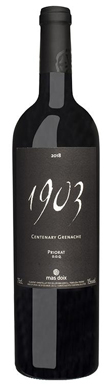
2018 was a difficult year, starting late and finishing with rain and low temperatures. In fact the wine begins well with abundant floral charm, and...
2018
Mas Doix
Mas Doix, 1903 Centenary Grenache, Priorat, Spain, 2017
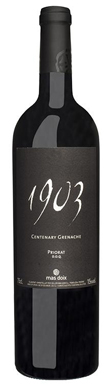
This was the warmest vintage of the vertical of 1903, and a year when the vines struggled. However it proves the quality of the Coma...
2017
Mas Doix
Mas Doix, 1903 Centenary Grenache, Priorat, Spain, 2015
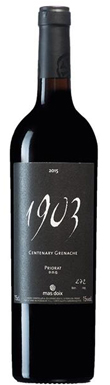
What a promising start! The first vintage release of 1903, and a fine result. It has the early Mas Doix oak and balsamic aromatics, but...
2015
Mas Doix
Mas Doix, Tossal d'en Bou Gran Vinya Classificada, Priorat, Spain, 2021

Barrel sample. I look forward to retasting when it has had a chance to settle in the bottle to check whether my enthsiasm now is...
2021
Mas Doix
Mas Doix, Tossal d'en Bou Gran Vinya Classificada, Priorat, Spain, 2019

Bottle sample. This will be the first Centenary Carignan to be released as a Gran Vinya Classificada when it comes onto the market. It’s very...
2019
Mas Doix
Mas Doix, 1902 Centenary Carignan, Priorat, Spain, 2018
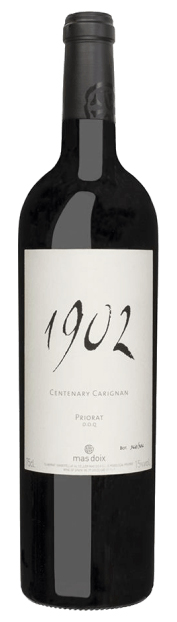
This is the 2022 release. It’s abundantly aromatic with violets, blueberries and notes of fine oak. In the mouth it’s almost crunchy, definitely with...
2018
Mas Doix
Mas Doix, 1902 Centenary Carignan, Priorat, Spain, 2017
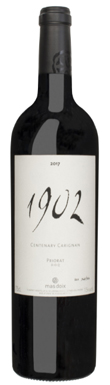
From one of the earliest and lowest yielding vintages. Opens with the classic cedar aromas. In the mouth it arrives plump and full, then the...
2017
Mas Doix
Mas Doix, 1902 Centenary Carignan, Priorat, Spain, 2013
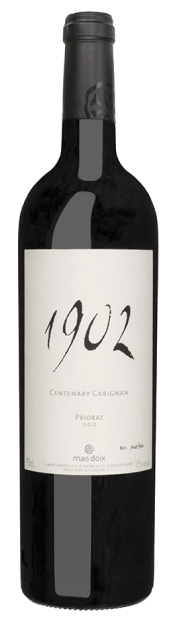
2013 was a poor year across much of Spain, but quite the reverse in Priorat. There it was a great vintage as this wine reveals:...
2013
Mas Doix
Mas Doix, 1902 Centenary Carignan, Priorat, Spain, 2010
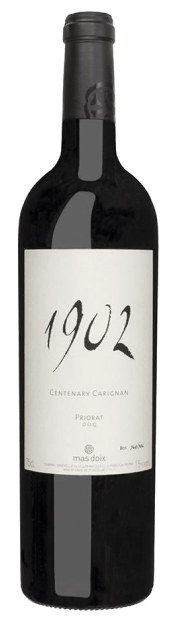
2010 was a textbook year in Priorat. At its launch (2009 was the first release of 1902) the wine was much praised: 'It was a...
2010
Mas Doix
Mas Doix, 1902 Centenary Carignan, Priorat, Spain, 2006
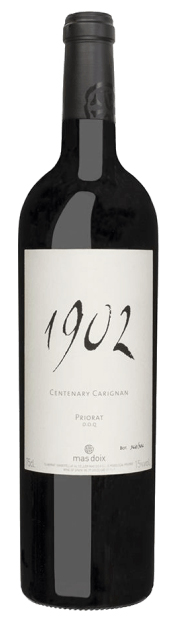
A fascinating part of the 1902 vertical was to taste two early vintages that were never released. On the 2006 the oak aromas are...
2006
Mas Doix
Mas Doix, 1902 Centenary Carignan, Priorat, Spain, 2005
(Trial; never commercialised). The 2005 was never released but reveals the essence of the vineyard, and its clear quality. With its lively acidity it is...
2005
Mas Doix
