
Morellino di Scansano: Names to know and wines to try
A coastal freshness typifies many of the Sangiovese-based reds from this less-famed southern DOCG of Tuscany, a region full of big-name impetus as well as local personality.


Morellino di Scansano is possibly Tuscany’s most under-the-radar and underrated wine. As a DOCG – Italy’s top level of denomination – with impressive general levels of quality and annual production in 2021, according to its regional consorzio, of 9.2 million bottles, it ought to be far better known. (The Brunello di Montalcino DOCG states ‘an average of 9 million bottles’ a year.)
Somehow, however, Morellino di Scansano misses out on the collective renown of Tuscan wines. The reasons could be that its emergence is relatively recent, and that it is from a part of Tuscany that is a long way from tourist hotspots. It is probably also true that its mysteriously lowly market positioning works against wider recognition.
Scroll down to see a selection of 10 Morellino di Scansano red wines to try
Morellino di Scansano comes from the province of Grosseto, the most southerly, the largest and the least populated province of the region – and one of Tuscany’s most unspoilt rural areas, in which vineyards find their place in a biodiverse patchwork of woods, olive groves, pastures and arable land. The DOCG stretches over a vast area, from the river Ombrone near Grosseto city itself (see map, below), east across to Capanne and Saturnia, and down almost to the regional border with Lazio to the south.
Topographically, it can be divided into three main areas. The first is the low-lying strip divided from the Tyrrhenian sea coast by the wooded Monti dell’ Uccellina. The second, widely planted area lies on the first line of gentle slopes inland, with vineyards concentrated around the villages of Magliano and Montiano. The third zone, climbing to the east to the villages of Scansano and Manciano, consists of steeper hills up to 500m above sea level.

Soils vary from the light silt and sand of the lower coastal strip to the sandstone and stony calcareous terrain of vineyards inland. The climate is typically Mediterranean, with mild winters, rainy springs and hot, arid summers. The particularities are the constant sea breezes, which mitigate the extreme temperatures of July and August, and the significant day-night temperature excursions on the inland slopes, which slow down ripening to the benefit of aroma and acid/sugar balance.
Unlike the wines of central Tuscany, which have a rich recorded history, winemaking in the province of Grosseto is sparsely documented. There is archaeological evidence that the Etruscans produced wine in the hills above the Tuscan coast, and the Romans after them, but little written testimony of winemaking in the area has survived. The favourable growing conditions mean that wine has always been made, albeit in the context of small-scale farming, but the emergence of a representative commercial production is relatively recent. Writing in 1966, Cyril Ray mentions a wine called ‘Scansano, made largely from Sangiovese, known locally as Morellino’, but it was not until it was first established as a DOC in 1978 that Morellino di Scansano came officially into being.
Leaps and bounds

Growth of the new DOC was initially slow. At the beginning of the 1990s, there were no more than 280 hectares under vine, more than half of which were controlled by the local cooperative. Another British author (and longstanding Decanter contributor) Rosemary George MW noted at the time that Scansano was ‘rather unknown’.
The turning point came in the second half of the 1990s, with the discovery of the vinicultural potential of the southern coastal area of the Maremma, heralded at the time as the new frontier in Italian wine. Leading Tuscan producers such as Castello di Bossi, Castello di Fonterutoli, Cecchi and Fattoria dei Barbi snapped up land in the DOC, and a wave of new private owners arrived. Thanks to this influx, between 1997 and 2005 the vineyard area grew from 450ha to 1,370ha and production from 2.3m bottles to 7.5m (as reported in I Numeri del Vino, September 2006), stimulating the creation of the DOCG in 2006. A lull followed, but the past five years have seen a brisk revival. To regulate production, the DOCG authorities have limited the vineyard area to the current 1,500ha.
Morellino is the local name for Sangiovese. Literally, it means ‘little dark one’, which might be a reference to the local breed of dark-coated horses called morelli or, more prosaically, to the berries of the native biotype. The production regulations allow producers to make a 100% Sangiovese wine, as many do, but also to blend with up to 15% of other varieties, which is one of Morellino’s distinctive features. The most interesting results come with the use of the local Alicante (a genetic match with Grenache/Garnacha) and Ciliegiolo; the former contributing its characteristic pressed flowers and spice aromas and the latter bringing red berries and a touch of agility.
Styles to explore

Another feature that sets Morellino apart is that it does not necessarily age in oak. Riserva wines must spend at least a year in barrel but, unlike Chianti Classico for example, there is no such requirement for the younger ‘annata’ wines. Morellino’s ripe, round, warm-climate tannins do not call for the barrel ageing that Sangiovese from other parts of the region typically needs to smooth out its edges. Without this preoccupation, producers have the option of using stainless steel to focus the fresh berry fruit and herby-floral characters that are among modern Morellino’s most winning features.
It was not always thus. There was a period when many Morellino producers, in pursuit of an unlikely SuperTuscan style, were making denser, more extracted wines with a lot of new oak, often overplaying the weighty side of the wines of the Maremma. Morellino has evolved since: today’s wines are brighter, more fruit-forward and a lot more flexible on the palate, and where wood is prescribed – as in the case of Riservas – there has been a decisive move away from barriques towards traditional medium to large formats.
Morellino di annata from one of the many top producers is a delicious wine, with a pleasurability rating that is hard to beat in its category. It is easy to drink, yes, but not at the expense of character.
Tasting wines from around the denomination, one discovers that there is a lot more to Morellino di Scansano than might immediately meet the eye. Terroir plays a significant role in such a large and varied viticultural area.
Wines from the sandier soils of the coast lean towards a lighter, drier style with distinctive floral notes. Those from the high slopes inland have ripe red fruit, fleshier textures and the greater structure that makes them more suited to Riserva bottlings than wines from the coast.
Morellino di annata(no requirement for barrel ageing) shows its best in its first three to four years, while Riservas have no fear of bottle age and drink happily for up to 10 years and beyond.
Laudable ambition
The vast majority of Morellino production is priced at entry level. This is great for wine drinkers but a matter of some concern for producers, and in fact high-profile estates Le Pupille and Poggio Argentiera have abandoned the DOCG for their top-of-the-range selections in search of higher price points.
To address the issue, the producers’ consortium is studying plans to restructure production, with the identification of sub-zones and the creation of a superior category, along the lines of Chianti Classico’s Gran Selezione. It’s a laudable project, which will hopefully bring benefits to the denomination over the medium term.
The good news, meanwhile, is that until the world wakes up to its merits, Morellino di Scansano continues to represent exceptionally good value for money.
Four Morellino names to know

Antonio Camillo, Montemerano
Organic grower/non-interventionist winemaker Antonio Camillo has dedicated the past 15 years to searching out small plots of native old vines on the high slopes of the least-exploited southeast corner of the DOCG. He is best known for his Ciliegiolo, but Camillo’s Morellino is also outstanding. @antoniocamilloviniditerritorio
Cantina Vignaioli del Morellino di Scansano, Scansano
This quality-oriented cooperative celebrated its 50th anniversary in 2022. With 170 members and 700ha of vineyard, the Cantina is the denomination’s largest producer. An extensive range includes a number of single-site selections of Morellino.
I Cavallini, Manciano
The Perozzi family have been making wine for three generations on this 350ha estate, where they are among the very few to maintain the tradition of mixed agriculture, today practised with a nod towards Steinerian biodynamics. Only 11ha are vineyards, so wine production is pretty limited, but the quality is impeccable.
Morisfarms, Massa Marittima
The Moris family were pioneers among the first generation of new landowners in the Maremma when they arrived in 1971, years before the creation of the Morellino DOC. The wines from the family’s 35ha Poggio La Mozza estate, which is dedicated exclusively to Morellino, are a benchmark for the denomination.
10 from the Tuscan south: Baudains’ pick of red Morellino di Scansano
Related articles
- Tenuta San Guido Guidalberto: 2001-2021 vertical
- Isole e Olena’s Cepparello: the Paolo de Marchi effect
- Top-value Brunello di Montalcino 2018: the 10 to buy
Celestina Fé, Morellino di Scansano, Tuscany, Italy, 2020
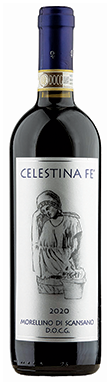

Moira Guerri grew up among the vines, assimilating a rural winemaking tradition which she transmits with contemporary awareness in wines of great natural sincerity from...
2020
Celestina FéMorellino di Scansano

I Cavallini, Morellino di Scansano, Tuscany, Italy, 2021
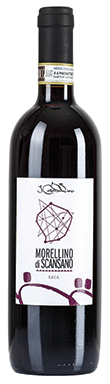
Nicola Perozzi divides his time between a medical practice in Rome and the family estate at Manciano, where he produces Morellino from a blend of...
2021
I CavalliniMorellino di Scansano
Roccapesta, Ribeo, Morellino di Scansano, Tuscany, Italy, 2020
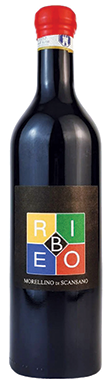
Milanese financier Alberto Tanzini bought this estate on one of the highest sites at Scansano in 2003 and replanted it with primarily Sangiovese, conceived from...
2020
RoccapestaMorellino di Scansano
Val delle Rose, Morellino di Scansano, Tuscany, Italy, 2021
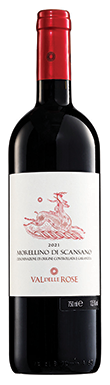
Val delle Rose is one of five estates owned by the leading Tuscan firm of Cecchi. The extensive property in the province of Grosseto was...
2021
Val delle RoseMorellino di Scansano
Moris Farms, Morellino di Scansano, Tuscany, Italy, 2020
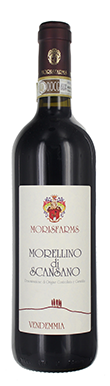
The Moris family hired the newly graduated enologist Attilio Pagli in the early 1980s and he has made the wines on the various estates ever...
2020
Moris FarmsMorellino di Scansano
Terenzi, Purosangue Riserva, Morellino di Scansano, Tuscany, Italy, 2019
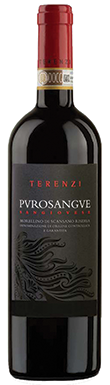
The Milanese Terenzi family own and manage this immaculate 60ha estate at Scansano, founded in 2001. The vineyards are planted to a range of international...
2019
TerenziMorellino di Scansano
Belguardo, Bronzone Riserva, Morellino di Scansano, Tuscany, Italy, 2019
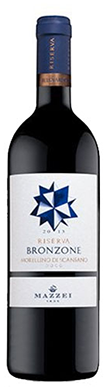
The Marchesi Mazzei, owners of the historic Chianti Classico estate of Castello di Fonterutoli, bought this 34ha tenuta in the 1990s. It's located on the...
2019
BelguardoMorellino di Scansano
Bruni, Laire, Morellino di Scansano, Tuscany, Italy, 2019
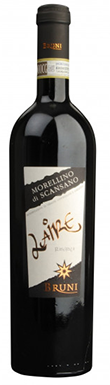
Cantina Bruni, founded in 1974, is one of the longest established specialist wineries of the DOCG. From 48ha on the coastal strip in the south...
2019
BruniMorellino di Scansano
Antonio Camillo, Morellino di Scansano, Tuscany, Italy, 2021
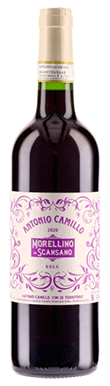
The old-vine plots which Antonio selects are planted in the traditional way, with local varieties mixed between the rows. He sources the Sangiovese for his...
2021
Antonio CamilloMorellino di Scansano
Cantina Vignaioli Scansano, Roggiano, Morellino di Scansano, Tuscany, Italy, 2021
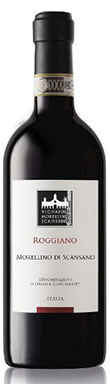
In its ultra-modern cellars at Scansano, the highly-reputed Vignaioli produce a range of Morellino which goes from everyday drinking to barrel-aged Riserva. Roggiano is the...
2021
Cantina Vignaioli ScansanoMorellino di Scansano
