
Napa Valley Cabernet 10 years apart
14 top Napa valley producers were invited to show two Cabernets each from vintages 10 years apart. Stephen Brook was on hand to monitor the progress.


The American embassy in London hosted a tasting of Napa Cabernets organised by the Napa Valley Vintners. The 14 wineries invited to pour their wines brought two vintages ten years apart. There was no programme behind the event, but it did give tasters an opportunity to monitor the evolution of wines from top producers. In most cases the young vintage was either 2015 or 2016, and the older 2005 or 2006.
These were all good vintages so quality was, or should have been, consistently high. Indeed, the wines ranged from very good to superb, as one would hope for given that they ranged in price from around £100 to £500. Harlan Estate was probably the most expensive wine, so I asked its manager, Don Weaver, what has changed between 2005 and 2015. He didn’t hesitate: ‘There is vintage variation, of course. Apart from that the only significant change has been that the vines are older and more balanced. But Harlan remains the same place, with the same team in the vineyard and winery.’
That would be true of many properties here. True, in California it is common practice to buy grapes from contracted growers so sources can vary from year to year. But the majority of wines here came from single vineyards, such as Tor’s To Kalon or Heitz’s Martha’s Vineyard.
One evident change has been the growth in AVAs (American Viticultural Areas) within Napa Valley. These are topographical designations. Unlike French AOCs or Italian DOCs AVAs are regulation-free, with no stipulations about permitted varieties or maximum yields. Stags Leap District, Rutherford and Oakville are long established AVAs here, with Coombsville and Calistoga more recent additions. Judged by the broadest of parameters, it is possible to characterise each AVA. Thus Coombsville in southern Napa lies closer to the cooling influence of San Pablo Bay. In contrast Calistoga is at the top end of the valley, which is its hottest sector. But extensive tastings demonstrate that Coombsville wines do not necessarily have a ‘cool-climate’ character, and Calistoga wines from the likes of Chateau Montelena or Eisele can have just as much finesse as a wine from Oakville or Stags Leap.
The human touch
The simple truth is that human intervention often overrides so-called ‘terroir’ characteristics. Years ago I asked the Napa Valley Vintners to organise a blind-tasting focused around Cabernets from different AVAs. Could I tell them apart? Not really, although Stags Leap seemed to have a touch more elegance. Similarly at blind tastings organised by Decanter, AVAs such as Oakville have offered some truly outstanding wines alongside some grimmer examples.
Scroll down to see the comparative tasting notes & scores
This shouldn’t come as a surprise. In Napa as in Bordeaux or Burgundy, winemaking, not to mention farming, leaves an imprint. Heitz’s wines were aged in Limousin oak, a very different medium from Allier or Troncais. Some estates, such as Dunn or Corison, pick relatively early, so as to avoid wines with any cooked or jammy characters and without excessive alcohol (broadly defined as 15% or above). In contrast, other properties favour a full-throttle style, accepting a proportion of overripe or raisined grapes, even at the risk of high alcohols.
This is not to say that one approach is better than the other, although American palates have a higher tolerance than European ones for overripe styles. If someone positively enjoys a Porty wine with 15.5%, well, who’s to deny them? Nor does moderate alcohol guarantee a balanced wine. Some early-picked Cabernets can be stringy or mean. When at this tasting I commented on the high alcohols of the Pahlmeyer wines, the winery’s representative murmured: ‘We get a lot of sun in Napa Valley.’
Californian sunshine and daily fog incursions are Napa hallmarks, and that hasn’t changed much over a decade. Growers uneasy about global warming, often expressed in Napa in the form of ‘heat spikes’ – a few days of equatorial temperatures around 40C – know that in most circumstances there are ways to deal with it. No grower need feel helpless in the face of extreme conditions. Caution about leaf removal and exposing bunches to direct sunlight, higher yields so as to avoid excessive concentration and high alcohols, earlier harvesting even at the expense of the shibboleths of ‘hangtime’ and ‘phenolic maturity’ – these are all ways to retain balance in a finished wine. It remains a personal, and sometimes commercial, choice whether to adopt these methods.
In this respect little has changed over a decade. However, I would suggest that quality is steadily improving. There is certainly more care taken about tannin management: grossly extracted wines are far less common than they used to be. Similarly, over-oaking, a problem in the 1990s, has receded and today oak is well handled. Even estates employing entirely new barrels tend to do so with discretion and care. Beth Novak Milliken of Spottswoode agrees with this analysis, and indeed her wines show that Napa can deliver wines of silky textures, intensity, purity, and finesse.
Rubicon illustrates this trend. This flagship wine from the Inglenook estate was renowned for its dense tannic structure, and was often given a few years’ bottle-age before release. The wine had a rugged grandeur, but it wasn’t much fun to drink. In 2000 the estate hired a new technical director, Philippe Bascaules, formerly of Château Margaux. The change in style soon became apparent. He reduced the proportion of new oak and length of barrel-ageing, and made other changes that resulted in a more elegant and approachable style.
Others stick to a path of over-ripeness, ending up with high-pH wines. This chemical measurement is closely related to the acidity of the juice and the final wine. In Bordeaux, the pH of a Cabernet Sauvignon wine would be between 3.4 and 3.7. In Napa, it can be 4.0 or above. The winemaker at the Peter Michael estate once insisted to me that his pHs of 4.1 or 4.2 would have no effect on longevity – but most would disagree. Many estates with a penchant for this style in the past have not changed their approach, and their wines – soft, broad, fleshy, powerful, relatively short-lived – still find favour with many consumers.
But where Napa winemaking has changed, it has changed for the better. Growers have a greater understanding of their terroir and how to farm it, and winemakers are more skilled at crafting balanced wines. Old-timers recall some wines from the mid-1980s – Mondavi Reserve Cabernets are a good example – that were 12.5% in alcohol and aged beautifully. Opulence and power are no guarantees of ageability. There were also green wines in the 1980s and few argue for a return to that style. But Napa farmers and winemakers know they need not be entirely at the mercy of global warming, heat spikes, and other unwelcome conditions. Napa has long produced some of the world’s greatest Cabernet-based wines, as well as grotesque distortions, and will no doubt continue to do so.
Napa Valley Cabernet Ten Years Apart:
You may also like:
Tasting Opus One: 1979 to 2016
Larkmead Vineyards: Single site, multiple terroirs
A taste of Howell Mountain: Tor Cimarossa Cabernet Sauvignon 2003-2016
Harlan Estate, Napa Valley, California, USA, 2005

At Harlan Estate, ask Will Harlan himself what the aim is with each, and the answer he’ll give is simple and even expected from this...
2005
Harlan EstateNapa Valley

Harlan Estate, Cabernet Sauvignon, Napa Valley, California, USA, 2015
<p>With his set jaw, flowing white hair and piercing blue eyes, Bill Harlan looks like he could have walked out of the novel Atlas Shrugged....
2015
Harlan EstateNapa Valley
Chappellet, Pritchard Hill Cabernet Sauvignon, Napa Valley, California, USA, 2005
<p>Donn Chappellet was the first grower, in 1967, to plant vineyards in the verdant Pritchard Hill area that lies a few miles east of Rutherford,...
2005
ChappelletNapa Valley
Chappellet, Pritchard Hill Cabernet Sauvignon, Napa Valley, California, USA, 2015
The dense black-fruited character of this powerful wine may well be derived from the high proportion of Petit Verdot. The nose is opulent but still...
2015
ChappelletNapa Valley
Bond, Vecina, Napa Valley, California, USA, 2005
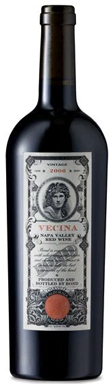
Bond is a label created by Bill Harlan of Harlan Estate to vinify the grapes of 5 hillside properties he considers of outstanding quality. Made...
2005
BondNapa Valley
Bond, Vecina, Napa Valley, California, USA, 2015
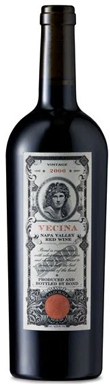
This wine makes an immediate impression on the nose, which is both perfumed and opulent, with rich spicy oak aromas. That's echoed on the palate...
2015
BondNapa Valley
Cardinale, Cabernet Sauvignon, Napa Valley, California, USA, 2005
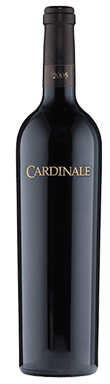
<p>Cardinale is a blend from mostly mountain sites in Napa, but always with a proportion of valley-floor fruit blended in to give greater approachability. There's...
2005
CardinaleNapa Valley
Cardinale, Cabernet Sauvignon, Napa Valley, California, USA, 2015
The aim of Cardinale is to be accessible, though not mature, on release, as well as having the capacity to age, and this 2015 succeeds...
2015
CardinaleNapa Valley
Corra, Cabernet Sauvignon, Napa Valley, California, USA, 2006
Celia Welch is one of the best-known and experienced consultant oenologists in Napa Valley, with Scarecrow and Signorello among her clients, and in 2004 she...
2006
CorraNapa Valley
Corra, Cabernet Sauvignon, Napa Valley, California, USA, 2016
The nose suggests pure luxury, with its sumptuous black-cherry and blackberry aromas. The palate is along the same lines, being svelte and rounded, with admirable...
2016
CorraNapa Valley
Favia, Cerro Sur, Napa Valley, California, USA, 2005
Andy Erickson is a Napa superstar, having been the winemaker at Screaming Eagle and other cult estates such as Dalla Valle. Favia is his own...
2005
FaviaNapa Valley
Favia, Cerro Sur, Napa Valley, California, USA, 2015
95
In a vintage when many wineries produced overripe or baked wines, this has a wonderfully fresh, fragrant, and lively nose, with cherry and blackberry aromas. The attack is fresh too, with ample concentration and flesh, and no excessive extraction. There are firm tannins to give structure, but it's well balanced, with an elegant, long and lifted finish.
2015
FaviaNapa Valley
Heitz Cellar, Martha's Vineyard, Napa Valley, California, USA, 2002
<p>The late Joe Heitz was a pioneer of single-vineyard Cabernet wines, and Martha's Vineyard in Oakville which was first made in 1966, was always the...
2002
Heitz CellarNapa Valley
Heitz Cellar, Martha's Vineyard, Napa Valley, California, USA, 2012
Joe Heitz died in 2000 and his son David was responsible for making this wine and subsequent vintages. The nose does indeed show that hallmark...
2012
Heitz CellarNapa Valley
Inglenook, Rubicon, Napa Valley, Rutherford, California, USA, 2006
Rubicon is an iconic wine from the historic Inglenook estate, drawing as it does from a well-aged vineyard. In the past the tannins could be...
2006
InglenookNapa Valley
Inglenook, Rubicon, Napa Valley, Rutherford, California, USA, 2016
<p>In 2010 there was a change of winemaker at Rubicon, and the new arrival was Philippe Bascaules from Château Margaux. He soon made changes that...
2016
InglenookNapa Valley
Ovid, Red Wine, Napa Valley, California, USA, 2006
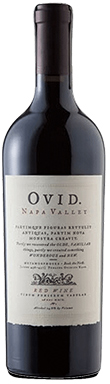
Like Chappellet, Ovid is located in Pritchard Hill at an elevation of 425 metres. The vines were planted in 2000, with 2005 the first vintage....
2006
OvidNapa Valley
Ovid, Red Wine, Napa Valley, California, USA, 2016
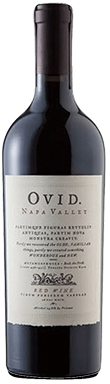
In 2017 Ovid was sold to the Duncan family of Silver Oaks, but Austin Peterson stayed on as winemaker. There are intense blackcurrant aromas on...
2016
OvidNapa Valley
Pahlmeyer, Proprietary Red, Napa Valley, California, USA, 2005
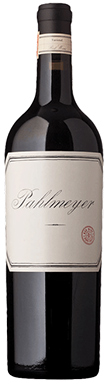
Jayson Pahlmeyer has always enjoyed producing broad-shouldered wines with high ripeness and evident power. This is no exception; the colour is scarcely evolved, but the...
2005
PahlmeyerNapa Valley
Scarecrow, Napa Valley, Rutherford, California, USA, 2005
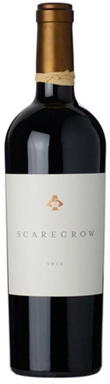
Scarecrow draws its fruit from part of the former J.J. Cohn vineyard on the Rutherford Bench, where some of the vines date back to 1945....
2005
ScarecrowNapa Valley
Scarecrow, Napa Valley, Rutherford, California, USA, 2015
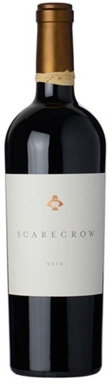
Scarecrow carries a high price tag which seems to justify an extracted style of wine that can be quite tiring. There's a lot of oak...
2015
ScarecrowNapa Valley
Spottswoode, Cabernet Sauvignon, Napa Valley, California, USA, 2016
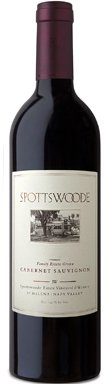
<p>Spottswoode has clearly made the most of this lovely vintage - this has charm and elegance on the nose that is still too rare in...
2016
SpottswoodeNapa Valley
Spottswoode, Cabernet Sauvignon, Napa Valley, St Helena, California, USA, 2006
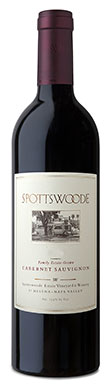
Founded in 1982 in St Helena, Spottswoode has always been managed by the women of the family, and it may not be fanciful to suggest...
2006
SpottswoodeNapa Valley
Staglin Family Vineyards, Estate Cabernet Sauvignon, Napa Valley, Rutherford, California, USA, 2005
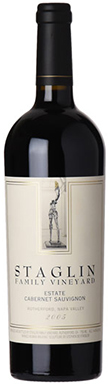
The Staglins were fortunate enough to find vineyards in Rutherford in the mid-1980s and worked with consultants such as Andre Tchelitscheff and Michel Rolland to...
2005
Staglin Family VineyardsNapa Valley
Staglin Family Vineyards, Estate Cabernet Sauvignon, Napa Valley, Rutherford, California, USA, 2015
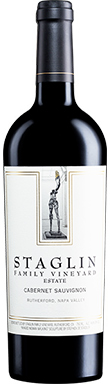
In 2007 Fredrik Johansson, with extensive experience in Australia as well as California, became the winemaker at Staglin. Like his predecessors, he has maintained a...
2015
Staglin Family VineyardsNapa Valley
Tor, Beckstoffer To Kalon Vineyard, Napa Valley, California, USA, 2006
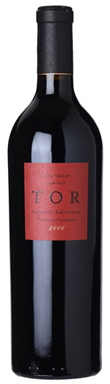
After decades working at Beringer, Tor Kenward retired to found his own label, specialising in wines from celebrated vineyards. Few are more renowned than To...
2006
TorNapa Valley
Tor, Beckstoffer To Kalon Vineyard, Napa Valley, California, USA, 2016
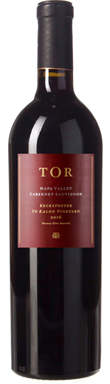
Jeff Ames, the Tor winemaker, walks a tightrope here, balancing sumptuous blackberry fruit on the border of over-ripeness. But it's aromatically in check; the palate...
2016
TorNapa Valley
