
Napa Valley’s Silver Oak: Revolutionising the use of American oak in winemaking
Having acquired its own cooperage, Napa’s Silver Oak has been quietly and scrupulously revolutionising the use of American oak in winemaking.


It’s fair to say that the use of oak is among the most important influences on a wine’s flavour and overall character.
In recent years, many winemakers have been dialling back their oak use, in search of more freshness and ‘terroir transparency’, but what if you could change the flavours imparted by the oak itself?
Scroll down to see notes and scores of 12 glittering Cabernets from Silver Oak
The fundamentals

To make a wine barrel, the oak is first turned into long, narrow staves, which are then left outdoors to ‘season’, the purpose of which is mostly to dry out the wood.
After the staves have been shaped, bent and bound together to form a barrel, the inside is ‘toasted’, using a small fire to heat the wood, caramelising its natural sugars and bringing out complex compounds.
The two main types of oak used in winemaking are French and American.
French oak (mostly Quercus petraea and Q. robur), which typically has a tighter grain, is generally considered to add a subtle, refined taste profile to wine, with hints of vanilla and spices such as clove, cinnamon and nutmeg.
American oak (mostly Q. alba), on the other hand, is known for its bold aromatics and flavours, which include vanilla, coconut, caramel and dill.
In search of more nuance in home-grown barrels, the team at Silver Oak in Oakville (fittingly) in Napa Valley and Healdsburg in Sonoma has added the roles of cooper and researcher to that of winemaker.
Close scrutiny

In 1973, the Duncan family, Silver Oak’s owners, partnered with American oak cooperage A&K in Higbee, Missouri.
After taking a 50% stake in the company in 2000, they acquired it outright in 2015 and immediately began making changes (including renaming it the Oak Cooperage) and conducting precision trials of both seasoning and toasting.
In the process, director of winemaking Laura Oskwarek (pictured, below) has made a pivotal discovery: the time spent seasoning American oak is more critical to its effect on wine than the toasting process.
‘Seasoning is important because it finds the balance of all the compounds that we like, which are then going to be affected by toasting,’ she explains. ‘Our trials have taught us that there is a definite minimum and maximum amount of seasoning that works for us.
‘We discovered there was a “too long” period of seasoning where it didn’t deliver what we wanted in the finished wine, and a “too short” period where improper seasoning occurred,’ Oskwarek continues.
‘Under-seasoning can result in barrels with a very “raw” style that doesn’t elevate the wines and can be too dominant. Extended seasoning, in the realm of 36 months, strips so much character from the wood that we find the barrels are too “soft” and don’t offer much added structure.’
Ultimately, they settled on 24 months – just over two winters – as the sweet spot, delivering a ‘Goldilocks’ balance.
‘The fluctuation that the wood experiences, in terms of temperature, rain, humidity and microbial impacts, is the most dynamic over two winters,’ Oskwarek says.
The trials have enabled the creation of American oak barrels that behave more like French oak. Yes, you read that correctly.
Toasting success

My tasting notes reveal wines that have more savoury characteristics and a freshness that I believe will enhance their ageability.
‘The idea that American oak imparts sweet herbal notes has more to do with a lack of seasoning in the barrel,’ Oskwarek says.
‘With proper seasoning, followed by toasting, we find the more favourable and classic notes of American oak, like toasted coconut, vanilla and sweet baking spice. Of course, the level of toasting affects those sweeter notes.
‘Most importantly, a properly seasoned barrel with a moderate toast can do wonders for elevating the red fruit character in red wines like Cabernet. For us, American oak complements our style.’
Toasting trials have revealed that very light toasting is universally unwelcome. Without the deeper sweetness and caramelisation that’s achieved through longer toasting, the wood imparts bitterness to the wine.
‘We found that with American oak, a medium-plus toast was an excellent complement,’ explains Oskwarek. ‘The aromas became darker, with added sweetness, and there was a fuller mid-palate. The trade-off, however, was more tannin.’
The first Silver Oak wines to benefit from these fine-tuned American oak barrels will be from the 2023 vintage, set for release in 2027.
Ongoing explorations

The team recently tasted the 2022 cooperage trials ahead of bottling the 2022 Napa Valley and Alexander Valley Cabernets.
‘We included an additional trial on this vintage of a heavy toast, and it turned out to be a great success as a component of our barrel programme,’ says Oskwarek.
‘This discovery has taught us that there is still much to learn about how toast can enhance our wines, and we will be continuing to run trials as we aim to achieve the best toast profile for each of our Cabernets, the way we did with our seasoning trials.’
There’s a major analytical component alongside Silver Oak’s sensory evaluations.
Independent wine laboratory ETS Labs runs oak ‘aroma panels’ for Oskwarek, using gas chromatography and mass spectrometry to measure levels of nine different aroma compounds.
Oskwarek then compares the data with sensory assessments of each trial on each vintage. ‘Our hope is to find trends and connections between the science and what we perceive,’ she says.
The aroma panels reveal the chemistry that underlies the different seasoning and toasting regimes.
‘We see how toast levels affect the expression of lactones [esters that contribute to aromas such as coconut, vanilla, caramel and dried fruits] and vanillin within the wines – how an increase in toast levels enhances some compounds while decreasing other compounds,’ she explains.
‘Each toasting profile brings something a little different aromatically and texturally to the wines.’
Breadth, depth & character

Oskwarek can run these experiments because the winemaking team blends before barrelling down (the process of transferring a finished wine from fermentation tanks into barrels), so the oak trials are carried out on the final blend, rather than on the various components.
‘After acquiring the cooperage, we immediately began to understand how best to craft American oak barrels that complement our wine style,’ she says.
‘By the 2021 vintage, we had confidence in our seasoning preferences; by the 2022 vintage, we had discovered that we had yet to hit a toasting maximum preference.’
She says that they’re still exploring how barrels with increased time over the fire may complement the wine in the long run.
‘Currently, we have staves from forests that we own seasoning, and we will soon make barrels from that wood,’ Oskwarek concludes.
‘Our story is very much rooted in tradition, but our curiosity drives us to continue exploring how to move the needle on quality.’
Cristaldi’s view: Two sides of Silver Oak – Napa & Sonoma
Related articles
- Napa Cabernet 2022: Best value wines of the vintage
- Cristaldi: Seeking Napa Valley’s best ‘second label’ wines
- Cristaldi: The age of cellar-worthy California Sauvignon Blanc
Silver Oak, Cabernet Sauvignon, Napa Valley, Oakville, California, USA, 2019
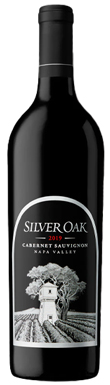

<p>The 2019 Silver Oak Napa Valley Cabernet shows a deep, ruby colour. It is a beautifully compact wine that delivers complex and nuanced aromas of...
2019
Silver OakNapa Valley

Silver Oak, Cabernet Sauvignon, Sonoma County, Alexander Valley, California, USA, 2019
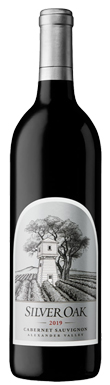
Aged in 50% new and 50% second-use American Oak from the Duncan family's The Oak cooperage in Higbee, Missouri. Matt Duncan joined me for my...
2019
Silver OakSonoma County
Silver Oak, Cabernet Sauvignon, Napa Valley, Oakville, California, USA, 2018
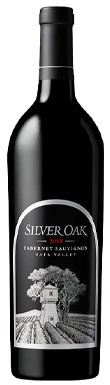
The lovely ruby red colour is translucent, revealing a heady wine of blackberry, liquorice, vanillin, spicebush, and dried floral notes with savoury, toasty oak spices....
2018
Silver OakNapa Valley
Silver Oak, Cabernet Sauvignon, Napa Valley, Oakville, California, USA, 2020
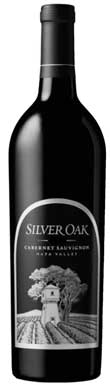
The 2020 Silver Oak Napa Valley Cabernet is simply remarkable. Perfumed rose petals and currant fruit lead the way, complemented by coriander seed, apricot pit,...
2020
Silver OakNapa Valley
Silver Oak, Cabernet Sauvignon, Sonoma County, Alexander Valley, California, USA, 2020
Shows no sign of the hardened tannic structure or overwrought fruit often associated with the 2020 vintage. Instead, this remains true to Silver Oak’s signature...
2020
Silver OakSonoma County
Silver Oak, Cabernet Sauvignon, Sonoma County, Alexander Valley, California, USA, 2018
Rich and alluring, with ripe currant and red berry fruit, pressed flowers and loamy earth. Framed by taut, mineral-rich tannins with layers of currant fruit...
2018
Silver OakSonoma County
Silver Oak, Cabernet Sauvignon, Sonoma County, Alexander Valley, California, USA, 2017
The 2017 Alexander Valley Cabernet is all about currant fruit, coriander spice, cedar, sage and fennel. With impressively polished and precise tannins, its grippy acidity...
2017
Silver OakSonoma County
Silver Oak, Cabernet Sauvignon, Napa Valley, Oakville, California, USA, 2017
Like the Alexander Valley Cabernet dialled up to 11, with more power, a darker fruit character and greater tannic structure, which builds through the full-bodied...
2017
Silver OakNapa Valley
