
New Zealand’s new faces: Six producers forging different paths
Although it’s best known around the world for established brands of Sauvignon Blanc and Pinot Noir, New Zealand’s wine scene is being driven by the creativity and innovation of a diverse new wave of winemaking. We introduce six names to know.


New Zealand’s wine scene is too often defined by its established styles and names.
One of the frustrations of living here is recognising the gap between what’s happening on the ground and what consumers abroad actually see.
Some are familiar names in new settings, others are newcomers to the scene.
Many embrace low-intervention or regenerative practices, offer fresh perspectives, or draw inspiration from working vintages around the globe, returning home to craft wines that expand the sense of what’s possible.
Below we highlight six such producers, but there are many more worth seeking out – Atípico, Cambridge Road, Forager, Huntress, Mélange, Three Fates, Vita and Vilaura, to name just a handful.
Together, they’re inviting wine lovers to reconsider what the label ‘New Zealand wine’ really means.
Scroll down to see notes and scores for six wines from a clutch of New Zealand trailblazers
Oraterra
Martinborough

When longstanding Martinborough winery Dry River changed hands in 2022, passing from the estate of the late US billionaire Julian Robertson to Wellington-based businessman Charlie Zheng, also owner of nearby Luna Estate, Dry River’s core team saw a chance to create something new together.
Led by chief winemaker Wilco Lam and backed by a wine-loving European family, they purchased what was previously the On Giants’ Shoulders winery and vineyards, and launched Oraterra, dedicating themselves to making the sort of wines that Lam hopes ‘touch a sense of wonder in people’.
Oraterra, which means ‘golden earth’ in Esperanto, is a nod to the team’s love of geology and the local soils.
‘We wanted something that resonated with all of us,’ says general manager and co-founder Sarah Bartlett.
She says starting from scratch and the team being involved at every stage – from naming to making their first wines – has been one of the best parts of creating Oraterra, helping to counter one of its hardest, which was ‘walking away from the previous relationships, and the people who invested and believed in what we were trying to achieve’.
She adds, though: ‘Luckily, these relationships were strong, and many stayed with us.’
Embrace the chaos
Having secured one of the region’s oldest vineyards, on the northern edge of Martinborough town – a 4ha block previously known as Pahi, and before that McCreanor vineyard, after the man who planted it in 1986.
They’ve since added further parcels from across the Martinborough Terrace, whose free-draining gravel soils and climatic conditions have brought it great renown, especially for high-quality Pinot Noir.
Everything is farmed organically and regeneratively with biodynamic treatments, and that same philosophy flows into the cellar.
‘Our approach is about embracing the chaos and life that make wine interesting,’ says Lam. ‘We don’t tame things too much or stand in the wine’s way.’
Chardonnay, Pinot Gris and Pinot Noir are handmade in tiny volumes and offered primarily through their wine club, The Fold.
For Lam, the project is about connection. ‘Wine is a beautiful social product – from its roots in agriculture to the conviviality of sharing a glass. Growing wine is a slow process and we only have that one opportunity per year to do something special.’
Nous
Marlborough

In a well-known region famed for scale, Nous proves that good things can come in the smallest of packages.
Rachael and Murray Cook farm just half a hectare on a steep clay hillside in Marlborough’s Southern Valleys – 0.29ha of Chardonnay and a newly planted 0.21ha of Pinot Noir – making them New Zealand’s smallest Biogro-certified organic vineyard.
The name Nous (rhymes with ‘house’) has layers of meaning: practical intelligence, philosophical perception and, in French, ‘we’, ‘us’ – very apt for a two-person operation where every vine is tended by hand.
‘It’s the culmination of over 20 years in wine,’ says Murray. ‘We wanted skin in the game, to create a legacy of our own making.’
Taking the plunge meant overcoming fear of failure, keeping day jobs to fund the vineyard (Murray is Dog Point’s winemaker, while Rachael is its marketing manager) and balancing family life.
From day one the vineyard has been organic and biodynamic, with high-density planting and a slope so steep that every task, from planting to hoeing, is physically demanding. ‘It’s not the easy way,’ Rachael admits, ‘but we want to challenge norms and pursue quality.’
Minimal rules
Minimalism rules: no synthetic pesticides in the vineyard; in the cellar, no additions beyond a little sulphur and no filtration.
‘Quality over quantity always,’ Murray says, noting: ‘[Biodynamics pioneer] Rudolph Steiner’s view on the farm as a living organism with minimal inputs and outputs makes us consider how we look after the soil, the plants, animals and our family home.’
They hope that knowledgeable drinkers might guess that their wine, tasted blind, hails from Marlborough (and Wairau specifically), but more importantly, that they’d find ‘a classic Old World ideology’ with an emerging style that’s all their own.
Nous Chardonnay is released annually on 1 September; the 2023 vintage is next up, while the first bottles of Pinot Noir are still about five years away.
It’s a slow burn but rewarding labour of love for its makers, who say ‘the joy we get from people enjoying the wine that we’ve created is far greater than we ever imagined’.
A Thousand Gods
Marlborough

The name A Thousand Gods comes from the Occitan word ‘miladiou‘ – an exclamation of surprise or astonishment heard in the vineyards of southern France.
For the label’s founders, Simon Sharpe and Lauren Keenan, it’s a tribute to the ‘salt of the earth characters’ they worked alongside in Cahors, especially Pierrot Jouves, father of Fabien of Mas del Périé, who at 85 years old is still out in the vineyard and on the tractor every day.
‘To work alongside people like this has been an invaluable experience,’ they told me.
After years making wine for others, the pair reached a turning point: keep working to someone else’s brief, or strike out on their own. The choice was obvious.
Certified-organic, biodynamically farmed fruit is sourced from Churton vineyard in Marlborough’s Waihopai Valley.
Production is tiny, the wines made without a single additive, including sulphur dioxide; no filtration, no fining – just meticulous, minimalist winemaking.
Going against the grain
The approach is inspired by producers like Overnoy et Houillon, Ganevat and Richard Leroy, whose work Simon and Lauren believe shows that no-additive wines can be precise, cellarworthy and profound.
‘This went against everything we learnt at uni,’ Lauren admits, ‘and rekindled a fascination with wine in a new way.’
A Thousand Gods delights in challenging wine’s received wisdom, championing grapes and styles often maligned or pigeon-holed, such as Sauvignon Blanc, Viognier and rosé. ‘We hope our wines reflect a freedom from paradigm and show that anything is possible,’ says Simon.
They’re not concerned about whether people can pinpoint their wines’ origins – connection matters more than provenance.
And when it comes to the future, ‘every year is a chance to learn and improve’, says Lauren.
‘We decided not to push to grow or scale our production – keep it small and make the wines we want to make. We’ll keep going only if we can make wines we’re truly happy with.’
In a country where wines are often made with a priority on consistency rather than curiosity, A Thousand Gods is providing a salutary reminder that exciting things can start by asking ‘Why?’ and ‘Why not?’
Ashleigh Barrowman
Marlborough

Ashleigh Barrowman’s wines are as arresting as their labels.
Her company Siren Wine gives a nod to her favourite track, Song to the Siren by This Mortal Coil, to Marlborough’s maritime climate and to the allure of wine itself.
‘Wine can captivate like a siren’s song,’ she says, ‘but it also demands respect – it can be destructive if abused.’
Barrowman embarked on the path towards starting her own label in 2020. A travelling winemaker splitting her time between Marlborough, Sicily, Burgundy, Jura and Gippsland, Australia, she had her wings clipped by the pandemic.
‘I started pruning at the Wrekin vineyard [in Marlborough’s Southern Valleys],’ she explains. ‘I instantly fell in love with the site and the people… it felt like it was meant to be. Timing is everything, and it was time to start my own wine.’
Her first vintage was in 2021 and she hasn’t looked back. Her ethos is simple: work only with biodynamically farmed, hand-harvested fruit and let the wine lead in the cellar.
‘I’m not a helicopter winemaker,’ she says. ‘I step in only if there’s real risk of fault. It’s harder to do less, but ultimately more rewarding.’
Staying motivated
Ashleigh’s range spans distinctive iterations of Chardonnay, Chenin Blanc and Pinot Noir, with a flair for sous voile (flor) wines.
‘I’m working on wines that won’t be released until 2035, all going to plan: more sous voile and a 2024 blanc de noirs aged on lees for 10 years.’
Working solo can be isolating. ‘It’s easy to doubt yourself and [hard to] stay motivated at times,’ she says. ‘Juggling everything from production and logistics to distribution, sales and marketing can be overwhelming. At least I have a great accountant!’
Still, sharing her wines with friends, mentors and, especially, vignerons she’s worked alongside makes it worthwhile.
Her message to drinkers blends joy and advocacy: ‘Support small, independent producers who respect the land. Vote with your wallet. But also – have fun and don’t take it too seriously.’
Kahiwi
Central Otago

Set against the dramatic backdrop of the Pisa range, Kahiwi is farmed biodynamically, integrating native plants and regenerative practices.
Co-founders Olivia Ross and Mike Wolfenden set out to prove that working with nature rather than dominating it can produce profound results.
Veterans of Burn Cottage and Felton Road, respectively, they found a like-minded partner in investor Yew Lin Goh, who shared their belief that Central Otago Pinot is too often released too early.
‘Our Mount Pisa vineyard rewards patience,’ Olivia says, ‘and has the potential to produce ageworthy Pinot Noir.’ Their debut 2021 wines have just been released.
Having the licence to work according to their convictions has been liberating. Their 70/20/10 philosophy – 70% conservative practices, 20% informed experimentation, 10% leftfield experimentation – allows for innovation while honouring tradition.
Manual viticulture, no cultivation (ie, no tilling of the soil between the vine rows) and the absence of synthetic inputs are non-negotiables. In the cellar, the only addition is sulphur dioxide.
Two distinct Pinot Noir cuvées articulate the site: Madeline, from schist and quartz soils, is fine-boned and mineral; Stella, from clay-loam, is deeper, darker and more brooding.
Under their Scordatura label, they conduct small-batch experiments, such as five wines in 2021 inspired by the Platonic solids (five unique geometric shapes associated with Plato’s theories about the nature of the cosmos).
Launching a new brand while building a winery has been daunting, but Olivia says that the satisfaction of working at their own pace – ‘living in a synthesis of farming, philosophy and winemaking’ – is highly rewarding.
Natural goals
They give deep consideration to ‘the triangle of terroir: place, time and process’, and draw inspiration from philosophical and practical sources such as Platonism, the wu-wei concept of ‘effortless action’ in Taoism, Japanese artisanship (notably the influential thinking of the late Masanobu Fukuoka) and Amish-American farmer-agronomist John Kempf.
Goals include reaching 10% soil organic matter, achieving energy self-sufficiency and expanding plant life in and around the vineyard.
And at Clos Miki – a close-planted Bannockburn site they’ve stewarded since 2022 – they’re applying their thoughtful, innovative approach to newly planted Chardonnay vines.
‘Looking ahead 10 years,’ Mike says in conclusion, ‘we envision Kahiwi as a demonstration of what’s possible when fastidious winemaking and gentle land stewardship work together in harmony.
‘If we can show that this approach not only preserves but actively improves the land while producing wines of genuine distinction, perhaps we’ll have made a meaningful contribution to the future of Central Otago, and beyond.’
Moko Hills
Central Otago

For Donald van der Westhuizen of Moko Hills in Bendigo, Central Otago, winemaking is the ‘easiest’ part of the job. ‘The saying that wines are made in the vineyard is a little cliché, but still very true,’ he says.
The hardest part? ‘Communicating Moko Hills beyond a bottle or glass of wine… each bottle truly is a small glimpse into this very personal journey between people and place.’
Moko Hills, named for the small lizards (mokomoko in Māori) found in the area, is a 40ha family-owned estate farmed with organic and regenerative practices, growing Pinot Noir and Chardonnay.
Production is deliberately small – fewer than 300 cases – and is guided by Donald’s ‘less is more’ philosophy. Every vineyard and cellar decision is questioned: why do it – and is it needed?
An academic background in ecology shapes his approach. Once a purist aiming to return land to an ‘original’ state, he now focuses on ‘breaking the barriers between the “natural” world and farming systems’.
Central Otago’s famously collaborative spirit has been vital. ‘Many of the legends I looked up to when I first entered the industry have become mentors, peers and close friends,’ he explains.
‘Their support and the culture they’ve helped create is a big reason why I’ve put down roots here.’
A wider tapestry
His comfort lies in the challenges of, ‘countless hours under the summer sun, blown around in the spring winds and keeping warm during the frosty winter mornings’.
Living on-site means, ‘experiencing first-hand the seasonal flux and daily rhythms, invaluable for piecing together the knowledge of a place’.
Wine is just one thread in the broader Moko Hills tapestry: orchards for fruit and nuts, vegetable gardens, a flock of chickens (all called Lucy) and a landscape where native trees, birds and insects all thrive.
‘Wine is a conduit,’ Donald believes, ‘a way of understanding the nuances of place and creating social connection.’
Six wines from six new New Zealand producers
Related articles
- New Zealand: Precision, purity, power & poise
- How Māori winemakers are finding their voice in New Zealand’s wine industry
- Australia & New Zealand newsletter: Sign up today
Oraterra, Pinot Gris, Martinborough, Wairarapa, New Zealand, 2024
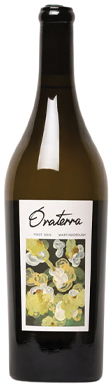

Layered, complex, with orchard fruits, spice and honey, dry, rich in fruit with a very fine texture. Thoughtful, elegant and very delicious. Wilco Lam likes...
2024
OraterraMartinborough

Nous, Wairau Chardonnay, Wairau Valley, Marlborough, New Zealand, 2021
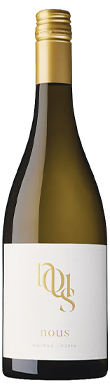
An inviting nose of Meyer lemon, white peach, a touch of flint, toasted cashew and fresh cream. The palate is silky, fresh and finely tuned,...
2021
NousWairau Valley
A Thousand Gods, Blanc, Waihopai Valley, Marlborough, New Zealand, 2023
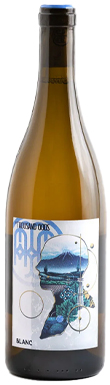
An intense burst of lime, elderflower, grilled lemon and pineapple, plus wet river stones on a hot, sunny day. The palate is textural and pithy,...
2023
A Thousand GodsWaihopai Valley
Ashleigh Barrowman, Queen of Cups Chenin Blanc, Southern Valleys, Marlborough, New Zealand, 2024
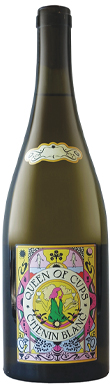
Aromatic yellow apples, lemon curd, a hint of camomile and wet wool lead to a mineral-rich, savoury palate with tangy, saline acidity. Lean and racy...
2024
Ashleigh BarrowmanSouthern Valleys
Moko Hills, Chardonnay, Bendigo, Central Otago, New Zealand, 2021
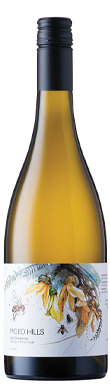
Fruit-driven but not fruity, there’s an enticing minerality here, alongside Nashi pear and citrus, white flowers and oyster shell. Fresh and lithe with a crunchy...
2021
Moko HillsBendigo
Kahiwi, Cuvée Madeline Pinot Noir, Central Otago, New Zealand, 2021
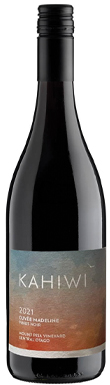
Fragrant, beguiling, bright, with intense raspberry, spice, rosehip and darker cherry aromatics, threaded with delicate herbal notes. Fine-boned and flavoursome with crunchy fruit, this is...
2021
Kahiwi
