
Oregon’s Ponzi Vineyards: Producer profile and wines to try
Ponzi Vineyards winemaker Luisa Ponzi remains a mainstay in Oregon's Willamette Valley since taking the helm of the family's winemaking role in the 1990s. She has pioneered the establishment of the Laurelwood appellation in 2020 as well as guided the brand's transition to new ownership with Groupe Bollinger, the family-owned company's first property outside France.


Dick and Nancy Ponzi came to the Willamette Valley in 1968, launching Ponzi Vineyards from a valley-floor estate vineyard in 1970. Relocating from Los Gatos, California, first-generation Italian-American Dick Ponzi was a mechanical engineer who designed rides for Disneyland.
Leaving the corporate life behind, Dick and Nancy’s interest in the wines of Burgundy brought them and their three young children to Oregon. At the time, David Lett had planted Pinot Noir, but the Ponzis did not know the Letts, and it would be years before they’d meet.
Scroll down to see tasting notes of seven Ponzi Vineyards wines
Four hectares of former strawberry fields were planted to Pinot Noir vines in 1970. The first barrels of Ponzi Pinot Noir were produced in 1974 and the wines made it to the Portland market in 1976, all 96 cases of it.

Pioneering a region and ‘growing milk’
The history of the Willamette Valley’s rich agricultural reputation dates to the native Kalapuyan tribes. When the Ponzis arrived, the Willamette Valley of the 1960s was a bustling agricultural centre, but wine growing wasn’t considered real farming. Luisa recalls being embarrassed by what her parents were doing.
‘I went to Hillsboro High School with other kids whose families had “real” farms,’ says Luisa. ‘Honestly, there was a sense of embarrassment. I never wanted to tell anybody that we were making wine. We used milk cartons instead of grow tubes to protect newly planted vines back then, and some kids on the bus once asked me if we were trying to grow milk,’ she recalls with a laugh.
These days, the Willamette Valley has a reputation as one of the world’s great Pinot Noir regions. Any notion of embarrassment has been replaced with pride in Luisa’s own children. The pioneering Ponzi Vineyards was established as the third bonded winery in the Willamette Valley.
Over time, the Ponzi children would become friends with other kids in the valley. Kids with names like Lett (Eyrie Vineyards), Sokol Blosser and Campbell (of Elk Cove). ‘We’d be playing hide and seek around the corner while our parents were putting together plans to establish the Willamette Valley Wine Growers Association,’ Luisa recalls.
The children of the valley’s founding families remain close to this day, having endured a shared experience. ‘We’re basically cousins,’ she relates.
Understanding that they needed to move away from the valley floor to really produce wines of quality. Dick and Nancy Ponzi purchased hillside sites in 1981, the Madrona and Abetina vineyards. The latter had been planted in 1975 by Oregon State University to over 20 different clones of Pinot Noir. This approach to viticulture would become a key part of the Ponzi vision.
The 1980s and early 90s would see Dick Ponzi’s wines land on the pages of American wine publications, making top 100 lists. As the Willamette Valley’s reputation rose, Ponzi Vineyards was often at the forefront, developing a reputation for producing compelling wines.

The next generation
All of her siblings played a part in the family winery. Her brother Michael became director of operations in the 80s, and her sister Anna Maria became director of sales and marketing in the early 90s.
Having spent years learning from her father, one of the valley’s most revered names, Luisa Ponzi sought formal wine education in Burgundy. There, she apprenticed with M Christophe Roumier of Domaine Roumier in Chambolle Musigny and Italian producer Luca Currado of Vietti in Piedmont.
She would return to the Willamette Valley and the family winery in 1993. She was the first American woman to earn the Certificate Brevet Professionnel D’Oenologie et Viticulture in Beaune. That vintage Luisa became the winemaker at Ponzi Vineyards. Luisa was a year old when her parents planted their vineyards, and picking up the mantle from her father was carrying on the Ponzi legacy as the family estate’s winemaker.

‘Clonal massale’
It’s about the estate vineyards when it comes to the Ponzi wines. Between the winery, now owned by Bollinger and the Ponzi family, there is a total of 68 planted hectares (170 acres). Between the original 4ha, some small hillside vineyards purchased in the early 1970s and a large 30ha purchase in the late 1980s.
The winemaking at Ponzi begins with their approach to wine growing, which has been a process of refining for Luisa. The vineyard that surrounds the winery is, to Luisa’s thinking, one of the best sites in all of the Willamette Valley. The result of a process of refining and refining each year over the lifetime of Ponzi Vineyards.
It’s all a product of Luisa’s and her father’s approach to viticulture over a 50-year period, and as a result, the vineyard is planted to 22 different clones of Pinot Noir. The tendency to play with different clones goes back to Dick Ponzi’s work with clonal experiments with Oregon State University in the 1970s. When Luisa came back from Burgundy, she planted all kinds of clones that she’d worked with in France.
‘With an older winery like ours, by Oregon standards, our longevity is the product of a series of decisions and stories over time. We didn’t just pick 22 different clones and say, let’s do that,’ Luisa exclaims. The selections were made vintage by vintage. Tasting the grapes and the wines each year and seeing what works well and where. It was a long process of ‘following the clones in the cellar and in the wines and seeing what they do,’ Luisa explains.
‘Clonal massale’ is Luisa’s term for the Ponzi viticultural ethic. A combination of clonal selection and massale selection. She defines ‘clonal massale’ as ‘the planting of several dozen clones in a single block.
These clones are specially selected for the site, and rather than being planted in an organised fashion, each in a different row or block, they are planted at random like wildflowers; despite variations in ripening, the grapes are harvested at the same time.
‘The clonal selections are done with precision,’ Luisa emphasises, ‘but then we mix them all together. I think it reveals terroir better because it’s a mix. We have Spanish, Swiss, California and French clones, it’s anything but a monoculture.’
Ponzi Vineyards at a glance
Founded: 1970
Owner: Groupe Bollinger (purchased in 2021)
Annual production: 38-42,000 cases (12 bottle)
Total hectares planted to vines: 68ha
Appellation: Laurelwood District AVA, which was established in 2020 in large part by the efforts of Anna Maria and Luisa Ponzi.
Estate vineyards: Estate Vineyard (1970), Abetina (1975), Madrona (1985), Aurora (1991-2006), Avellana (2006-2014)
Key wine varieties: Pinot Noir, Chardonnay and Pinot Gris
Winemakers: Dick Ponzi (1970 to 1993); Luisa Ponzi (1993 to present)
The winemaking
‘We have a gravity mentality’’ says associate winemaker Max Bruening. This approach is a reflection of Dick Ponzi’s respect for the work done over a year in the vineyard as it transitions to the cellar.
When the new Ponzi Vineyard facility opened in 2013, it was designed to take advantage of gravity on the crush pad and in the cellar keeping the movement of wine as gentle as possible. When they are used, the pumps have governors in them to soften their impact and keep the integrity of the wines and the terroir within them intact.
Whole cluster inclusion and smaller fermentation batches are key components of the Ponzi winemaking process. The focus under the new Bollinger group is on the site-specific, premium Pinot Noirs and Chardonnays. Small fermentation lots (with native yeasts) seem to amplify the particular character of a block or a vineyard they may want to emphasise, according to Bruening.
The gentle touch combined with a search for texture is the recipe at Ponzi. This includes low inputs of new oak, particularly on the Chardonnay, from longer barrel ageing and extensive lees stirring. The barrels are bent with steam rather than heat from the toast, looking to minimise wood’s undue influence on the wines.

The Bollinger acquisition
In early April of 2021, the Bollinger group (SJB USA) acquired Ponzi, including the winery and thirty-five acres of vineyards. In October of that same year, Jean-Baptiste Rivail was appointed CEO of Ponzi Vineyards and executive vice president of SJB USA. The Ponzi family has retained 40ha of vineyard land and is under long-term leases with the Bollinger Group.
The Bollinger acquisition of Ponzi was a net positive for everyone to hear Luisa tell it. ‘This has really allowed us to focus in. It’s possible that maybe I was indulged as the winemaker a little bit too much when it was me and my sister,’ Luisa admits. ‘I probably could have benefited from some stronger guidance on how all the wines I wanted to make or was making were doing from a market and sales point of view.’
Rivail has taken an active role in helping the brand develop that focus as part of its reputation moving forward under Bollinger. ‘This terroir, Laurelwood, and these focused wines, the varieties, Pinot Noir, Chardonnay and our reserve and single-vineyard bottlings, that’s where we’re focusing.’
‘This is a legacy family in the Willamette Valley, and Luisa has been a pioneering winemaker here. We want to continue and build on that legacy and bring it to the broader world that Bollinger has access and inroads to,’ Rivail reveals.
‘I’ve really been pleased with how much respect we’ve been given as a winemaking team,’ Luisa says. There were a lot of suitors, but Bollinger wanted us to keep doing what we’ve been doing and that made the decision much easier.’

Willamette pioneers Ponzi: Seven wines to try
Related articles
Willamette Valley 2021: Chardonnay report and top-scoring wines
Oregon’s Willamette Valley 2021: Vintage report and top-scoring wines
Southern Oregon 2021: Vintage report
Ponzi Vineyards, Aurora Chardonnay, Willamette Valley, Laurelwood District, Oregon, USA, 2019
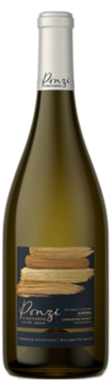

A contemplative Chardonnay from the Aurora Vineyard sustainably farmed and planted in 1990. The aromatics are framed by lemon and white flower pollen with a...
2019
Ponzi VineyardsWillamette Valley

Ponzi Vineyards, Avellana Chardonnay, Willamette Valley, Laurelwood District, Oregon, USA, 2019
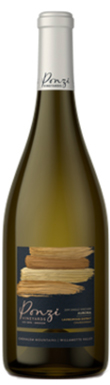
Winemaker Luisa Ponzi made Chardonnay in Burgundy under Dominique Lafon and firmly believes in the variety in the Willamette Valley and the Laurelwood District AVA....
2019
Ponzi VineyardsWillamette Valley
Ponzi Vineyards, Laurelwood Chardonnay, Willamette Valley, Laurelwood District, Oregon, USA, 2019
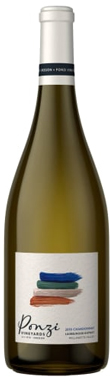
Luisa Ponzi is a big believer in Chardonnay from the Laurelwood District. Having trained with Dominique Lafon in Burgundy, she's drawn to the variety. The...
2019
Ponzi VineyardsWillamette Valley
Ponzi Vineyards, Reserve Pinot Noir, Willamette Valley, Laurelwood District, Oregon, USA, 2018
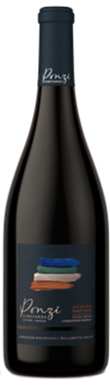
A gorgeous Pinot Noir with richness, depth and layered complexity from four Ponzi estate sites: the Aurora, Abetina, Avellana and Madrona vineyards. Spiced aromatics of...
2018
Ponzi VineyardsWillamette Valley
Ponzi Vineyards, Aurora Pinot Noir, Willamette Valley, Laurelwood District, Oregon, USA, 2019
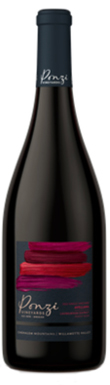
Ponzi's Aurora Vineyard has experimental origins, with various rootstocks, spacing and clones planted in the early 1990s. Gobs of violets, fresh mint and evergreen tips...
2019
Ponzi VineyardsWillamette Valley
Ponzi Vineyards, Avellana Pinot Noir, Willamette Valley, Laurelwood District, Oregon, USA, 2019
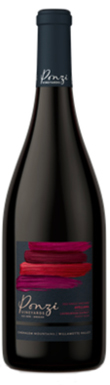
The Avellana Vineyard Pinot Noir is planted in Ponzi's ‘clonal massale’ approach, a field blend of 22 different clones. The 2019 vintage was a cooler...
2019
Ponzi VineyardsWillamette Valley
Ponzi Vineyards, Laurelwood Pinot Noir, Willamette Valley, Laurelwood District, Oregon, USA, 2021
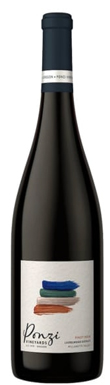
The Laurelwood bottling is comprised of a variety of sites throughout the Ponzi estate. This wine shows excellent spicy fruit and freshness. Bramble fruits are...
2021
Ponzi VineyardsWillamette Valley
