
Petite Montagne, grand ambition: Ten top wines from an exciting corner of Champagne
Tom Hewson dives into this small pocket of the Champagne region and reveals why its producers and wines are making waves on wine lists all over the world.


In most descriptions of the Champagne region, the Petite Montagne de Reims gets grouped as part of the larger area of the Montagne de Reims, Champagne’s most northerly subregion.
Admittedly, although its name suggests otherwise, the Petite Montagne is a sizeable stretch of mostly east-facing vineyards that does indeed join up with the Montagne de Reims proper at the village of Villers-Allerand.
Scroll down to see top Champagnes from the Petite Montagne de Reims
However, this gently undulating subregion – which has become a vibrant hub for top-class independent growers – can surely be considered its own unique entity.
This is due to one fundamental difference between the Petite Montagne and the wider Montagne de Reims: soil type.

A different underground world
Most trips to Champagne begin with a murky descent into a cellar carved from the region’s immense chalk bedrock.
After all, it’s not only the vines that make use of the extraordinary properties of this compressed marine deposit.
The wines, once in bottle, spend many years ageing in this formidable network of cool, calm subterranean galleries.
Just 15 minutes drive southwest of Reims and its famous chalk cellars, however, the underground world is rather different.
‘It’s like being at the beach!’ says Nicolas Maillart, a grower-producer in the village of Eceuil in the Petite Montagne.
He reaches into a hole in his cellar wall and lets a fistful of fine, dry sand run through his fingers.
Much of the Petite Montagne is characterised by these sandy soils.
Building the cellar was such a complex job that a series of commemorative photographs still line the walls of Maillart’s estate.

Key villages of the Petite Montagne
All premier cru except for Gueux; with their most widely planted grape variety:
Chamery: 42% Meunier
Ecueil: 76% Pinot Noir
Sacy: 46% Pinot Noir
Villedommange: 58% Meunier
Vrigny: 87% Meunier
Gueux: 85% Meunier
A place and style of its own
This change in soil type impacts the style of the wines.
‘Our Pinot Noir is more aerial, less massive,’ says Richard Desvignes at Lacourte-Godbillon in Eceuil.
Benoist Perserval, of Perserval-Farge in Chamery, agrees: ‘Our wines have a little less tonicité [tension], but they’re easier to drink young’.
Ineffable character
Other than the soil, though, there’s little to differentiate the landscape here from the nearby slopes of the Montagne de Reims.
Although the rolling hills are not quite as high as the Grande Montagne area, the aspects and slopes are not wildly different.
The area can catch some of the cooler temperatures and rainfall that the nearby Ardre Valley often experiences, but ripeness and harvesting dates are often a little earlier than the north-facing parts of the Grande Montagne.
Yet the Petite Montagne is different, and has attracted the interest of the larger houses:
‘Ruinart came here looking for Chardonnay,’ says Perseval, ‘they need some that is ready younger, for their non-vintage’.
Over the other side of the hill, in the village of Courmas, Piper-Heidsieck sources elegant Meunier for its new cuvée, Essentiel Blanc de Noirs.
Séverine and Yann Alexandre, of the well-regarded eponymous estate also in Courmas, sell Meunier to Krug.

Petite Montagne top names to know
Bonnet-Ponson
Clément Perseval
Emilien Allouchery
Frédéric Savart
Guerlet-Deguerne
La Closerie
Lacourte-Godbillon
Louis Brochet
Nicolas Maillart
Perrine Fresne
Perseval-Farge
Roger Coulon
Thomas Perseval
Yann Alexandre
Meunier mania

Meunier in particular seems to thrive here, yielding wines of beautiful finesse and florality compared to the fruitier, rounder examples from the villages of its traditional home in the Marne Valley.
Francis Egly of Egly-Ouriet was one of the first to shine a light on the region via his cuvée Les Vignes de Vrigny, made from 100% Meunier in the village of Vrigny.
Since Jérôme Prévost created the now rare and much sought-after La Closerie Champagnes made from Meunier in Gueux, the area has exploded with independent names.
Nowadays, the most notable mover-and-shaker in Vrigny is Champagne Roger Coulon, whose sleek new tasting room seeks to draw high-end visitors to this quiet, sometimes neglected subregion.
Edgar Coulon, now the 9th generation at the estate, strives to retain acidity through farming the vines organically: ‘A lot of Meunier tastes flat as it ages’, he says, ‘it’s important to keep the energy’.
His wines have immediate aromatic generosity, and the constant refinement in the cellar is palpable. Unusually for Champagne, Coulon’s wines now rest an entire year in the cellars after disgorgement before shipping.
‘It costs a lot of money,’ says Coulon, but he feels it’s worth it, as his wines reach his clients at a perfect stage of evolution.
A spirited group

Many of these independent producers have a zealous drive for organic viticulture.
In the village of Chamery, in the southern part of the subregion, 25% of the vineyard is organic. This compares to 8.1% in Champagne overall.
There’s a relaxed, youthful undercurrent here, which is in contrast to many of Champagne’s villages.
Each spring, the village assembles for Chamery Circus, a tasting where the dress code is jeans and t-shirts, barbecues are fired up and local musical talent, buoyed by a glass or two, takes to the stage.
Pinot Noir presence
Just to the north of Chamery, the village of Eceuil breaks the mould for Meunier dominance with its extensive plantings of sought-after Pinot Noir.
One of the village’s stars, Nicolas Maillart, tends a recently planted parcel of his speciality: ungrafted vines of Pinot Noir, which can survive here on their own roots thanks to the inability of phylloxera to spread in sandy soils.
Maillart’s resulting wine, Les Coupés Franc de Pieds, is one of this area’s most intense, evocative treasures.
Between them, the resourceful Champagne makers of the Petite Montagne are building an identity as vivid and energetic as anywhere in the region.
The statement is clear: the Petite Montagne de Reims may be petite in size, but in ambition, character and interest, it’s anything but.

Top Champagnes from the Petite Montagne
Related articles
- Champagne releases for spring & summer 2025
- Côte des Bar: A pocket of Champagne brimming with character
- Champagne report 2024: Latest releases from the Côte des Blancs
Nicolas Maillart, Les Coupés Franc de Pied, Champagne, France, 2020
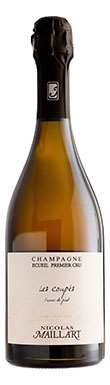

Nicolas Maillart's remarkable Pinot Noir from ungrafted vines planted on the sandy slopes of Éceuil in 1973 is one of the most striking wines from...
2020
Nicolas Maillart

Gaspard Brochet, 333.d, Champagne, France
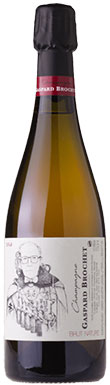
Brochet has made quite an impact with his individual style based around fruit from the Petite Montagne village of Écueil and surrounding villages. 333.d is...
Gaspard Brochet
Lacourte-Godbillon, Mi-Pentes, Champagne, France

WIth its name meaning 'mid-slopes' in French, this Pinot Noir from the sandy soils of Éceuil is a perfect example of what the Petite Montagne...
Lacourte-Godbillon
Roger Coulon, Esprit de Vrigny, Champagne, France
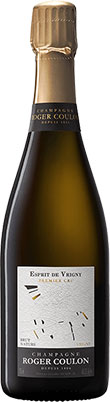
Roger Coulon takes one plot of Meunier, one of Pinot Noir and one of Chardonnay from Vrigny to try and paint a perfect picture of...
Roger Coulon
Lacourte-Godbillon, Terroirs d'Ecueil, Champagne, France
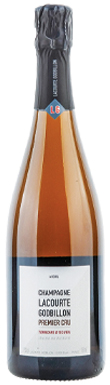
The most accessible cuvée from this charming, dedicated producer in the sandy Petite Montagne de Reims area is all about the beautiful suppleness of Pinot...
Lacourte-Godbillon
Yann Alexandre, Blanc de Blancs, Champagne, France, 2018
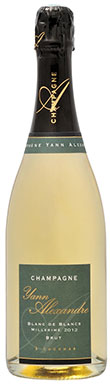
Chardonnay is not normally a specialty of this part of Champagne, but Yann Alexandre in Courmas does seem to have a knack for it. Warm...
2018
Yann Alexandre
Yann Alexandre, Grande Réserve, Champagne, France
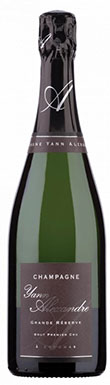
Grande Réserve is Yann Alexandre's most demonstrative Champagne, showing a beautiful aromatic range of dried apple, honey and buttery pastry cut with long, citric Chardonnay...
Yann Alexandre
Perseval-Farge, C de Chardonnay, Champagne, France
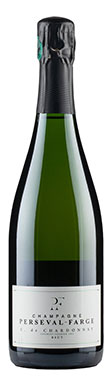
This long-aged cuvée, with almost 10 years on lees, shows the more soft focus, fragrant side of Chardonnay from the sandy soils of the Petite...
Perseval-Farge
Emilien Allouchery, La Scène, Champagne, France, 2019
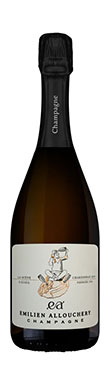
New voice Emilien Allouchery is starting out in Éceuil with a handful of vivid, dynamic cuvées highlighting his home village. The 2019 Chardonnay La Scène...
2019
Emilien Allouchery
Roger Coulon, L'Hommée, Champagne, France
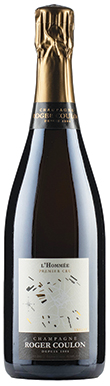
Refined and composed, this was the pick of the Roger Coulon portfolio, golden-fruited and open-stanced with dried apple, apricot tart and dark spices. Voluminous but...
Roger Coulon
