
Producer profile: Donnafugata


At the forefront of innovation and the development of Sicilian wine as a whole, this pace-setting family producer combines an island legacy, dating back more than 160 years, with a strong vision for the future. Richard Baudains reports…
I am sitting at a table in the tasting room at Donnafugata in Marsala on a blustery January afternoon, and the wines keep coming. I am in the lengthy process of tasting one of the most comprehensive ranges of Sicilian wines made by a single producer on the island today. It is a kaleidoscope of colours, aromas, textures and flavours that testifies to the extraordinary richness of Sicily. No other Italian region can offer such diversity – and Donnafugata showcases it impressively.
Scroll down for Richard Baudains’ top five wines from the Donnafugata range
Donnafugata sources grapes from managed vineyards in the Marsala area and its own estates in four strategically located parts of the island, two of which are new additions to the portfolio. Each property has its own distinctive growing conditions, grape varieties and site-specific production.
The aim across the extremely eclectic range is, in the words of winemaker Antonino Santoro, ‘to express each variety in the context of its terroir’. The new entries are on Mt Etna and in the DOC zone of Vittoria, in the southeast of the island.
The former, acquired in 2016, is a big, shiny cherry on top of the cake. The Etna DOC has a buzz factor which currently makes it the most sought-after vineyard site in the region. It has all the elements of a great narrative: unique terroir with its volcanic soils and high altitude, old bush-trained vines, high-profile investors and wines with striking personality.
Donnafugata at a glance
Owners: Rallo family, based in Marsala
Grape source: Direct ownership and managed vineyards
Total vineyard area: 405ha
Annual production: 2.24m bottles
Number of wines: 22
Estates and vineyard areas: Contessa Entellina (283ha); Pantelleria (68ha); Vittoria (36ha); Randazzo- Passopisciaro, Etna (18ha)
Etna used to supply tanker wines to the vermouth industry. Now it produces the region’s highest-priced premium bottlings. Donnafugata owns 18ha on the north face of the volcano, in the top locations of Randazzo and Passopisciaro, at altitudes between 730m and 780m. There is a small production of tangy Etna Bianco made from the very interesting Carricante grape, but the climate on this side of the mountain favours the dark-skinned Nerello Mascalese. This is red wine country, as the debut vintages of the zippy, wild berry-scented Sul Volcano Rosso and the single-cru Fragore Contrada Montelaguardia amply demonstrate.

Donnafugata also arrived at Vittoria in the same year as the Etna site was acquired. Cerasuolo di Vittoria is one of Sicily’s longest-established denominations and, to date, its only DOCG. It may not have the glamour of Etna, but the traditional blend of Nero d’Avola and Frappato boasts a pedigree as one of the island’s true native-grape terroir wines. The sandy, calcareous soils and hot, dry climate combine to make reds with fruit and floral aromas and soft tannins. Donnafugata produces a classic cherry-coloured Cerasuolo and an unoaked monovarietal Frappato with an exuberant floral-spicy nose and a fresh, bouncy character that bursts with energy.
Growing presence
Pantelleria is something else. The island, 40 minutes by plane from the mainland and closer to north Africa than Italy, presents very particular challenges for wine growing. The wind, freezing cold in winter and baking hot in summer, blows hard for 300 days a year. To protect vineyards from the elements, the ancient gnarled vines are bush-trained close to the ground in little hollows dug out of the sandy, volcanic soils following a tradition now listed by UNESCO’s World Heritage Committee for its ‘creativity and sustainability’. The grape is a white Muscat, known locally as Zibibbo. Ben Ryé, the top wine, is an intense expression of an extreme terroir made by adding hand-selected, sun-dried grapes to must during fermentation. Donnafugata has been here since 1989, patiently accumulating plots dotted around the island and restoring terraces supported by a staggering 40km of dry stone walls.
The largest estate and nucleus of the group is in the Contessa Entellina DOC in the province of Palermo, in the northwest of the island. The soils are predominantly clay, but with infinite variations in composition over the hilly 283ha of the property, which reaches up to 600m above sea level. Matching soils, expositions and varieties means that the estate grows no fewer than 17 grape types – including some that you would not expect, such as the Pinot Noir that goes into a rather good metodo classico sparkling rosé. The flagship wines are Mille e Una Notte, a Nero d’Avola-dominant blend, and the white Vigna di Gabri, based on Ansonica (Inzolia). This is also where Donnafugata produces its top Chardonnay, Chiarandà, which is picked in the hours of darkness to exploit the day to night temperature difference.
The Contessa Entellina estate is where it all started. In 1983, Giacomo Rallo, a lawyer by profession and at that time the fourthgeneration head of a highly respected Marsala house, took the far-sighted but courageous decision to sever the family’s 150-year-old connection with fortified wines and launch into the production of premium table wines. He sold the Marsala business and founded Donnafugata with his wife Gabriella Anca Rallo, who had just inherited the country property at Contessa Entellina. Today brother and sister Antonio Rallo and José Rallo, Giacomo’s children, run the family business, which has grown from the 100ha of their mother’s original estate to a total holding of 405ha, making them the second-biggest private vineyard owners on the island.

Island identity
Donnafugata has expanded, but it has also evolved, both in terms of the character of the wines and its long-term mission. Looking over the long rows of bottles from across the tasting table, José describes the house style as ‘pleasurable, fresh and elegant’. Tasting back through the vintages gives the statement a context. The 2012 vintage of the Chiarandà Chardonnay is big and fleshy with tropical fruit in the Californian mould. The 2005 is still within its drinking window but comes over weighty and foursquare. The current vintage, 2016, is fresher with more progression on the palate and great intensity on the finish.
The red, Mille e Una Notte, goes in the same direction, from the more extracted and oaky 1998 and 2008 to the more supple current vintage of 2015. The new vintages are more immediately accessible and more food friendly. There is brighter definition and more freshness in the whites, as well as more suppleness in the reds. In part, the style shift is the result of harvesting choices. Winemaker Santoro says: ‘If I have the option, I would rather pick slightly earlier than later.’ It’s also partly down to shorter barrel time, less new oak and more bottle age before release.
The long-term mission is to focus increasingly on local grapes. International varieties have played an important role in the rise of modern winemaking in Sicily. When the first new-wave wines started to emerge to enthusiastic reviews in the mid-1990s, they helped to bring recognition to the region. As Antonio acknowledges: ‘The boom of international varieties in the 1990s showed the world the potential of Sicily.’ They also filled a gap, as he explains: ‘At that time the local varieties were weak; they were planted to produce volume, not quality.’

Today winemaking in Sicily revolves much less around Chardonnay, Cabernet and Merlot, but the potential of the local varieties is almost certainly not yet fully expressed. Research at Contessa Entellina (19 native varieties) and on Pantelleria (33 biotypes of Muscat) aims at identifying and reproducing quality clones of local varieties for the vineyards of the future. It is a lengthy process. ‘It has taken 10 years to get Grillo (the grape of the excellent recently released SurSur) up to the level of Chardonnay, but it is the only way forward,’ says Antonio. ‘The priority for our generation is to defend biodiveristy for future generations. It is our great resource. Whatever genetic modification can invent will always be inferior to what we have inherited.’
During a visit to the estate you get the sense of connecting with Sicily. It is in the semiotics of the specially commissioned art labels and in the naming of things (Donnafugata is the imaginary village in Tomasi di Lampedusa’s novel Il Gattopardo). It is in the 150-year-old carob tree in the garden at Contessa Entellina, and in the traditional courtyard of the former Marsala house, which is now the company headquarters. Meanwhile, present-day, cutting-edge Sicily is vividly apparent in the estate’s research, the sustainable viticulture, the carbon footprint analysis on the back label of every bottle – and very much in the taste of the wines themselves.
Richard Baudains is DWWA Regional Chair for Veneto. He has been a regular Decanter contributor on Italian wines since 1989
Richard Baudains’ top 5 wines from the Donnafugata range
You may also like
Discover Sicily: 20 great buys
Ten Sicilian wineries at the top of their game
Top Volcanic wines
Cortese: A ‘new’ organic wine estate to watch in Sicily
Donnafugata, Ben Ryé, Passito di Pantelleria, Sicily, Italy, 2016
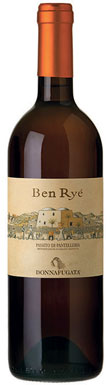

Bright shade of old gold. Elegant aromatic complexity of figs, dates, rose petal, orange peel, dried apricot and pineapple, then at the back savoury notes...
2016
DonnafugataPassito di Pantelleria

Donnafugata, Mille e Una Notte, Sicily, Italy, 2015
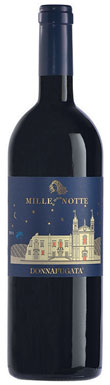
Elegantly self-assured on the nose. Cassis and violets with a note of cocoa powder, a touch of inkiness and a hint of wild herbs. Intense...
2015
Donnafugata
Donnafugata, Floramundi, Cerasuolo di Vittoria, Sicily, Italy, 2017
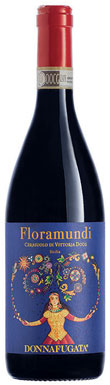
Big, expressive and quite exotic nose of sweet cherry, cinnamon, Turkish delight and rose petal. Lots of volume on the palate, which has slightly gritty...
2017
DonnafugataCerasuolo di Vittoria
Donnafugata, Fragore Etna Rosso, Etna, Sicily, Italy, 2016
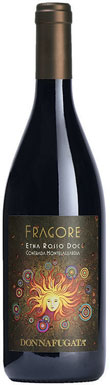
Authentic, very bright pale shade of Etna reds with young pink edges. Sweet red fruit and glacé cherries on the nose, plus a distinctive tanginess....
2016
DonnafugataEtna
Donnafugata, Vigna di Gabri Bianco, Sicily, Italy, 2017
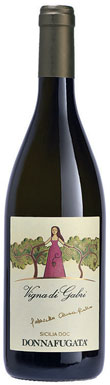
Lime tree blossom, bergamot and salted lemons, hints of Mediterranean scrub and capers. Crisp entry, firm structure with the lightly tannic character of the Ansonica...
2017
Donnafugata
