Producer profile: Orin Swift
Inspirational winemaking and groundbreaking presentation led to this Californian producer quickly catching the eye of one of the biggest US wine groups. While its ownership has changed, the creative drive behind the label remains in place.


Since its first vintage release in 1999, Orin Swift Cellars has left an indelible mark on the US wine industry. Founder Dave Swift Phinney made headlines in 2010 for selling (see below) his most famous creation The Prisoner, which has inspired a host of imitators.
Time has proven Phinney’s versatility. In 2016, E&J Gallo bought Orin Swift Cellars’ domestic brands and retained Phinney, who continues to turn out hypnotic labels and modern, stylish wines that consumers can’t seem to get enough of.
Simply put, Dave Phinney has drawn wine drinkers in with his artistically avant-garde labels. His most famous creation is The Prisoner red blend, which bears a phantasmagoric label of a shackled prisoner. There are other bewildering facings, such as the formidable female protagonist on Machete, who is wielding, what else but a machete; and his L’usine labels showing female faces, caked in makeup – a homage to Andy Warhol’s silkscreen portraits of famous women.
Scroll down to see 11 wines from Dave Phinney & Orin Swift
Phinney has said that half of the people who buy wine buy it for the label. His labels instil grand impressions of what’s inside. And labels aside, the wines are well-built, fruit-forward, modern and stylish. The unconventional grape blends have also helped them stand out in a crowded marketplace, as with the first Prisoner wine, and the grapes always come from top growers.
Always on the move

Bryan Sandoli, current COO of Dave Phinney Wine & Spirits, came on board in 2004. Phinney’s first employee, he was tasked with building a direct-to-consumer component (today, under Gallo, those clubs are Milk Run and Equinox). Success wasn’t immediate. Grapes were bought on handshake deals and IOUs. Eventually, with enough inventory and borrowing power, the machinery began bringing in money, and growth battled to keep up with demand.
Output at Orin Swift Wines ballooned to 85,000 cases (a million bottles) annually by 2010, when Phinney sold The Prisoner and Saldo, a Zinfandel-based wine, to Huneeus Vintners for $40 million. The sale was for the two labels alone. Phinney stayed on until 2012, and in 2016, Huneeus flipped its Phinney purchases as part of a widely publicised $285 million sale to global beverage group Constellation.
In 2016, Phinney sold Orin Swift’s core domestic brands – Abstract, Machete, Mercury Head, Papillon and Slander – to E&J Gallo. In 2018, Gallo bought Phinney’s Locations label. The sale price for both remains undisclosed, but it was significant. He is contracted with Gallo to continue making the Orin Swift wines, while serving as the de facto creative director.
It’s apparent Phinney is the poster child for creativity in wine, and his artistry has secured a loyal following that isn’t predicated on high scores. But he didn’t do it alone. A handful of passionate disciples, such as his assistant Samantha Smith, assistant winemaker Kevin Fox and Bryan Sandoli supported his clear vision. Together, they leveraged direct-to-consumer channels, leaned into grower relations and maintained quality even at exponential growth. Their combined efforts raised Phinney into the pantheon of accomplished winemakers – but not as a traditionalist.
A circuitous path
Born on 2 January 1973 in Gilroy, California, Phinney was adopted by Jean Swift Phinney, a well-regarded psychologist and educator, and the late Bernard Orin Phinney, a famous molecular biologist and longtime educator at UCLA. Combine his dad’s middle name (Orin), with his mother’s maiden name (Swift), and you get a name that sticks.
The Phinneys lived in the Los Angeles neighbourhood of Brentwood and, when on sabbatical, travelled the world, indulging in their passions for music, cars, science, hiking, skiing and a shared love for fine art and culture – all passions that rubbed off on Dave Phinney.
Just before his 13th birthday, at a gallery in Culver City, Los Angeles, with his parents, ‘I saw The Little Prisoner, and I really liked it’, Phinney recalls. ‘I was doing a report on Rembrandt, and that particular etching – the original – had similarities to some of Rembrandt’s.’ The etching by iconic Spanish painter Francisco José de Goya y Lucientes is called The Custody is as Barbarous as the Crime or The Little Prisoner.
But in 1995, five years before the Prisoner would grace a wine label, a 22-year-old Phinney was just getting into wine. While studying abroad in Florence, living with classmates Scott Kelly and Tom Traverso, whose California family was in the gourmet food and wine business, the three would geek out on wine. Traverso is often credited with getting Phinney into wine, but ‘I was an enabler more than anything else’, he says: ‘The proverbial lightbulb went on for Dave when we were over there. And he ran with it.’
And the ideas never ceased.
Opening doors

After college, in 1997, Phinney landed a harvest internship at the Robert Mondavi Carneros winery facility. The Mondavis encouraged employees to pick the second crop of grapes from the Carneros site to make their own wine. Phinney took full advantage and harvested Cabernet Sauvignon and Gamay to make one barrel of wine with a partner, who kept siphoning wine out without topping off, and the wine spoiled.
Phinney was selected to finish harvest at Opus One and could have stayed on, but rising in the ranks would mean a long wait. And he wasn’t prepared to wait.
In 1998, he found work at Whitehall Lane with Dean Sylvester, who encouraged him to skip going to UC Davis and learn on the job. Sylvester taught him practical winemaking skills, how to taste grapes in the vineyard, and how and when to practise restraint. Phinney experimented with his own grapes, pushing the envelope of ripeness, and through trial and error would determine for himself which varieties needed more hang time, and which didn’t. Later in his career, he would settle into decade-long contracts, getting to know vineyards, and scrutinising any picks hovering at or above 23 Brix [equivalent to about 13.6% potential alcohol]. The goal was to produce wines with a rich, round palate-feel, with no holes.
In 1999, he was still knocking on doors, pleading, and even sharecropping for grapes, and he culled together enough fruit to produce the first official Orin Swift Cellars wines: a Cabernet Sauvignon, featuring Sancho Panza on the label, a Petite Sirah and a Zinfandel.
The wines would not debut immediately, and he still needed a paycheck. Phinney had proved a quick learner, a sound winemaker, and Sylvester recommended him for the role of winemaker at Bennett Lane, a new property in Calistoga that Whitehall Lane owner Tom Leonardini bought in 2002 (selling on to Randy and Lisa Lynch the following year). Leonardini was a Phinney fan and, not inconsequentially, his father-in-law.
One of the first people Phinney showed his nascent Orin Swift Wines to was Karen Williams, owner of ACME Fine Wines in St Helena, California. Williams had been managing the wine bar at Tra Vigne restaurant when Phinney first called on them. ‘From the start, Dave’s wines created unmistakably loyal and impassioned fans,’ she recalls.
Williams might be underplaying her role in Dave Phinney’s rise to success. Sandoli, who is married to Williams, recalls how Tra Vigne was an incubator for brands in the early noughties in Napa Valley. Williams would have taken all of Phinney’s 285-case initial run, but he offered just half to her. She featured it in Tra Vigne’s extremely popular ‘Up and Coming’ wine flight, and between that programme and selling it on the floor, with retail and mailing list support, ‘she helped put Orin Swift on the map’, says Sandoli.
‘We were lucky with small to medium-sized distributors early on,’ says Sandoli; ‘we were the cornerstone in their book.’ As with Kimberly Jones, an early adopter based in Los Angeles: ‘We were all building everything together,’ he says.
And Orin Swift’s growing fan base was hungry for more by the time Wine Spectator named Orin Swift, The Prisoner 2005 its No17 wine in the world in 2007. When The Prisoner sold in 2010, it was ‘gasoline on the fire’, and Phinney had a ‘massive distributor animal to feed’. But, he says: ‘Once someone opened the door and we could have fun with the labels, we never looked back.’
In good company

So, what is this wine world powerbroker of rule-bending, multi-million dollar blends doing now? After the sale to Gallo in 2016, Phinney resolved to work even harder – worked too much, by his own admission, and backed off a bit after a health scare in 2021. He enjoys working with Gallo – considers it a friendship, not merely a business arrangement – and will sign a contract this year, extending his working relationship with the family for the next several years.
Above all, he is unshackled by the day-to-day operations of the Orin Swift machine, which had become gruelling – free to source grapes and enjoy making wine again. To dream and imagine.
With an eye on quality, the Orin Swift portfolio will see ‘responsible growth’ under Gallo’s supervision – something Phinney is bullish about.
He views this opportunity with Gallo as a chance to redefine the big-brand takeover, emphasising that he wouldn’t continue to be involved if quality wasn’t paramount to Gallo.
‘They declassified Mercury Head in 2020 when I said to,’ he offers as an example of Gallo’s willingness to make decisions that can lead to a loss of ‘millions of dollars’, as Phinney puts it. For his part, Phinney hopes to be involved with Orin Swift ‘in some way’ indefinitely. For Gallo, the feeling is mutual. Joseph C Gallo, vice president/general manager of the company’s Luxury Wine Group, says: ‘Dave has vision and incredible artistic talent, but what sets him apart is his drive to bring his vision to life. His wines are outstanding. Most people don’t see the effort he brings to his craft – he insists on owning every detail. The transparency in everything he does resonates with consumers today and it will tomorrow.’
And so, it seems we’re only at intermission in Phinney’s career. As Orin Swift grows with Gallo, how will Phinney lean into his aberrant world of liquid Dadaism? Phinney, for his part, still owns Department 66, his winery project in Maury, southwest France; has planted vines in California’s Sta. Rita Hills AVA; established a project on Mare Island, a peninsula of the city of Vallejo, California, with a distillery called Savage & Cooke; and has created The Gestalt Wine Company – a subscription-based e-commerce wine platform. In other words, stay tuned.
Dave Phinney & Orin Swift: 11 wines to seek out
Related articles
- Moorooduc Estate: producer profile
- Storm Wines: producer profile and latest releases
- Spring Mountain Vineyard: producer profile & 10 wines to try
Department 66, Pharaon, Côtes Catalanes, Languedoc-Roussillon, France, 2019
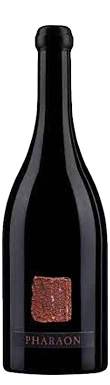

<p>Rich and heady aromas of blackberry, blueberry and flashy cedar, with pine spices and masses of dark chocolate along with a kind of liquid, crushed slate, then flexing more fruit-floral muscle with high-toned candied blueberries and violets. Utterly broad and expensive, with lush mixed berry fruit and cedar spices, all framed by satiny, featherweight tannins. The fruit builds from dark to light, turning red berry with splashes of cranberry and flamed orange peel on a spicy white pepper and fresh herb finish. Dave Phinney considers this wine a kind of Department 66 ‘Reserve’, in that it is a selection of the best barrels from any given vintage (some years, it is not produced).</p>
2019
Department 66Côtes Catalanes

L'Usine Cellars, Manqué, Mazis-Chambertin Grand Cru, Burgundy, France, 2017
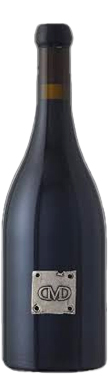
A really beautiful nose of wild strawberry, cherry and cardamom with pops of cedar. Shows remarkable restraint, with sappy tannins that possess excellent grip and vivacious acidity that maintains a thread of freshness. A touch of blood orange, clove, wood smoke and black tea on a long finish. Tightly knit, wound up and ready for a decade of ageing before the fireworks kick in. This is the second vintage of Dave Phinney's Mazis-Chambertin négociant project. Manqué is slang for the underdog.
2017
L'Usine CellarsMazis-Chambertin Grand Cru
Orin Swift, Burnt Sacrifice, California, USA, 2020
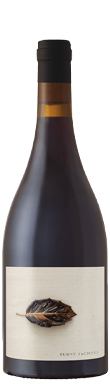
Following the 2017 fires in California, Dave Phinney worked with Gallo to create Burnt Sacrifice in partnership with the Napa Valley Community Foundation. Ripe brandied cherry, grapefruit, clove, smoke and cedar. Round and soft with bright, juicy red-toned fruits, a deep mineral mid-palate, good acidity, and a long finish marked by Provence herbs. 100% Pinot Noir aged 12 months in 25% new French oak.
2020
Orin Swift
Department 66, Others, Côtes Catalanes, Languedoc-Roussillon, France, 2018
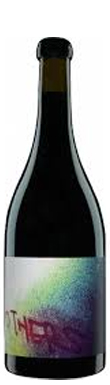
Brooding aromas of wet slate, tomato confit and boysenberry, along with lofty-turned earth notes and a pop of red leaf tea. Expansive on entry, with grainy tannins framing a plethora of red, black and blue-toned fruits, tinged with star anise, chocolate, black rum cake and a cedar-kissed finish. Balanced, expressive and layered. Tremendous value. While the D66 flagship label would be Grenache-focused, Dave Phinney and Richard Case had to figure out what to do with the ‘other’ Syrah, Carignan, and Petite Sirah grapes that they have planted on their property. This ‘Others’ is the answer. Leading with 65% Grenache, the rest is Syrah, Carignan, Mourvèdre and Lledoner Pelut.
2018
Department 66Côtes Catalanes
L'Usine Cellars, Sleepy Hollow Vineyard Pinot Noir, Monterey County, Santa Lucia Highlands, California, USA, 2018
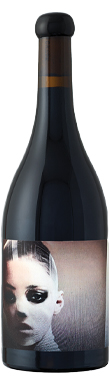
A Phinney fireworks display of brazen Pinot Noir with powerful aromas, enticing with sweet cherry fruit laced with cedar, cocoa powder, walnut husk and pine. Round, polished and lush fruit penetrates deep and lingers for a full minute after the black pepper and cherry compote. Strawberry-fig coulis resolves through burly tannin and woodsmoke. Velvety tannin is cloaked beneath a canopy of lush fruit.
2018
L'Usine CellarsMonterey County
Orin Swift, 8 Years in the Desert, California, USA, 2021
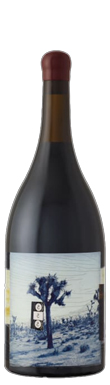
Overflowing with ripe, dusty red berry fruit, vanilla-tinged, turning to blueberry and revealing dried spices and a sandalwood touch. Full-bodied, silky and deeply fruited at first sip, turning to mixed berry compote, balanced by grippy tannins. This is juicy, and even at this alcohol level, it’s balanced and long.
2021
Orin Swift
Orin Swift, Mercury Head, Napa Valley, California, USA, 2019
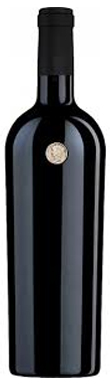
Produced only in the best vintages as a barrel selection. This vintage includes Cabernet Sauvignon from Stagecoach, Emerson Day, Morisoli Vineyards, and a splash of grapes from Gallo’s Monte Rosso vineyard. Heady strawberry accented with raspberry coulis, fragrant dried florals with vanilla, sweet cedar and coconut shavings. Voluminous with buoyancy and sweet dark fruit covering traces of underbrush, pine forest and chalky crushed minerals, framed by sappy tannins. Dark chocolate finish, long.
2019
Orin SwiftNapa Valley
Department 66, D66, Côtes Catalanes, Languedoc-Roussillon, France, 2018
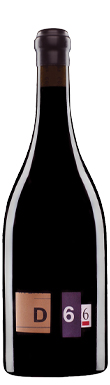
Dave Phinney’s Department 66 project is based in Maury, Richard Case and Bob Doyle running the winery in his absence. Some of the first vineyards Phinney owns, they have amassed about 120ha, built a winery, and have been up and running since 2009. This 2018 boasts raspberry cola, brandied cherry and rich cedar aromas and has voluminous body and weight. Dark sweet black fruit, salted milk chocolate, liquid slate, and a wealth of spices on a long finish.
2018
Department 66Côtes Catalanes
L'Usine Cellars, Annapolis Ridge Pinot Noir, Sonoma Coast, California, USA, 2018
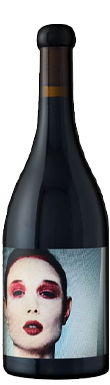
Offers sumptuous strawberry fruit, leather, boysenberry, forest floor and bay leaf aromas. Phinney’s knack for concentration is on full display in this medium- to-full-bodied Pinot which delivers inky black fruit that coasts over the palate, building tannins along with brown spices, cola, leather, pepper, charcuterie, and finishing in a deeply wooded pine forest. Annapolis Ridge Vineyard is a staple in Gallo’s J Vineyards portfolio, so with them as a partner, it’s no surprise Phinney desired to tap this marvellous high-elevation site with its Goldridge, fine sandy loam soils. Entirely destemmed and aged nine and a half months in French oak, 43% new. L'usine is French for 'the factory' and pays homage to ‘all the Andy Warhols of the world,’ in a nod to Phinney’s own obsession with avant-garde art. His first L’usine bottlings (2017 vintage) debuted in 2020.
2018
L'Usine CellarsSonoma Coast
L'Usine Cellars, Sta. Rita Hills Pinot Noir, Santa Barbara County, Sta Rita Hills, California, USA, 2018
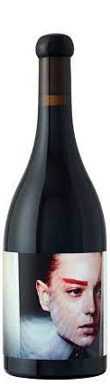
Elegant and lifted nose of vanilla, coffee, red cherry and cola. Creamy, with assertive tannins.
2018
L'Usine CellarsSanta Barbara County
Orin Swift, Abstract, California, USA, 2021
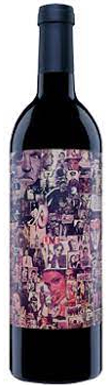
Black cherry and kirsch, with pronounced oak, vanilla and chocolate notes. Broad and mouthfilling, with a deep concentration of blueberry fruit, black currant, vanilla and mocha. Grippy, angular tannins resolve with good acidity and a lengthy finish of earth, chocolate and cedar. This label was first introduced after the Prisoner sale, having debuted in 2009. 'With over 75,000 square miles of California represented in this blend, it is a true amalgamation,’ says Dave Phinney. The blend for Abstract begins with Grenache, and then they weave in Syrah and Petite Sirah, but the combination and blend differ from year to year.
2021
Orin Swift
