Get our daily fine wine reviews, latest wine ratings, news and travel guides delivered straight to your inbox.
You are now subscribed
Your newsletter sign-up was successful
An account already exists for this email address, please log in.
Prosecco Superiore: One man’s mission to uphold a name
What is Prosecco Superiore DOCG, grown on the rolling UNESCO-status hills, doing to set itself apart from the commercially much more successful Prosecco DOC wines? We ask Diego Tomasi, director of the Conegliano Valdobbiadene consorzio.
In the beginning, there was only one Prosecco: Prosecco di Conegliano Valdobbiadene, recognised (initally as a DOC) by Italian wine law in 1969.
Served in households whose kitchen shelves boasted copies of late restaurateur Russell Norman’s Polpo, it broke into the UK as a cool, casual, unpretentious sparkling wine.
By the late 2000s, demand outstripped supply and in 2009, the original Conegliano Valdobbiadene region was elevated to DOCG status, along with neighbouring Asolo, while a new Prosecco DOC was created across a vast area of northeast Italy, running from Vicenza in the Veneto to Trieste on the Slovenian border.
Scroll down for Jason’s pick of Prosecco Superiore
Although the subsequent boom was good for producers in both zones, growers in the original heartlands are now increasingly concerned that their DOCG wines are being perceived as little more than higher-priced Prosecco DOC.
Enter Diego Tomasi, current director of the Conegliano Valdobbiadene consorzio, who has made it his mission to highlight the unique qualities of Prosecco Superiore DOCG and demonstrate what makes it truly superior(e) to Prosecco DOC.
Prosecco Professore
Quietly spoken and elegantly dressed, Tomasi brings with him a wealth of technical knowledge from a distinguished career in the prestigious Conegliano Scuola Enologica wine school.
Affectionately known as Il Professore, his work has demonstrated that complex soils, steep slopes, lower yields and hand harvesting make better wines.
Decanter newsletter
Get our daily fine wine reviews, latest wine ratings, news and travel guides delivered straight to your inbox.
‘Not all Prosecco is created equal,’ Tomasi says. ‘Prosecco Superiore comes from an old terroir. Glera is our indigenous variety and it has been here for 300 years. It is not like the DOC area, where other varieties were removed to plant Glera just because there was a market.’
Under Tomasi’s directorship, new initiatives are being enacted to distinguish Prosecco Superiore DOCG from the wines made on the plains, which are sold as Prosecco DOC.
It’s a challenge; consorzio data for 2023 show that the DOC produced 618 million bottles, overshadowing the DOCG’s 92.5m – meaning Prosecco Superiore is considerably harder to find than the ubiquitous Prosecco DOC.
Tomasi has devoted his professional life to this territory, however, and he is determined to try.
The Rive
Claudio Francavilla of L’Antica Querica
(Image credit: Credit Unknown)
One of his focuses has been the 43 Rive (pronounced ‘REE-veh’), created in 2009 when the DOCG was formed, and which currently make up about 4.2% of the vineyard surface.
All Rive wines must display both the name of the Riva and a vintage date on the bottle.
‘A Riva is a steep vineyard that has complex soils, lower yields and a unique microclimate,’ Tomasi says. ‘Only in these sites do we have the maximum expression of aroma.’
Demanding terrain
The vertiginous Rive vineyards are much less fertile than those on the DOC plains, meaning yields here are limited to a maximum of 13,000kg/ha, similar to (and in some instances, and particular sites, lower than) those in Champagne.
‘If you go over this, to 18 tonnes per hectare as in the DOC, you lose a lot of Glera’s flavour,’ Tomasi remarks. The landscape might be picturesque, but growing and harvesting grapes here is nothing short of heroic.
On these daunting slopes, it’s thought to take between 600 and 800 hours a year to work one hectare of vines, compared to about 150 hours on the mechanised DOC plains. Everything has to be done by hand and on foot, and vines are often planted on narrow, hard-to-work terraces less than a metre wide, known locally as ciglioni.
The value of the Rive isn’t just in terroir expression, but also as a focus for sustaining the agricultural heritage of the region.
‘The Rive express hard work, human tenacity, the beauty of the landscape and the union between the vine and its caretaker,’ Tomasi says.
A new approach
Anna Nardi of Perlage Winery
(Image credit: Credit Unknown)
Beyond the vineyards, Prosecco Superiore producers are exploring more ambitious methods of making their wines.
While most Prosecco DOC is bottled within a month or two of fermentation, producers in the DOCG are experimenting with keeping the wine in contact with the fermentation yeasts for longer.
Extended lees contact, from four to six months, can ‘create aromatic complexity, harmonise the flavours and enhance the creaminess of the bubbles’, according to Tomasi.
At Ruggeri, winemaker Fabio Roversi has been experimenting with extending lees contact from several weeks, which is typical, to several months or more.
‘At the end of secondary fermentation, we have a resting period of the wine in the autoclave for up to six months, which adds a delicate flavour of breadcrumbs and yeast,’ he says. ‘We want to show how Glera can evolve and gain complexity.’
Nearly all Prosecco Superiore is made using the Martinotti method, which requires a second fermentation under pressure in a specialised tank called an autoclave. This process was developed in Conegliano, and was at one point as unique to Prosecco as the traditional method was to Champagne.
Prior to the production of the first Martinotti-method Prosecco in 1939, the wines were made according to the ancestral method, involving a second fermentation in bottle.
But unlike the traditional method practised in Champagne (also a secondary fermentation in the bottle), ancestral method wines aren’t disgorged of their sediment or given a dosage (the addition of sugar solution before the bottle is resealed), leaving them cloudy and often bone dry.
Growing in popularity
Since 2019, this method has been sanctioned in the DOCG under the name sui lieviti (‘on the lees’). Although current production volumes are comparatively small, Tomasi notes that interest is growing, as the wines lend themselves more easily to pairing with food.
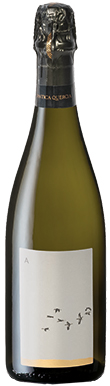
Sales of this style were up by 5% in 2024, to 157,400 bottles, according to the consorzio. Producers such as L’Antica Quercia (above) believe that sui lieviti Prosecco can mature and improve in the bottle, just like a still wine.
Its ‘A’ 2020 is a convincing argument for this style. Reevaluating the received wisdom on lees ageing has also led producers to question the assumption that Prosecco is best drunk in the first year after bottling.
‘Prosecco Superiore can evolve pleasantly over three to five years,’ Tomasi explains. ‘The result is a more grown-up, mature version.’
Some producers now hold wines back in their cellars to gauge the evolution in bottle, although the early signs are that the sui lieviti wines offer much more character after a few years than Martinotti-method Prosecco, due to the preservative qualities of the lees and Glera’s delicate nature.
Evolving styles & pairing with food
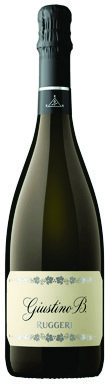
In the past, Prosecco Superiore was predominantly extra dry, with a dosage of 12-17g/L balancing out naturally high acids to give an off-dry sparkling wine. This remains the most popular style, accounting for more than half of production, and there are many superb examples, such as the Giustino B from Ruggeri.
But a warming climate has delivered lower acidities than in the past, meaning that – as in other sparkling wine regions – there has been a trend towards lower dosage and a drier style.
Today, brut (theoretically 0-12g/L, but typically not below 6g/L) and extra brut (under 6g/L) are growing rapidly in popularity; according to Tomasi, brut’s market share has risen from 20% in 2014 to 40% in 2024.
Over the same period, extra brut has risen to 3% from almost zero.
Andrea Miotto (second generation winemaker at Cantina Miotto) suggests: ‘Although the extra dry is better for an aperitivo, brut is something that matches well with small, simple dishes. Think about the traditional food of Venice and try sardines, crostini or baccala [salted cod], or even some risotto.’
The next generation
The DOCG’s Young Club with Diego Tomasi (front row, fourth from left)
(Image credit: Credit Unknown)
Looking to the future, Tomasi is especially proud of a new initiative called the Young Club, founded in April 2023 and designed to bring together younger generations working in the DOCG.
‘We rely on their desire to improve, their sensitivity to sustainability issues and their ability to embrace change,’ he says. More than 70 individuals under the age of 35 participate, and members hold a variety of roles in the wine industry.
Anna Nardi, director and brand ambassador at Perlage Winery – an organic pioneer – is part of the group.
‘We want to bring fresh ideas and identify areas for improvement,’ she says. ‘It’s inspiring to see young minds collaborating to nurture historic denominations, and refreshing to see competitors viewing one another as colleagues and, often, friends.’
The group’s objectives are to enhance quality, improve communication and increase sustainability. Research trips to Champagne and Franciacorta have been organised, and market research is being undertaken to find out how young drinkers feel about Prosecco Superiore DOCG.
What’s in a name…
But there is one final challenge for Tomasi. The contorted, syncopated vineyards of the DOCG heartlands seem to be reflected in its tongue-twisting name: Conegliano Valdobbiadene Prosecco Superiore DOCG – and that’s before you even add the name of the Rive.
Tomasi acknowledges that this creates the wrong kind of mouthful, even for native Italian speakers. Consultations are underway to find something catchier, without losing the word ‘Prosecco’, which has its historical origins in these hills.
It’s a slow process so, for now, the easiest way to rediscover the original Prosecco is to look for the ‘G’ in DOCG on the label, and experiment with the top-quality wines being produced under Rive designations.
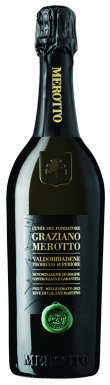
Graziano Merotto, Cuvee del Fondatore Rive di Col San Martino, Prosecco, Conegliano-Valdobbiadene Superiore Rive, Veneto, Italy, 2023
My wines
A subtle hint of shortcrust pastry sits comfortably alongside Golden Delicious fruit, with seamless texture and a dry finish with a low 6g/l dosage. A...
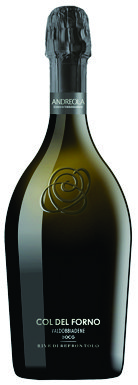
Andreola, Col del Forno Rive di Refrontolo, Prosecco, Conegliano-Valdobbiadene Superiore, Veneto, Italy, 2023
My wines
This Brut style offers up delicate mango and pineapple aromas with a winning combination of concentrated fruit, refreshing acidity, and tight, fine bubbles that glide...
L'Antica Quercia, A Sui Lieviti, Prosecco, Conegliano-Valdobbiadene Superiore, Veneto, Italy, 2020
My wines
With apple pie, nectarine and sourdough flavours weaving through fine bubbles, this has been mellowed by time in bottle but without losing freshness. It finishes...
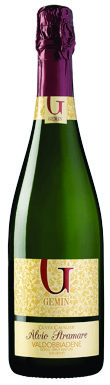
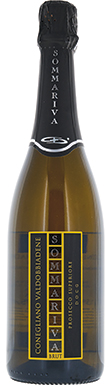
A well-balanced introduction to the fashionable Brut style, this avoids the neutrality of some wines in this category, delivering upfront aromas of crunchy green apple, white flowers and a teasing, cleansing line of acidity that is perfectly integrated with the 9g/l of dosage. It’s a compelling argument for trading up from Prosecco DOC, thanks to the extra level of finesse, freshness and integration on offer. It might just remind you of why you drank Prosecco in the first place.
Jason Millar is a freelance writer and consultant specialising in the wines of Italy and South Africa. He has worked in various roles in the UK wine trade since 2011, most recently as company director at London merchant Theatre of Wine from 2018 to 2023. In 2016 he won three scholarships on his way to attaining the WSET Level 4 Diploma, including The Vintners' Scholarship for the top mark of all graduates worldwide.