In 2015, top Piedmontese winery Gaja purchased 30ha at 650m in Trezzo Tinella, planting vines and building a new 250,000-bottle winery principally to vinify white grape varieties grown in the new vineyards.
While the new facility is only a 15-minute drive from Gaja’s 19th-century winery in the village of Barbaresco, the vineyards here can be as much as 4°C cooler.
Although the initiative is a response to the warming climate, it also represents a huge investment in the future of Piedmont’s white wines.
Scroll down for David’s pick of Piedmont’s white wines
Located in northwest Italy between the Alps and the Apennines, Piedmont is rightly associated with great red wines.
Ideal conditions for grape-growing are provided by the continental climate, with protection from the worst of the weather by the nearby mountains and a range of hills, mainly of marine origin.
Reds made with Nebbiolo, Barbera and Dolcetto are Piedmont’s best-known wines; however, a largely unnoticed feature in recent years is a significant increase in the plantings of white varieties.
The quality of Piedmont’s white wines made with the likes of Cortese, Arneis, Timorasso, Erbaluce and Nascetta is evident in the glass, supported by planting statistics that are the ultimate proof that producers see an important future for white wines in the region.
Decanter newsletter
Get our daily fine wine reviews, latest wine ratings, news and travel guides delivered straight to your inbox.
Sergio Germano, winemaker at Ettore Germano (pictured below), driven by his own interest in white wines, cites the importance of the technology that’s now available for making whites, including temperature control.
He notes that the new focus on white varieties chimes perfectly with the contemporary trend for drinking lighter, more refreshing and lower-alcohol wines.
(Image credit: Credit Unknown)
The big picture
In the period 2008-2024, according to the Anagrafe Agricola del Piemonte regional database, the total vineyard area in Piedmont remained relatively stable at around 44,500ha.
However, the area of red varieties fell by 11%, while that for white varieties rose by a remarkable 25%. As a result, white varieties increased from 31% to 40% of the total. Plantings of Nebbiolo (red) grew significantly, but it is the exception that proves the rule.
In fact, if plantings of Barbera continue to fall, the red variety will soon be overtaken by Moscato Bianco as the most planted variety in the region.
In terms of total hectares planted, Moscato Bianco is the uncontested queen of white varieties. With 10,425ha in 2024, it has more than three and a half times the plantings of the next most planted white variety, Cortese.
Nearly all of the Moscato grapes are used for tank-method sparkling wine – either Asti or Moscato d’Asti – although a handful of producers make dry, still Moscato wines, including newcomer Emanuele Gambino, who ages his in amphora.
Plantings of the variety have increased by 585ha since 2008, yet this only represents 6% growth; outside the top 10 for percentage growth.
Local heroes
Arneis is the biggest winner in terms of growth in planted areas, gaining 675ha since 2008 to 1,452ha. Of this, 920ha produces Roero Arneis DOCG. A short drive from the Langhe, Roero has distinctive sandy soils, perfect for Arneis.
Its popularity was established in the 1990s, when Barolo and Barbaresco producers led by Vietti and Bruno Giacosa adopted Arneis as their local white grape of choice. More than simply an early-drinking thirst quencher, Arneis is capable of extended ageing.
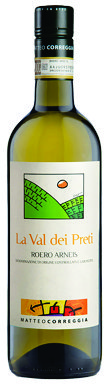
Matteo Correggia produces a Riserva-category Arneis from old vines. Sealed under screwcap for freshness, it is released with six years of bottle age. Similarly, Angelo Negro has a bottling released after seven years called Sette Anni.
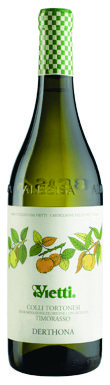
Timorasso is the Piemontese grape currently on everyone’s lips. It has seen the second-largest percentage increase in area and is the rising star of Piedmont’s white wine scene. From a base of just 45ha in 2008 (and a meagre 6ha as recently as 2000), it now accounts for 478ha of vineyard.
Of these, about 400ha are in the previously unfashionable Colli Tortonesi, according to the local consorzio, and this has attracted attention from important Barolo and Barbaresco producers in recent years, including Vietti and Oddero.
The latter has invested in 3ha in Monleale, where Walter Massa revived the fortunes of the variety in the late 1980s and 1990s.
Isabella Oddero (pictured below) couldn’t be more effusive: ‘In our personal experience, we can say that the Timorasso grape grown in the Colli Tortonesi area is a great local variety and has huge potential in terms of complexity, bottle ageing, evolution and elegance.’
Fresh and concentrated on release, Timorasso shows its real quality after three to four years in bottle, developing a remarkable array of Riesling-like petrol aromas alongside herbal and dried stone fruit notes.
In the last decade and a half, Cortese has grown by 260ha to 2,776ha, of which 60% is used for Gavi DOCG. The region’s vineyards have grown considerably from an
initial 250ha when it was made a DOC in 1974.
An inexpensive and popular wine in both the on- and off-trades, achieving higher quality requires lower yields and intensive canopy management.
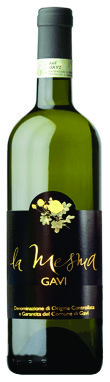
It is only then that wineries can create Gavi with a real sense of place and with the quality to age in the bottle, as with La Mesma’s Etichetta Nera 2014.
Isabella Oddero
(Image credit: Credit Unknown)
International flavour
Among the international varieties, Chardonnay is by far the most significant; its 1,371ha of vineyard represents a 42% increase since 2008. Much of the region’s Chardonnay is bottled as either Langhe Chardonnay or Piemonte DOC, while the remainder is blended into Alta Langa Viognier DOCG, a traditional-method sparkling wine of rapidly growing importance.
Long-term enthusiasts for Chardonnay include Gaja, with its much-admired Gaia & Rey bottling. In Barbaresco, Ca’ del Baio produces three styles: a wine from younger vines, aged only in stainless steel; another from older vines, which goes through malolactic fermentation and is aged in oak; and a new wine fermented and aged in oak.
In 1996, Matteo Correggia planted Sauvignon Blanc in Roero because he loved the variety. Since 2008, plantings across Piedmont have more than doubled to 260ha.
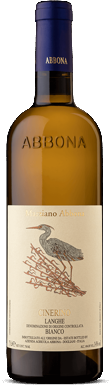
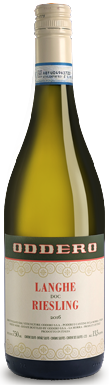
Furthermore, among other international varieties, Viognier and Riesling have increased from just 0.6ha and 18ha respectively in 2008 to 151ha and 78ha in 2024. Viognier is increasingly being seen as a good match for Piedmont’s warm growing season.
Examples to try include Marziano Abbona’s version from Dogliani.
(Image credit: Credit Unknown)
New names to intrigue
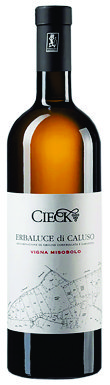
Erbaluce, planted around Caluso, three-quarters of an hour northeast of Turin, has grown by 65% to 373ha in the last decade and a half.
Historically, this great variety was used mostly for making sweet passito style or late-harvest wines, but today, most Erbaluce wines are dry, with some traditional-method sparkling wine also being made.
Erbaluce’s restrained but subtle aromatics – crisp green apple, lemon and florals – combined with its high acidity make the grape suitable for all three styles, as demonstrated by Cieck’s wines.
While Nascetta has attracted a great deal of attention in recent years, it hasn’t seen the same level of increased plantings as some of the other white varieties. From a tiny base of just 7ha, it now stands at 68ha.
One reason for its relatively slow growth is that it is strongly associated with the Barolo region, in which it competes directly for vineyard space with the much-in-demand Nebbiolo.
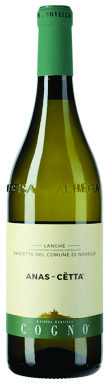
Valter Fissore of Nascetta-pioneer Elvio Cogno explains its appeal: ‘Even if it is a niche wine, more and more wine professionals and wine lovers are discovering and becoming more passionate about Nascetta.
‘Every day, we receive positive feedback and compliments for the high quality of this white wine, which is recognised as one of the great white wines of the Langhe.’
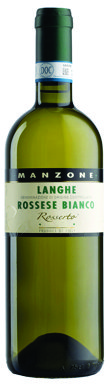
There are several other, even rarer white varieties, such as Baratuciat and Rossese Bianco, that may begin to gain traction in Piedmont in the future.
One thing is clear: while drinkers will undoubtedly continue to treasure the region’s great red wines, there are more and more reasons to reach for the highly characterful, distinctive white wines of Piedmont.
And the real focus of interest should be the indigenous varieties, especially Timorasso, Nascetta and Erbaluce.
They may be new names to learn and new wines to seek out, but they will certainly reward the adventurous drinker.
Elvio Cogno, Anas Cëtta, Langhe, Nas-cëtta del Comune di Novello, Piedmont, Italy, 2023
My wines
Half made in stainless steel and half in cask, it has elegant aromas of tangerine, ripe stone fruit, sage and acacia flower. It's fairly full-bodied...
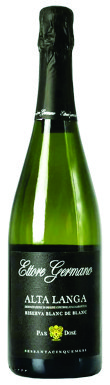
Ettore Germano, Riserva, Alta Langa, Piedmont, Italy, 2017
My wines
Intense aromas of lemon zest, toast, hazelnut and honeyed hints introduce a lean and elegant body which finishes long and dry, with stony and citrus...
La Mesma, Etichetta Nera, Gavi di Gavi, Piedmont, Italy, 2014
My wines
Complex aromas of white flower, apricot and mushroom describe a mature wine with a long finish, yet the freshness and racy acidity suggest this still...
Matteo Correggia, La Val dei Preti Arneis Riserva, Roero, Piedmont, Italy, 2018
My wines
Gold tinted, it has an intriguing nose of pear, dried white fruits, and a hint of tertiary earthiness. It's characterised by mild-mannered acidity and a...
From fruit grown in Monleale – the top Timorasso village – a slow fermentation in ceramic vessels, oak casks and stainless steel tanks yields a very...
Deep lemon in colour, it offers ripe apricot and pineapple fruit with some herbal overtones. Full-bodied and quite luscious before a dry, refreshing citric finish....
Precise lime, herb and white peach aromas introduce a medium body with ripe fruit, bright acidity, stoniness, and a refreshing finish. Grown in a northwest-facing...