Revisiting Languedoc’s Château d’Aussières
Ahead of Château d'Aussières' first release on the Place de Bordeaux, Andrew Jefford returns to the Domaines Barons de Rothschild estate in Languedoc’s Corbières to rediscover the story and taste the wines.

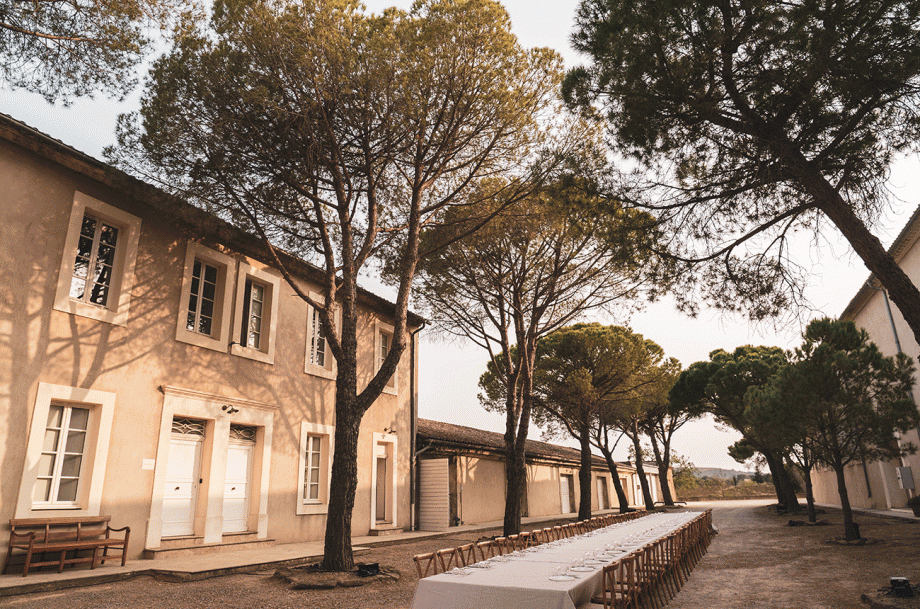
In 1999, an unlikely love story was kindled. Baron Eric de Rothschild of Lafite-Rothschild felt a coup de coeur – a sudden passion – for a property in Languedoc’s Corbières: Château d’Aussières (170 hectares of vines amid 600ha of garrigue and mountain forest).
The matchmaker was the French bank Crédit Agricole. ‘My father,’ says Saskia de Rothschild, Baron Eric’s 36-year-old daughter and today the president of Domaines Barons de Rothschild, ‘is very much someone who works in the spirit of intuition and coups du coeur. It’s his way of handling things. He fell in love with the rough kind of nature there and its extraordinary, atypical potential.’
Scroll down to see Andrew Jefford’s tasting notes and scores for six Château d’Aussières wines
It’s an intriguing site – likely much older as a vineyard than Lafite itself. Lafite (according to Jane Anson’s thoroughly researched Bordeaux Legends) was first planted with vines between 1670 and 1680. Aussières, by contrast, lies within easy reach of the first Roman colony in Gaul: Colonia Narbo Martius, founded 1500 years earlier, in 118 BCE. It was Narbonne (the colony’s modern name) which revealed to the Romans just how well-suited Gaul was to viticulture.
Narbonne’s rapid vineyard development underscored, too, the Gaulish thirst for wine: the competition between Italian exporters and local producers was soon intense, and provoked legislative intervention from Rome. The 5th-century Gallo-Roman aristocrat, poet and bishop Sidonius Apollinaris, visiting a villa near present-day d’Aussières, praised the fields, watercourse, vineyards and olive groves with which it was surrounded.
Further centuries of pre-Lafite viticulture followed. Aussières lies underneath the Massif de Fontfroide in a long, secluded, funnel-shaped valley of enormous appeal to shy yet canny monastic eyes; the Abbaye de Fontfroide was founded in 1093. Initially a Benedictine monastery, it became Cistercian between 1144 and 1145 before eventually becoming ‘national property’ at the time of the French Revolution. This magnificent building still exists, its size and grandeur attesting in part to its agricultural wealth.
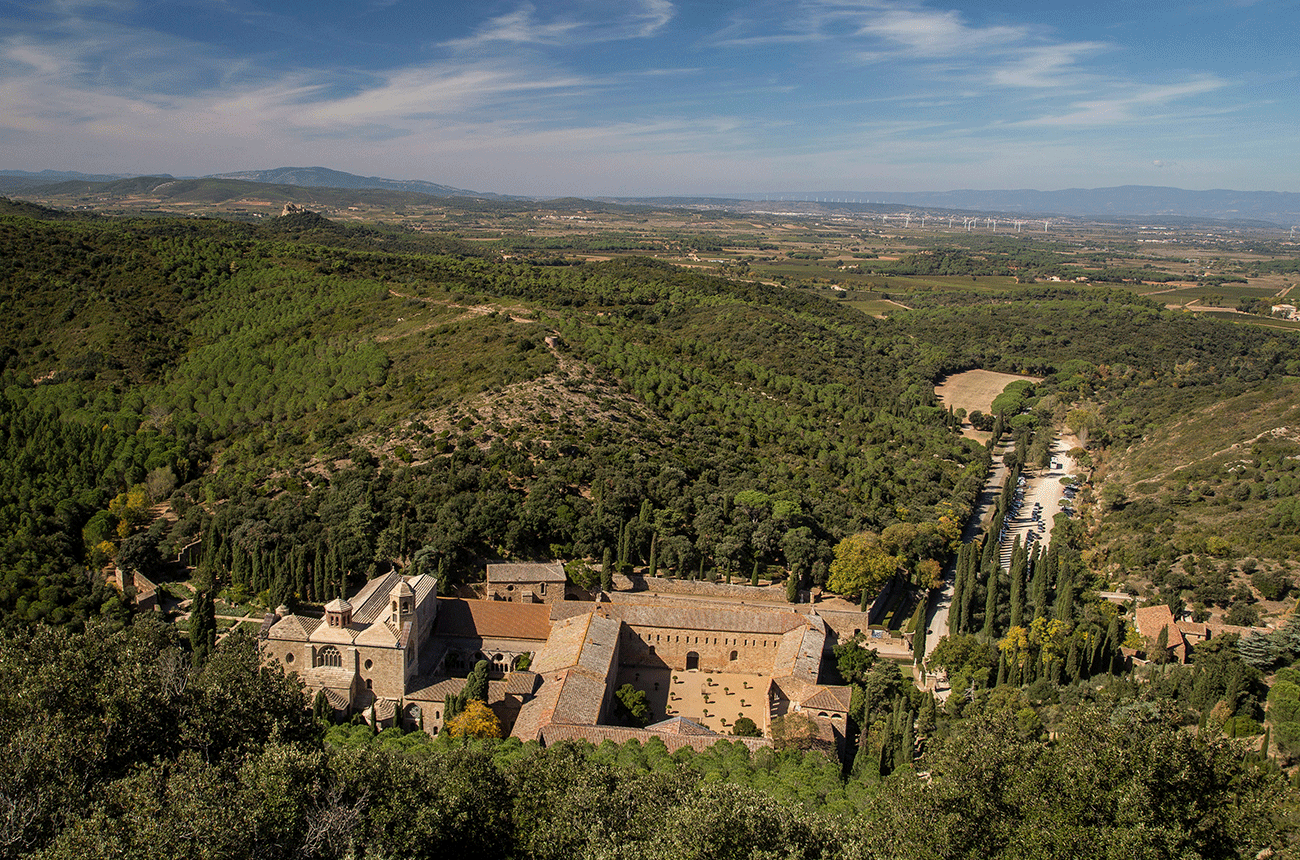
Jean de Roquefeuil, the former director of Château Rieussec and, since March 2023, Château d’Aussière’s new director, considers that his new charge ‘must have been a significant part of the Fontfroide farmland’ – and a quick look at the map shows why. The Abbey itself is nestled away in a secluded retreat inside the Massif, surrounded by high hills, while the main swathe of productive lands in the Fontfroide valley stretches from Aussières off to the southwest via St Julien de Septime. The main route to Narbonne, too, passes Aussières.
Indeed nowadays the A61 – the Autoroute des Deux Mers linking Narbonne and the Mediterranean to the Atlantic – provides most of the estate’s northern boundary, its traffic all too clearly visible from the vineyards. Why didn’t Domaines Barons de Rothschild plant trees to screen it? ‘We did,’ said Jean de Roquefeuil. ‘But they broadened the motorway and tore them all down.’ More tree planting is planned.
In the 19th and early part of the 20th century, Aussières was a hamlet, with a little school, chapel, laundry and communal dining room: there’s plenty of space, and a substantial group of buildings which were in poor shape when Baron Eric bought the property. Potential for vineyard tourism facilities? Perhaps. Since purchase, though, the Rothschilds have concentrated on production. An astonishing 2.5 million bottles of wine a year left Aussières prior to COVID, and Jean hopes to exceed 2 million again this year. Unlike its Bordeaux cousins, Aussières has a bottling line. Château l’Evangile bottles for two days a year; Aussières sometimes bottles twice a week. This makes Aussières one of the most significant wineries in Corbières, though much of its wine is IGP. ‘We have the chance here not just to make great wine,’ says Jean de Roquefeuil, ‘but to make thirst-quenching wine, too.’
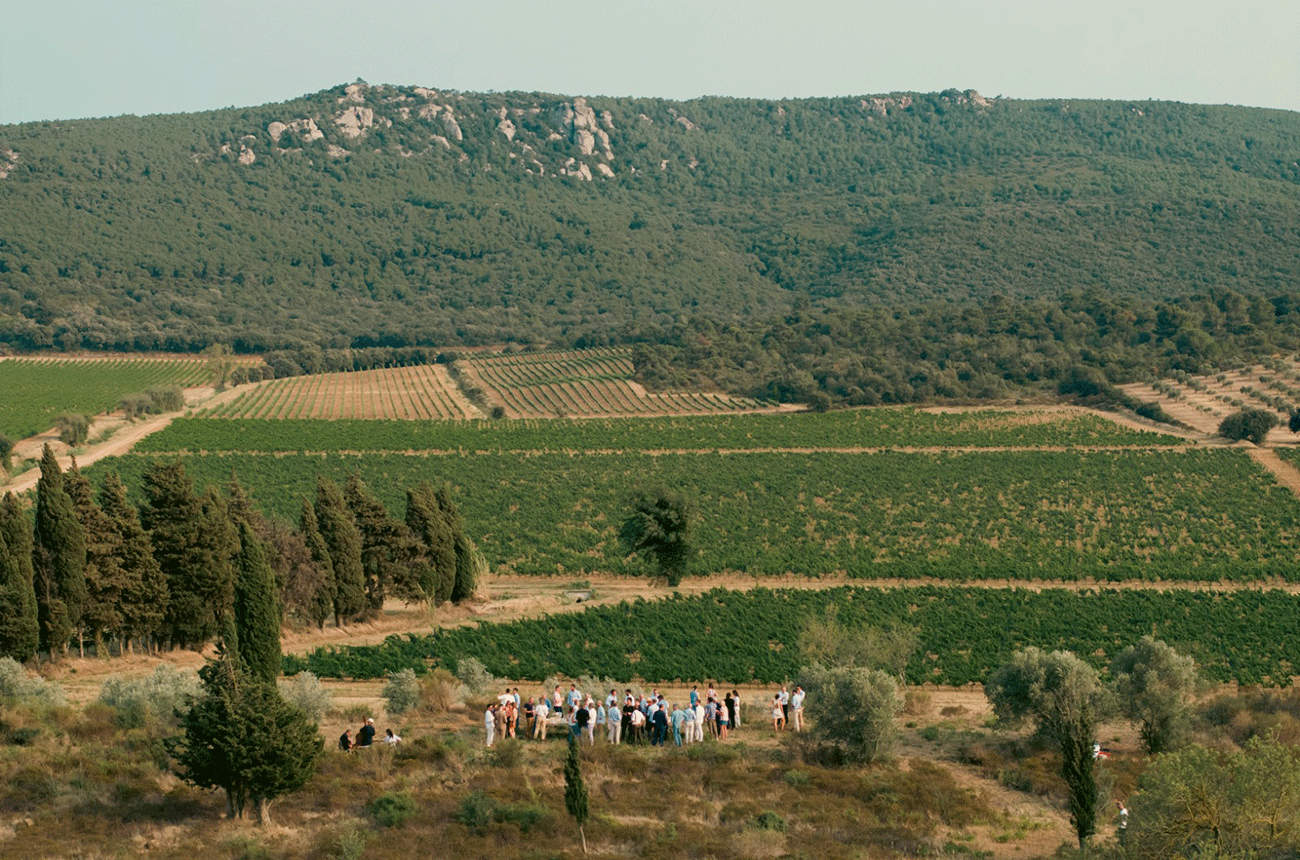
How important is the Corbières identity to Aussières, and will much be made of this when the Château d’Aussières 2019 is finally launched as part of the 2023 September releases on to the Place de Bordeaux? Jean says that the team is conscious of its Corbières identity, and points out that Aymeric Izard, the director-before-last who was running the estate when I visited in 2016, was a local (indeed Izard’s father is the long-time mayor of Villeneuve-lès-Corbières).
Being a contributing part of an appellation is a concern of Saskia de Rothschild’s. ‘We’re Corbières,’ says Jean, ‘but above all we’re Fontfroide, our little valley’ – thereby drawing attention to the fact that the valley is a much cooler location than most of Corbières. ‘We’re blocked off to the south by the Massif and much more open to the north, to the wind which comes down from Carcassonne. It’s almost always 2 to 3°C cooler here than elsewhere in Corbières.’ Indeed this is a site where Grenache actually struggles to ripen satisfactorily. Long-term cellarmaster Mathieu Mocquet has only harvested in August once, and immediately stopped because of rain; the harvest (by machine except for those Carignan bunches destined for carbonic maceration) usually finishes in October. The site can be vulnerable to frost: d’Aussières lost 70% of its crop in 2021.
Given that Aussières is already distributed globally, I wondered what practical difference having the top wine sold through La Place was going to make. Jean gave me two answers, the second of which was unexpected. ‘It will help distinguish the grand vin from the rest of the range. It will also give us the chance to refocus a bit on the local market.’ Aussières at present is rarely seen on sale in Languedoc, since this is not a key market for Domaines Barons de Rothschild’s existing distribution channels, but La Place sells extensively within France as well as on export markets, and the wine will now be there for all professional buyers (supermarkets included) to source if wished. Interestingly, the labels have been updated; you can no longer see a link (via script, illustration and five-arrow motif) with Lafite, Duhart et al. The new version features illustrations by Saskia’s mother, Beatrice.
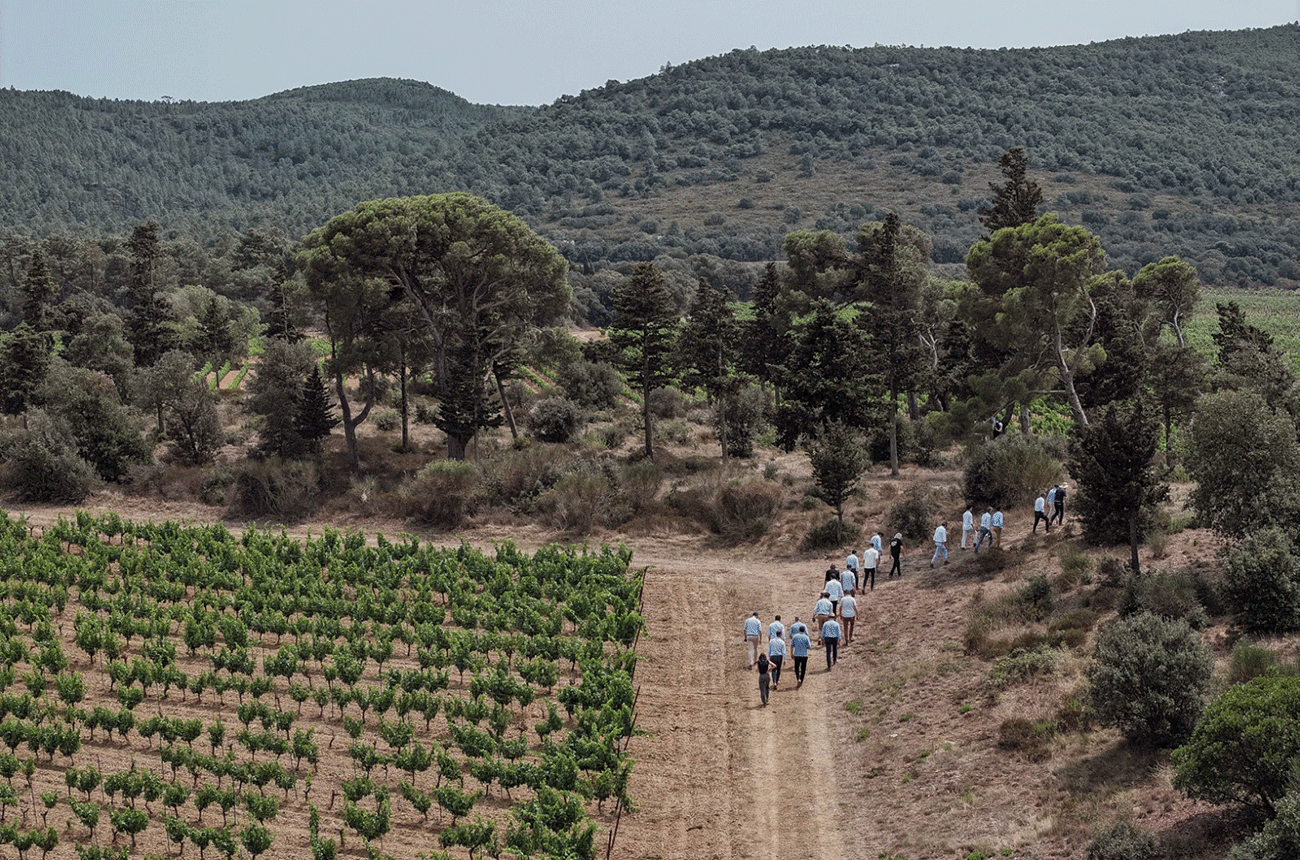
Tasting notes for six wines (all of which are made from estate fruit alone) are given below. I asked Jean de Roquefeuil if there was any expectation that Aussières should fit into a particular style or play a special role within the Domaines Barons de Rothschild profile. ‘No,’ he replied, ‘there’s no influence from Bordeaux; we don’t work with Eric Boissenot [the long-term Lafite consultant] but rather with Marc Dubernet [a leading Narbonne consultant] – in fact now with his son Matthieu, for the assemblages. There’s no requirement to have something that fits into a range; no need to trim our sails.’
When asked about the key qualities of Aussières, both de Roquefeuil and Mocquet stress ‘freshness, drinkability and exuberance’ – and claim that when all the different wines of Domaines Barons de Rothschild are opened and offered together, the Aussières is not infrequently finished first.
I didn’t note any change of aesthetic tempo since I last tasted in 2016 (though the 2018 is, as so often elsewhere, a powerfully styled wine); instead the wine seems to have grown a little in concentration and poise as the vines have aged and the plantings have been refined. There are more characterful and wilder Corbières wines than this – but the deepening Languedoc wine tradition needs classicism and elegance, too. Aussières opens the door to that.
Andrew Jefford tastes six Château d’Aussières wines
Related articles
- Jefford on Monday: One from the heart?
- Place de Bordeaux March 2023 releases: from 100-point Napa to Italian gems
- September releases on the Place de Bordeaux 2022
Château d’Aussières, Rosé d'Aussières, Corbieres, Languedoc-Roussillon, France, 2022
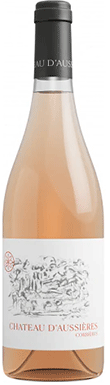

This is the third vintage of rosé from Aussières: a blend of 76% Grenache and 24% Syrah, macerated for between three and six hours before being directly pressed. It’s petal-pink in colour, with sweet, creamy, delicate, softly peachy aromas. The impression that you’re about to taste a Provence-style rosé ends when you sip, though: the coolness that slides off Fontfroide at night is evident in the wine’s pungent acid structure and bright energy, almost as if it was a Languedoc echo of Sancerre. Red-wine fruits (as much redcurrant as strawberry) combine with white-wine energy and shape.
2022
Château d’AussièresCorbieres

Château d’Aussières, Corbieres, Languedoc-Roussillon, France, 2018
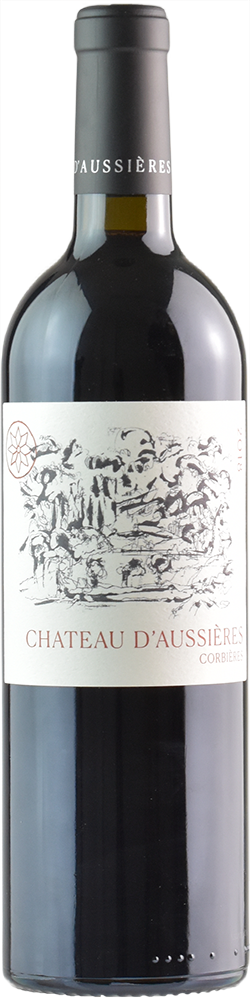
The 2018 vintage wasn’t, in fact, quite as extravagantly warm in Languedoc as it was in other regions; nonetheless there’s no mistaking the solar force in this blend of 76% Syrah with 24% Mourvèdre. It’s still almost saturatedly black-red, with exotic, fleshy aromas of bramble-scented fruits freshened with a little pine. This sturdy, rich, impressively textured Aussières has denser tannins and (I’d guess) more copious extract than its peers; more alcoholic wealth, too. The fruit of two higher-sited, clay-soiled parcels of Syrah help bring freshness, though.
2018
Château d’AussièresCorbieres
Château d’Aussières, Corbieres, Languedoc-Roussillon, France, 2014
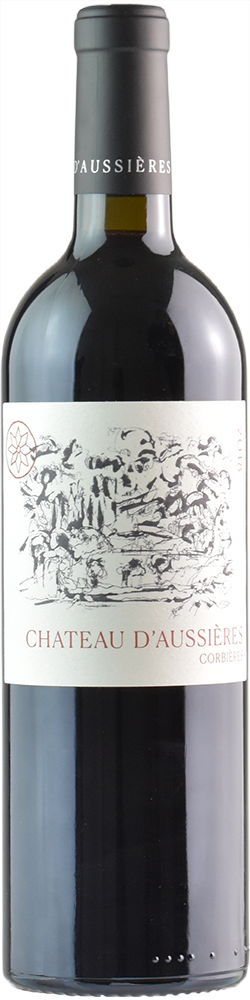
This vintage had mellowed since my last visit, with some beefy, meaty aromatic notes joining the attractively rounded fruits. The blend here brings 57% of Syrah together with 17% of Grenache, 10% of Mourvèdre and 16% carbonically macerated Carignan. The palate is more substantial than in 2013 and the acids a little less insistent and more successfully bonded with the fruit; there are, too, more of the refreshingly aromatic bitter notes often called herbal (thyme and rosemary) in Languedoc wines.
2014
Château d’AussièresCorbieres
Château d’Aussières, Altan d'Aussières, Corbieres, Languedoc-Roussillon, France, 2021
This new wine is named after a wind that blows in from the Mediterranean, cresting the massif before fanning down on the valley below. It sometimes brings fine weather (the ‘white’ Altan) and sometimes wet (the ‘black’ Altan); the wine was created to show off Aussières’ Carignan fruit when vinified by carbonic maceration (the blend is 37% Carignan, 36% Grenache, 20% Syrah and 7% Mourvèdre). Frost took 70% of the crop in 2021, but the remaining fruit was high in quality. This is dark black-red in colour, with sweet, alluring scents of dark berry fruit and a swirl of chocolate. As with the rosé, the palate is brighter, zestier and more impactful than the nose suggested: smooth, refreshing and quenching. An expression of Fontfroide more than Corbières in general.
2021
Château d’AussièresCorbieres
Château d’Aussières, Corbieres, Languedoc-Roussillon, France, 2013
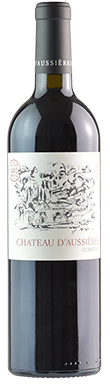
Jean de Roquefeuil and Mathieu Mocquet wanted to show two of their preferred older vintages during this tasting (about 600 bottles are reserved for longer ageing every year), and this vintage presented itself more attractively than when I tasted back in 2016. The blend combines 70% Syrah with 18% Mouvèdre and 12% Grenache. Look out for plums, currants and unlit tobacco-leaf notes in a lively, brisk, poised style; the extra cellar years have brought a mellow aromatic warmth to upholster those fruits.
2013
Château d’AussièresCorbieres
