
Rhône discovery: 10 exciting producers to know
Ready to expand your wine horizons? Look beyond the well-known estates and renowned appellations, and you’ll uncover the hidden talents of the Rhône. Matt Walls highlights 10 of his current favourite producers in the region and explains what makes their wines so special.


Sometimes I come across estates whose wines are so good that I can’t believe they’re not better known.
Usually it’s because they’re from obscure appellations, or simply because these vignerons are more focused on making the wine than marketing it.
Here are 10 domaines that I’ve been enjoying recently, all of which make beautiful wines that speak not only of where they’re from, but also bear the unmistakable imprint of the hands that made them.
Scroll down to see tasting notes and scores for Matt’s producer picks: 10 exciting Rhône wines
Cave Julien Cécillon – St-Joseph

After working in wineries in South Africa and California (where he met his wife Nancy Kerschen), Julien Cécillon, along with his family, eventually returned home to the northern Rhône.
His roots go deep here – he is one of a long line of vignerons, and his uncle is winemaking legend Jean-Louis Grippat – but his experience abroad has helped develop a style that is somewhere between traditional and modern. In the 10 years that Cécillon’s estate has been up and running, it has gained a reputation for dependable wines from around the southern pole of the northern Rhône, made both from vineyards he’s acquired himself and from bought grapes.
He now makes St-Joseph, Crozes-Hermitage, Cornas, St-Péray and a range of impressive Vin de France varietal wines. Kerschen has also started making wines under her own L’Etrangère label, and her first wine, a 2018 Syrah Vin de France, proves that Cécillon’s not the only winemaking talent in the family.
Domaine de Gouye – St-Joseph

The village of St-Jean-de-Muzols has long been considered one of the best terroirs in St-Joseph. This is where Philippe Desbos tends his 4ha of vines. His father planted most of the vineyard in the 1950s and 1960s, positioning the rows to be worked by horse.
Desbos’ obliging steed Ramses still pulls the plough today. He makes his wines ‘as close to the terroir as possible’, he says, ‘like how my father used to make’. He still uses the same press, in fact, which is now over 150 years old.For the press to function properly, he has to use whole bunches, resulting in an eminently traditional style of wine. His red St-Joseph Vieilles Vignes is fragrant and as authentic as you could hope for.
A small proportion spends two years in old barrels for his Vieilles Vignes 24 Mois en Fûts, resulting in a more complex, richer style. He also makes a little white wine.
These are not the most refined or polished St-Josephs. And they’re all the better for it.
Domaine Gallety – Côtes du Vivarais

Does describing Domaine Gallety as ‘the best estate in the Côtes du Vivarais’ smack of faint praise? If so, it isn’t meant to – the Gallety family might be based in a little-known sector of the southern Rhône, but they’re making wines that wouldn’t look out of place in a line-up from a much grander appellation.
We’re at the southernmost tip of the Ardèchehere – a hotbed of creativity – still in the southern Rhône, but only just. Alain Gallety and his son David-Alexandre are making a tight range of red wines, all blends of Syrah and Grenache, that combine classicism with flair. Stylistically, if you imagine a cross between Lirac and Cornas, then you’re getting there.The organically farmed vineyards surround their farmhouse, just a stone’s throw from the Rhône river.
Picked by hand, the grapes tumble straight into the cement tanks under their home for fermentation, before being matured in neutral oak for up to two years. A personal favourite is the Domaine Gallety Rouge, an inexpensive wine that neatly illustrates their style and can age for a decade.
Their Syrah-heavy La Syrare needs a decade to develop, but when ready it can go head-to-head with heavyweights from the northern Rhône.
Domaine Gramenon – Vinsobres & Valréas

In 1978, Michèle Aubéry-Laurent and her husband Philippe Laurent bought a run-down farmhouse and vineyards in a village called Montbrison-sur-Lez in the remote northeastern reaches of the southern Rhône. They had three children. Michèle was a nurse, Philippe made organic wine – he was an early pioneer of natural wine, in fact. When he died unexpectedly in 1999, it was up to Michèle to pick up the vines and the children and raise them all single-handedly.
Today she works together with her son Maxime-François Laurent, making wines from biodynamic vineyards scattered close to their home in unfamiliar appellations such as Côtes du Rhône Villages Valréas and Vinsobres.
Some of their best wines are bottled under AP Côtes du Rhône. Though they make enjoyable whites and even sparkling wines, their speciality is old-vine Grenache. They create beautifully crafted wines that tell vivid tales: wines like tapestries.
In the UK, Domaine Gramenon remains something of an insider’s secret, but it’s time it was more widely recognised for what it is: one of the best, most soulful estates of the Rhône Valley.
Domaine Chaume-Arnaud – Vinsobres

The appellation of Côtes du Rhône Villages St-Maurice is almost extinct. Aside from the local cave cooperative, just two producers bottle any wine under this name; one of them is Domaine Chaume-Arnaud.
Most of what Chaume-Arnaud makes is Vinsobres, however – a more familiar name, but appellations like these still serve more as bushel than lighthouse. I can think of no other reason this estate isn’t better known, since its wines are so reliably good.
It is now in the hands of Thibaud Chaume, whose parents Philippe and Valérie converted the estate to biodynamics in 2003, achieving certification in 2009.
Their St-Maurice is wild and mouthfilling, their Vinsobres more refined and refreshing thanks to 20% Cinsault in the blend. Their Vinsobres La Cadène, containing more Mourvèdre, is deeper and more ageworthy. And their white wines are as good as their reds.
For a more detailed profile of this under-the-radar domaine, as well as tasting notes and scores for more of its wines, click here.
Domaine Laurent Habrard – Crozes-Hermitage

It’s inevitable that very large appellations have some quarters that are more favourable than others. So it is with Crozes-Hermitage. Most of the land consists of a succession of deep alluvial terraces, and these soils can produce concentrated, expressive Syrahs. But there’s a chunk of granite at its northerly apex – the historic heart of the appellation – that delivers wines of real finesse.
This is where Laurent Habrard is located, in the village of Gervans. The eponymous winemaker farms the land organically, and is now incorporating biodynamic methods as well. He has a little of both types of terroir, and in blending them together makes some of the best red and white Crozes-Hermitage, vivid and precise wines of great balance and drinkability.
He occasionally selects particular barrels for longer élevage, naming them after members of his team. These are particularly worth looking out for – wines with personality in more ways than one.
Rotem & Mounir Saouma – Châteauneuf-du-Pape

Even the most traditional wine regions need to evolve, and it’s often newcomers who bring new ways of thinking. But as the price of vineyard land rises in famed appellations such as Châteauneuf-du-Pape, it becomes more difficult for outsiders to gain a foothold. Such appellations risk resting on their laurels – so thank goodness for Rotem and Mounir Saouma.
The success of their Burgundy négociant house Lucien Le Moine has allowed them to invest in vineyards; they chose to focus on Châteauneuf.
Mounir is interested in ancient ways of making wine and does things his own way. For reds, he opts for a two-week cold maceration and long, slow fermentations; he then ages the wines in barrel or amphora for up to five years – no racking, pumping, fining or filtration.
Sulphite additions are late and minimal. Omnia is a blend from across their nine lieux-dits, but the pinnacle of the range is Arioso, a pure old-vine Grenache from lieu-dit Pignan. Their white Magis is just as distinctive, tight and focused.
These are among the appellation’s most engaging wines.
Domaine Moulin-la-Viguerie – Tavel

If you don’t consider yourself a big fan of rosé, you might be forgiven for skipping over this entry. It’s all they make in Tavel, after all. But what is more important for a wine, its colour or its terroir? Luckily for Tavel, it’s the latter.
Gaël Petit of Moulin-la-Viguerie points out that Tavel was historically famous for making pale red wine, not rosé; there is no mention of colour on the labels of his Tavel, which pours the colour of a pale Pinot Noir.
‘Along the way, we forgot how to make wine,’ he says of Tavel. He’s starting again from scratch, and early signsare promising: his 2017, 2018 and 2019 are all complex, individual, food-friendly wines. Petit is one of a growing band of low-intervention winemakers, including Domaine l’Anglore and Clos de Grillons, that are signalling a renaissance for Tavel.
Rather than sticking rigidly to appellation rules, they let the land guide their winemaking decisions, resulting in some unforgettable wines. Sometimes being colour blind is a blessing.
Domaine le Sollier – Duché d’Uzès

Is this the most remote estate of the Rhône? At about 80km west of Châteauneuf-du-Pape, it’s certainly one of them. I’ll admit that, knowing little about the producer, I was tempted to strike it off the itinerary during a day’s exploration of the new Rhône Valley appellation Duché d’Uzès (first awarded AP status with the 2012 vintage). But I’m so glad I didn’t.
Domaine le Sollier is situated on the very western edge of the southern Rhône, into the foothills of the Cévennes near the town of Monoblet. The 12.5ha estate has been in the Olivier family for three generations, but they’ve only been bottling their own wines since 2006, and have been certified organic since 2015.
Their intention is to create wines with the least intervention possible.Most of their wines are bottled under IGP Cévennes, which gives them flexibility with grape varieties and blends.
They grow Grenache and Syrah, but also a plenty of Cinsault and Alicante Bouschet for the reds; Viognier, Roussanne, Chardonnay and Vermentino for their whites.
They bottle some Syrah-based wines under AP Duché d’Uzès, including Les Linthes (80% Syrah,20% Grenache), a deeply mineral style of red Rhône with a straightness and freshness that’s rare in the southern Rhône.
Domaine du Chapitre – St-Andéol

Domaine du Chapitre’s St-Andéol is the kind of understated wine that doesn’t try to catch your eye in a line-up, but it’s one you find yourself going back to at the end of a tasting and wanting to drink. It’s a wine that has something to say for those prepared to listen.
For such a self-assured wine, I was expecting it to be the product of centuries of gradual nipping and tucking, but the Dorthe family have only devoted their land to wine since the 1970s.
It’s the culmination of two factors that have helped to propel them forward: a new generation and a new appellation.
Frédéric Dorthe joined the domaine in 2000 after studying in Beaune and training in Côte-Rôtie and Condrieu, and the birth of new local appellation Côtes du Rhône Villages St-Andéol in 2017 has helped generate a renewed focus on quality and terroir here.
From Dorthe’s range, it’s the piquant red Domaine du Chapitre that places me immediately in this southern tip of the Ardèche, and his aromatic white Vin de France Exsultate is just as memorable.
A pick of each: Walls’ top 10 exciting Rhône wines
You may also like
Matt Walls’ hidden gems: Domaine Burgaud, Côte-RôtieWalls: Why Syrah is the most adaptable grape in the worldCornas 2019: Report and top scoring wines
Domaine Moulin-la-Viguerie, La Combe des Rieu, Tavel, Rhône, France, 2019
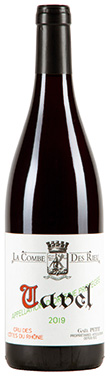

Very dark, more a pale red than a rosé. Medium-bodied. Acidity is low but balanced. There’s a gentle tannic pull and a good sense of...
2019
Domaine Moulin-la-ViguerieTavel

Rotem & Mounir Saouma, Arioso, Châteauneuf-du-Pape, Rhône, France, 2010
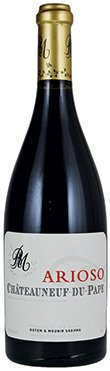
Very deeply coloured, with powerful, strict tannins, deeply mineral. At 10 years, it’s starting to show its potential. I enjoyed it, but this will be...
2010
Rotem & Mounir SaoumaChâteauneuf-du-Pape
Domaine Gramenon, L’Emouvante, Côtes du Rhône, Rhône, France, 2019
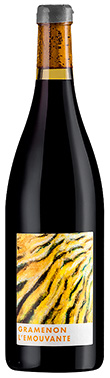
Like a kind of southern Rhône Cornas, this has electric waves of black olive, bay leaf and gentle smokiness; no overt reduction, really alive and...
2019
Domaine GramenonCôtes du Rhône
Domaine Gallety, La Syrare, Rhône, France, 2017
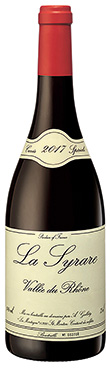
Brambly and pure, with a hint of smoky reduction for now, and a meaty back- note, like medium-rare steak. Great tannic finesse, and freshness at...
2017
Domaine Gallety
Domaine Laurent Habrard, Valérie, Crozes-Hermitage, Rhône, France, 2016
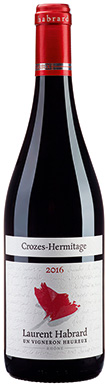
Fresh and curious nose of iodine, bottled ink, cherry stones and blackberries. Beautifully fine, close-knit warp of tannins, like fine Italian fabric. Perfectly balanced, beautifully...
2016
Domaine Laurent HabrardCrozes-Hermitage
Domaine de Gouye, Vieilles Vignes, St-Joseph, Rhône, France, 2018
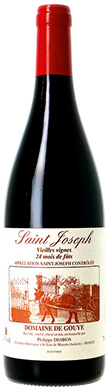
Finely fragranced, with intense violets, black cherry and pink peppercorns. Light-bodied, but no lack of intensity and a gently textural grip. No overt oak or...
2018
Domaine de GouyeSt-Joseph
Domaine Chaume-Arnaud, Vinsobres, Vinsobres, Rhône, France, 2017
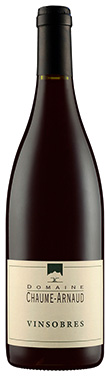
From a pebbly, clay-limestone slope at 250-420m, the hand-harvested fruit is destemmed and fermented with indigenous yeasts, then matured for 20 months in concrete. Plum,...
2017
Domaine Chaume-ArnaudVinsobres
Domaine du Chapitre, Côtes du Rhône Villages, Rhône, France, 2017
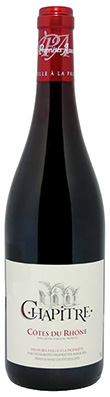
Darkly coloured but not opaque, with brambly fruits on the nose underscored by Szechuan pepper. On the palate, it is rounded and elegant, spicy again,...
2017
Domaine du ChapitreCôtes du Rhône Villages
Domaine le Sollier, Les Linthes, Duché d’Uzès, Rhône, France, 2018
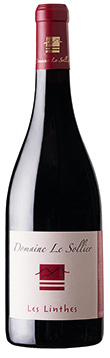
Appealing cherry, fresh aromatics and a slight earthy, cranberry note; some pine needles in the background. Light- to medium-bodied, quicksilver on the palate, super-fresh, with...
2018
Domaine le SollierDuché d’Uzès
Cave Julien Cécillon, Babylone, St-Joseph, Rhône, France, 2018
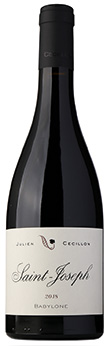
An intriguing mix of Old World elegance and New World polish. Gentle spiciness and a sunny generosity on the palate, but well balanced for the...
2018
Cave Julien CécillonSt-Joseph
