
Riverland revival: Australia’s forward-thinking region
Long misunderstood and underrated, South Australia’s vast Riverland wine region is enjoying a renaissance thanks to its drought-resistant alternative varieties and old-vine plantings. Cassandra Charlick meets some key producers and recommends 15 exciting wines to buy.


Once the domain of bulk wine and the workhorse of the Australian wine industry, the Riverland is the country’s largest GI (Geographical Indication) by tonnage, responsible for a third of the total annual crush.
While quantity is still viewed as a key marker in this South Australian region, 200km northeast of Adelaide, the quality of alternative grape varieties and old-vine plantings are turning heads, playing a key role in the increasing demand for Riverland fruit by boutique producers.
Scroll down for tasting notes and scores of 15 exciting Riverland wines
Old vines and new varieties
‘This property is 100 years old, and at 70 years old these are some of the oldest vines in the Riverland,’ says Ashley Ratcliff of Ricca Terra. Ratcliff, who purchased the estate with his wife Holly in 2003, is passionate about both old vines and drought-resistant Mediterranean varieties and is one of the major players in the Riverland revival.
The backbone of the region’s history is the Soldier Settlement scheme, instigated after World Wars I and II, where returned servicemen planted some of the Riverland’s first vineyards. In 2019 he created a range of wines called Soldiers’ Land ‘to preserve this history and these vines’.
Saving them from being grubbed up or abandoned ‘we’re slowly reconverting the vines by hand picking and hand pruning with the idea that they will age well past a century’.

Ratcliff’s focus is also on shifting the dominance of varieties such as Cabernet Sauvignon, Shiraz and Chardonnay – vast, heavily cropped plantings destined for bulk wine – to alternative grapes better suited to the Riverland’s warm, arid climate.
This idea was formed back in the mid 2000s at Yalumba in the Barossa Valley, where he worked for more than 13 years. ‘We could see the pending climate-change issues even back then and we thought, what else is out there? Let’s look at different varieties.’
Today Ratcliff grows 1,800 tonnes of grapes, of which about 40% are alternative varieties; Fiano, Vermentino and Nero d’Avola are the main ones but there are 30 in all. And inspired by the success of Ratcliff’s own premium wines – he uses just under 300 tonnes of fruit for Ricca Terra (‘rich earth’) – boutique producers across South Australia are clamouring for the farm’s top-quality fruit.
Taking risks
And it’s not just Mediterranean varieties that Ratcliff and others are experimenting with. It’s the techniques too. He pulls his 1971 Dodge truck up to a long row of vintage drying racks. ‘Almost every property has them kicking around,’ he says. ‘Remember, this was originally sultana country.’
However, what he’s got on the racks is much more exciting than table grapes: they’re heaving with Zibbibo, air-dried in the sun for 35 days. ‘The only way to learn is to do it yourself,’ he says of the experiment. ‘I don’t know anybody else making a straw wine in Australia.’ watch this space…

The cost of land is more affordable in the Riverland than in other South Australian GIs, enabling smaller producers to risk-take with unknown varieties and styles. However, the real shift required for the long term is one of external perceptions.
‘I’m fortunate that our business is doing well because we’ve gone down the track of having alternative varieties,’ says Ratcliff.
‘We have 35 growers involved in Terra Vino, our grape-trading business, and about 45 winemakers buying the fruit. There’s a huge future for the Riverland, but it’s all about mindset.
‘There is a preconceived view that the region just makes bulk wine [for wines usually labeled as from South Eastern Australia]. But it has the capacity to produce serious wine too,’ Ratcliff emphasises. ‘Growers need to break away from this mentality that it’s easiest for them to sell off their fruit to the big wineries or to pull up their old vines.’
Rethinking Australian viticulture
Brendan and Laura Carter from Unico Zelo have worked closely with Ratcliff since they started their brand in 2013. ‘The concept behind Unico Zelo was trying to make the most Australian wine we possibly could,’ explains Brendan.
‘Too often we miss seeing wine as something that can connect us to the land. So, our premise was, if we were to rethink viticulture in Australia, how would we go about doing that?
‘We realised that if we use water as the limiting resource around the question of what should we plant where, and why, that leads us down the path of grape varieties that typically come from really warm places.’

Consequently, Fiano and Nero d’Avola are the heroes in the Unico Zelo portfolio, the Carters’ success down to them flipping the narrative around from ‘what can we sell’ to ‘what can we make and then educate the market to enjoy’.
It’s all down to logic, says Brendan. When considering grape varieties suitable for the Riverland that means ones with great natural acidity that can deal with heat and less water, with the fruit picked when it has reached the right pH rather than the right sugar level.
‘Australia is a big place; we can’t all make great Shiraz,’ he states.
‘It also doesn’t add up stylistically: 75% of wine produced in Australia is red yet 78% of wine consumed is white. That means most of the wine that’s made in Australia is not made for Australians. Can you imagine that happening in France?’
Farming sustainably
While organics are still in the minority in the Riverland, the low risk of disease and pest pressure does lend itself to the practice.
Jenny and Eric Semmler of 919 Wines have farmed organically since purchasing their property in 2002. They met while studying winemaking and fell in love over a shared passion for fortified wines, which was the deciding factor in which varieties to plant – largely Spanish and Portuguese.
‘We look after the soil because we know that healthy soil is vital for farming,’ explains Jenny as we walk through the vineyard. ‘So the cover crop suppresses weeds. It shades the soil in summer, knocking about 15°C or 20°C off the soil temperature.
‘A lot of places around here have bare soil in summer, which is just the worst thing as the vines cook from underneath.’

She stops mid-conversation and looks up, beaming. ‘That’s very special. It’s one of our kites. We’ve had up to 37 bird species here because we encourage biodiversity.’
Great wine is impossible without passionate people, and there’s an evident love of the Riverland by those that make wine here. And like Ratcliff at Ricca Terra, the Semmer’s love extends to saving the region’s old vines.
The couple managed to gather up Palomino cuttings the day the vineyard supplying them with fruit was pulled out. ‘Suddenly, we became custodians of one of the very last remaining patches of this grape variety in Australia,’ recounts Jenny.
It was a passion project; their solera-crafted Pale Dry Apera made from those grapes had never been financially viable – that is until it won a major award in 2011. Jenny tears up. ‘I still get the shakes when I talk about it. We’re just this tiny little producer.’
Taking Riverland to the world
In addition to a growing presence throughout Australia, the export market has been a key driver in the premiumisation of the Riverland.
Unico Zelo and Ricca Terra have importers in major markets such as the UK and US, as do wineries that champion Riverland fruit, such as Thistledown, founded by British Masters of Wine Giles Cooke and Fergal Tynan.
Another distinctive Riverland label on international shelves is that of Delinquente Wine Co, made by Con-Greg Grigoriou. A fourth-generation wine grower, born and raised in the Riverland, Grigoriou says he has seen a considerable shift in the region since he started making wine in 2014.

He was initially drawn to crafting Riverland wine in a style that he enjoyed drinking: ‘lighter, fresher and alive’. And It was clear early on that consumers were looking for this style too.
‘It’s allowed us to grow and assist with controlling the Riverland narrative through being able to tell our story,’ Grigoriou explains. ‘Commercially, the wines offer incredible quality and value for money at an appealing price point.
‘We’ve been able to grow the export side of the business through just fielding inquiries. I also think there’s a lot of interest the Riverland because it is, for all intents and purposes, new for people.’
Brendan Carter of Unico Zelo agrees. ‘The Riverland is one of the most fascinating places to make wine. What’s more new and interesting than crafting wine in the most sustainable way from what is the hottest, most unsustainable place in Australia to do it!’
Riverland: the facts
Area under vine 22,032ha from a total GI of 4,105 km2
Producers About 30 wineries and more than 1,000 grape growers
Altitude 0-99m
Rainfall 148mm
Soils Varied over a region of this size. The river valley has of loams and clays from the flood plain of the Murray River. Higher ground is slightly undulating Mallee landscape, with windblown sands over layers of lime and clay.
Climate Continental; this is semi-arid inland Australia. Long sunshine hours and little humidity mean low disease pressure.
Grape varieties There are more than 85 planted, but the main ones are Cabernet Sauvignon, Merlot, Chardonnay and Shiraz plus white and red Iberian, Italian and other Mediterranean alternative varieties.
Rise of the Riverland: 15 top wines to try
Related articles
919 Wines, Reserve Sparkling Durif, Riverland, South Australia, Australia
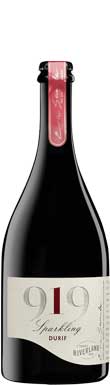

Sparkling red wine isn’t an Australian proposition, but sparkling red wines that involve bold and tannic grapes are. It’s not every day you see a...
919 WinesRiverland

Delinquente, Screaming Betty Vermentino, Riverland, South Australia, Australia, 2022
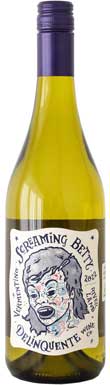
Organic and biodynamic, wild fermented in stainless steel with four weeks on fine lees. An impactful nose of concentrated green pineapple, lemon pith, cheesecloth and...
2022
DelinquenteRiverland
Ricca Terra, Vermentino, Riverland, South Australia, Australia, 2022
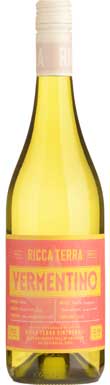
Hand-pruned and hand-picked from a single vineyard and fermented with natural yeast. Everything you want from a Vermentino: a jumble of sea spray, crisp citrus...
2022
Ricca TerraRiverland
Delinquente, Hell Macerato, Riverland, South Australia, Australia, 2022
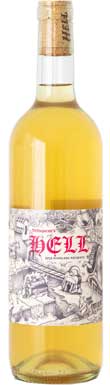
Arinto and Malvasia fermented separately on skins for two weeks, before being combined on skins for another three weeks then pressed to old oak. The...
2022
DelinquenteRiverland
Thistledown, Gorgeous Grenache Blanc, South Australia, Australia, 2022
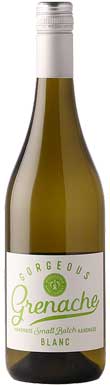
A blend of mature Riverland and biodynamic McLaren Vale fruit, whole-bunch pressed and oxidatively handled before wild fermentation in concrete and older oak. The nose...
2022
Thistledown
Unico Zelo, Esoterico, South Australia, Australia, 2021
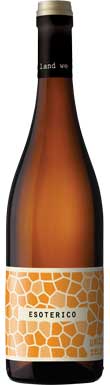
92
You couldn’t include more aromatic varieties in a blend if you tried. A mix of Riverland and Clare Valley fruit. It’s like throwing your head deep into a bouquet of spring blooms: rose petals, lime blossom, lemon sorbet, lime marmalade, lychee and a touch of dried mint. The bone-dry palate is juxtaposed with a savoury, briney, skinsy texture followed by a refreshing finish thanks to a vivacious acid line. Campari, dried orange rind, lemon juice and pith and a slight gasoline note. It grows on you with each sip. A quirky, interesting wine. Good length too and really comes into its own with food – try fried halloumi.
2021
Unico Zelo
Unico Zelo, River Sand, Riverland, South Australia, Australia, 2022
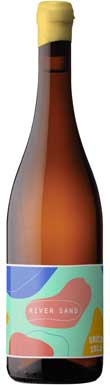
Well, this is pretty! Super aromatic, with waves of lemon sherbet, heady jasmine florals, peardrop boiled sweets and a slight cut hay grassiness. All underpinned...
2022
Unico ZeloRiverland
Ricca Terra, Soldiers’ Land Shiraz, Riverland, South Australia, Australia, 2022
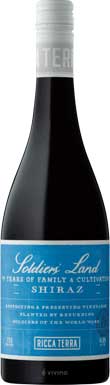
You can’t help but be drawn in by this nose. Generous fruit, handled carefully and displaying itself with decorum and class. Bright on entry, new-season...
2022
Ricca TerraRiverland
Ricca Terra, Soldiers’ Land Grenache, Riverland, South Australia, Australia, 2022
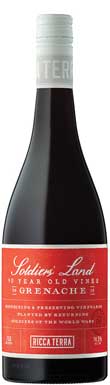
A testament to the power of preservation and legacy, made from 91-year-old vines planted by returned soldiers from World War I. Ricca Terra’s vision is...
2022
Ricca TerraRiverland
Ricca Terra, Nero d’Avola, Riverland, South Australia, Australia, 2022
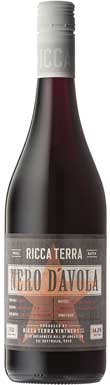
This water-saving grape is Ricca Terra's flagship variety. The nose is dense and a little closed now – understandable given its youth. But on the...
2022
Ricca TerraRiverland
Delinquente, Roko Il Vagabondo Montepulciano, Riverland, South Australia, Australia, 2022
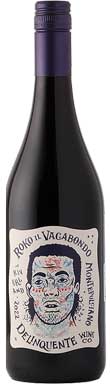
From two parcels of organic Riverland fruit harvested about a week apart. Vibrant aromas leap from the glass: red liquorice, bright redcurrant, hibiscus, aniseed and...
2022
DelinquenteRiverland
Thistledown, Gorgeous Grenache, South Australia, Australia, 2021

Fruit from Riverland and McLaren Vale vineyards vinified separately using wild fermentation and whole-bunch inclusion. Bright red fruit aromas with a lifted pepper note. The...
2021
Thistledown
Unico Zelo, Fresh AF, Riverland, South Australia, Australia, 2022
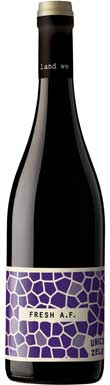
A pretty, if slightly restrained nose. The Zibibbo florals leap through the dusky, brambly red varieties like a stripey jumper in a 'Where’s Wally' scene....
2022
Unico ZeloRiverland
919 Wines, Reserve Pale Dry Apera, Riverland, South Australia, Australia
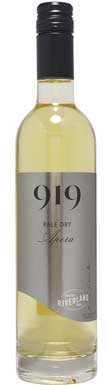
A true solera wine with plenty of delicious nutty flor notes. Wave after wave of brine and meaty salted green olives waft from the glass....
919 WinesRiverland
919 Wines, Reserve Classic Topaque, Riverland, South Australia, Australia
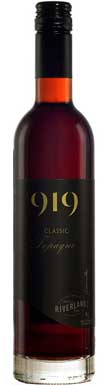
It’s clear that an expert hand is behind the fortified wines at 919. The heady nose is full of rich toffee, burnt butter, caramelised bananas,...
919 WinesRiverland
