
Sherry country’s quiet revolution


Sarah Jane Evans MW is excited to witness a quiet revolution in Jerez, driven by outside investment, a renewed focus on terroir and the development of different wine styles...
In the sunshine of Jerez, within the city’s historic Alcázar fortress, a remarkable sherry tasting took place last summer. Entering the Mezquita inside – the mosque that was turned into a church in 1264 – I had no idea of the significance of what was to unfold. The Mezquita is small, circular and very picturesque, but not the easiest venue for a tasting. Never mind, we were engrossed. At the end, there was a prolonged ovation: not the typical reaction to a wine tasting.
Scroll down for Sarah Jane Evans MW’s pick of new-wave Jerez wines
In retrospect, that tasting at Vinoble, the biennial trade fair for fortified and sweet wines, was another turning point in sherry’s variegated history. All those of us packed into the room on that day want sherry to reclaim its place as one of the great wines of the world. However, the last 30 or more years of decline have seen wheat fields replace vines on those precious chalky albariza soils.
The event was, put simply, an exposition of research that explained the different vineyards or ‘pagos’ of the sherry zone: the Marco de Jerez. Each taster was given a box with 12 soil samples; each sample showing subtly different versions of albariza soil. With the geological treasure box came wines to taste from the pagos, and a presentation about the geography, climate, people and history of each of these special vineyards.
The tasting was almost forensic in its thoroughness. The presenters were Ramiro Ibáñez and Willy Pérez. Their names have become strongly linked in the revival of Sherry, but they could not be more different as people. Someone later described them to me as ‘Burgundy’ and ‘Bordeaux’.
Want to visit Jerez? Read our weekend guide here
Forces of change
Ibáñez, from Sanlúcar de Barrameda, is the silent one, the consultant winemaker who has moved his work to focus on an ever-closer expression of the pagos, working both with other growers and bodegas, and on his own account with the Cota 45 wines. Pérez is the great communicator, from the family winery Luis Pérez. He has been an exceptional positive force, spreading the understanding of the pair’s joint researches into Jerez history and Sherry’s old ways, and pushing boundaries within the historical constraints of the Sherry world. In some cases the door was ready to be pushed wide open. In other areas there has been some resistance.
What does the change in Sherry amount to? Well, at the heart of it, not much apparently. After all, the main categories of Sherry continue. To be sure, there have been tweaks over recent years. En rama Sherry, bottled (almost) directly from the cask, has become a seasonal event. Special selections – an idea led by Equipo Navazos with its negociant business of numbered bottlings of selected casks – are produced by a number of bodegas today. Antonio Flores at González Byass manages the Palmas range, an annual selection of four wines of increasing age, from the Tio Pepe solera. And Paola Medina at Williams & Humbert has been bottling vintage finos (two words that are rarely seen in the same sentence), with further innovations planned.
Meanwhile, Peter Sisseck of Dominio de Pingus in Ribera del Duero has invested in Sherry, resulting in a beneficial and positive wave of attention for Jerez. With Carlos del Río González-Gordon, his business partner from Hacienda Monasterio (also in Ribera del Duero), Sisseck bought the Fino Camborio solera of Angel Zamorano from Juan Piñero and a 10ha vineyard in the pago of Balbaína.
The connections in the fine wine world of Sherry are close: consultant winemaker Ibáñez has been supervising the solera in recent times. To walk into the little bodega now is to be charmed. It’s a perfect match of historic white-walled bodega, but scrupulously tidy, with all the necessary technical kit. Sisseck is in no hurry to rush out his first vintage, much as we may be keen for him to do so.
Sherry or not?
These, though, are Sherries. What is discernible more recently is a trend towards what might be called ‘not-Sherries’. These are wines from the Marco de Jerez that are not fortified to the minimum 15% alcohol. They are made from the Palomino grape, grown in the famed albariza pagos, and fermented in stainless steel or cask. Many grow a light layer of flor in the relatively short time they are in cask – enough to make a significant change to the palate structure and aromatics.
In addition, the traditional asoleo practice – drying grapes on straw mats in the sun – has been reintroduced. The idea is not to raisin the grape, but to introduce sufficient sugar in it to increase the alcohol level. I can remember long ago seeing grapes spread out on the ground in the vineyard to dry, but the quick and easy process of fortification supplanted that practice. In years of high demand, this was the way to achieve a consistent product.
As I say, not all of this ‘innovation’ is unthinkable to the regulators. César Saldaña of the Consejo Regulador tells me that the board of the consejo has already agreed to modify its requirements. ‘Sherry is by definition a vino de licor [liquor wine] and in our case, this makes fortification compulsory.’ He adds: ‘These non-fortified Sherries obviously require alternative techniques in order to reach the minimum 15% alcohol: specific viticultural techniques to concentrate sugar levels in the grapes, which result in very low yields, and sun-drying or asoleo.’
As regulations currently stand, producers such as Luis Pérez and Williams & Humbert cannot currently claim that their wine is unfortified. To be Sherry a wine needs fortification, even if only minimal. It’s a requirement that should disappear when formal approval comes through.
Not all is plain sailing – non-fortifed/non-aged wines are still being discussed at board level. They also need to sort out the difference between a local white wine from the Vino de la Tierra de Cádiz, and a non- fortified white ‘Sherry’. Perhaps the difference will be flor-ageing, but nothing is certain.
Overall, Saldaña sees consensus for the acceptance of change. This new category of wine needs to reflect the region so, he suggests, there could be a place for the varieties that were once significant but were abandoned after phylloxera: Beba, Cañocazo, Castellano, Mantúo, Melonera, Perruño and Vigiriega (and possibly others).
Style innovations
There are a number of other players in this new/old world, some returning to wine styles similar to the 19th-century favourite known as vino de pasto. Eduardo Ojeda at Grupo Estévez introduced Ojo de Gallo, with its light layer of flor, under the Valdespino label in 2015. Then in 2017 he launched José Estévez Albariza, a lighter style, its name obviously laying claim to the local terroir.
Montserrat Molina at Barbadillo has a huge wine range under her remit, from popular to treasure-trove; Mirabrás is among the innovations in her portfolio. Working with her is Armando Guerra, who is closely in touch with a new generation of wine-growers, from Primitivo Collantes to Alejandro Muchada of Muchada-Léclapart. They can often be found bringing bottles to taste and discuss in Guerra’s bar, Taberna der Guerrita, in Sanlúcar de Barrameda.
The energy is palpable. Ojeda in particular could be forgiven for being a little world-weary at this sudden ‘discovery’ of unfortified wines under flor. After all he is also the winemaker behind Equipo Navazos, the business that he started with Jesús Barquín. Was he the first with flor wine? ‘Yes. We had the idea in 2007, and the first wine of this type was the joint venture with Dirk Niepoort – Navazos Niepoort – which was launched in 2008,’ he says. ‘Later we made Florpower in 2010. Since 2011 we have made OVNI, including a Pedro Ximénez and a Palomino Fino, lightly marked with flor. Logically, Navazos Niepoort 2008 marks the before and after of this trend and is the most representative. Everything since has been as a consequence of that wine,’ he adds.
Its influence has travelled abroad. From New Zealand to Argentina – as well as France’s Jura region – there are winemakers who are fascinated by flor and its effect on a wine. Jerez – and the traditional wines of Andalusia – need to make sure that they retain the moral rights, the ‘ownership’ of flor.
In context
For Ibáñez, it’s important to understand Sherry in the context of 3,000 years of winemaking. ‘There was the period of aromatised wines – with honey, herbs and so on – in ancient times, through to the system of criaderas and soleras, to post-phylloxera Jerez and down to the wines we have today,’ he says.
The consejo’s Saldaña points out that Jerez lost many varieties after phylloxera. What fascinates him and illuminates the quality of his wines is what he refers to as, ‘the circle of soil-plant-grape-wine-bottle, with man and all his idiosyncrasies – political, family, religion, diet, lifestyle’. He says: ‘I call it “vinodiversity” and it’s what explains the differences, such as differences between Sanlúcar and Jerez.’
What caused the emotion at the Vinoble tasting is that Ibáñez and Pérez were putting Jerez back in touch with its own soul. The Burgundians have known and celebrated their terroir for several hundred years. In Spain, Priorat and Bierzo have been leading the way in soil studies. This tasting was a way of putting into public ownership some of the knowledge retained by growers or capataces (the cellarmasters). The small-scale and the artisan have become a requirement of so many wine lovers. This tasting and the research behind it gave Jerez the chance to celebrate the fact that it can produce world-class wines from a distinctive terroir.
There’s a word of caution from Ibáñez, however. ‘While we have seen en rama wines, aged Sherries, emerge, what we are missing is any quality differentiation except that of old wines,’ he says. ‘I have an image of my ideal Jerez bodega, based on only 25%-30% of existing Sherries – only those of the highest quality – and the remainder would be young wines.’ He adds that he would like: ‘A kind of Port/Douro way to classify the wines, plus a Jura model to give a pyramid of prices.’
The last word should go to an outsider, someone drawn to fino as a great white wine. At the time of his purchase in Balbaína, Sisseck said: ‘Jerez’s great pagos have long been clearly defined, but no one has paid attention to them for years. That’s something we want to change.’ This is significant. The pagos have never been forgotten in the region. Sisseck’s arrival has given the Marco de Jerez a renewed impetus to talk up its treasures, not only in its wine, but also in its vineyards.
Sarah Jane Evans MW is DWWA co-Chair and author of The Wines of Northern Spain
See also:
Rioja 2010 panel tasting results
Top Seville restaurants and wine bars
Bodegas Callejuela, Blanquito, Manzanilla, Jerez, Spain
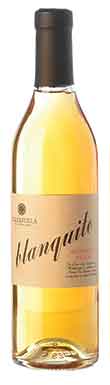

Yes, this is actually Sherry. But the Callejuela brothers are significant to this story – local growers whose wines were brought to a wider public...
Bodegas CallejuelaManzanilla

Bodegas Barbadillo, Mirabrás, Cádiz, Spain, 2016
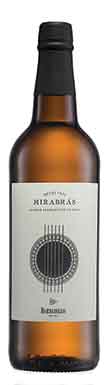
Grapes briefly sun-dried, fermented in manzanilla casks. After time on lees, 18 months in stainless steel with flor. Shows the camomile and brioche of manzanilla,...
2016
Bodegas Barbadillo
Bodegas Cota 45, Ube Miraflores, Cádiz, Spain, 2015
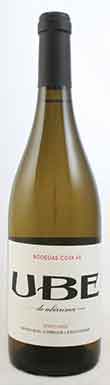
Part of a series of wines by Ramiro Ibáñez made from some of the great pagos. This has a significant quantity of grapes grown on...
2015
Bodegas Cota 45
Muchada-Léclapart, Vibrations, Cádiz, Spain, 2016
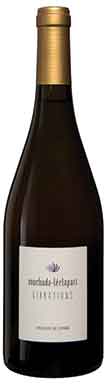
A biodynamic Champenois combining forces with an Andaluz former architect. Five days of skin contact elicit a spicy, textured wine, with suggestions of oranges on...
2016
Muchada-Léclapart
Equipo Navazos, La Bota de Florpower 77, Jerez, Spain, 2015
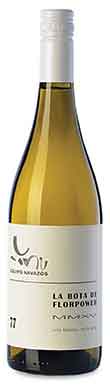
The grandparent of many subsequent flored Palominos. Delicately aromatic, as you would expect of an unfortified manzanilla, but more powerful, with chalky notes. Distinctive style.
2015
Equipo Navazos
Bodegas Hidalgo, Las 30 del Cuadrado, Jerez, Spain, 2016
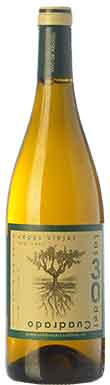
A fascinating collaboration: well-known Riojan Basilio Izquierdo fermented the Palomino from El Cuadrado vineyard in manzanilla casks and left it on its lees for six...
2016
Bodegas Hidalgo
Bodegas Forlong, Blanco, Cádiz, Spain, 2017
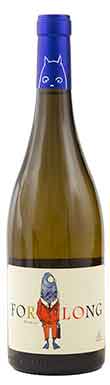
A young project, committed to organic production, in Pago Balbaína. Delicate and floral with complex fruit character – much more so than typical Palomino. The...
2017
Bodegas Forlong
Valdespino, Ojo de Gallo, Cádiz, Spain, 2016
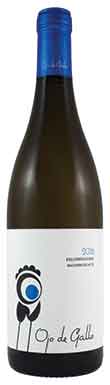
From one of the most famous pagos: Macharnudo Alto. It's unfortified and fermented with indigenous yeast. A weak layer of flor develops over six months....
2016
Valdespino
Bodegas Primitivo Collantes, Viña Matalián Blanco Seco, Cádiz, Spain, 2018
A family business from Chiclana de la Frontera. The latest generation is bringing in something new. In addition to classic Moscatels and very fine Amontillado...
2018
Bodegas Primitivo Collantes
