
Silverado Vineyards: Under the radar Napa Cabernets
Why this Napa estate and its wines deserve more attention...


As the number of Napa Valley labels continues to climb, new wineries grab buzz with $200-plus Cabernet cuvées or obscure varieties, while some wineries with 40-year histories have slipped under the radar, their wines sidelined by fascination with the latest.
That’s the current tale of Silverado, founded in Stag’s Leap District in 1978, whose first Cabernet was the 1981 vintage. Ever since, the winery has produced long-lived examples at reasonable prices – my main takeaway from a recent vertical tasting at the winery at the end of May was that they don’t get nearly as much attention as they should do.
Background
Diane Disney Miller, the only daughter of Walt Disney, fell in love with Napa Valley on a 1975 visit, and with her husband Ron and mother Lillian purchased vineyards in Yountville and Stags Leap. Soon after, they built this winery to make their own wines.
About six miles north of the city of Napa on the eastern side of the valley, Stags Leap was then (and still is) basking in the glory of Stag’s Leap Wine Cellars Cabernet Sauvignon triumph at the famous 1976 Judgement of Paris tasting.
Despite a long history for a Napa winery, the estate has had only two winemakers, which surely contributes to the wines’ consistent quality – as does owning over 160 hectares of prime vineyards. And in contrast to Napa’s tiny boutique wineries, Silverado produces some 25,000 cases of Cabernet annually – similar to that of a Bordeaux château.
Today, five of the 14 wines Silverado produces are Cabernets, three of them single-vineyard expressions. In its eponymously-named Silverado Vineyard in Stags Leap, the University of California at Davis has identified a unique Cabernet clone and given it ‘heritage’ status, one of only a handful recognised in this way.
Varying styles
When I turned off the Silverado Trail and drove up to the impressive stone and stucco Mediterranean-style winery, flowers were blooming and I had a panoramic view of the valley from the long terrace.
The tasting, though, took place in a brightly lit room in the winery itself, with maps of Silverado’s six vineyards on the walls and a lineup of magnums, stainless steel spittoons and polished glasses on a long white table. We were sampling eight vintages of the estate Cabernet Sauvignon, spanning four decades, and seven vintages of Solo, one of Silverado’s single-vineyard Cabernets, which debuted in 2002.
Long-time winemaker Jonathan Emmerich, associate winemaker Elena Franceschi, and managing director Russell Weis were all on hand to fill me in on the details.
As we sampled vintages of the estate blend, what struck me was the way the styles fell into distinct eras.
The 1987 is 100% Cabernet from Silverado Vineyard, and though still alive with a core of fruit, it’s a bit rustic.
Examples from the 1990s, aged in a combination of French and American oak, incorporated Cabernet Sauvignon, Merlot, Cabernet Franc and Petit Verdot, with half the grapes from Silverado Vineyard and half from the historic Mt. George Vineyard in cool Coombsville, purchased in 1988.
Both areas are noted for warm days and cool nights, which allow the grapes to retain acidity and develop flavour without getting too ripe.
The wines from the 2000s reflected Napa’s push toward riper, more powerful wines with higher alcohol and aged in more new oak, but were never over the top.
From 2000 to 2007, Silverado added purchased grapes to the estate blend to scale up production. ‘We lost our way for a few years,’ explains Emmerich, but they eventually rejected the idea and began tweaking viticulture and winemaking for higher quality – switching from cordon to cane trellising, using fewer and shorter pump overs, and adding optical sorting. Emmerich calls the subtle changes ‘death with a thousand cuts.’
With the last few vintages, the estate Cabernet seems even better than before. The wines are savoury, structured, juicy and elegant, yet cost less than $60.
But Silverado’s biggest change was adding single-vineyard bottlings to the range to showcase the individual terroirs of their major Cabernet vineyards, which began in 2002.
In contrast to the estate blend, Solo is 100% Cabernet from the heritage clone in Silverado Vineyard and is aged only in French oak.
It’s denser, deeper, and more intense and complex than the estate bottling, but still has a lush, red fruit prettiness. For me, the standouts are 2008 and 2016.
Diane Miller died in 2013, and Ron just this year, in February. But unlike many Napa wineries with succession problems, it’s not for sale. Four of the couple’s seven children are actively involved .
Silverado Cabernet through the years:
You may also like:
Mount Eden Vineyards: Comparing the Cabernets 1990-2000
Top California Cabernet 2015 wines: Full vintage report
Chateau Montelena: Profile and top wines
Silverado Vineyards, Cabernet Sauvignon, Napa Valley, California, USA, 1987
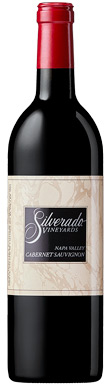

Made entirely from Cabernet Sauvignon, this wine comes from Silverado’s gravelly vineyard at the winery, in the cool Stags Leap District, which became an AVA...
1987
Silverado VineyardsNapa Valley

Silverado Vineyards, Cabernet Sauvignon, Napa Valley, California, USA, 1992
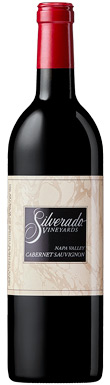
This vintage is the first to include Cabernet Franc, and also contains more than 10% Merlot. 50% of the grapes in the blend came from...
1992
Silverado VineyardsNapa Valley
Silverado Vineyards, Cabernet Sauvignon, Napa Valley, California, USA, 1999
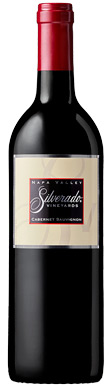
Still intense, concentrated and rich, this wine brims with aromas of violets, cassis, spices and savoury fruit flavours, with a hint of chocolate mocha. It...
1999
Silverado VineyardsNapa Valley
Silverado Vineyards, Cabernet Sauvignon, Napa Valley, California, USA, 2002
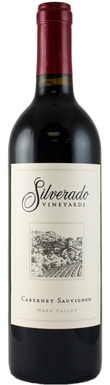
You can sense a style change with this vintage: a hot September meant the grapes were picked significantly riper, so the alcohol is higher, and...
2002
Silverado VineyardsNapa Valley
Silverado Vineyards, Cabernet Sauvignon, Napa Valley, California, USA, 2004
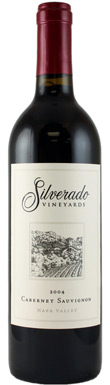
With raspberry aromas and ripe raspberry and mineral flavours, this vintage fits into the riper style of Napa Cabernets. It’s seductive but less fleshy and...
2004
Silverado VineyardsNapa Valley
Silverado Vineyards, Estate Grown Cabernet Sauvignon, Napa Valley, California, USA, 2009
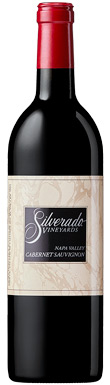
In this very ripe vintage, Napa received way less rainfall than usual and harvest ended on 12 October. In 2007, the winery abandoned using purchased...
2009
Silverado VineyardsNapa Valley
Silverado Vineyards, Estate Grown Cabernet Sauvignon, Napa Valley, California, USA, 2014
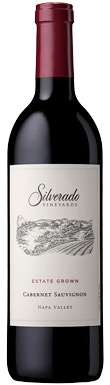
This wonderfully violet- and currant-scented wine marks a fresher, more polished phase in Silverado’s winemaking, with brighter, silkier red fruits, layers of flavour, a linear...
2014
Silverado VineyardsNapa Valley
Silverado Vineyards, Estate Grown Cabernet Sauvignon, Napa Valley, California, USA, 2016
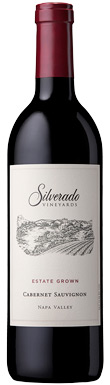
In another near-perfect growing season, with a mild July and August and warmer temperatures in September, harvest wrapped up on 7 October - just a...
2016
Silverado VineyardsNapa Valley
Silverado Vineyards, Solo Cabernet Sauvignon, Napa Valley, Stags Leap District, California, USA, 2003
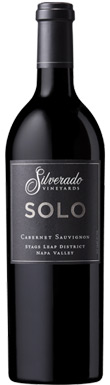
This 100% Cabernet Sauvignon from Silverado’s home vineyard in the Stags Leap District debuted in 2002, and production ranges from about 1,100 to 1,500 cases...
2003
Silverado VineyardsNapa Valley
Silverado Vineyards, Solo Cabernet Sauvignon, Napa Valley, Stags Leap District, California, USA, 2004
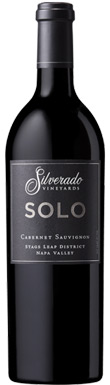
Silverado’s home vineyard off the Silverado Trail was first planted to vines in the 1880s, and was one of the first to grow Cabernet Sauvignon....
2004
Silverado VineyardsNapa Valley
Silverado Vineyards, Solo Cabernet Sauvignon, Napa Valley, Stags Leap District, California, USA, 2007
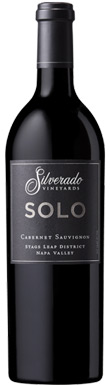
This drought year had a textbook growing season with few heat spikes, though only 60% of the usual rainfall. It was extolled as a great...
2007
Silverado VineyardsNapa Valley
Silverado Vineyards, Solo Cabernet Sauvignon, Napa Valley, Stags Leap District, California, USA, 2008
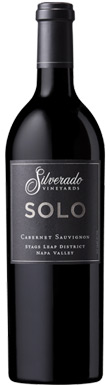
Juicy and rich, this vintage of Silverado’s all-Cabernet wine from Silverado Vineyard is medium-bodied and lush, but more mineral than usual. It has a leafy,...
2008
Silverado VineyardsNapa Valley
Silverado Vineyards, Solo Cabernet Sauvignon, Napa Valley, Stags Leap District, California, USA, 2010
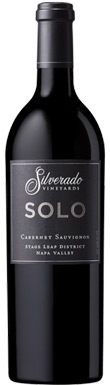
This was the first year Silverado used an optical sorter, which proved helpful in removing sunburnt grapes following an August heatwave. Harvest was in mid-October,...
2010
Silverado VineyardsNapa Valley
Silverado Vineyards, Solo Cabernet Sauvignon, Napa Valley, Stags Leap District, California, USA, 2011
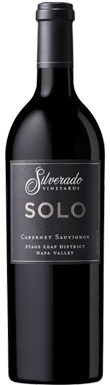
Wines from this cool, wet vintage were widely panned, but many Cabernets are actually lovely. Lighter-styled and less concentrated, yes, but also lower in alcohol...
2011
Silverado VineyardsNapa Valley
Silverado Vineyards, Solo Cabernet Sauvignon, Napa Valley, Stags Leap District, California, USA, 2016
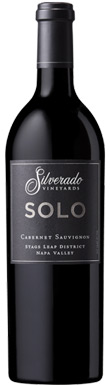
The 2016 growing season in Napa was pretty laid back and easy, with warm, dry days, no heat spikes and harvest in the first week...
2016
Silverado VineyardsNapa Valley
