
St Hallett Wines: producer profile plus new releases tasted
This South Australian winery is famous for its Old Block Shiraz, among others. But the new chief winemaker tells David Sly about her aim for St Hallett Wines to be recognised as a Barossa Shiraz specialist, by continuing to focus on site-specific releases.

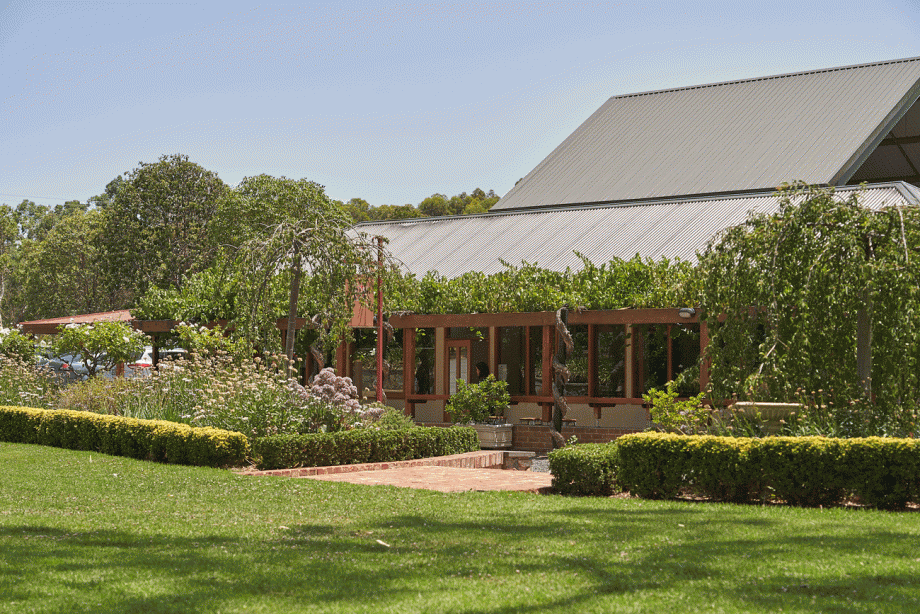
A long story tracing the history of South Australia’s Barossa region is integral to the success of St Hallett Wines. And formidable people are key to this story – many are legendary characters in the pantheon of Australian wine.
Early St Hallett winemaker Robert O’Callaghan (now of Rockford Winery) saved historic Shiraz vines from being grubbed during the 1970s and made rich wines celebrating their unique qualities. Larger-than-life raconteur and marketeer ‘Big’ Bob McLean sold the merits of these signature Shirazes to the world. Entwined through a legend of long promotional lunches and great merriment, St Hallett fostered a loyal fan club for its wines, led by Old Block Shiraz.
Scroll down for David Sly’s tasting notes and scores on the latest releases from St Hallett Wines
Years have marched on, yet despite several changes in ownership and numerous winemakers, St Hallett has never let go of its history. This stems from the Lindner family’s arrival in the Barossa from Central Europe’s historical Silesia region in 1838. They planted grape vines near Tanunda, before starting their own winery in 1944, enduring turbulent years of struggle and triumph.
New winemaker, new chapter
Now, under owners Accolade Wines (whose vast global business includes other recognisable Australian brands like Hardy’s, Banrock Station and Grant Burge Wines), a new chief winemaker has been introduced to not only continue, but to amplify this legacy of championing Barossa Shiraz.
Helen McCarthy is entirely comfortable with such a task, because she has her own interesting Barossa winemaking story to tell. This is in addition to opening a fresh chapter of the St Hallett tale that involves a broader suite of Shiraz wines, further embracing the influence of Eden Valley vineyards from the elevated, stony ridges that flank the Barossa Valley floor.
Having come previously from Mountadam Vineyards and Thorn-Clark Wines, McCarthy’s focus had long been fixed on Eden Valley fruit, understanding the cool-climate nuances of these grapes.
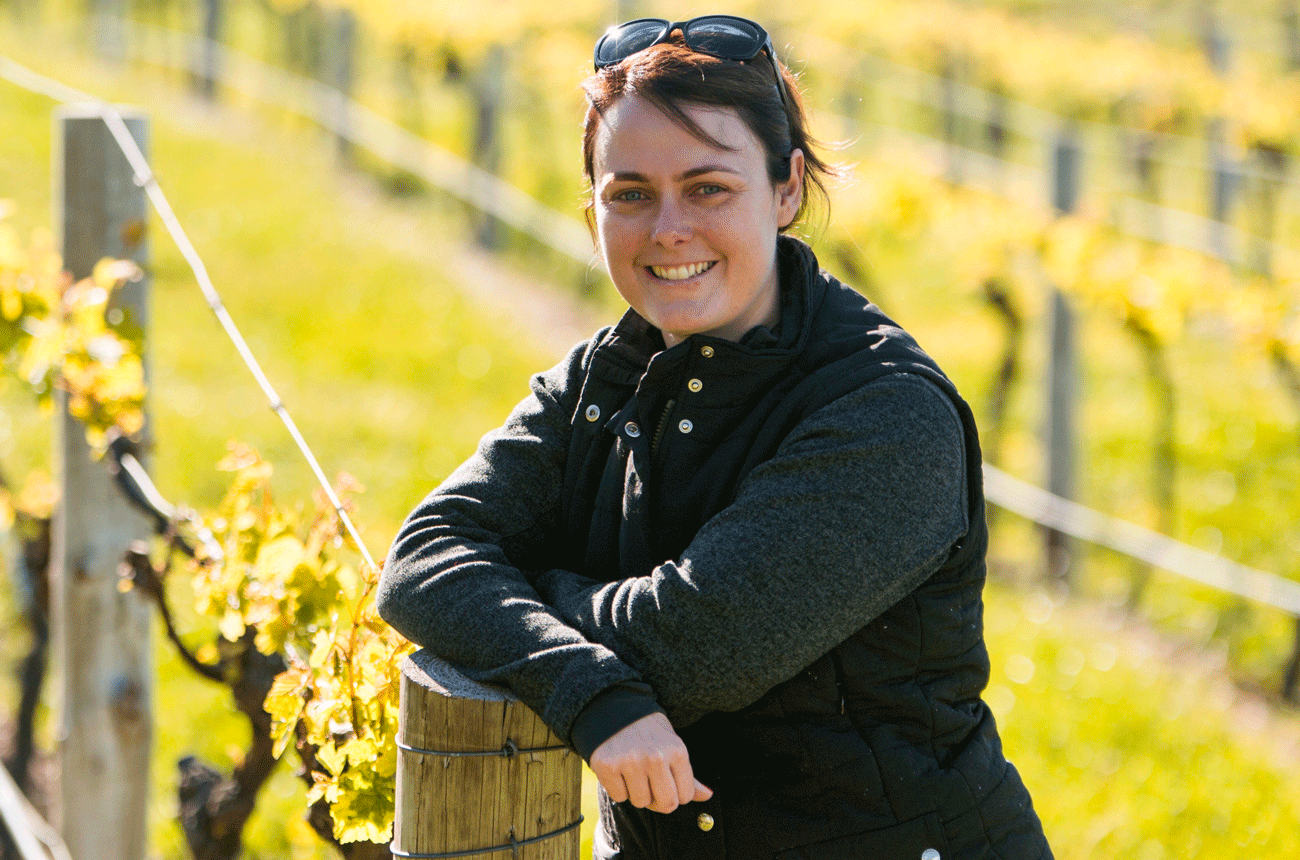
When she applied for the job of St Hallett senior winemaker and site manager in early 2019, soon after the departure of group chief winemaker Toby Barlow, her skill set provided the perfect fit for Accolade’s renewed vision for St Hallett’s Shiraz output.
Her immediate task was to focus the winemaking to reflect a new marketing slogan for the brand, heralding St Hallett as the ‘Masters of Barossa Shiraz’ – which meant that Riesling was no longer made by St Hallett from the 2020 vintage. An element of Grenache remains through the portfolio – with old-vine Grenache and Grenache rosé, as well as featuring as a component in some blends – but the spotlight has been directed towards a dozen different examples of Shiraz.
Each of these wines has a distinctive sourcing pattern from specific vineyards throughout the Barossa to define a raft of different Shiraz characteristics, which continues to grow with an increasing number of Eden Valley fruit parcels being procured.
Site-specific Barossa Shiraz
‘It’s not all my doing,’ McCarthy insists with a smile. ‘It was already happening before I got here. But I’m certainly giving it a nudge along, looking more specifically at southern Eden Valley fruit parcels that show more cool-climate characteristics.
‘For us to truly present a complete picture of understanding Barossa Shiraz, we need to be doing this – and more – to play around with fresh ideas. I believe there’s a big, complex story to tell about this grape variety, and we’ve only really just scratched the surface in the Barossa.’
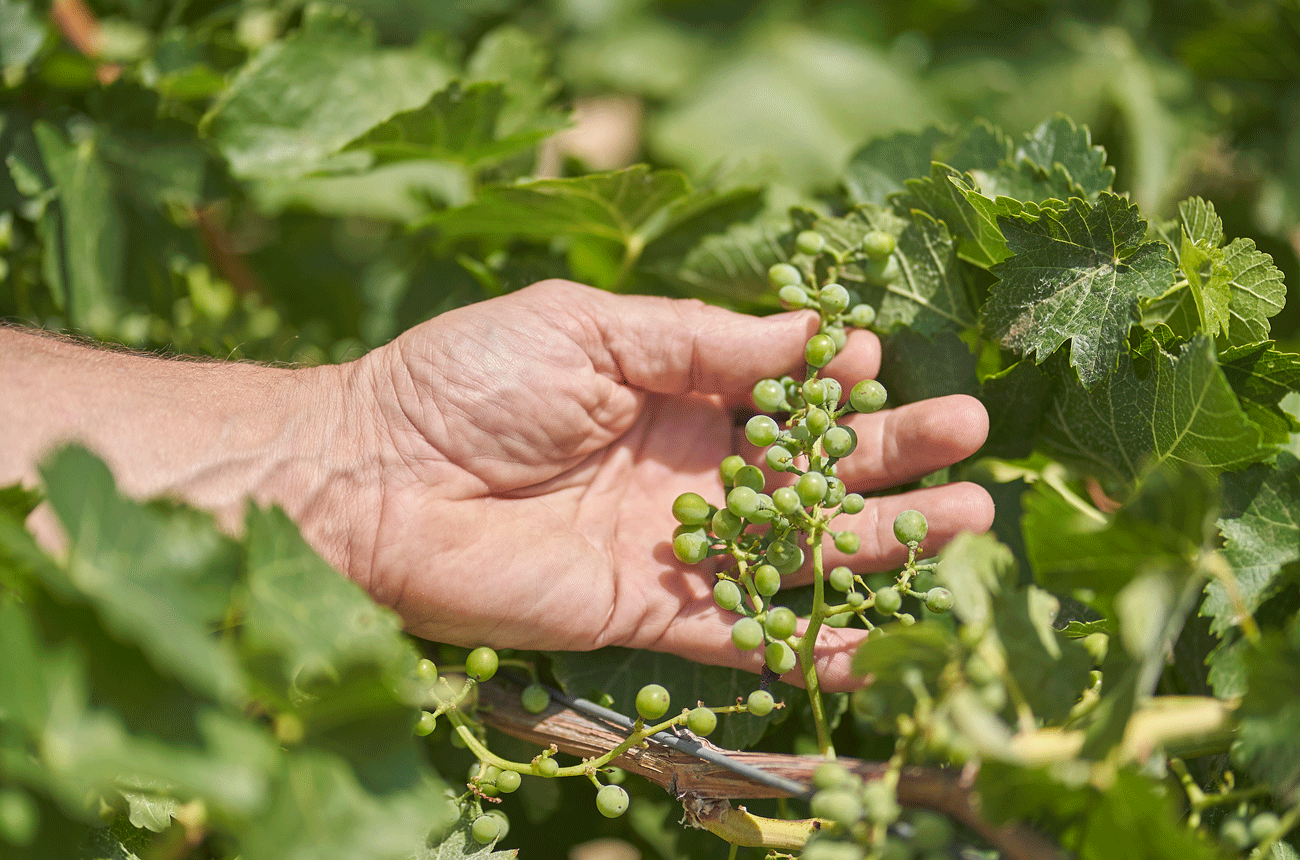
McCarthy explains her point by enthusiastically sketching ideas that will push St Hallett’s Shiraz output further – by developing Parish blends that define small, historical Barossa sub-regions, and doing clonal explorations that demonstrate how specific Shiraz clones behave across different sites and soil types. She’s optimistic that wine lovers will support the winery steering the focus on single-vineyard wines into a more nuanced direction.
‘There haven’t been wines of this type from the Barossa, and it’s something we will definitely be looking at in the future,’ she says, noting that such ideas build on a significant suite of Barossa sub-regional wines that previous winemaker Toby Barlow introduced to the market.
‘St Hallett’s long reliance on relationships with many growers and vineyards throughout the Barossa will allow this to happen – and I believe this presents very exciting winemaking opportunities.’
A St Hallett first: Eden Valley Syrah
Pursuing such peaks of excellence adds to McCarthy’s responsibilities that include supervising Grant Burge Wines being made and stored at the St Hallett winery near Tanunda.
Yet within such a busy schedule, she has given specific attention to several new wines that specifically highlight Eden Valley fruit – and stand a significant step apart from the more brawny, big-bodied Shiraz sourced mostly from the northern Barossa that has been St Hallett’s trademark.
Foremost among these more nuanced Shirazes is 2018 Higher Earth Syrah (note, not Shiraz). A new release in 2020, it’s made from 100% Eden Valley grapes – a first for St Hallett. Made before McCarthy arrived at the winery, it’s a style that excites her – showing rich blue fruits, a lick of minerality and a lifted floral bouquet – although she’s now keen to refine the style further, to enhance the elegance and svelte beauty of cool-climate Shiraz.
‘I want this to be a wine that people keep talking about because it doesn’t fit the standard expectation of a St Hallett Shiraz,’ she says. ‘It has already attracted a different type of customer to St Hallett, and I feel that it opens up a lot of possibilities for who this brand can reach.’
Boutique old-vine flagship
A more exclusive new Shiraz aims at an even higher level: Planted 1919 is from Barossa vines at least 100 years old. The first release, from the 2015 vintage, comes from an Eden Valley vineyard usually directed into the Old Block Shiraz blend of northern Barossa and Eden Valley fruit parcels.
By isolating this parcel as a separate wine – with the tiny volume producing just 360 bottles for Australia and 1,200 globally, at a hefty AU$450 (£255) price tag – it presents a new opportunity for St Hallett.
‘It’s very brave to introduce a new flagship wine that pursues a very different direction, but it’s a very exciting signal for the future,’ says McCarthy. It’s stunning – a really interesting example of texture speaking ahead of the fruit, with all the elements seamlessly integrated.’
The wine’s subtlety and evolution in the glass thrills McCarthy, who says future releases of Planted 1919 will most likely feature different source blocks, demanding different examinations and analysis of elite Barossa Shiraz.
‘I feel very fortunate to be presenting such outstanding wines that had been made before I arrived in the winery, but I must say that these wines sing to what I like to do.’
Despite her excitement about these new releases, McCarthy doesn’t want change the style of existing St Hallett wines – particularly the influence of old-vine parcels from across the northern Barossa and Eden Valley that create Old Block Shiraz, and the black-fruited power amplified by American oak that characterises Blackwell Shiraz.
‘There will be an evolution of the portfolio, but within this will remain a respect for the winemaking signatures that have defined St Hallett’s history. We will always allow those very specific wine styles to continue.’
100% Barossa
To help ensure this continuity, McCarthy consults with former chief winemaker Stuart Blackwell, creator of several St Hallett Shiraz styles – including Blackwell Shiraz and Faith Shiraz – and who continues to serve as a brand ambassador.
‘I’ve really benefited from Stuart telling me about the history of the wines, and the knowledge and stories about the winery’s relationships with the various grape growers we work with,’ says McCarthy. ‘It’s all connected into the fabric of how we make these wines. And those common threads remain in place.
‘Stuart tastes the blends with me and tells me what he thinks. It’s nice to have that continuity, because it can be so easy to get too wrapped up in only what you’re thinking.’
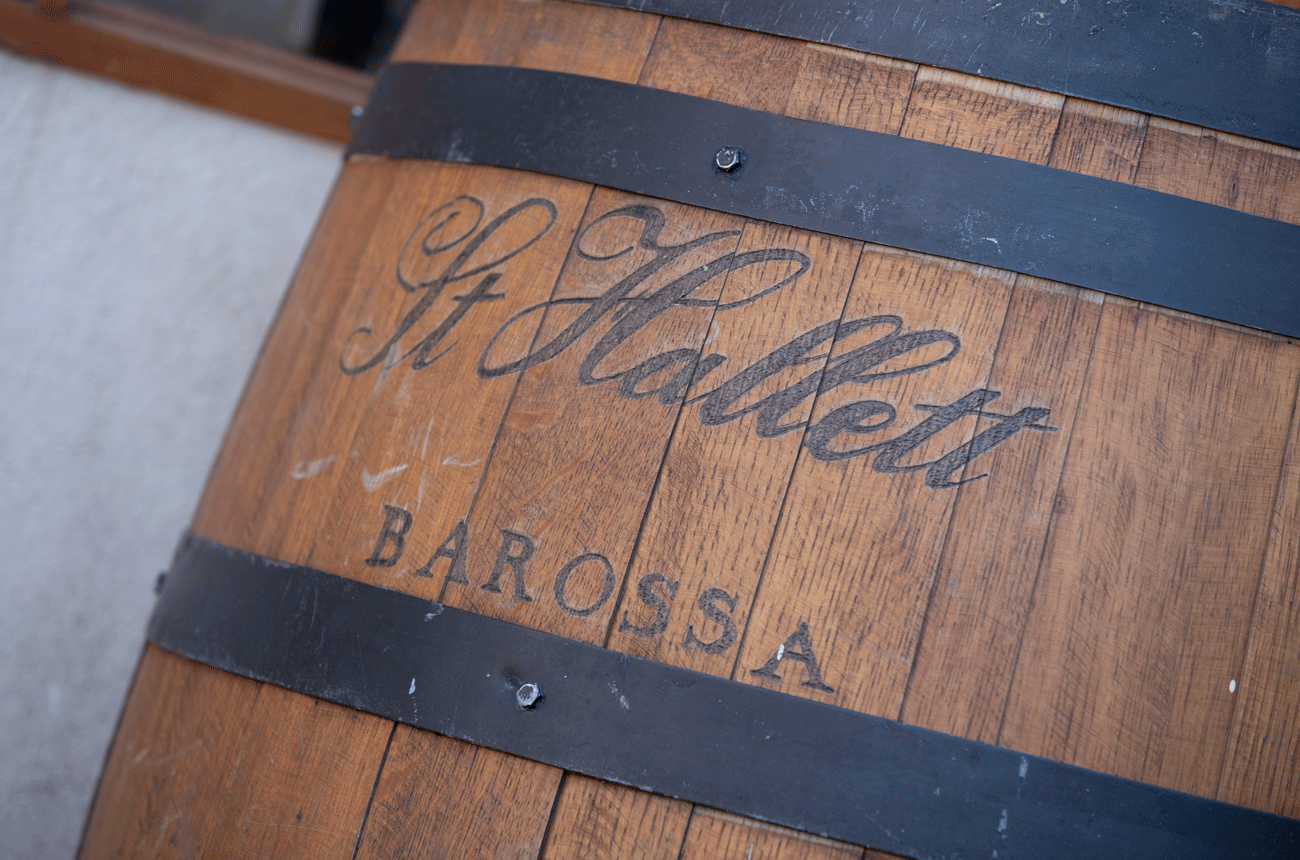
The new vision for St Hallett is a considered philosophy. McCarthy says travel restrictions during 2020 presented ample time for everyone involved with the brand to have a serious rethink about the wines, their customers, and how to improve production.
This has led to some new introductions – including large-format oak fermenters, allowing for whole-bunch fermentation of some Shiraz components – and a more polished presentation at the winery’s cellar door, with emphasis on tutored tastings rather than the rustic, informal approach that had long been a part of St Hallett’s personality.
‘Everything we are doing fits St Hallett’s ambition to be a serious Shiraz specialist,’ says McCarthy, who believes change is injecting fresh energy to the brand.
‘It shows that we can breathe new life into a historical brand without damaging any important aspects of its past. Keeping everything 100% Barossa is really important to me, and we’re ready to present an exciting new chapter in the St Hallett story.’
St Hallett Wines: the facts
Founded In 1944 by the Lindner family
Owners Accolade Wines, since 2017
Senior winemaker Helen McCarthy, since 2019
Production 165,000 cases annually.
Barossa Shiraz sources 130 parcels from 30 growers throughout the central Barossa Valley floor, western ridge and northern Barossa (totalling about 2,500 tonnes), as well as from seven growers in Eden Valley (about 300 tonnes)
St Hallett Wines: a timeline
1912 Pop Lindner plants the Old Block vineyard on the fringes of Tanunda in the Barossa
1944 Pop’s son Bill, a trained winemaker, establishes St Hallett Wines in a Tanunda shed, focusing mainly on fortified wines
1970 Bill’s sons Carl and Elmore take charge of the winery
1972 Robert O’Callaghan joins St Hallett as winemaker, remaining until he established his own Rockford Winery from 1982
1980 O’Callaghan makes the first St Hallett Old Block Shiraz
1982 Stuart Blackwell, who first joined St Hallett in 1972, returns as senior winemaker, having spent several years making wines in South Africa and Zimbabwe
1988 Marketing maestro Bob McLean joins, successfully elevating St Hallett Old Block Shiraz from a beloved South Australian treasure to an international wine icon
2000 St Hallett forms a triangular ownership consortium with Tatachilla Wines of McLaren Vale and Hillstowe Wines of the Adelaide Hills, forming the publicly-listed company Banksia Wines.
2002 Major shareholder Lion Nathan brewery buys Banksia Wines
2007 Toby Barlow becomes head winemaker, moving from Lion Nathan’s sibling winery Mitchelton. Barlow focuses on single-vineyard releases to show the personalities of Shiraz from different Barossa sub-regions
2017 Accolade Wines buys St Hallett
2019 Helen McCarthy joins St Hallett as senior winemaker. The brand abandons white wines to market itself as a Barossa Shiraz specialist
St Hallett Wines: the latest releases
You might also like…
Yalumba: producer profile and latest releases tasted
Best Australian Shiraz under £25 to buy
Hentley Farm: producer profile plus six wines tasted
St Hallett, Planted 1919 Shiraz, Eden Valley, South Australia, Australia, 2015


Surprising, delightful restraint and finesse in a new flagship Barossa Shiraz from St Hallett, focusing on the subtle nuance of svelte Eden Valley fruit. It’s...
2015
St HallettEden Valley

St Hallett, Old Block Shiraz, Barossa, South Australia, Australia, 2016
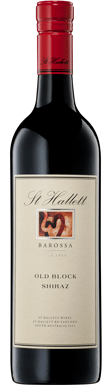
Light on its feet despite such a brawny frame defined by northern Barossa fruit, this shows liquorice and sharp blackberry, with hints of fresh raspberry...
2016
St HallettBarossa
St Hallett, Higher Earth Syrah, Eden Valley, South Australia, Australia, 2018
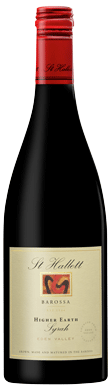
This new wine in the St Hallett portfolio shows great promise. Offering a bouquet of dark cherry, violets and bright raspberry with a flash of...
2018
St HallettEden Valley
St Hallett, Mighty Ox Shiraz, Barossa, South Australia, Australia, 2018
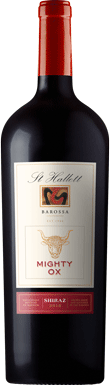
Marketed only in a magnum celebration bottle, this new package is classic Barossa Shiraz in almost nostalgic fashion, with ripe, dark-fruited power speaking in rich...
2018
St HallettBarossa
St Hallett, Blackwell Shiraz, Barossa, South Australia, Australia, 2019
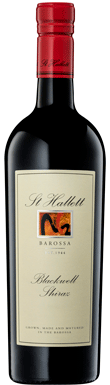
No restraint shown here! Blackwell is unashamedly old-school Shiraz: heavy and raw with the obvious influence of American oak and boasting an enormous black fruit...
2019
St HallettBarossa
St Hallett, Faith Shiraz, Barossa, South Australia, Australia, 2019
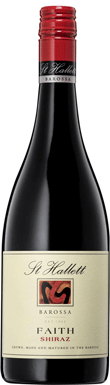
<p>Like a protégé of the black, burly Blackwell Shiraz, this has dark-fruited heft in a modest priced wine that delivers superb bang for your buck....
2019
St HallettBarossa
St Hallett, Gamekeeper's Shiraz, Barossa, South Australia, Australia, 2020
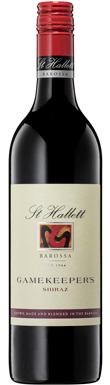
The ripeness of full-flavoured Barossa Shiraz shines through in this sturdy entry-level wine. Oak from staves and swift processing results in a rather rough-hewn finish,...
2020
St HallettBarossa
