
Tasting Ceretto’s 2016s
Stephen Brook tastes the famed estate's delayed 2016 releases and looks back at how it all began...
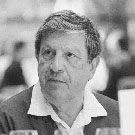

Brothers Bruno and Marcello Ceretto were among the founders of modern Barolo, and like many others in the 1960s and 1970s they took Burgundy as their model. It was not just the use of small barrels that impressed them, but the devotion to terroir. It inspired them to validate what they considered some of the finest sites in their region. At a time when most smallholders were still selling grapes to cooperatives or wholesalers to eke out a living, the Cerettos were seeking out sites with the highest reputation.
Those 20 hectares of vineyards in Barolo and Barbaresco remain the core of their holdings, which these days total 160 hectares – so this is no boutique operation. Ceretto produces a lot of wine, and in many markets is probably still best known for its Blangé, a hugely popular Arneis that has always been in bright, modern packaging.
The Nebbiolo wines are numerous and far from cheap, but quality has always been impressive. The brothers were fervent modernists and didn’t shy away from a generous proportion of new oak for the top barrique-aged wines. They also favoured the shorter macerations that were keenly adopted by other modernists such as Elio Altare.
The business is now run by the third generation, Bruno’s sons Federico and Alessandro Ceretto. For Federico, the modernist/traditional debate is something of an irrelevance, and to be sure the concepts have become blurred for a decade or more.
Ceretto, like so many other well-known Barolo producers, adopts a pragmatic approach, seeking to draw on the best of both approaches. Their Barolos and Barbaresco are fermented with indigenous yeasts, then initially aged in 300-litre barrels, with the proportion of new oak varying according to the quality and character of every new vintage – but it never exceeds 20%. After nine months or so the lots are blended, and the rest of the ageing process takes place in large casks, coopered from French rather than Slavonian oak. Because all these wines are made in much the same way, the essential difference between them is the source of the grapes: the land on which they are grown.
Just as important as the vinification and ageing is the value placed on the health of the vineyards. In 2015 the entire estate was certified as organic, and all the single vineyards they own in Barolo and Barbaresco are now farmed using biodynamic treatments, although there is no biodynamic certification. Given the size of the estate, this respect for the soil and the vine commands admiration.
The 2016s
Like all other Barolo estates, Ceretto is thrilled by the quality of the 2016 vintage, and by its uniform excellence in both Barbaresco and Barolo. Critical acclaim for the vintage has been close to unanimous – indeed, I rated the vintage 5/5 in my recent report for Decanter Premium – but the Ceretto range has not been available for tasting until now. It does not disappoint. For Federico Ceretto, the hallmark of the vintage is ‘balance and classicism’ and it’s hard to disagree. Moreover, all of these wines have a wonderful clarity of fruit.
Yet, for obvious reasons, it was not easy to launch the new wines. A handful of British journalists were sent four wines, which were tasted and discussed during a video conference. I pulled the corks an hour and a half before the webinar began and was able to retaste the wines in the course of the leisurely discussion. It made a pleasant change from the sometimes-frenetic pace of importers’ tastings, or the assault course of events such as Nebbiolo Prima, brilliantly organised though they are.
Ceretto’s generic Barolo draws on fruit from various communes, but also contains grapes from less qualitative sectors of renowned sites such as Brunate and Prapò in Serralunga. The winemaking outlined above applies to all the single-vineyard wines. Brunate comes from La Morra, and Ceretto are major players here, owning almost 6ha. Far smaller is their parcel in Bussia, but it’s in a prized section. Bussia in Monforte has become ridiculously large, with almost 300ha planted. However, Ceretto’s plot is in Bussia Soprana, one of the truly outstanding sites not only in Monforte but in the entire region. Other Barolo wines Ceretto produce include Prapò and Bricco Rocche, but they were not presented for the tasting. However, one Barbaresco was included: Bernadot, grown high up in Treiso.
Looking back at my numerous tasting notes on Ceretto wines from the 1980s, they are mostly positive, but the words ‘tannic’ and ‘tarry’ recur often. Today the wines are much more harmonious and less extracted. This is precisely the direction that Ceretto continue to take. In Federico’s words: ‘We’re now seeking a lighter style, not in the sense of dilution of course, but by having less extraction and more focus on balance and complexity. For us, Barolo from 2016 represents precisely the style of wine we’re looking for.’
Tasting the Ceretto 2016 releases:
You may also like:
1996 Piedmont: A retrospective
Tasting the single-vineyard wines of Pio Cesare
Alto Piemonte latest releases: 12 top picks
Ceretto, Bussia, Barolo, Monforte d’Alba, Piedmont, Italy, 2016
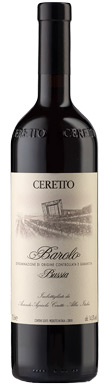

Compared to the Brunate bottling, this is reticent and stern on the nose, with fruit that's robust rather than perfumed, displaying ample cherry and raspberry...
2016
CerettoBarolo

Ceretto, Bernadot, Barbaresco, Treiso, Piedmont, Italy, 2016
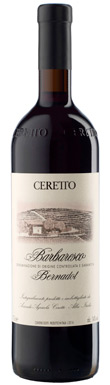
The aromas here are lifted and floral, with delicate raspberry fruit that's full of charm and given nuance by a hint of oak. The attack...
2016
CerettoBarbaresco
Ceretto, Brunate, Barolo, La Morra, Piedmont, Italy, 2016
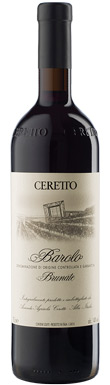
This is less perfumed on the nose than the regular Barolo, but it still shows charming, delicate raspberry fruit and a marked floral character. Rich...
2016
CerettoBarolo
Ceretto, Barolo, Piedmont, Italy, 2016
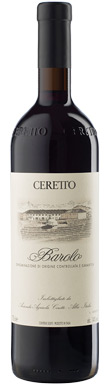
There are exquisite floral tones, especially violets, on the nose, which displays ripe red fruits alongside poise and perfume. The attack is fresh with lively...
2016
CerettoBarolo
