
Tasting the single-vineyard wines of Pio Cesare
Stephen Brook dives into Pio Cesare's 2016s and finds a splendid collection of wines of consistent quality...


Although one would expect the town of Alba to be the centre of the Barolo and Barbaresco wine industry, in fact just one single winery is located there. This is Pio Cesare, which was founded in 1881 and is today run by the genial Pio Boffa, his nephew Cesare Benvenuto, and, since 2016, Boffa’s daughter Federica, who represents the fifth generation. Thus the winery has been in the hands of the same family since its foundation. The cellars themselves are of historical importance, having been constructed four storeys deep around the ancient Roman walls of the town. Pio Boffa regards himself as a traditionalist, but he is a flexible one, and not averse to ageing part of his wines in barriques if he thinks they will gain complexity.
Don’t call it ‘regular’
With 70ha under vine, production is large at close to half a million bottles. The single-vineyard wines may be just a few thousand bottles each, but the generic Barolo and Barbaresco are produced in more substantial quantities. Pio Cesare farms 15ha in Serralunga and 21ha in Treiso, giving a wide selection of parcels from which to produce its blends. The firm dislikes the assumption that a blended Barolo is some kind of inferior or bland product. Indeed, Boffa goes so far as to write on the label of these two generic wines: ‘Please don’t call it “regular”’, implying, correctly, that a blended wine from numerous sites within five communes can be just as good as one from a single location.
The single-vineyard Barbaresco comes from Il Bricco in Treiso. Pio Cesare is the main owner of this 15ha site, which has clay and limestone soils and higher elevation than most other vineyards in the village. However, only three exceptional plots are used to create the cru wine. They produce a very long-lived wine of consistently high quality. In 2015 Pio Cesare bought almost 10ha of the south-facing Mosconi vineyard in Monforte, a cru that is also validated by Chiara Boschis. Its most treasured site is 6.6ha of Ornato in Serralunga; this was the first of Pio Cesare’s cru wines, dating from 1985.
Winemaking
The winemaking is much the same for all the Nebbiolo wines. The must is fermented in stainless steel tanks at temperatures that do not exceed 30°C. Extraction begins with pump overs, but is then replaced with pneumatic punch downs, resulting in a maceration of about 40 days. Then 20% of each wine is aged in one-third new barriques for up to 10 months, before being transferred to large casks for 18 months. The 80% that does not see the inside of a barrique is simply aged in large casks, before being blended with the other batches of the same wine. After a light fining, the wine is bottled and rests before release, which tends to be later than releases from other producers here.
In 2010 Pio Boffa was introduced to Professor Denis Dubourdieu of Bordeaux, and they soon became friends. Until his death in 2016 Dubourdieu consulted for Pio Cesare, but more in the sense of sharing philosophical ideas about Barolo rather than mere technical advice, although Dubourdieu did encourage the use of punch downs. Their close relationship was not publicised as Pio Boffa did not want it perceived as a marketing tool. Today the winery works with Dubourdieu’s renowned associate Christophe Olivier.
The tasting of 2016s vindicates Boffa’s conviction that a blended wine can still be of outstanding quality. The Barbaresco and Barolo blends are determined in advance, based on the firm’s knowledge of the vineyards. Thus the same proportion of grapes from each vineyard is placed within each fermenter, making these true vineyard blends rather than wines stitched together after the ageing process is completed. At a time when there is a profusion of wines with ‘geographical mentions’ (crus) and wines identified by fantasy names, it is reassuring to know that a traditional vineyard blend can often be superior to a single-vineyard wine. The tasting also confirmed that splendid and consistent quality of the 2016 vintage.
The Pio Cesare 2016 collection
Pio Cesare, Ornato, Barolo, Piedmont, Italy, 2016
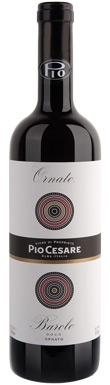

This fine site in Serralunga is elevated at 380 metres, which may explain the wine's finesse. Very ripe sour cherries dominate the nose, which is...
2016
Pio CesareBarolo

Pio Cesare, Mosconi, Barolo, Piedmont, Italy, 2016
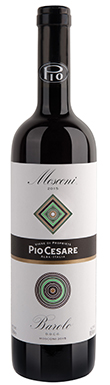
Pio Cesare acquired an extensive parcel within Mosconi in 2014, but only the oldest vines are used for the cru wine. The nose is packed...
2016
Pio CesareBarolo
Pio Cesare, Il Bricco, Barbaresco, Piedmont, Italy, 2016
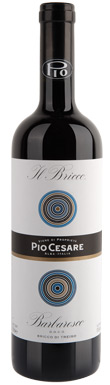
Only the most prized three plots from this lofty site are used for this cru, which is why production is no more than around 6,600...
2016
Pio CesareBarbaresco
Pio Cesare, Barolo, Piedmont, Italy, 2016
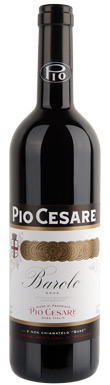
Widely sourced, from family-owned vineyards in Novello and Grinzane Cavour as well as more celebrated villages, this Barolo shows admirable opulence on the nose, with...
2016
Pio CesareBarolo
Pio Cesare, Barbaresco, Piedmont, Italy, 2016
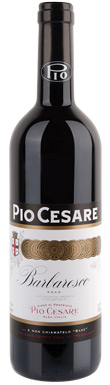
Sourced from the firm's vineyards in Treiso. The nose is pure charm and delightfully fragrant, with aromas of strawberries and violets. The attack is initially...
2016
Pio CesareBarbaresco
