
Tenuta di Biserno: Maximising potential
Aldo Fiordelli interviews Tenuta di Biserno CEO, Niccolò Marzichi Lenzi, about the estate's fine wines and how they have coped in 2020...


When the moment arrived in 2014 to decide whether or not to start harvest, consultant Michel Rolland said, frankly, ‘you can go back to the beach’. Resident agronomist Ranieri Orsini recalls saying, ‘we can wait to harvest, I think we could pick something interesting over there’.
Tenuta Biserno is indeed ‘over there’, close to the village of Bibbona on the northern side of Bolgheri but outside of the appellation. It sits on a rolling hill 100 metres above sea level between the forest (known in these parts as the MSingagona) in the rear and the flat lands leading down to the sea.
The 2014 vintage was one of the wettest and coolest since 2002. ‘In the vineyards there was an odour of volatile acidity’, remembers Niccolò Marzichi Lenzi, CEO of Biserno; no doubt a thrilling start for the nephew of Marcheses Piero and Lodovico Antinori, who arrived that year. ‘Memories that I try to erase,’ he says with a laugh, though surely there was little to smile about at the time.
Tenuta Biserno is an estate spanning nearly 100 hectares of vineyards, divided into two parts: 40 hectares around the villa dedicated to Biserno, and 56 hectares in Campo di Sasso, below the medieval village of Bibbona. ‘This distinction comes naturally for the winery,’ says Lenzi, ‘since Campo di Sasso boasts warmer, sandy soils at a lower altitude, while around Biserno the vineyards rise over the typical “conglomerato di Bolgheri”, a clay-limestone mixture very similar to what is found in Bellaria, one of the top cru for Cabernets in the Bolgheri appellation’.
Pino and Biserno are made from these vineyards, while Campo di Sasso produces Insoglio del Cinghiale and white grapes. ‘We have vineyards which must produce grapes for Biserno because of their naturally superior quality, like Capannone and Salino, while the Anfiteatro vineyard goes into Pino di Biserno. The Cipressa vineyard swings, depending on the vintage. We promote or demote a plot by analysing the grapes at harvest. There is no difference in the age of the vines since most of them were planted between 2002 and 2003.’
One of the main differences between the two wines is of course the blend. ‘While Biserno is always equal thirds Cabernet Franc, Cabernet Sauvignon, and Merlot with a maximum 5% splash of Petit Verdot, Pino changes according to the vintage,’ explains Lenzi. There is no interchangeability between Biserno and Pino, only some Petit Verdot or Cabernet Franc grapes not considered high enough quality for Pino go into Insoglio del Cinghiale. As proof, certain vintages of Pino have at times resulted in better wines than Biserno. Such was the case with the two 2014s tasted on this occasion.
‘In 2007 Pino was better than Biserno,’ admits Lenzi. ‘The grapes for Biserno have the ability to reach maturity increasing in concentration without losing thickness in their skins, which would make them more vulnerable to possible diseases. Pino, on the other hand, has less concentration yet more freshness’. The two wines follow different yet parallel methods in the winery, too, with three- and four-week maceration over the skins for Pino and Biserno, respectively.
‘Sometimes there can be a very tiny exchange of press wines from Biserno to Pino,’ adds winemaker, Helena Lindberg, who continues with an interesting detail: ‘We carry out malolactic fermentation in oak, but only partially and mainly for the Merlot. This is mostly because Merlot is an early ripening grape and thus it finishes the first fermentation sooner. However, when carrying out malolactic in barrique you need to do an extra round of racking compared to achieving the same fermentation in stainless steel, before the oak ageing’. There is of course a fairly different evolution of the two labels, with Biserno ageing in 80 to 90% new French oak, while Pino matures in just one-third new oak.
When all is said and done, there are 30,000 bottles of Biserno and 100-120,000 of Pino di Biserno. ‘The price of the former is increasing a lot and today it costs 130 euros, while Pino stays at a lower, more democratic price of around 45 euros,’ remarks Lenzi. As for the future, ‘the strategy won’t change, we are working more on small details in the vineyards rather than on technologies. Our aim is to have a deeper knowledge of our small plots to achieve the maximum potential from every vintage’.
Of course there is concern about Covid-19: ‘The major challenge is the uncertainty. We did not suffer as much in the market during lockdown, since closures were staggered among different countries. As of today, we are able to sustain our partners, but of course we are concerned about the months to come. Agriculture never stops, and we tried to levy this with our clients and partners around the world by way of virtual tastings and conference calls. For example, we held an online tasting with Singapore, Finland, and Montecarlo. We are always striving to preserve the personality of Biserno, an iron fist in a velvet glove, the gentleman of all our wines, side by side with the younger, fresher, and more timid Pino’.
Tenuta di Biserno: Comparing Biserno and Il Pino
You may also like:
Tenuta di Biserno wines tasted and rated
Bolgheri 2017 vintage report: Experience counts
Chianti Classico alternatives: Top Tuscany IGT wines
Tenuta di Biserno, Biserno, Toscana, Tuscany, Italy, 2017
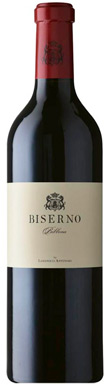

The 2017 vintage was warm and dry, yet not as much as 2003. 'In the vineyards there was not high vine stress as in 2012,'...
2017
Tenuta di BisernoToscana

Tenuta di Biserno, Il Pino di Biserno, Toscana, Tuscany, Italy, 2017
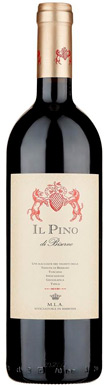
In 2017 production was down 26% due to lighter grapes in a dry, hot season. A very early ripening season was offset by one of...
2017
Tenuta di BisernoToscana
Tenuta di Biserno, Biserno, Toscana, Tuscany, Italy, 2016
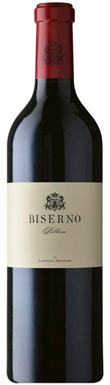
If the 2016 Pino is a delicious mediterranean Bordeaux blend, the 2016 Biserno is a serious wine to age. From one of the best vintages...
2016
Tenuta di BisernoToscana
Tenuta di Biserno, Il Pino di Biserno, Toscana, Tuscany, Italy, 2016
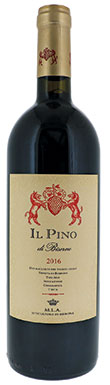
Cabernet Franc dominates this blend (52%), with a high percentage of Merlot (30%) confirming the Left-bank style of this wine from Bibbona, on the northern...
2016
Tenuta di BisernoToscana
Tenuta di Biserno, Biserno, Toscana, Tuscany, Italy, 2015
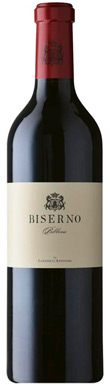
At the release of the 2015 and 2016 vintages, the comparison between the two was sometimes in favour of the former. Biserno 2015 has a...
2015
Tenuta di BisernoToscana
Tenuta di Biserno, Il Pino di Biserno, Toscana, Tuscany, Italy, 2015
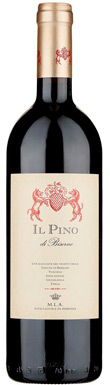
Dominated by Merlot (36%) with Cabernet Franc (30%), Petit Verdot (20%) and Cabernet Sauvignon, this label reflects the warm, powerful 2015 vintage. Forward and generous...
2015
Tenuta di BisernoToscana
Tenuta di Biserno, Biserno, Toscana, Tuscany, Italy, 2014
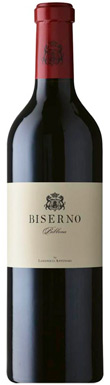
As with Pino, Biserno 2014 was produced with a severe selection in the vineyards. Today, this is the Bolgheri vintage to drink due to its...
2014
Tenuta di BisernoToscana
Tenuta di Biserno, Il Pino di Biserno, Toscana, Tuscany, Italy, 2014
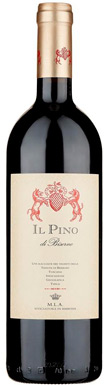
The cool 2014 vintage was one 'which I try to forget,' according to Niccolò Marzichi Lenzi. But in this vintage Pino is at the same...
2014
Tenuta di BisernoToscana
