
The rise of Crémant: The top bottles to seek out
As Crémants de Loire and Bourgogne turn 50, the style’s popularity continues to bubble up. In time for the party season, we present 20 great Crémant buys from around France


France is awash with bubbles.
And no, I’m not talking about Champagne; I’m talking about Crémant, the bottle-fermented sparkling wines made outside Champagne, across eight French regions.
From Alsace in the northeast down to Burgundy, then skirting the Alps in Jura and Savoie, south to Die and Limoux, across to Bordeaux and finally the Loire Valley, these Crémant appellations trace an effervescent tour of France.
They look back on various sparkling wine traditions and come with delicious regional accents.
Scroll down to see notes and scores for 20 superb French Crémants
A rich history
Sparkling wines have long been popular in France. Legend has it that they’ve been made in Limoux since the mid-16th century, although evidence of the wine’s effervescence is considerably younger.
It was the early success of Champagne and its processes that inspired others.
Négociant and winemaker Joseph-Jules Lausseure made Bourgogne Mousseux from his Pinot Noirs in 1818. Others soon followed and, by 1827, more than a million bottles of sparkling Burgundy had been sold in France.
Belgian Jean-Baptiste Ackerman pioneered the style in the Loire Valley, a hub of sparkling wine production to this day.
He founded his trading house in Saumur in 1811, got into wine production, experimented, and received a gold medal at the 1838 Industrial Exposition of Angers for his 1836 sparkling wine. Troglodyte cellars, carved into the local tuffeau limestone, were ideal, of course.
In Alsace, Mousseux d’Alsace was made in the 1880s and ’90s, but it took young Julien Dopff, from a family of coopers and wine producers, to take the idea mainstream.
He had visited the Paris Universal Exposition in 1900, discovered Champagne and the méthode Champenoise (as it was then known), and promptly decided to train in Epernay. He then began to make sparkling wine back home in Alsace.
The official stamp

Internationally, the success of Champagne, its marketing nous and the region’s fierce stance on defending its (well-deserved) status and quality have left other regional French sparkling styles firmly in the shadows.
While Champagne has had a legally protected name since 1887, legally fixed boundaries since 1927 and formalised appellation laws since 1936, other sparkling wines had to wait longer for legal definition, despite their entrenched histories.
Initially, local traditions were subsumed into appellation laws, as in Vouvray in 1936, or recognised separately, as in Bourgogne Mousseux (1943) and Saumur (1957); however, ongoing legal wrangling with Champagne and integration with European laws finally resulted in the creation of dedicated appellations for Crémant, starting in the 1970s.
Crémant de Loire and de Bourgogne, both of which were created in 1975, are celebrating their 50th anniversaries this year, while Alsace will do so in 2026.
Crémant appellations for Limoux (Languedoc) and Bordeaux were formalised in 1990, Die (Drôme) in 1993, Jura in 1995 and Savoie in 2015.
Know your Crémant styles
France
Loire
AP received 1975
Colours white, rosé
Area in production 3,600ha
Grape varieties Chardonnay, Chenin Blanc, Orbois, Cabernet Franc, Cabernet Sauvignon (max 30%), Grolleau, Grolleau Gris, Pineau d’Aunis (max 30%), Pinot Noir
Bourgogne
AP received 1975
Colours white, rosé
Area in production 3,433ha
Grape varieties Pinot Noir, Chardonnay (min 30%), Gamay (max 30%), Aligoté, Pinot Gris, Pinot Blanc, Sacy, Melon
Alsace
AP received 1976
Colours white, rosé
Area in production 4,567ha
Grape varieties Auxerrois, Chardonnay, Pinot Blanc, Pinot Gris, Pinot Noir, Riesling; rosé wines must be 100% Pinot Noir
Limoux
AP received 1990
Colours white, rosé
Area in production 1,097ha
Grape varieties Chardonnay (min 30%), Chenin Blanc (min 10%), Mauzac (max 20%), Pinot Noir (max 30%)
Bordeaux
AP received 1990
Colours white, rosé
Area in production 1,927ha
Grape varieties Cabernet Franc, Cabernet Sauvignon, Carmenère, Malbec, Merlot, Petit Verdot, Muscadelle, Sauvignon Blanc, Sauvignon Gris, Semillon plus ‘supporting’ varieties Ugni Blanc, Colombard and Merlot Blanc (max 30% alone or together)
Die
AP received 1993
Colours white
Area in production 66ha
Grape varieties Clairette, Aligoté (10%-40%), Muscat Blanc à Petits Grains (5%-10%)
Jura
AP received 1995
Colours white, rosé
Area in production 298ha
Grape varieties Chardonnay, Pinot Noir, Savagnin, Poulsard, Trousseau. For white: Chardonnay, Pinot Noir and Trousseau can account for min. 70% of the blend; for rosé, Pinot Noir, Poulsard and Trousseau must represent min 50% of the blend
Savoie
AP received 2015
Colours white
Area in production 47ha
Grape varieties Jacquère (min 40%), Altesse (together with Jacquère min 60%), Aligoté, Mondeuse Blanche, Chardonnay, Chasselas, Molette, Gamay, Mondeuse, Pinot Noir; max 20% of red grapes
Luxembourg
AP received 1991
Colours white, rosé
Area in production n/a
Grape varieties Elbling, Müller-Thurgau, Auxerrois, Pinot Blanc, Pinot Gris, Pinot Noir, Chardonnay, Riesling, Saint Laurent, Sylvaner
Perfect party choice
These appellation laws are tailored to the production of sparkling wine. The foremost aim is to prevent the oxidation of grape juice before pressing.
All Crémant rules thus mandate hand harvesting and the size or fill height of the transport containers of the grapes. Even the maximum drop from hopper to press is governed, as is the maximum time between picking and pressing.
Grapes must be whole-bunch-pressed and only to a specified limit. Only grapes for rosé wines may be macerated on the skins.
Wines must be made by second fermentation in bottle, spend at least nine months maturing on lees and have a certain minimum pressure.
Buying Crémant thus guarantees a minimum level of sparkling wine quality – a standard that countless producers have mastered, scaled and translated into price.
It’s perfectly possible to buy Crémant in a French supermarket for far less than €10, less than £15 here in the UK and less than $30 or even $20 in the US.
This makes Crémant a real value proposition, especially for parties, but it also means that there are many perfectly correct but uninspiring Crémants out there.
Beyond France? Look out for Crémant de Luxembourg
Formalised in 1991, Crémant de Luxembourg is made from grapes grown along the western bank of the Moselle river.
Unlike in neighbouring Germany, where the river grinds its way through the Rhenish slate massif, the soils along this 42km stretch are of Triassic marls and limestone where Pinot varieties, Chardonnay and Riesling thrive very close to the 50th parallel of latitude – further north than either Epernay or Reims. Each year, the country produces about three million bottles.
Domaine Alice Hartmann, Brut, Crémant de Luxembourg, Moselle, Luxembourg NV 90pts

Made from half Riesling and roughly a quarter each of Pinot Noir and Chardonnay, the last two having been matured in oak as base wine.
Lovely aromas of tangerine jelly and peel join a creamy smokiness. The palate straddles that smooth, oaky creaminess with bright, fresh Riesling fruit, offering a touch of honey and more tangerine.
Aged for just 18 months on lees, this is a sophisticated yet fruit-driven, light-bodied Crémant that will work both as aperitif and alongside spicy dishes. Drink 2025-2030 Alcohol 12.5%
Finding the jewels

So how do you spot the great ones?
Beyond paying attention to Crémants with longer lees ageing, look for special cuvées from the larger producers and for Crémants made by smaller, artisanal producers – and chat to your wine merchant.
Right now, Crémant is surfing a wave. The French national federation of Crémant producers reports that in 2024, 114.5 million bottles of Crémant were sold at home and abroad, grown across about 15,000ha in eight appellations.
The upward trend in production – amounting to a 47% increase between 2016 and 2024 – is ‘developing in line with market demand’, the federation says.
These numbers are dwarfed by Champagne’s 34,200ha and 271 million bottles sold in 2024, but Crémant d’Alsace is now the most popular traditional-method sparkling wine sold in France after Champagne.
Crémant works as a value alternative for Champagne – especially if you look to Crémant de Bourgogne, which is often made from Chardonnay and Pinot Noir – or as a sparkling wine category in its own right, full of wonderful local inflections: an effervescent Jacquère, a sparkling Clairette, a Crémant dosaged with Vin Jaune? Yes please!
Krebiehl’s pick: 20 excellent Crémant buys from around France
Related articles
- Champagne Dhondt-Grellet: The young grower at the top of his game
- Great-value sparkling wine: 18 bottles to try
- Vintage English sparkling wine: Panel tasting results
Domaine des Grandes Espérances, Barbule Extra Brut, Crémant de Loire, Loire, France
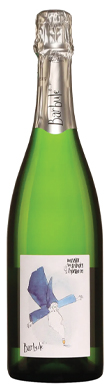

With about 36 months on lees and no dosage, this golden wine offers beautiful varietal expression, starting with hayflowers and blossom honey alongside a gentle...
Domaine des Grandes EspérancesCrémant de Loire

Domaine Frantz Chagnoleau, Staccato Brut Nature, Crémant de Bourgogne, Burgundy, France, 2017
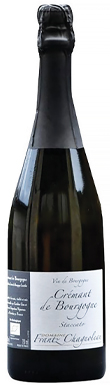
From a tiny domaine in the Mâcon, this is an artisanal blanc de blancs, made from fruit grown in St-Aubin. The wine spent 48 months...
2017
Domaine Frantz ChagnoleauCrémant de Bourgogne
Etienne Fort, Monsieur S Brut Nature, Crémant de Limoux, Languedoc-Roussillon, France
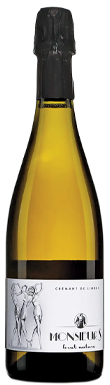
A serious, artisanal Crémant. Right from the off, you get creamy, salty apple aromas that shimmer with rye sourdough and sea breeze, suggesting richness and...
Etienne FortCrémant de Limoux
Fruitière Vinicole d’Arbois, Béthanie Brut, Crémant du Jura, Jura, France
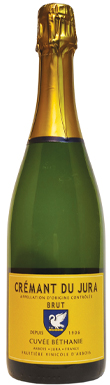
A classy, bone-dry wine that is a pure Chardonnay base wine with a decisive addition of Vin Jaune, made from Savagnin, as dosage. Exquisite aromas...
Fruitière Vinicole d’ArboisCrémant du Jura
Dopff, Chardonnay Brut Nature, Crémant d’Alsace, Alsace, France, 2020
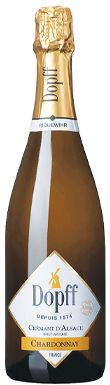
An exceptionally pure wine from one of Alsace’s Crémant pioneers, made from Chardonnay only, with no added sulphur or sugar. It spent three years on...
2020
DopffCrémant d’Alsace
Albert Mann, Extra Brut, Crémant d’Alsace, Alsace, France, 2022
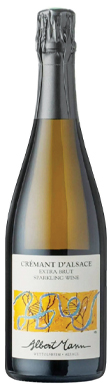
Lightness and poise are central to this elegant Crémant from one of Alsace’s foremost domaines. It’s based on mostly Pinot Blanc, but the grape’s linearity...
2022
Albert MannCrémant d’Alsace
Domaine de l'Idylle, Extra Brut, Crémant de Savoie, Savoie, France
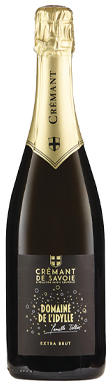
Made from a blend of two local Savoie varieties, Jacquère and Roussette, with some Chardonnay, this hails from Alpine heights and speaks of creaminess and...
Domaine de l'IdylleCrémant de Savoie
J Laurens, Les Graimenous Brut, Crémant de Limoux, Languedoc-Roussillon, France, 2023
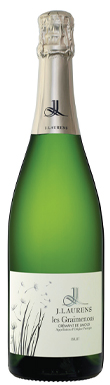
This elegant, light-bodied but superbly smooth Crémant is a blend of Chardonnay, Chenin Blanc, Mauzac and Pinot Noir. Subtle smokiness opens into gentle lemon and...
2023
J LaurensCrémant de Limoux
Jean Chartron, Le Crémant de Jean Blanc de Blancs Brut, Crémant de Bourgogne, Burgundy, France, 2023
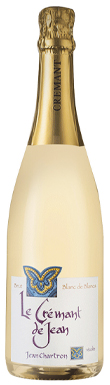
Made by a winemaker with a reputation for fine Puligny-Montrachet, this blanc de blancs is immediately stony and pure on the nose, accompanied by a...
2023
Jean ChartronCrémant de Bourgogne
Roche Lacour, Cuvée de Réserve Brut, Crémant de Limoux, Languedoc-Roussillon, France, 2018
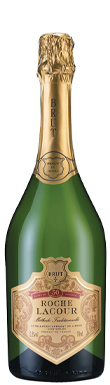
Oak ageing and long lees ageing set this vintage Crémant apart. Neither oak nor time have obscured the beautiful fruit on the nose – a...
2018
Roche LacourCrémant de Limoux
Cave de Lugny, Blanc de Blancs Brut, Crémant de Bourgogne, Burgundy, France
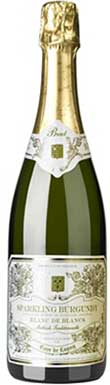
89
One of the most reliable and best-value Crémants around. Delivers wonderful blanc de blancs slenderness and lightness, and brims with flavours of green apple, white pear and lemon. Its lively mousse is persistent and helps to swirl these fresh and appetising notions of orchard fruits and citrus, finishing with just a touch of toastiness. A perfect light aperitif that will also be lovely with seafood starters.
Cave de LugnyCrémant de Bourgogne
Amélie Guillot, Brut, Crémant du Jura, Jura, France
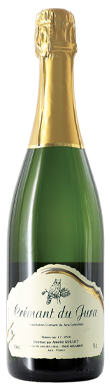
Crafted from Chardonnay and Savagnin, this spent just a year on lees, and offers overtones of hay and blossom honey. The palate is exquisitely light,...
Amélie GuillotCrémant du Jura
Château Bauduc, Blanc de Blancs Brut, Crémant de Bordeaux, Bordeaux, France, 2021
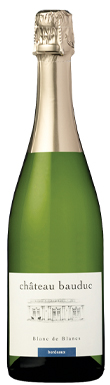
Semillon with a dash of Sauvignon Blanc, aged for two years on lees. Opens with a sense of freshly baked sponge cake, followed by that...
2021
Château BauducCrémant de Bordeaux
Celene, Cuvée Royale Brut, Crémant de Bordeaux, Bordeaux, France
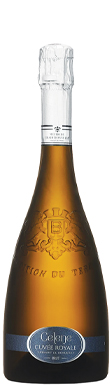
Fragrant lemon, immediate brightness and subtle florality, all on an ultra-light body. A blend of Cabernet Sauvignon, Semillon and Muscadelle, this just sings, coming across...
CeleneCrémant de Bordeaux
Sauvion, Brut, Crémant de Loire, Loire, France
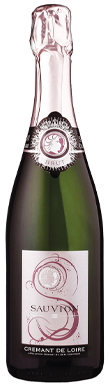
A blend of Chardonnay and Chenin Blanc, this zippy, bright wine spent just 12 months on lees. The tender nose offers lemon zest, crunchy green...
SauvionCrémant de Loire
Stephane Aladame, Blanc de Blancs Extra Brut, Crémant de Bourgogne, Burgundy, France, 2020
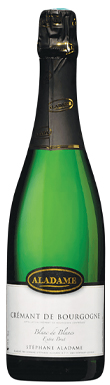
From the Côte Chalonnaise, this is a blend of Aligoté and Chardonnay that spent 15 months on lees. A slender, citrus-focused wine with a nose...
2020
Stephane AladameCrémant de Bourgogne
Achard-Vincent, P'tit Jules Brut, Crémant de Die, Rhône, France
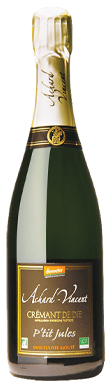
This ultra-light Crémant speaks eloquently of its origin, with the aromatic Muscat grape leaving a real signature. While not obvious, it lends a subtle florality...
Achard-VincentCrémant de Die
Domaine Langlois-Château, Rosé Brut, Crémant de Loire, Loire, France
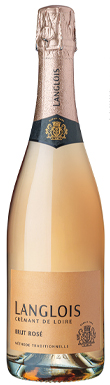
90
Langlois-Château is part of the Bollinger stable, so you know you're guaranteed a quality fizz here. Made from 100% Cabernet Franc, it's full of juicy redcurrant fruit, ripe red apple acidity and a creamy, strawberry yoghurt length. A bright, lively fizz that would transition well from balcony aperitif to the dinner table. The straight Crémant Brut (a Chenin-Chardonnay-Cabernet Franc blend) is also enjoyable.
Domaine Langlois-ChâteauCrémant de Loire
Cattin, Sauvage Rosé Brut, Crémant d’Alsace, Alsace, France
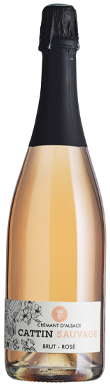
Like all pink Crémant d’Alsace, this is a pure Pinot Noir. Gentle smokiness on the nose speaks of a reductive style that soon makes room...
CattinCrémant d’Alsace
Jean-Charles Boisset, JCB No.69 Rosé Brut, Crémant de Bourgogne, Burgundy, France
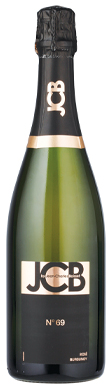
A blend of Chardonnay, Pinot Noir, Gamay and Aligoté. Almost luridly pink; the nose is reminiscent of cherry candy with overtones of lime peel and...
Jean-Charles BoissetCrémant de Bourgogne
