
Understanding Graves plus 12 top-value wines worth seeking out
Rich in wine history, Graves and Pessac-Léognan offer quality and value at a range of price points, from easy-drinking styles to high-end examples with long-term potential. Here’s our comprehensive guide.

Stretching from Pessac some 50km southwards to the town of Langon, the vineyards of Graves are bordered to the west and south by pine forest and to the east by the Garonne river.
Within Graves, in its northern sector, is the more recently created (1987) appellation of Pessac-Léognan, which includes all classified Graves wines. While all Pessac-Léognan wines are part of the Graves region, not all Graves wines are Pessac-Léognan.
Scroll down to see tasting notes and scores for 12 Graves wines to try
One of Bordeaux’s oldest winemaking regions, Graves has been exporting wine since Eleanor of Aquitaine married Henry of Anjou, who became king of England in 1154, creating a flourishing trade with France. These days, the region offers a wide variety of red and white wines, at many different price points.
Graves & Pessac-Léognan: the facts
Graves AP: Established in 1937
Pessac-Léognan AP: Established in 1987
Planted area: Graves 3,500ha; Pessac-Léognan 1,791ha
Production (bottles): Graves 20 million; Pessac-Léognan 8m
Grapes: About 75% red wines made primarily from Cabernet Sauvignon, Merlot and Cabernet Franc and about 25% white wines made from Sauvignon Blanc, Semillon and Muscadelle
Winemakers: More than 200 in Graves, 75 in Pessac-Léognan
Classification: All 16 estates from the 1953 Classification for Graves are located in the Pessac-Léognan AP. Of the 14 estates, six are classified for both their red and white wines, seven for their reds only, and three for their whites. All are ranked equally as cru classé de Graves.
Where to start
Starting at the lower end of the scale, the southern Graves region features many entry-level wines. Here, smooth and easy-drinking reds such as Château Villa Bel-Air, and crisp, cool dry whites such as Châteaux Les Clauzots or du Seuil, can be found at prices in the £15-£20 range in the UK. One finds different styles, too: from a more structured red at Château Rahoul, for example, to oak-seasoned white blends, such as Cuvée Caroline from Château de Chantegrive.
In response to the wider Graves area developing a ‘less valued image’ following the creation of the Pessac-Léognan appellation in 1987, Marie-Hélène Lévêque of Château de Chantegrive stresses that a new generation of ‘bold properties and wine-growers’ is making wines with advantageous price/quality ratios.
Indeed, an initiative this year is the region’s Ambassadeur de Graves label, which is innovative in involving consumers in choosing the most ‘emblematic’ Graves estates and wines, increasing visibility for the southern part of the appellation. The sheer beauty of the region, with its gently rolling hills and historical sites, is also ideal for bed-and-breakfast wine tourism, which is developing rapidly.
In the north, the region’s famous gravels, which are ideal for draining excess water and ripening grapes, are especially deep at estates in the Pessac-Léognan appellation. Here, there are more stringent rules for vineyard planting-density and yields. The highest vineyard elevation reaches 60m in altitude, at Domaine de Chevalier.
Some producers, such as Florence Cathiard of Château Smith Haut Lafitte, believe the more recent appellation can confuse consumers. ‘The Graves name was perhaps more significant and relevant for the terroir, and the [Pessac-Léognan] classification lacks hierarchy,’ she says.
But, because the Pessac-Léognan appellation lacks the same brand recognition as St-Emilion or Pauillac, for example, many wines tend to be relatively well priced for the quality – even the more expensive brands.

Mid-range value
At the next level up, Graves wines can be especially interesting, as the past decade has seen many estates improving quality, outpacing their market value.
At Château Olivier in Pessac-Léognan, for intance, which is classified for both its red and white wines, director Laurent Lebrun carried out a comprehensive study of the 230ha estate (61ha under vine). Subsequent replanting led to better wines and new discoveries. For example, Cabernet Sauvignon works well when planted in cooler clay soils, given global warming.
‘Thirty years ago, you couldn’t ripen Cabernets without gravel, but with warming, clay brings needed tension and minerality,’ says Lebrun.
At least three other classified Pessac-Léognan estates have come on strongly in recent years, too: Châteaux Bouscaut, Latour-Martillac and Malartic-Lagravière. Their red wines possess greater depth and length than their counterparts in the southern Graves.
New trends are developing at Vignobles André Lurton’s Château Couhins-Lurton and Château La Louvière. With global warming, the cooler soils at both estates are yielding ageworthy wines of fine balance, and at economical pricing.
André Lurton, who died in May 2019, purchased La Louvière back in 1965 and was instrumental in the campaign to create the Pessac-Léognan appellation. Influential consultant Denis Dubourdieu, who passed away in 2016, assisted Lurton and many other winemakers in the region, leaving an important imprint for crafting high-toned wines with energy.
Lurton’s son Jacques took over as president of the company, with a vision to add ‘Burgundian texture’ to the wines. They are intended to maintain the energy of his father’s style but have more body.
Top-end strength
The Graves region’s cream of the crop has to be first growth estate Château Haut-Brion: not only part of the 1953 Graves classification, but also the only red wine producer outside the Médoc to have been included in the 1855 Grand Cru Classé classification – indeed, as one of only four premiers crus classés estates at the time, with Château Mouton Rothschild being promoted in 1973 to make it five firsts.
Its Pessac vineyard contains a complex variety of soils, from sandy gravels to limestone. Heat from the nearby city of Bordeaux, combined with the effects of climate change, have led to higher alcohol levels in recent years, but the wine – along with that of sister estate La Mission Haut-Brion – develops beguiling aromatic complexity and depth, reflecting unique and outstanding quality. Château Haut-Brion also crafts amazing, if very pricey, dry white wines on a very small scale.
Just down the road from Haut-Brion is the famous Château Pape Clément – named after the eponymous 14th-century French pope. The style of Pape Clément’s wine tends towards density and power, influenced by the warmer urban climate. Its white wine, also classified, is regarded as one of the most opulent in Pessac-Léognan.
By contrast, Domaine de Chevalier in Léognan, surrounded by forest, has a cooler microclimate and exudes great elegance and precision in its red and white wines, also both classified. Olivier Bernard, the owner since 1983, has cut back some of the surrounding forest to reduce the threat of frost, but there remain significant variations in temperature between night and day, ensuring complexity and freshness.
Producing only red wine, the highly esteemed Château Haut-Bailly, also in Léognan, has some of the oldest vines in the appellation, which contribute to elegance and density. The estate recently reconstructed its cellar space to store barrels at a more stable temperature, which is ‘critical during the ageing process’, according to director Véronique Sanders.
It has also added two ‘cold chambers’ to cool grapes before vinification, as well as isothermal fermentation vats to enable better control of temperatures. Its American owners, the Wilmers family, also own neighbouring Château Le Pape, which, as well as making fine wine, is an award-winning bed-and-breakfast featuring a rooftop garden.
When Florence and Daniel Cathiard acquired Château Smith Haut Lafitte in 1990, they not only achieved incredible improvements in quality for the red (classified) and white wines, but also earned recognition throughout the region for having made a huge contribution to wine tourism. The estate was certified organic in 2019, and endeavours include their famous wine spa hotel, wine-related beauty brand Caudalie and art installations around the estate.
Led by Château Haut-Brion, the wines of Pessac-Léognan count among the best that Bordeaux has to offer, both whites and reds. And while the winemakers may be competitors, estates exude a tangible team spirit in organising annual events together, such as harvest celebration parties, group tastings and dinners, revealing an admirable solidarity that’s hard to match elsewhere in Bordeaux.
Terroir and climate
Graves and Pessac-Léognan are considered ‘Left Bank’ appellations of Bordeaux because they lie to the left of the Garonne river.
The famous Médoc gravel terraces from the north continue into the Graves region, named after its gravel-rich soils, mixed with sand, clay and some limestone. The river to the east mitigates frost, and the forest to the west protects against the prevailing winds and keeps soils moist. As temperatures are generally higher than in other Bordeaux appellations, its vineyards are among Bordeaux’s earliest to ripen.
Quality outside the classification
There are plenty of notable Pessac-Léognan wines that aren’t classified. Take, for example, Château Smith Haut Lafitte’s world-class white. The result of everything from careful attention to how much sunlight the grapes get in order to preserve acidity, to inert pneumatic horizontal presses to prevent oxidation (and loss of aromas and colour degradation), it doesn’t feature in the classification only because Smith Haut Lafitte wasn’t making white wine in the 1950s.
Another non-classified wine can be counted as one of the appellation’s top reds: Château Les Carmes Haut-Brion. The owner at the time chose not to apply, but today the wine would surely be included if the classification were to be held.
Not to be confused with the Domaine Clarence Dillon properties of Châteaux Haut-Brion and La Mission Haut-Brion, Les Carmes is unusual for its high proportion of Cabernet Franc. Located on the outskirts of the city of Bordeaux, the estate boasts a contemporary winery that was completed for the 2015 harvest . Designed by Philippe Starck and Luc Arsène-Henry, it is built partly underground, resembling the hull of a ship.

Reds and whites: vintage variation
When buying Graves, it’s worth bearing in mind that vintage quality for whites may not always be the same as for reds – and vice versa. For example, 2017 was superb for white wines. Cool, dry weather resulted in crisp, refreshing wines, and grapes were picked under excellent conditions, whereas in September there was rainfall that complicated the vintage for the reds. By contrast, 2016 is considered a top red wine vintage, with wines exuding density and freshness, but the whites lack the requisite acidity for optimal verve and energy. On a few occasions, however, both reds and whites have been excellent, such as in 2010.
Graves & Pessac-Léognan: Panos Kakaviatos’ 12 to try
Related content
Bordeaux 2020: Release prices and scores
Anson: Bordeaux’s single-variety wines under the spotlight
How the Bordeaux 2008 first growths taste now
Château Smith Haut Lafitte, Blanc, Pessac-Léognan, Bordeaux, France, 2017
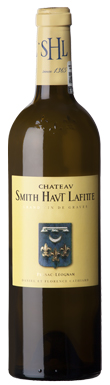

Floral and acacia aromas, with lemongrass, sweet herb, juicy pear, wet stone and white pepper. Full-bodied and creamy in texture, but with exquisite brightness, balance...
2017
Château Smith Haut LafittePessac-Léognan

Domaine de Chevalier, Blanc, Pessac-Léognan, Cru Classé de Graves, Bordeaux, France, 2017
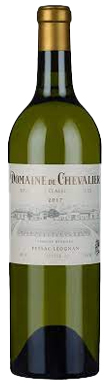
Opulent and refined, revealing vivid juicy peach, fresh pear and lime freshness. Mid-palate succulence is balanced by a long finish marked by springtime floral bouquet...
2017
Domaine de ChevalierPessac-Léognan
Château Malartic-Lagravière, Blanc, Pessac-Léognan, Cru Classé de Graves, Bordeaux, France, 2017
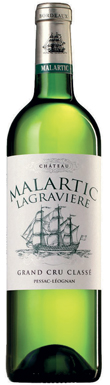
Carafing brought out spring flower, oyster shell, fleshy peach and vivid lime aromas. Rather round, almost creamy on the palate. Excellent mid-palate sap, concentration and...
2017
Château Malartic-LagravièrePessac-Léognan
Château Olivier, Blanc, Pessac-Léognan, Cru Classé de Graves, Bordeaux, France, 2017
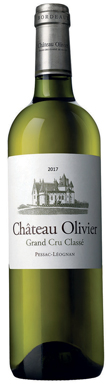
Brisk aromas of orchard fruit, pink grapefruit, Italian clementines and lime. Shaved almond in a suave texture on the palate. Refined freshness and balance quench...
2017
Château OlivierPessac-Léognan
Château Chantegrive, Cuvée Caroline, Graves, Bordeaux, France, 2017
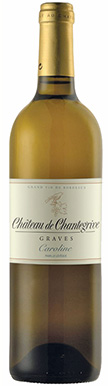
This is crowd-pleasing, with rather pronounced oak aspects. I like the mandarin orange, white peach, and not overbearing vanilla tones. The finish is fresh with...
2017
Château ChantegriveGraves
Château Rahoul, Blanc, Graves, Bordeaux, France, 2017
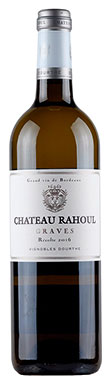
Lovely pear and peach aspects, harmonious aromas. The palate is brisk and bright. Lees stirring adds complexity to fine fruit purity. Delicious with mildly spiced...
2017
Château RahoulGraves
Château Haut-Bailly, Pessac-Léognan, Cru Classé de Graves, Bordeaux, France, 2016
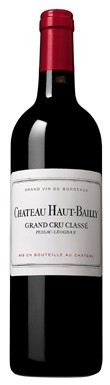
Refined, elegant, brilliant. Spring rain and a dry, sunny summer and autumn meant perfectly ripe grapes, a growing season CEO Véronique Sanders dubbed Le Bonheur...
2016
Château Haut-BaillyPessac-Léognan
Château Les Carmes Haut-Brion, Pessac-Léognan, Bordeaux, France, 2016
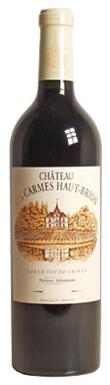
Refined, if a bit closed in at this stage, slowly revealing blackberry, juicy damson and tobacco leaf. The palate comes across with wet stone, much...
2016
Château Les Carmes Haut-BrionPessac-Léognan
Château Carbonnieux, Pessac-Léognan, Cru Classé de Graves, Bordeaux, France, 2016
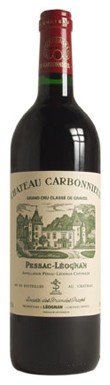
Château Carbonnieux has returned to traditional working of the soils and is trialling organic farming methods. The property consists of 119 plots with a range...
2016
Château CarbonnieuxPessac-Léognan
Château La Louvière, Pessac-Léognan, Bordeaux, France, 2016
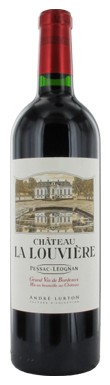
Complex nose of cigar box, crushed stones, cedary wood and fleshy dark fruits. Very smooth on the palate, rich and fleshy with a lovely tannic...
2016
Château La LouvièrePessac-Léognan
Château Rahoul, Graves, Bordeaux, France, 2016
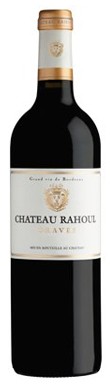
Elegant aromas of pencil shavings, cocoa and broad black fruits. Lovely intensity and sinewy tannins. Savoury finish.
2016
Château RahoulGraves
Château Villa Bel-Air, Graves, Bordeaux, France, 2016
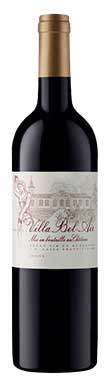
Ambitious nose with forward aromas of chocolate and vanilla and leafy nuances. Ripe and fleshy black fruits, with some opulence on the palate and a...
2016
Château Villa Bel-AirGraves
