
Vernaccia di San Gimignano: Tuscany’s supreme white wine territory
Lying in the west of one of the world’s prime red wine areas, the DOCG of Vernaccia di San Gimignano produces only whites. Some styles are delicious in their first flush of youth, while other bottlings can be a great off-beat choice for cellaring.


In the province of Siena, in the heart of Tuscany, lives the ‘white queen’ – Vernaccia di San Gimignano – whose name is taken by both the DOCG region and its key grape variety. Her vineyards gaze up to the striking hilltop skyline of the UNESCO World Heritage-listed medieval ‘city of towers’ (there are 14 that remain visible today) of San Gimignano.
To taste Vernaccia di San Gimignano is to be transported into a historical tapestry of art and culture; lauded by poets, popes and aristocrats, this wine’s long, noble recorded history dates back to at least 1276.
Scroll down to see notes and scores for 10 characterful wines from Vernaccia di San Gimignano
Covering some 750ha, the denomination’s production has been steady for decades (the register of vineyards closed in 1998) at about five million bottles, but its value has increased. ‘We have seen renewed interest in historic indigenous white wines, which are versatile and pair well with food,’ says Irina Guicciardini Strozzi, president of the Vernaccia di San Gimignano consorzio. ‘Remember, we were Italy’s first DOC, certified in 1966.’
The DOCG status came in 1993, after the modern renaissance driven by local growers as well as people arriving from other regions, beginning in the 1980s. The soil here formed over Pliocene marine deposits of yellow sand and clays, often layered over denser blue clay beds.
‘The soil influences the wine’s style,’ says agronomist and vice president of the consorzio Nadia Betti. ‘While no zoning has ever been done, we can identify four zones: those which give complex, structured wines; those producing very fruity, fresh Vernaccia that is ready sooner; others which produce less-fruity but savoury wines; and, lastly, zones offering lighter-bodied yet elegant, mineral Vernaccia.’
Vintage Vernaccia & Riserva
‘Pity the poor Vernaccias that are sold and drunk too soon, without their true value being understood,’ says Francesco Galgani at Cappella Sant’Andrea. Indeed, time is crucial to understanding Vernaccia. The ‘annata’ wines (the benchmark wines of the vintage) display subtle, fine, fruity and floral aromas and are pleasant, saline and very quaffable.
Above all, they have gourmet potential, their typical savouriness pairing well with meals, drawing out flavour and in turn being enhanced by the food. Give the annatas a few years and they gain in complexity, revealing their true nature. The Riserva wines must, by regulation, age (in oak, steel, amphorae or concrete) for at least 11 months, of which three months must be in bottle, before going to market.
One point to remember is that the Riserva category doesn’t allow for a wine to be reclassified as Riserva later – the decision must be made at the time of harvest, since bunches set aside for Riserva are recorded separately. Therefore, when freshly picked, only the most valuable, highest-quality grapes are selected.

Walter Sovran, director at Panizzi, says: ‘The Riserva is made with the finest grapes, so there is a high correlation with the vineyards but not necessarily with the soil. The grapes most suitable for Riserva can come from different plots, depending on the year. The Riserva is the most ageworthy type of Vernaccia. I recently tasted the Panizzi 1990 Riservas again and found them intact and still lively.’
The late Giovanni Panizzi, who was president of the consorzio from 2003 to 2009, and Elisabetta Fagiuoli, owner of Montenidoli, always focused on Vernaccia’s potential for evolution over time; other producers then followed suit.
As it matures, Vernaccia changes and improves considerably – in the Riservas it strikes a balance between an acidic, sapid backbone and a full, structured intricacy, displaying deeper and more complex aromas, too (think saffron and flint). If you’re patient, Vernaccia di San Gimignano is sure to impress.
When visiting the city of towers, drop by the consorzio’s wine bar – you’ll be surprised at how this unique white can evolve.
Five producers to know
Cappella Sant’Andrea

This 7.5ha organic vineyard includes a number of 60- and 100-year-old vines that have been trained up small maple trees. The winery also produces Vernaccia Riserva in amphorae. The wines undergo spontaneous fermentation with natural yeasts and their strong character expresses the terroir with authenticity. cappellasantandrea.it
Fattoria San Donato

It’s worth making the journey to the medieval village of San Donato, home to the eponymous fattoria. Umberto Fenzi and family have managed the 20ha organic vineyard for more than 20 years, alongside 180ha of olive groves, orchards, crops such as spelt, barley and chickpeas, saffron, livestock and a farmstay that offers cookery classes. Their wines embody the true spirit of the terroir. sandonato.it
Il Colombaio di Santa Chiara

The Logi family’s wines are guaranteed to provide precision, verticality and slow evolution. The Locanda dei Logi (an upscale farmstay in the former rectory and adjacent buildings of the small Romanesque San Donato church, just southwest of San Gimignano), the new Osteria della Locanda and the wine shop are all well worth a visit. colombaiosantachiara.it
Montenidoli

Elisabetta Fagiuoli is a passionate, eminently knowledgeable wine-grower. It was 1965 when she moved to Montenidoli, on one of Tuscany’s oldest hilltops, high up on dolomitic limestone soil. Her wines clearly encapsulate the spirit of their birthplace, set among 200ha of forests. montenidoli.com
Tenute Guicciardini Strozzi

With more than 1,000 years of history, this estate covers 530ha (with 90ha of vineyards) a few kilometres northeast of the city of towers. A visit to the winery is a unique experience, encompassing rolling hills, woods, vineyards, a stately home and park, historic wine cellars and a truffle orchard. guicciardinistrozzi.it
A view on Vernaccia: Piubello’s 10 wines to try
Related articles
- Expert’s Choice: Coastal Tuscany
- The lesser-known Tuscany: 12 hidden gems to discover
- Decanter’s rare finds: A journey through Italy’s lesser-known varieties
Cesani, Sanice Riserva, Vernaccia di San Gimignano, Tuscany, Italy, 2020
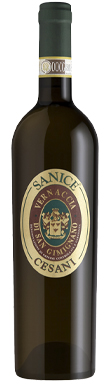

Clear aromas of camomile, yellow peach and graphite herald a structured, balanced and juicy palate with substance and good progression. The Cesani family have been...
2020
CesaniVernaccia di San Gimignano

Terre di Sovernaja, Assola Riserva, Vernaccia di San Gimignano, Tuscany, Italy, 2021
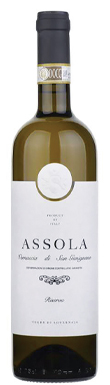
Displays clear aromas of sweet spices, citrus fruits and chalk. Its pure style and expressive complexity are captivating. Federico Montagnani grew up among vineyards and...
2021
Terre di SovernajaVernaccia di San Gimignano
Cappella Sant'Andrea, Rialto, Vernaccia di San Gimignano, Tuscany, Italy, 2022
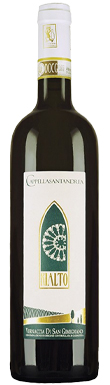
From a single vineyard, Rialto expresses clear herby, peaty and briny aromas. A quintessential Vernaccia, energetic and authentic, it makes for easy sipping. Cappella Sant'Andrea...
2022
Cappella Sant'AndreaVernaccia di San Gimignano
Il Colombaio di Santa Chiara, Campo della Pieve, Vernaccia di San Gimignano, Tuscany, Italy, 2022
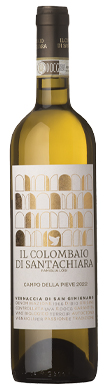
Highly distinctive, displaying herbal, citrus and elderflower aromas. There’s quintessential salinity, dynamism and depth of flavour here. From a 15-year-old vineyard, owned by the Logi...
2022
Il Colombaio di Santa ChiaraVernaccia di San Gimignano
Il Palagione, Lyra, Vernaccia di San Gimignano, Tuscany, Italy, 2021
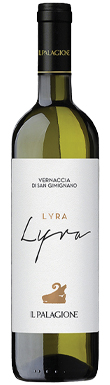
An intense nose swirls with sage, hazelnut, citrus and pencil shavings. Its profound, energetic character has substantial weight, supported by a bright streak of acidity....
2021
Il PalagioneVernaccia di San Gimignano
Panizzi, Vigna Santa Margherita, Vernaccia di San Gimignano, Tuscany, Italy, 2022
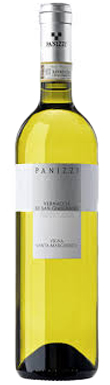
Hazelnut, floral and iodine aromas in the glass lead to a palate of remarkable depth, lifted by acidity, the flavours lingering on a spicy finish....
2022
PanizziVernaccia di San Gimignano
Casa alle Vacche, I Macchioni, Vernaccia di San Gimignano, Tuscany, Italy, 2023
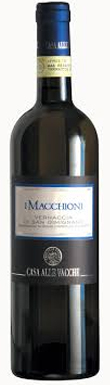
Enticing bouquet of lily of the valley, white-fleshed fruit and herbs, then a fresh, sapid texture, fine dynamic mouthfeel right through to the long finish....
2023
Casa alle VaccheVernaccia di San Gimignano
Mormoraia, Suavis, Vernaccia di San Gimignano, Tuscany, Italy, 2023
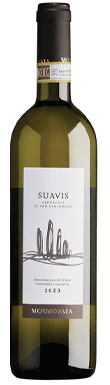
Delicate aromas range from sage to white peach and elderflower in this structured, juicy and dynamic wine, with overarching freshness and a savoury finish. At...
2023
MormoraiaVernaccia di San Gimignano
Signano, Poggiarelli, Vernaccia di San Gimignano, Tuscany, Italy, 2023
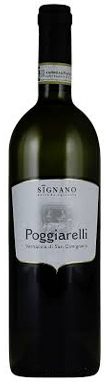
Floral notes alternate with saffron and yellow peach aromas. A well-balanced opening and fresh, dynamic progression culminates in a deliciously savoury finish. The Biaginis are...
2023
SignanoVernaccia di San Gimignano
Tenute Guicciardini Strozzi, Riserva, Vernaccia di San Gimignano, Tuscany, Italy, 2020
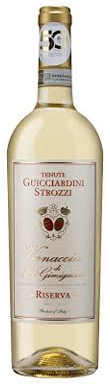
The 2020 Riserva shows finely blended herbal notes, broom, white pepper and a balsamic whisper on the nose, then a well-structured palate with complex texture...
2020
Tenute Guicciardini StrozziVernaccia di San Gimignano
