
Veuve Clicquot La Grande Dame masterclass: DFWE New York 2025
On the morning of Saturday 9 June, guests at Manhatta, Decanter’s deluxe New York Fine Wine Encounter venue, were treated to a masterclass in the art of ageing within the context of one of the most iconic prestige cuvée Champagnes from one of the most recognisable Champagne brands.


Gaëlle Goossens, senior winemaker and research and development lead at Veuve Clicquot, took guests on a deep dive into the intricacies of Veuve Clicquot’s top Champagne, La Grande Dame.
As a self-proclaimed ‘geeky wine person’, Goossens was the perfect host for this in-depth masterclass, providing listeners with a rare behind-the-scenes look at the creation and evolution of an icon.
Scroll down for notes and scores for seven vintages of La Grande Dame

The wine line up consisted of four fairly recent La Grande Dame vintages (2018, 2015, 2012, 2008), followed by a selection of Grande Dame wines from the back vintage collection (1996, 1993, 1990).
‘They are very special, very rare, and they are completely different,’ said Goossens of the older vintages. ‘This is what we want to show today: that we have the same cuvée, but different expressions.’
Many will know that the DNA of Veuve Clicquot, thanks to the conviction of its founder Madame Clicquot-Ponsardin, is its extensive use of Pinot Noir across all the Champagnes in its range.
But Goossens took the audience beyond the house’s expertise with Pinot Noir, into the complexities and subtleties of creating the prestige cuvée of one of Champagne’s biggest houses.

The new 2018
The masterclass was also the perfect opportunity for guests to taste the new 2018 vintage of La Grande Dame, launched in April this year.
2018 was a warm vintage with an abundant crop of grapes. 2015 was also a very warm year. But, as guests discovered during the masterclass, the wines couldn’t be more different.
The key is soils and water. ‘In 2015 we lacked water, so the soils suffered from one of the worst droughts of Champagne,’ said Goossens. This lack of water caused the vines to stop maturing the grapes, which Goossens said gave the wines a minty, eucalyptus aftertaste.
Conversely, in 2018 ‘we had rain all year long, so the soils kept fresh and cold’. This is reflected in 2018’s superb balance of warm, sun-kissed fruit and a high-tension, mineral core.
Instead of the usual 10 years of ageing before release, ‘we deliberately released 2018 a bit earlier than what we’re used to’, said Goossens. And here’s the interesting part. She said this is because they realised they were losing the ‘terroir window’.
By releasing after 10 years of ageing, they would have passed the youthful, fresh, mineral, terroir-driven stage of the wine’s life, but it hadn’t quite reached its tertiary stage of development, so the wine would be sat somewhere in the middle phase.
Releasing it earlier allows the wine to show its youthful characters, as well as the influence of the terroir.
‘When we say the art of ageing, it’s not always pushing the boundaries of ageing in terms of length, it’s more mastering the ageing,’ said Goossens.
See our coverage of the 2018 launch here
The nitty gritty
The house’s use of micro-vinifications is one of the keys to its consistency, resulting in lots of small vats of wines with which to choose the final blend.
‘We’ll have a single vat from a single cru, from a single year, from a single variety,’ said Goossens.
To give an idea of scale, that means every year the winemaking team tastes 700 to 800 wines from a single harvest, plus 400 to 500 different reserve wines. ‘To elaborate our blend, we need to taste more than 1,000 wines over several months,’ she said.

The second key element that Goossens revealed is the blind tasting of these wines: ‘If you want to find the best wine, you have to blind taste.’
Creating a vintage of La Grande Dame is as much about strategic decision making as it is about the quality of the vintage.
Managing the stock of reserve wines plays a key role here; enough must be put aside each vintage to ensure there is enough to create the brand’s entry-level Yellow Label each year.
‘So La Grande Dame is only made when we have enough reserve wines in our winery, and when the Pinot Noir is really extraordinary,’ said Goossens.

The goal with La Grande Dame is to put the structure and texture of Pinot Noir alongside minerality and finesse. ‘But it’s extremely hard to find finesse with Pinot Noir, it’s easier to get bigger aromas than finesse,’ says Goossens.
Finding finesse, therefore, is also about where the grapes are sourced from, she said, and this is dependent on the vintage. In a warm year like 2018, grapes were sourced primarily from the cool north-facing slopes of the Montagne de Reims, notably Verzy and Verzenay.
‘What cellar master Didier Mariotti calls “the art of blending” is actually the art of finding the right crus for the right vintage,’ says Goossens.
La Grande Dame: One cuvée, myriad expressions

Veuve Clicquot, La Grande Dame 2018
Veuve Clicquot, La Grande Dame 2015
Veuve Clicquot, La Grande Dame 2012 (magnum)
Veuve Clicquot, La Grande Dame 2008 (magnum)
Veuve Clicquot, La Grande Dame 1996 (magnum)
Veuve Clicquot, La Grande Dame 1993 (magnum)
Veuve Clicquot, La Grande Dame 1990 (magnum)
Veuve Clicquot, La Grande Dame 1990 (jeroboam)
Guests had the rare opportunity to see just how different the same cuvée can taste, depending on the circumstance: from the vintage conditions, to how long it spent on lees, to when it was disgorged, to what format it was bottled in.
La Grande Dame through the ages
Related articles
Decanter’s New York Fine Wine Encounter: Perfect port in a storm
US restaurants with the best Champagne lists
Best Champagne houses to visit
Veuve Clicquot, La Grande Dame, Champagne, France, 2018
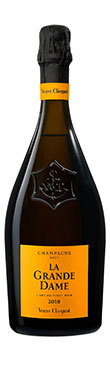

The long sunny days and warmth of the 2018 vintage has provided glowing stone and citrus fruit to this glorious Grande Dame. While the initial...
2018
Veuve Clicquot

Veuve Clicquot, La Grande Dame, Champagne, France, 2015
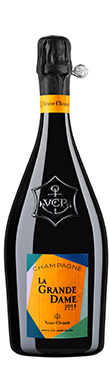
The warmth of the 2015 growing season shows its face in the form of golden fruit: yellow plum, ripe pineapple and dried orange rind. This...
2015
Veuve Clicquot
Veuve Clicquot, La Grande Dame, Champagne, France, 2012
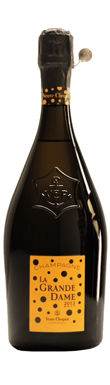
This feels a little more evolved than you might expect, aromas of crusty bread, honey, oatmeal, walnut and toasted seeds coming to the fore. It's...
2012
Veuve Clicquot
Veuve Clicquot, La Grande Dame, Champagne, France, 2008
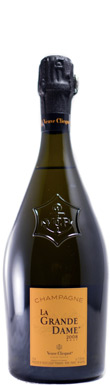
This 2008 is currently showing itself as a huge version of La Grande Dame, rushing forwards with verve and power. It's a generous wine and...
2008
Veuve Clicquot
Veuve Clicquot, La Grande Dame, Champagne, France, 1996
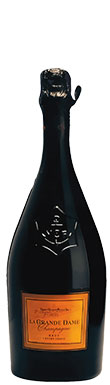
A charming vintage of La Grande Dame that's showing the fine side of age. Aromas of sweet wildflower honey, rye bread and toasted cashews lead...
1996
Veuve Clicquot
Veuve Clicquot, La Grande Dame, Champagne, France, 1993
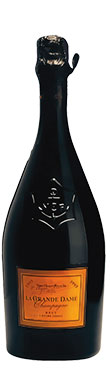
A fascinating look into the differences between early-disgorged and late-disgorged Champagne. This 1993 had been disgorged in 2003, its original disgorgement date, meaning that ...
1993
Veuve Clicquot
Veuve Clicquot, La Grande Dame (Magnum), Champagne, France, 1990
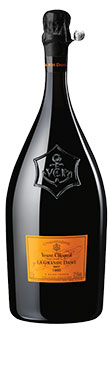
<p>(Magnum) Tasting 1990 La Grande Dame from magnum and from jeroboam side by side was a revelatory exercise. This was from magnum and it had...
1990
Veuve Clicquot
Veuve Clicquot, La Grande Dame (Jeroboam), Champagne, France, 1990
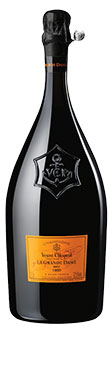
<p>(Jeroboam) Every ounce of this 1990 Grande Dame from jeroboam was trembling with chalky tension and unleashed power. Trapped inside this large format, it has...
1990
Veuve Clicquot
