Walls: Top-quality and great-value Côte-Rôtie alternatives
With the complex and aromatic wines of Côte-Rôtie in high demand, and prices climbing out of reach, Matt Walls identifies a number of Côte-Rôtie alternatives from both the Rhône and further afield which deliver on style, complexity and price.


When a grape variety is given time to ripen slowly and gradually, it develops its aromas one by one. The grape has time to listen to those aromas, to remember them all, layering them like tints in a watercolour.
When there is no race for ripeness, a grape can meander through non-fruit aromas, the subtle tones of flowers, spices and herbs that speak more of a place than of simply a grape variety.
This is why we love Syrah from the northern apex of the Rhône Valley: Côte-Rôtie. I’d drink it every day if it wasn’t so bloody expensive.
Scroll down for tasting notes and scores for Matt Walls’ Côte-Rôtie alternatives
Why Côte-Rôtie is so expensive
It’s hardly surprising that prices for Côte-Rôtie are so high. At just over 300ha, the vineyard area is a quarter of the size of Saint-Joseph, and working the rickety terraces is highly labour intensive. The demand is high for the captivating style it produces.
What is this style, exactly? It is a particularly aromatic style of Syrah, typified by violets and a subtle smoky spice. On the palate, the black olive tapenade character with its addition of rosemary, thyme and juniper appears first, before the forest berry fruits.
It is a cool, transparent style of wine with a finely-etched tannic frame and moderate alcohol. These are wines that have a natural affinity for whole bunch fermentation and oak ageing.

Thanks to Syrah’s unique adaptability, there are similar styles of wine to enjoy at lower prices if you know where to look.
Finding Côte-Rôtie alternatives close to home
Unsurprisingly, the most abundant hunting ground for Côte-Rôtie alternatives is close to the appellation itself. When it comes to the drawing of appellation boundaries, bureaucrats are fallible and vines don’t observe them anyway.
There are some beautiful slopes in and amongst those classified as Côte-Rôtie that have instead been placed under the generic Côtes-du-Rhône appellation. The quality can be excellent here, the wines are very similar in style to Côte-Rôtie, and they can offer great value for money. Domaine Jamet’s Côte-du-Rhône is the obvious example.
There are many excellent IGP Collines Rhodaniennes Syrahs grown nearby, like in the enclave of Seyssuel, on the opposite bank to Côte-Rôtie. Grown on the same sloping schistous soils, some of these are the mirror image of their more famous neighbour.
Saint-Joseph is also an area where great alternatives can be found. It is not only a larger appellation than Côte-Rôtie, but it is also much longer, stretching 50km north to south.
It rarely states on the label where the fruit is grown, but if you know it’s from the northern end of the appellation, you’re more likely to get a brisk, aromatic expression of Syrah.
Investigate those made by winemakers based in and around Ampuis and Condrieu. The best grown Saint-Josephs of Chavanay can bear a marked resemblance to Côte-Rôtie.
While the southern part of Saint-Joseph, Cornas and Hermitage tend to produce denser styles of Syrah, the granite-born Crozes-Hermitage wines grown north of Hermitage can also please lovers of the more aerial Syrahs from further north.
Finding Côte-Rôtie alternatives further afield
Further still, even outside France, there are winemakers producing Syrahs from cooler climates that can slake a thirst for Côte-Rôtie.
South Africa is your best bet, particularly Elgin, Elim, Bot River and cooler sites in Stellenbosch and Swartland.
It’s a similar story in Australia, with Yarra Valley and Adelaide Hills producing some highly elegant Syrahs.
California and Washington are players too, but when it comes to price these usually match, or even exceed, those from the Northern Rhône.
From New Zealand, examples from Hawke’s Bay tend to be the most affordable. Delicious though many are, they don’t often have the deeply savoury character and herbal aromatics that makes Côte-Rôtie so distinctive, but Trinity Hill, Elephant Hill and Bilancia are all good options.
For whatever reason, finding this style of Syrah in South America is rare. And perhaps surprisingly this is also the case for the rest of Europe. But there are several striking Syrahs coming out of Germany now, and with climate change no doubt more will follow.
A Côte-Rôtie style beyond Syrah
Why stop at Syrah? There are other grape varieties that can deliver a similar flavour profile. I would suggest Mencia. Grown in Northern Spain on the slate, schist and granite soils in Bierzo and the steep, terraced slopes of Ribera Sacra, it produces fresh and precise wines.
They tend to have a mineral core, a slim, upright frame and aromatic herb, flower and berry notes. Remind you of anything?
I am sure the producers mentioned in this piece are not aiming to copy Côte-Rôtie like for like. But I doubt they would be offended by the comparison. There’s only one place, however, that truly makes wines that taste of Côte-Rôtie. And that’s Côte-Rôtie.
14 Côte-Rôtie alternatives:
You may also like:
Côte-Rôtie 2019 report
10 exciting Rhône producers to try
Hidden gems: Domaine Burgaud producer profile
One Block, Syrah, Yarra Valley, Victoria, Australia, 2017
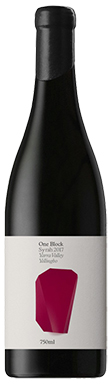

Sage and black cherry are the dominant aromas here, but most of all there’s a sense of gentle togetherness, harmony and grace in this wine. Despite being light-bodied, it has a certain presence on the palate, it moves fast. The acidity is low, but it’s not noticeable; it's a wine of great poise and precision. One of those perfectly balanced wines that appears to have made itself. It's a Syrah akin to a marble statue, with great purity, grace and coolness. Not a terribly complex or concentrated wine, but it doesn't need to be; I love it for its calmness and serenity. Coming from just one block of 20-year-old vines which are at 240m and south-west facing, in the Yellingbo area of Yarra Valley. Partly whole bunch fermented and then matured in demi-muids, of which 20% were new. Only 2,800 bottles were made.
2017
One BlockYarra Valley

Damascene, Cederberg Vineyards Syrah, Cederberg, South Africa, 2019
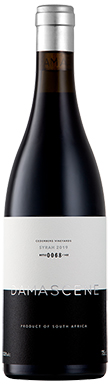
Beautifully floral aromas, with a touch of greenness that gives freshness. This evolves into graphite, black pepper and blackberry characters with a reductive edge that accentuates the aromatics. This is definitely a savoury Syrah, as opposed to a fruity Shiraz, evidenced by the tight and dry finish, which is grippy but not austere. It’s perfectly balanced, open, complex and drinkable; an excellent example of South African Syrah. The vines are at an impressive 940m altitude, it was fermented using natural yeasts and aged in foudres.
2019
Damascene
Domaine de Monteillet, St-Joseph, Rhône, France, 2018
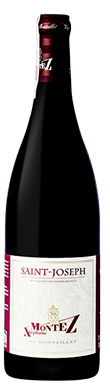
This delivers everything you would hope for from a Saint-Joseph. Violets, lavender and pink peppercorns on the nose, with some just-ripe blackberries coming through, but the fruit is secondary to the florality and spice. Smoky notes linger and in time, a touch of liquorice, star anise and cola-flavoured oak emerge. Light-bodied in the mouth, but there’s good intensity and freshness without heaviness or extraction. Having said that, there's some good grip on the front of the tongue. An excellent wine. The vines are five to 20 years old and are grown on muscovite granite in Chavanay. 20% whole bunch, fermented with natural yeasts with a submerged cap, and then matured in demi-muids for a year.
2018
Domaine de MonteilletSt-Joseph
Domaine des Amphores, Les 7 Lieux, St-Joseph, Rhône, France, 2019
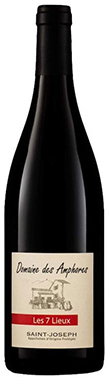
Such a beautifully captivating, floral nose with lavender, violets and roses backed up by fresh raspberry. Medium-bodied on the palate, it has a good sense of concentration but no heaviness, just intensity and a dry, mineral, precise finish. Fine, dry, grippy and clay-like tannins coat the mouth. Showing good acidity and freshness despite the heat of the 2019 vintage, this is very well-balanced and offers so much pleasure. I would drink it young, but it could be interesting with age too. Extraordinary value for money. Hand-picked grapes from five to 50-year-old vines in Chavanay, it was then matured in demi-muids.
2019
Domaine des AmphoresSt-Joseph
Domaine Faury, La Gloriette, St-Joseph, Rhône, France, 2018
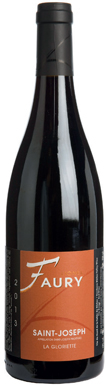
Reductive to start with, this is a distinctly tight expression of Saint-Joseph. On the palate it’s very smooth, like running your hand through a fur coat. There's a fullness and generosity on the palate that I don't always associate with this cuvée, but admittedly it's a particularly rich and ripe year. The fruit is opulent and the alcohol quite potent, but it is all in check. There's some smoky bacon tones, and the general effect is fresh despite the generous, giving fruits. Great purity and precision despite the ripeness. The grapes come from some of the finest vineyards in Chavanay, with some very old vines. It’s had 20% whole bunch, with 20% new oak use, and was matured for 18 months in barrel.
2018
Domaine FaurySt-Joseph
André Perret, Les Grisières, St-Joseph, Rhône, France, 2018
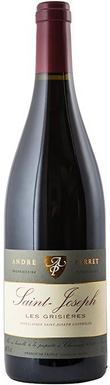
It's worth picking a hot vintage for this cuvée, and the 2018 is a case in point - the richest, most concentrated example of Les Grisières I've tasted. It doesn't lack any clarity or rigidity of tannic structure. The oak is present but well-integrated, so doesn't intrude. A flavour profile of pure forest berry fruits proves that this is very young still. The alcohol is just in balance, though higher than a typical year. The vines are from a parcel near Chavanay.
2018
André PerretSt-Joseph
Larry Cherubino, Laissez Faire Syrah, Great Southern, Western Australia, Australia, 2018
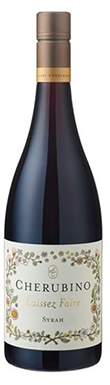
The vines for this 100% Syrah from the Great Southern area in Western Australia were dry farmed, and the grapes hand-picked and sorted. It matured for 10 months in French oak, followed by no filtration and minimal use of sulphur before bottling. There's a slight char on the nose, like herbs on the barbecue. A touch of blood mingles with black fruits and blackberries. Light-bodied, it moves quickly in the mouth and has ample tannic grip. There’s plenty of impact without weight or overt concentration, and it finishes fresh and lifted with a floral flourish. A lovely wine that’s very northern Rhône in style, I would drink this now whilst it’s young.
2018
Larry CherubinoGreat Southern
Adegas Guímaro, Finca Meixeman, Ribeira Sacra, Galicia, Spain, 2018
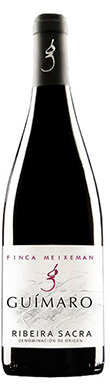
This is predominantly Mencia but also contains some Brancellao, Merenzao, Caíño Tinto, Sousón, Mouratón and Garnacha Tinta. Gently fragrant, this puts forth violets and blueberries with a subtle nuttiness and a touch of liquorice. Fairly slight in frame, it coats the tongue and delivers a gently pulling sensation in the mouth rather than a tannic grip. It feels very naturally balanced despite the low acidity, with its pure fruit, tannins and alcohol all in balance. A quiet, understated wine with a real sense of place.
2018
Adegas GuímaroRibeira Sacra
Domaine Georges Vernay, Sainte-Agathe, Collines Rhodaniennes, Rhône, France, 2018
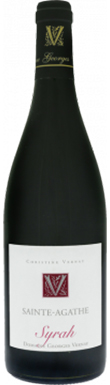
On the border of Côte-Rôtie, this parcel of old Syrah vines is planted within the boundaries of the Condrieu appellation. Beautifully expressive raspberry, juniper and rose appear on the nose. Light bodied, but with a gently plump, juicy core. Vibrant acidity and a salty finish make this lively and drinkable. I would drink this by itself and enjoy its delicacy.
2018
Domaine Georges VernayCollines Rhodaniennes
Piedrasassi, PS, Santa Barbara County, California, USA, 2018
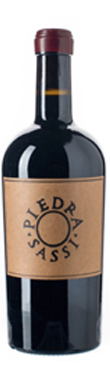
A highly expressive, effusive nose, with tomato stalk, white pepper and oregano, clearly whole bunch fermented. Combined with sandalwood characters, the nose might be too herbal for some tastes, but it certainly has its place. Light-bodied on the palate, it is light in concentration but high in aromatics, with some rose florality and lift. Very appealing and easy to drink.
2018
PiedrasassiSanta Barbara County
Pierre Gaillard, Clos de Cuminaille, St-Joseph, Rhône, France, 2016
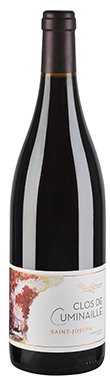
From a 40-year-old vineyard in Chavanay, grapes were fully destemmed. It’s showing blackberry, bonfire ashes and blackcurrant leaf aromas. 2016 was not the most concentrated vintage, so it’s medium-bodied but very smooth in the mouth. The finish is lifted and fresh, with bright berry acidity. Quite lean and transparent, this is mostly based around fresh acidity, with fine, slight tannins and a granitic spine. I would drink this now while there's still some fruit left, rather than aiming for further development.
2016
Pierre GaillardSt-Joseph
Stéphane Ogier, La Rosine, Collines Rhodaniennes, Rhône, France, 2018
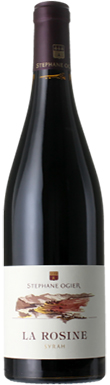
Labelled as IGP Collines Rhodaniennes, this 100% Syrah is from a vineyard just above lieu-dit Bassenon in Côte-Rôtie. 20% whole bunch was used, and it’s showing soft, squished berry fruits alongside vibrant acidity. There's a gently resinous seam that brings complexity and a distinctly northern Rhône feel. Succulent tannins make this expressive and enjoyable, with enough weight to work well with food. 2018 was a particularly ripe and plush vintage for this cuvée.
2018
Stéphane OgierCollines Rhodaniennes
Jean-Luc Jamet, L'Enclave, Côtes du Rhône, Rhône, France, 2018
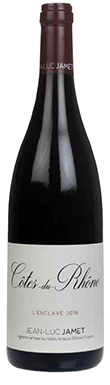
A little reticent on the nose initially, then there's subtle a whiff of bacon that comes through. A polished, medium-bodied palate that’s supported by seamless, fine tannins and concentration. There is good length, but it needs more time really, despite its sense of freshness, lift and purity. With 70% of the grapes destemmed, the wine was then matured for 10 months in a variety of barrel sizes.
2018
Jean-Luc JametCôtes du Rhône
Ziereisen, Gestad Syrah, Baden, Germany, 2016
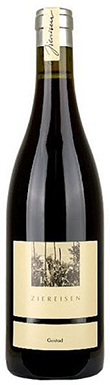
Brightly transparent with an attractive ruby colour. The nose is sappy and resinous with lots of gently tarry herbal notes. It’s light in body, but with 24 months in barriques the oak helps to bring a little generosity to the palate. Sapid raspberry fruits combine with fresh, tangy acidity and very fine tannin. This makes for a very drinkable Syrah, even in a vintage like 2016. Whatever it lacks in concentration it makes up for in intensity. Remarkably youthful and fresh considering this is five years after vintage.
2016
Ziereisen
