Walls: Exceptional single-vineyard Côte-Rôtie from Benjamin & David Duclaux
A rare vertical tasting brings attention to the quality and ageing potential of some of Côte-Rôtie's little-known single vineyards.


Côte-Rôtie is equidistant between Avignon and Beaune. It might be part of the Rhône family, but, due to its location, it can be forgiven for looking north to Burgundy as well to the southern Rhône.
Arguably, though, Côte-Rôtie has more in common with Burgundy’s Côte d’Or.
Scroll down for notes and scores of 18 wines from Benjamin & David Duclaux
If we discount an optional seasoning of Viognier, both region’s reds are monovarietal. Their climates are continental. They grow their vines on southeast-facing slopes.
There are no official premiers or grands crus in Côte-Rôtie, but the proliferation of single vineyard wines is more Burgundian in spirit than Châteauneuvois.
Until now, most have come from Ampuis’ most sacred slopes: Côte-Brune, Côte-Blonde, La Landonne.
More recently, winemakers have been singling out lieux-dits from Côte-Rôtie’s most southerly commune – Tupin-et-Semons.
Though always part of the appellation, this sector has never garnered quite the same praise as Ampuis.
But the strength of a recent tasting at Domaine Benjamin & David Duclaux suggests this terroir is ripe for reappraisal.

Brotherly love
Benjamin and David are brothers (Domaine Duclaux in Châteauneuf is no relation). They’re a jovial pair and they get on well, always cracking jokes.
David’s son Matteo has just joined the estate after a season in New Zealand, and he shares the family’s sunny disposition.
‘We’re not making wine,’ says Benjamin, ‘we’re creating moments in life to share together.’
The 5ha estate, based in the commune of Tupin-et-Semons, was established in 1928 by the brothers’ great-grandfather.
Their Syrah parcels are all planted on gneiss and surround the estate.
Except for a little Condrieu, they only make Côte-Rôtie.
Why no St-Joseph, I wondered? ‘It’s a life choice,’ says Benjamin, ‘we want to stay small and master what we do – and we have a good life as it is! We only make wine from the slopes – we were born on the slopes.’

One cuvée becomes four
Until the 2000s, they only made one Côte-Rôtie, a blend of all their plots.
In 2003 however, they decided to make an experimental barrel of their oldest vines from lieu-dit Maison Rouge, the oldest dating back to 1943.
It was never released commercially, but the quality was clear; ‘it has always been silkier, racier,’ says David. The first official vintage of Maison Rouge was 2005.
At this point they renamed their cuvée classique La Germine. This has since been joined by La Chana, a cuvée with 7% Viognier designed for early drinking.
Their fourth cuvée, Coteaux de Tupin, was first released in 2018.
The specific parcels aren’t the only differentiating factor between each bottling.
Use of whole bunch increases through the range, from 20% for the La Chana and La Germine up to 100% for Coteaux de Tupin, which is designed with long ageing in mind.
The amount of new oak increases too, but never dominates by the time the wines are mature.
As for the names of the cuvées, La Chana and La Germine both refer to obsolete place names on antiquated vineyard maps (though both are blends of several parcels).
Coteaux de Tupin means hillsides of Tupin, a large lieu-dit under the hilltop village of Tupin. So far, so prosaic.
The etymology of Maison Rouge, meaning red house in English, is more intriguing. David offers two possibilities.
The first is connected to a house in the vineyard that was once owned by the Archbishop of Vienne. Legend has it his robes were red and his house was painted the same colour.
The second possibility is that guest houses in Roman times were painted red so that travellers knew where they could get a bed for the night, and the house in the vineyards was once such a hostelry. ‘Which is true? We don’t know,’ says David.
The tasting
When I visited earlier this year, they generously opened a full vertical of Maison Rouge and Coteaux de Tupin. It was the first time they’ve ever performed such a tasting, so the experience was a first for us all.
The Maison Rouge series came first. Blonde gneiss soils are known for their exuberant fragrance and that’s what this cuvée delivers, with high-toned rose and tobacco aromas. In the spectrum of Côte-Rôtie, this is stylistically central – traditional but not dusty, modern but measured and balanced.
It’s a cuvée you can drink young, but it shows its best typically after seven to 15 years of ageing, depending on the vintage.
Only the 2008, a wet year in Côte-Rôtie, was past its best; even the 2005 has another 10 years ahead of it.
The three vintages of Coteaux de Tupin that we tasted were all superb. Compared to the crowd-pleasing, centrist style of Maison Rouge, it’s a bolder, richer, more velvety expression.
Though this cuvée will be longer lived than a typical Maison Rouge, all three vintages of Coteaux de Tupin were surprisingly approachable already.
The Duclaux family aren’t the only ones to make single-vineyard wines from these lieux-dits. Coteaux du Tupin is bottled pure by Domaine Benoît Roseau, Domaine Martin Clerc and Maison Stéphan.
A Maison Rouge is also made by Domaine Georges Vernay and Domaine Mouton. Stéphane Ogier has just bought some land here too, though it’s not yet planted. Perhaps there will be an opportunity for horizontal tastings next time I’m in the area.
While the single-vineyard wines of Ampuis attract the limelight, those of Tupin-et-Semons remain relatively well priced. But for how much longer? This tasting proved just how good they can be.
Top class single-vineyard Côte-Rôtie:
Related articles
- Walls: The joy of sand
- Walls’ hidden gems: Domaine Verzier, a new future for the northern Rhône
- Walls: Reflections on what makes cuvée Boisrenard so spéciale
Benjamin & David Duclaux, Coteaux de Tupin, Côte-Rôtie, Rhône, France, 2020
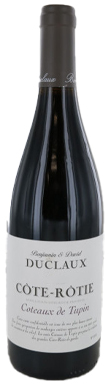

A wonderful nose: rose and tobacco leaf, really attractive. Soft, easy-going, velvety style on the palate with mouthfilling fruit and well-balanced acidity. The alcohol is a touch high, but suits the style. Touch of tannic grip on the long finish. The oak is still quite present, but will integrate in time. The family has 3ha in the Coteaux de Tupin; they choose the best terraces of that year. All whole-bunch fermented, aged in barrel for 22 months. Gneiss soils.
2020
Benjamin & David DuclauxCôte-Rôtie

Benjamin & David Duclaux, Coteaux de Tupin, Côte-Rôtie, Rhône, France, 2019
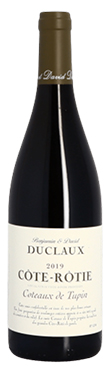
So rich, so powerful, but not excessive. It has lovely acidity and is so fresh. Amazing richness of fruit, great velvety tannins, wonderfully expressive aromatics of fresh rose, cigars, and perfumed smoke. A wonderful wine. The family has 3ha in the Coteaux de Tupin; they choose the best terraces of that year. All whole-bunch fermented, aged in barrel for 22 months. Gneiss soils.
2019
Benjamin & David DuclauxCôte-Rôtie
Benjamin & David Duclaux, Coteaux de Tupin, Côte-Rôtie, Rhône, France, 2018
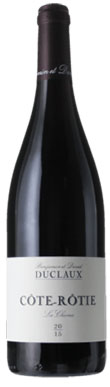
A rich and very deep fruit expression. It's velvety, soft and lush, from a very ripe vintage. Good acidity however. It has relatively big proportions for this estate, but not excessively so. Sweet raspberry and cigar tobacco, sandalwood, cedar and spice. Incredible length. A great wine, with huge ageing potential, but equally it could be drunk today. The family has 3ha in the Coteaux de Tupin; they choose the best terraces of that year. All whole bunch-fermented, aged in barrel for 22 months. Gneiss soils. First vintage of this cuvée.
2018
Benjamin & David DuclauxCôte-Rôtie
Benjamin & David Duclaux, Maison Rouge, Côte-Rôtie, Rhône, France, 2020
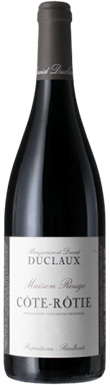
A lovely nose, in a very elegant style, it's not dominated by new oak. Fine, red-fruited aromas with a touch of juniper, and a good sense of precision. Weightier than expected on the palate. It's delicate, but has good presence and fullness. Good acidity and a spicy finish. Fresh, well balanced, will age well. Good now, but wait for further complexity. The family has 1.4ha in this lieu-dit, partly planted in 1943, partly in the mid-1970s. First vintage was 2005, but just 900 bottles; 2006 was the first to be sold commercially. Gneiss soils; stems only included since the 2017 vintage. Natural yeasts, submerged cap fermentation, 40% new oak.
2020
Benjamin & David DuclauxCôte-Rôtie
Benjamin & David Duclaux, Maison Rouge, Côte-Rôtie, Rhône, France, 2019
Deeply coloured. Intense and open on the nose, with darker fruit character than the 2020. Spicier in style, with smoky juniper notes. Full in body, soft, juicy, but with plenty of intensity. Really mouthcoating fruit and ripe, plentiful tannins, with slightly raised alcohol compared to a typical vintage, but it's all in balance. Long, impressive and delicious. The most powerful vintage of this cuvée, but it's so good. The drinking dates are conservative, it might last much longer. Picked over five days, with one degree of alcohol difference from the start to the finish. The family has 1.4ha in this lieu-dit, partly planted in 1943, partly in the mid-1970s. First vintage was 2005, but just 900 bottles; 2006 was the first to be sold commercially. Gneiss soils; stems only included since the 2017 vintage. Natural yeasts, submerged cap fermentation, 40% new oak.
2019
Benjamin & David DuclauxCôte-Rôtie
Benjamin & David Duclaux, Maison Rouge, Côte-Rôtie, Rhône, France, 2018
Darkly coloured. With its ripe and open aromas, this is a lush example, velvety, with lower acidity than some vintages. Very generous, with quite high alcohol. Certainly delicious, but a little lacking in cut and strictness compared to some other years. 'More massive in style,' as a vintage according to Benjamin Duclaux. The family has 1.4ha in this lieu-dit, partly planted in 1943, partly in the mid-1970s. First vintage was 2005, but just 900 bottles; 2006 was the first to be sold commercially. Gneiss soils; stems only included since the 2017 vintage. Natural yeasts, submerged cap fermentation, 40% new oak.
2018
Benjamin & David DuclauxCôte-Rôtie
Benjamin & David Duclaux, Maison Rouge, Côte-Rôtie, Rhône, France, 2017

A relatively dark, savoury expression, still very young at eight years of age. Slightly closed at the time of tasting, with good intensity and freshness on the palate; enjoyably saline, with some cut and definition on the finish. There's a slight edge to the tannins. Well balanced, with some tobacco and cedar notes. The family has 1.4ha in this lieu-dit, partly planted in 1943, partly in the mid-1970s. First vintage was 2005, but just 900 bottles; 2006 was the first to be sold commercially. Gneiss soils; stems only included since the 2017 vintage. Natural yeasts, submerged cap fermentation, 40% new oak.
2017
Benjamin & David DuclauxCôte-Rôtie
Benjamin & David Duclaux, Maison Rouge, Côte-Rôtie, Rhône, France, 2016
This vintage is slightly paler than other recent ones. Fresh and well balanced, enjoyably drinkable, almost Burgundian in style. Good acidity, but just wait a couple of years for it to reopen, as it's in something of a closed phase. A cooler vintage, they finished picking in early October. The family has 1.4ha in this lieu-dit, partly planted in 1943, partly in the mid-1970s. First vintage was 2005, but just 900 bottles; 2006 was the first to be sold commercially. Gneiss soils; stems only included since the 2017 vintage. Natural yeasts, submerged cap fermentation, 40% new oak.
2016
Benjamin & David DuclauxCôte-Rôtie
Benjamin & David Duclaux, Maison Rouge, Côte-Rôtie, Rhône, France, 2015
Still very deep and dark in colour. Very much closed for business currently, and a touch reduced. Berry coulis and liquorice come with air, but it's a touch truculent. Lovely sense of generosity, a weighty expression of this cuvée. Very tannic, but they're rounded tannins, and with good acidity. Will be excellent in time, but this needs a long time in bottle. Hands off until 2030. The family has 1.4ha in this lieu-dit, partly planted in 1943, partly in the mid-1970s. First vintage was 2005, but just 900 bottles; 2006 was the first to be sold commercially. Gneiss soils; stems only included since the 2017 vintage. Natural yeasts, submerged cap fermentation, 40% new oak.
2015
Benjamin & David DuclauxCôte-Rôtie
Benjamin & David Duclaux, Maison Rouge, Côte-Rôtie, Rhône, France, 2014
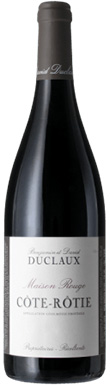
This has a certain strictness on the nose, a touch volatile, though it's open now, with spicy raspberry notes and cedar. Not light on the palate, it does have some weight, and a good sense of freshness. Touch of smoke on the finish, good acidity. They did a good job here. Not a generous or deep vintage, but a well balanced, fresh and elegant one. Warm spring, not a cold year but wet, and hard to reach full ripeness. 40% less than average crop here, they had to cut a lot of damaged berries out. The family has 1.4ha in this lieu-dit, partly planted in 1943, partly in the mid-1970s. First vintage was 2005, but just 900 bottles; 2006 was the first to be sold commercially. Gneiss soils; stems only included since the 2017 vintage. Natural yeasts, submerged cap fermentation, 40% new oak.
2014
Benjamin & David DuclauxCôte-Rôtie
Benjamin & David Duclaux, Maison Rouge, Côte-Rôtie, Rhône, France, 2013

Very fresh, with blackcurrant and blackcurrant leaf notes. Light- to medium-bodied, with tense, tight tannins. Lacks a bit of elegance in terms of texture, as the tannins are a touch raw, but the acidity is good. An austere vintage. They lost 30% of the crop to coulure. Late vintage, picked in October. The family has 1.4ha in this lieu-dit, partly planted in 1943, partly in the mid-1970s. First vintage was 2005, but just 900 bottles; 2006 was the first to be sold commercially. Gneiss soils; stems only included since the 2017 vintage. Natural yeasts, submerged cap fermentation, 40% new oak.
2013
Benjamin & David DuclauxCôte-Rôtie
Benjamin & David Duclaux, Maison Rouge, Côte-Rôtie, Rhône, France, 2012
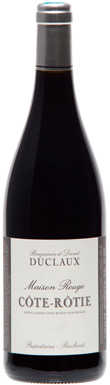
Open, developed, ready to drink. Notes of tobacco, rose and incense, this is very aromatic. Lovely sense of generosity on the palate but fresh and velvety. Well balanced, harmonious, with good length. This has everything in the right amount and the right place; 2025 is the perfect moment to drink this. Perhaps just lacking a little concentration and length, but just so charming and classic. The family has 1.4ha in this lieu-dit, partly planted in 1943, partly in the mid-1970s. First vintage was 2005, but just 900 bottles; 2006 was the first to be sold commercially. Gneiss soils; stems only included since the 2017 vintage. Natural yeasts, submerged cap fermentation, 40% new oak.
2012
Benjamin & David DuclauxCôte-Rôtie
Benjamin & David Duclaux, Maison Rouge, Côte-Rôtie, Rhône, France, 2011
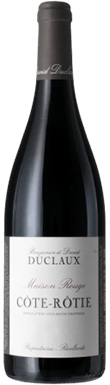
Ready now, soft and velvety, juicy. Not as complex as some vintages, but drinking very well now. Forest floor notes alongside the blackberry fruit. Very soft and appealing. Herbal blackberry notes, with a soft structure at this stage. A late, large crop that was difficult to get fully ripe. The family has 1.4ha in this lieu-dit, partly planted in 1943, partly in the mid-1970s. First vintage was 2005, but just 900 bottles; 2006 was the first to be sold commercially. Gneiss soils; stems only included since the 2017 vintage. Natural yeasts, submerged cap fermentation, 40% new oak.
2011
Benjamin & David DuclauxCôte-Rôtie
Benjamin & David Duclaux, Maison Rouge, Côte-Rôtie, Rhône, France, 2010

Spicy and smoky before the fruit, quite intense in aroma, but starting to open. Strict, tense and tannic, so this still needs time. Tannins are a little angular, with good acidity. Upright, tense, and very long. A serious wine, but it needs a long time to soften. Benjamin Duclaux describes this wine as 'serious, a good student, academic,' which accurately captures the style. The family has 1.4ha in this lieu-dit, partly planted in 1943, partly in the mid-1970s. First vintage was 2005, but just 900 bottles; 2006 was the first to be sold commercially. Gneiss soils; stems only included since the 2017 vintage. Natural yeasts, submerged cap fermentation, 40% new oak.
2010
Benjamin & David DuclauxCôte-Rôtie
Benjamin & David Duclaux, Maison Rouge, Côte-Rôtie, Rhône, France, 2009
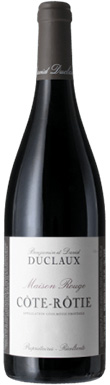
This still has a lovely bright ruby colour in 2025. A soft, easy-going, velvety style. It's long, still quite tannic, but generous and soft. Taking on some forest floor and a touch of farmyard complexity. Lovely red-fruited style. Acidity is quite low, but it's drinking well now. A vintage for those that enjoy an old-school style. It's perhaps not as technically clean as later vintages but nonetheless enjoyable. The family has 1.4ha in this lieu-dit, partly planted in 1943, partly in the mid-1970s. First vintage was 2005, but just 900 bottles; 2006 was the first to be sold commercially. Gneiss soils; stems only included since the 2017 vintage. Natural yeasts, submerged cap fermentation, 40% new oak.
2009
Benjamin & David DuclauxCôte-Rôtie
Benjamin & David Duclaux, Maison Rouge, Côte-Rôtie, Rhône, France, 2008
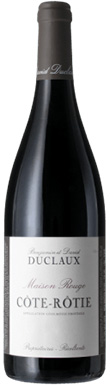
The nose is beginning to lose some fruit, there's a herbal note that's beginning to dominate. Light-bodied with good, fresh acidity, but the fruit is struggling now. Tannins are a little harsh, a touch austere and angular. Still some enjoyable structure, smoke and salt, but time to drink up. This was a difficult vintage, with a bad end to the season, there were two heavy rains during harvest. The family has 1.4ha in this lieu-dit, partly planted in 1943, partly in the mid-1970s. First vintage was 2005, but just 900 bottles; 2006 was the first to be sold commercially. Gneiss soils; stems only included since the 2017 vintage. Natural yeasts, submerged cap fermentation, 40% new oak.
2008
Benjamin & David DuclauxCôte-Rôtie
Benjamin & David Duclaux, Maison Rouge, Côte-Rôtie, Rhône, France, 2007
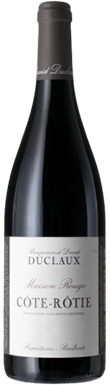
Great colour still after 18 years. Lovely nose: truffle, forest floor, cedar and piquant spicing. Lovely fleshy palate, with good salinity and freshness. Long finish, this is really excellent now. Acidity is a touch low perhaps, but it's very harmonious, complex and delicious. Earthy finish. The family has 1.4ha in this lieu-dit, partly planted in 1943, partly in the mid-1970s. First vintage was 2005, but just 900 bottles; 2006 was the first to be sold commercially. Gneiss soils; stems only included since the 2017 vintage. Natural yeasts, submerged cap fermentation, 40% new oak.
2007
Benjamin & David DuclauxCôte-Rôtie
Benjamin & David Duclaux, Maison Rouge, Côte-Rôtie, Rhône, France, 2006
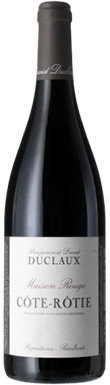
Lovely nose, really open and complex, with truffle, some black fruit notes, mint, juniper. Soft and enjoyable, juicy, this is a lovely time to drink it. Totally harmonious, another example of a really lovely 2006, an underrated year. Long finish, good acidity. Excellent, such a fresh and classic Côte-Rôtie. Cleansing tannin to close. The family has 1.4ha in this lieu-dit, partly planted in 1943, partly in the mid-1970s. First vintage was 2005, but just 900 bottles; 2006 was the first to be sold commercially. Gneiss soils; stems only included since the 2017 vintage. Natural yeasts, submerged cap fermentation, 40% new oak.
2006
Benjamin & David DuclauxCôte-Rôtie
Benjamin & David Duclaux, Maison Rouge, Côte-Rôtie, Rhône, France, 2005
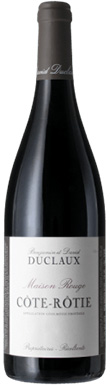
Amazingly youthful colour still. Spicy, herbal, dark style of aroma, slightly forbidding, a touch balsamic. Straight, energetic and fresh. Still plentiful tannins. It's so fresh, with good acidity and great length. Focused, intense and saline, with notes of forest floor. Still feels youthful. Drink now for the cut and thrust of the tannins; or later. First vintage of this cuvée. The family has 1.4ha in this lieu-dit, partly planted in 1943, partly in the mid-1970s. First vintage was 2005, but just 900 bottles; 2006 was the first to be sold commercially. Gneiss soils; stems only included since the 2017 vintage. Natural yeasts, submerged cap fermentation, 40% new oak.
2005
Benjamin & David DuclauxCôte-Rôtie
