Walls: Get to know the 20 lieux-dits of Hermitage
Matt Walls takes a deep-dive into the geological complexity of the Hermitage appellation, analysing the 20 different lieux-dits and highlighting the importance of site and soil within this famous vineyard area.


Not so long ago, most Hermitage was a blend of different vineyards from across the hill. However, since the 1990s we’ve seen an increasing range of single-vineyard wines being made.
Getting a handle on the most important sites will help guide you to a style you enjoy, and even if you prefer blended wines, becoming familiar with the individual Hermitage lieux-dits will enrich your drinking experience.
Scroll down to see Matt Walls’ tasting notes and scores for seven wines from Hermitage lieux-dits
The hill of Hermitage

To the naked eye, this south-facing slope looks reassuringly uniform, but beneath the vines, there is an extraordinary diversity of soil types and ages, which Michel Chapoutier has described as ‘geological chaos’.
As a result, expect very different expressions of Hermitage depending on where the vines are grown.
It’s not easy to find information on some of these sites, therefore below you will find a comprehensive look at all 20 of the Hermitage lieux-dits.
Mapping out the Hermitage lieux-dits

The hill can be split into three main parts: the western, central and eastern sections. I’ve also split the eastern section into two here for further clarity.
The western flank
The Rhône River runs north to south along the eastern edge of the Massif Central, a 300-million-year-old granitic outcrop that covers much of the south of France.
At some point in time, a hunk of granite was hewn off this outcrop by the Rhône, and it now sits apart on the river’s east bank. Thus, the hill of Hermitage was born.
Successive geological eras have seen further types of rock build up against it, creating the elongated hill as we know it today.

Les Bessards
The granitic part of Hermitage only makes up around 25% of the hill, and it’s the source of some of the most exciting wines. Most of this flank is included under one large lieu-dit: Les Bessards.
There is very little soil over the granite bedrock here, in fact less and less the higher you go, comprising mostly decomposed granite and pale gravelly sand.
It’s almost entirely planted with Syrah and makes for a concentrated, upright, intense style of wine that is typified by minerality rather than fruitiness. It’s often described as the ‘vertebral column’ of Hermitage and makes for particularly long-lived wines of great purity.
Several producers have made a pure Bessards cuvée, including Delas, Bernard Faurie and Chapoutier, whose Le Pavillon comes from here.
It’s a major component in both of Jean-Louis Chave’s red blends, a minor one in Jaboulet’s La Chapelle, and makes up 30% of Guigal’s Ex-Voto.
L’Hermite (granite)
Above Les Bessards, around the iconic Chapel of Saint Christopher, is the granitic portion of L’Hermite, which again is mostly planted with Syrah. (There is also a part of the lieu-dit with loess soils, which is covered in the following section).
Like Les Bessards, the tannins here have a very tight feel and the wine is particularly straight and energetic.
‘It doesn’t have the sweetness of Le Méal,’ says Jean-Louis Chave, ‘it’s more bony.’
Cave de Tain owns two parcels in L’Hermite, both of which display a lean but powerful style.
‘Syrah was made for this kind of soil,’ says head winemaker Xavier Frouin, noting that the vines never suffer in hot, dry weather as the roots can push through fissures in the rock in search of moisture.
Chapoutier bottles a single-vineyard red and white from this lieu-dit, both called L’Ermite.
Les Grandes Vignes
Higher still is Les Grands Vignes. This is the highest part of the hill, rising to 325m. It’s almost entirely owned by Delas, and since 2015 they’ve been bottling a single-vineyard wine from this lieu-dit under the name Ligne de Crête.
The wines from Les Grandes Vignes don’t have the same density as Les Bessards, instead expressing a more elegant, aerial style of Hermitage that drinks relatively early.
Aromatically, however, they share the same notes of violets, petrichor and spice that are so often found in wines grown on the granitic part of the hill.
Varogne and Les Vercandières
These are two small lieux-dits, neither of which are bottled as single-vineyard wines.
Varogne is at the limit of the appellation as the hill curves round to the west. It’s more open to the north wind here, and doesn’t see the sun until late in the morning, making for a less concentrated style. Dard & Ribo source some of their fruit from here.
Les Vercandières is a very small, walled vineyard at the foot of the hill. Its soils are sandy clay and alluvial deposits rather than granite.

The central section
Directly to the east of the western granitic section is a proud, largely south-facing bulge in the hill that we can refer to as the central section. Some simply refer to this section by the name of its most important lieu-dit: Le Méal.
Le Méal
From here, all the way to the eastern tail-end of the hill, the soils are much younger and more diverse, with more limestone and compacted glacial deposits.
Le Méal also has regular scatterings of rounded alluvial stones – galets roulés – on the surface.
It’s a hot, early-ripening site, and produces some of the most concentrated, imposing expressions of Hermitage. These are wines of great depth and intensity, fleshier and more muscular than Les Bessards.
The reds are often characterised by ripe blackberry, in contrast to the blackcurrant of Les Bessards; the whites of Le Méal can be thunderous and hugely complex.
Chapoutier produces a white and a red bottling from this site, and Ferraton just a red.
It’s always been the major component in Jaboulet’s La Chapelle, and is the main constituent of Sorrel’s Le Gréal (the rest comes from Les Greffieux).
L’Hermite (loess)
Some Hermitage lieux-dits are far from uniform, with vines at different altitudes, exposures or soil types. L’Hermite is one of them; it could helpfully be split in half, as the western part is granitic, the eastern part is covered in loess and sits above Le Méal. This sandier part is generally considered more favourable for whites.
Jean-Louis Chave has several rows of Roussanne in L’Hermite which produce a tense wine with quite pointed acidity. He says he typically finds flavours of white flowers, peach and honey in this component of his blend.
Les Greffieux
This lieu-dit is situated directly beneath Le Méal, with soils containing clay mixed with silt, sand and alluvial stones. It’s a free-draining site that can suffer from hydric stress in hot years.
The wines here tend to be rounder, softer and juicier than Le Méal – elegant but not quite as intense.
Chapoutier bottles a single-vineyard example, and many producers use it for their top blends, such as Jaboulet’s La Chapelle, Chapoutier’s Monier de la Sizeranne and Bernard Faurie’s Greffieux-Bessards.
Les Plantiers and La Croix de Jamanot
These two sites are effectively continuations of Les Greffieux at the foot of the hill, and neither are recognised as superior sites.
Les Plantiers is entirely owned by Domaine Marc Sorrel. Winemaker Guillaume Sorrel says it provides big yields that ‘bring the juice’, but it needs to be blended with more structured wines from elsewhere on the hill to make for an interesting wine.

The eastern section
The geological form of the hill in this section is broadly the same as the central section: silty loess soils at the top of the hill which are particularly favourable for white wines; a steeply sloping middle section of limestone and pebbly alluvial soils offering some of the finest terroirs; and more recent alluvials, clay and sand towards the foot of the slope.
Beaume
Given that this lieu-dit runs from the top to the bottom of the hill, with some vines facing south and some west, it’s not possible to define one specific style from Beaume.
Much of the alluvial deposits are fused into large, concrete-like chunks called ‘poudingue’. Jean-Louis Chave says his particular parcel produces Syrah that is always very spicy.
Fruit from this lieu-dit plays a part in the reds of Yann Chave and Domaine du Colombier.
Others, such as Ferraton, grow Marsanne and Roussanne, which they blend with Le Méal for their cuvée Le Reverdy.
Péléat
This small lieu-dit to the east of Beaume contributes to both Yann Chave and Jean-Louis Chave’s red blends. The style here is fine and fresh with good acidity, but less rich and spicy than Beaume.
Jean-Louis Chave also has some white here, which makes for a brisk and floral blending component.
Domaine Belle’s white Hermitage is effectively a single-vineyard Péléat, though it’s not mentioned on the label.
Les Rocoules
Though some producers, such as Jaboulet, have Syrah planted here, it’s usually considered a top terroir for whites. This lieu-dit takes up a large section of the hill, however, so it’s quite stylistically diverse.
The upper plots give a light, aerial style; the hillside plots give a creamier, weightier wine.
Laurent Habrard’s Les Rocoules is in the lighter, more floral style. Domaine Marc Sorrel makes a deliciously rich example.
Jean-Louis Chave makes three vinifications from the top, middle and bottom of the hill, which are used to blend his white Hermitage.
Maison Blanche
A very fine terroir for whites at the top of the hill, made up of deep, wind-blown silt.
It contributes to blends made by Maison les Alexandrins and Jaboulet, among others.
La Pierrelle
This small lieu-dit is a continuation of Maison Blanche, so in part shares the same silty soils, before stretching down the hill into stony alluvials.
Louis Barruol of Château Saint Cosme bottles a red and a white from this vineyard.
Les Diognières (or Les Dionnières)
Like Les Greffieux, this lieu-dit covers a sloping section at the foot of the hill, but is rather different in style; less bold, more subtle.
Jean-Claude & Nicolas Fayolle and Ferraton both made a single-vineyard red Hermitage from here; Laurent Fayolle makes a red and a white.
Many others use it in blends, including Michelas St-Jemms, Tardieu-Laurent and Jaboulet for their Maison Bleue.
The eastern tail
This most easterly section of the hill is not considered to be the finest terroir, but can produce lighter reds with a good sense of finesse, as well as delicious whites.
Les Murets
Les Murets is the major mid-slope lieu-dit in this final part of the hill, and like Les Rocoules, with which it shares a border, it’s most commonly associated with whites.
Caroline Frey at Jaboulet grows both colours, and favours Roussanne over Marsanne here for her white blends. She says it’s a late-maturing site, resulting in fresh, mineral whites with great tension.
The only single-vineyard white from Les Murets is Chapoutier’s opulent 100% Marsanne cuvée De l’Orée.
Guigal’s white Ex-Voto is not far off, however, with 90% coming from Les Murets, the rest from L’Hermite. Domaine Belle’s red Hermitage is derived exclusively from this lieu-dit.
L’Homme
Above Les Murets is the small, fairly flat loess-covered lieu-dit L’Homme. It gives a fresh and upright, perfumed style of red but is arguably better suited to whites. No single-vineyard bottlings are made.
La Croix
This is the eastern edge of the main Hermitage hill, a huge lieu-dit that runs from the very top to the very bottom of the hill, so it’s not possible to generalise about the style here.
The thick loess and clay at the top make for reds with fresh acidity and fine tannin, gaining flesh as they run towards the bottom of the slope.
Again, this is arguably a better site for whites than reds. It isn’t currently bottled as a single-vineyard wine.
Diognières et Torras
This is an eastern extension of Les Diognières, with similar soils, but facing southwest rather than south.
Domaine du Colombier is one producer with a parcel here, and nobody bottles it pure.
Torras et les Garennes
Like a full stop at the end of a sentence, this little hill of rounded galets and clay that’s situated to the east of the Torras, a stream that might otherwise logically mark the end of the appellation.
It’s entirely owned by Jaboulet and Cave de Tain. The wines it produces are generous and fruity with a distinctive iron tang, but can lack structure and definition. No single-vineyard bottlings are made.

Important decisions: Bottling as blends or as single-vineyard wines?
Some producers only own a single parcel on the hill, so have to make a single-vineyard wine by default.
Others own multiple parcels, but produce single-vineyard wines by choice. Certain producers own parcels all over the hill, but only ever produce one blended wine.
So which is better, a blend of different lieux-dits or a pure bottling of one of the best lieux-dits? That’s a question for another column.
Seven top wines from Hermitage lieux-dits:
Related content:
Exclusive Rhône Valley Wine Tour with Decanter – BOOK NOW
Rhône 2020: best-value wines
Walls’ hidden gems: Domaine A&E Verset, Cornas
M Chapoutier, Le Méal Blanc, Hermitage, Rhône, France, 2001
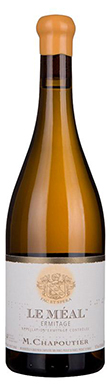

Powerfully open, this roars out of the glass. There's still some fruit here, both dried and fresh apricots, to accompany the heather honey and macadamia nut. Full-bodied, ample and silky on the palate. Voluminous, generous and full of concentrated flavour with exceptional length. The oak influence is strong, lending plenty of barley sugar, tobacco and a touch of cedar, but it's all well-integrated now. Nonetheless, I'm pleased they're moving away from so much oak today. But there's no question this is a great white wine.
2001
M ChapoutierHermitage

Domaine Marc Sorrel, Les Rocoules, Hermitage, Rhône, France, 2006
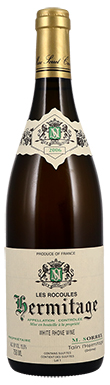
<p>The colour is starting to darken now, taking on some copper tinges. The nose is glorious, with brown sugar, marzipan, honey and dried apricot. Full-bodied but not massive, with lovely clear acidity underneath. Ample in the mouth, finishing dry and long. Very fresh still, with an appealing mineral line. Fully mature now, no need to wait any longer.</p>
2006
Domaine Marc SorrelHermitage
Domaine Laurent Fayolle, Les Dionnières, Hermitage, Rhône, France, 2005
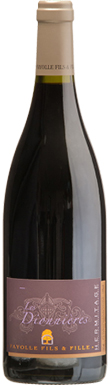
With aromas and flavours of griotte cherry, raspberry and blackberry, this has great finesse, fine tension and perfect balance, with a gentle mineral touch on the finish. From a 0.28ha plot in lieu-dit Les Dionnières at the foot of the hill. 60-year-old vines, all destemmed.
2005
Domaine Laurent FayolleHermitage
Ferraton Père & Fils, Le Méal, Hermitage, Rhône, France, 2001
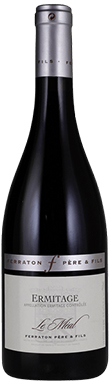
Dark, meaty and brooding on the nose, there's some beef stock and dried herbs alongside a little leaf mulch and bonfire smoke. Full-bodied and round, it's dry and savoury but still with some inner fruit sweetness. The power of the site is still in evidence and it finishes long. Now is a great time to drink this.
2001
Ferraton Père & FilsHermitage
Domaine Laurent Fayolle, Les Dionnières, Hermitage, Rhône, France, 2010
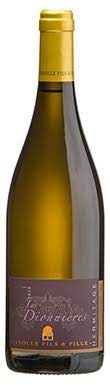
A silky, quietly powerful wine that’s gently saline with a touch of noble bitterness. It has a long, savoury, nutty finish, making it very fine. No new oak was used, and it was matured in one, two and three-year-old barrels for 12 months on the lees.
2010
Domaine Laurent FayolleHermitage
Cave de Tain, Hautes Terrasses, Hermitage, Rhône, France, 2017
Much fresher, straighter and more floral than their Basses Terrasses cuvée, this has great energy and aromatic finesse. With good acidity, it’s very well balanced. The vineyards here have more outcrops of galets than the lower sites, and not such rich soils. Coming from Cave de Tain’s higher altitude parcels on the hill of Hermitage: L'Homme-La Croix, Triboulette, Thoet and Signeaux.
2017
Cave de TainHermitage
Cave de Tain, Basses Terrasses, Hermitage, Rhône, France, 2017
A round, generous and flowing style of Hermitage that’s almost too fat. It’s juicy, but with good acidity, although the alcohol is on the high side. Richer and more approachable than their Hautes Terrasses cuvée, but not as structured or aromatic. Coming from Cave de Tain’s lower altitude parcels on the hill of Hermitage: Pied de Coteau, Beaumes, Murets, La Croix. These are deeper, richer soils than the vineyards that go into their Hautes Terrasses.
2017
Cave de TainHermitage
