
Why has Tuscany’s Orcia Valley become a talent magnet?
The Orcia Valley in Tuscany is drawing ambitious winemakers from surrounding areas, such as Chianti Classico and Montalcino. Emily O'Hare investigates the source of this magnetic attraction.


In her autobiography, Images and Shadows, Iris Origo, an Anglo-American writer, social historian and philanthropist, recalls her and her husband’s search for a home in Italy in the mid 1920s.
Settling in the south of Siena, between the towns of Montalcino and Montepulciano in Tuscany, just north of Monte Amiata in the Orcia Valley, Origo wrote: ‘That vast, solitary, unspoiled landscape charmed and enthralled us: to live in the shadow of that mysterious mountain…that, we were sure, was the life we wanted.’
‘Orcia is billed as one of the most beautiful DOCs in Italy – but there is substance behind the good looks.’ – Tim Manning
An enchanting landscape, the Val d’Orcia / Orcia Valley is divided in two by the Orcia River running from east to west towards the Tyrhennian sea.
Origo’s ‘mysterious mountain’ is Monte Amiata, an extinct volcano last active some 300,000 years ago. It shelters the vineyards in its shadow, and is sacred to those on its slope now and long, long ago – some say it was the seat of the Etruscan gods, and the lightning storms are quite the spectacle.
Surrounded by giants
The hills of the Val d’Orcia roll between the mountain, Montalcino and Montepulciano in ripples. The landscape is more gentle on the eye than the dramatic, steep and deeply forested Chianti Classico.
Instead, fields of golden wheat and barley cover great stretches of land, interrupted by slithers and points of posturing cypress trees so evenly planted that their presence must have been orchestrated by mathematical minds.
Vineyards appear infrequently, atop grey clay, sand and silt – soils as ‘bare and colourless as elephants’ backs’, noted Origo. Where green vines do not puncture the soil, and cereal and grain cannot grow, mounds of grey, inhospitable clay go on for miles – one might be looking across the moon’s surface.
For centuries, painters and writers have tried to translate the beauty of this region. And with the relatively new Orcia DOC, established in 2000, winemakers are officially offering their own expressions of this territory.
The DOC encompasses around 160 hectares of vines and has 40 producers, with an annual output of around 300,000 bottles. It’s a tiny production in comparison to neighbouring Montalcino with its average production upwards of nine million bottles.
Winemakers previously using the Toscana IGT can label their wines under seven categories: Orcia, Orcia Riserva, Orcia Sangiovese, Orcia Sangiovese Riserva, Orcia Rosato, Orcia Bianco and Orcia Vin Santo (see more in the box below).
It will be interesting to watch how the Orcia DOC finds its way next to the giants on either side. The seven categories of DOC do not yet seem to fit the potential of the land, or the ambition of the region’s winemakers.
But their humility, curiosity and respect for the land bodes well for the future of this nascent Tuscan wine appellation.
Four talents attracted to the Orcia Valley
Maurizio Comitini
Maurizio Comitini, winemaker of excellent Vino Nobile in Montepulciano at Azienda Croce di Febo, has been working with Il Pero since 2015. He’s based in the commune of Radicofani, next to the estate of the late Andrea Franchetti, Tenuta di Trinoro.
Comitini was keen to see how Sangiovese expressed itself in the warmer, more windswept and arid Val d’Orcia, and with few vines in this area he was keen to understand the level of biodiversity.
He says: ‘Val d’Orcia has an oenological story largely still to be written, and with the liberality of the DOC one is more able to comply with the real vocation of the grapes.’
He was especially keen to work with Sangiovese in concrete, appreciating the flexibility of the DOC regulations which make it possible to produce a premium DOC wine without the requirement to put the wine into wood for a year, as is the rule for Vino Nobile di Montepulciano.
Without oak, the Sangiovese of Orcia – in comparison to Montepulciano – is more approachable and less austere, the tannins less sculpted, making for wines that are more open and expansive.
Tim Manning

For over 20 years, Manchester-born Tim Manning has been working in Chianti Classico. There he has made a reputation for himself with his artisanal and sensitive approach to Sangiovese at Riecine, Il Borghetto and Montecalvi.
In 2020 he joined Fabbrica, a Swiss-owned winery in the outskirts of Pienza.
Of the Orcia DOC, he says: ‘Orcia is billed as one of the most beautiful DOCs in Italy – but there is substance behind the good looks. Its producers are modest, passionate and unstuffy, it can easily give Montalcino a run for its money and produce Sangiovese-based (or not!) wine with an elegance and drinkability to match Chianti Classico.’
His Orcia Sangiovese Riserva ‘Tinia’ perfectly exemplifies the capacity for this DOC to compete with its premium neighbours; Brunello di Montalcino and Vino Nobile di Montepulciano.
But it is the Syrah that Tim produces, however, that really makes me swoon.
After analysis of the hill morphology (similar to Southern Rhône) and of its soils (similar to Crozes-Hermitage in the Northern Rhône), the owners decided to plant Syrah.
Under Manning’s guardianship, the variety is vinified in concrete with 20% whole-cluster fruit, pressed out after around 60 days on the skins, and aged for 18 months in a large 50hl oak barrel.
The aromas are enticing; dark and forest fruity, and the palate is deeply flavoursome, entirely fresh with no jammy notes to dull the appetite. Easily a one-bottle-not-one-glass kind of wine!
I found this variety at other estates in Orcia, such as Poggio Grande, to be equally magnetic.
Gerhard Sanin
With no historical tradition regulating viticulture here, there is a lot of experimentation and many playful yet premium wines running beneath the Toscana IGT banner.
Ever tried a Vin Gris made with co-fermented Sauvignon Blanc and Black Muscat?
Neither had I until I found the Mastrojanni family, of Brunello fame, working away at La Nascosta (‘The Hidden One’) a few kilometres east of Montalcino in Castiglione d’Orcia.
After selling their eponymous estate in Castelnuovo Dell’Abate in 2008, Antonio Mastrojanni and his son Luca began buying small parcels of vineyards in the Orcia Valley.
They began experimenting with various clones of Sangiovese and some other varieties rather unusual for the region, such as Gewurztraminer, Sauvignon Blanc and Moscato Nero.
With the nighttime temperature sometimes dropping by 20℃, Luca explains that it’s possible to achieve beautiful white wines. To support the Mastrojanni’s enthusiasm for these grapes, they engaged the help of winemaker Gerhard Sanin from Tenuta Moser in Südtirol in 2019.
Giovanni Stella

For now, the DOC does not allow for wines with high percentages of non-native varieties. The character and quality of the IGT wines in Val d’Orcia must not be overlooked.
Giovanni Stella is a Tuscan-born winemaker working in Chianti Classico at Caparsa in Radda and San Donatino in Castellina. Five years ago he began working at Ultima Pietra in Trequanda, a small family-owned winery in the north of the Val d’Orcia.
He is passionate about the region’s capacity to make world-class wines: ‘We know that our grapes have this unique and in no way imitable imprint of the place where the vine is grown. And here in Val d’Orcia, it is exceptionally beautiful. Our wines must communicate this, this is our goal.’
Orcia Valley fact box
160 hectares under vine
12 communes: Buonconvento, Castiglione d’Orcia, Pienza, Radicofani, San Quirico d’Orcia, Trequanda, Abbadia San Salvatore, Chianciano Terme, Montalcino, San Casciano dei Bagni, Sartiano and Torrita di Siena
40 wineries
Producers to know: Fabbrica, Il Pero, Poggio Grande, Tenuta Sanoner, La Nascosta, Atrium, Ultima Pietra, Giacomo Baraldo, Donatella Cinelli Colombini, Podere Forte
Key grape varieties: Sangiovese, Trebbiano (for Orcia DOC). Syrah, Marsanne, Rousanne, Cabernet Franc, Cabernet Sauvignon, Merlot etc (for Toscana IGT)
Orcia DOC: Minimum 60% Sangiovese grapes and other non-aromatic grapes, released onto the market in the March following the harvest
Orcia Riserva DOC: Minimum 24 months of ageing; at least 12 in oak barrels
Orcia Sangiovese DOC: Minimmum 90% Sangiovese grapes and a maximum of 10% of Canaiolo Nero, Colorino, Ciliegiolo, Foglia Tonda, Pugnitello or Malvasia Nera
Orcia Sangiovese Riserva DOC: Aged for 30 months; at least 24 in oak barrels
Orcia Rosato DOC: Minimum 60% Sangiovese with a maximum of 40% non-aromatic varieties (not to exceed 10% white grapes)
Orcia Bianco DOC: Minimum 50% Trebbiano grapes and a blend of up to 50% other non-aromatic white grapes
Orcia Vin Santo DOC: Minimum 50% of Trebbiano, Malvasia, and up to 50% other aromatic white grapes
Orcia Valley: Eight to try
Italy newsletter: Sign up today
Get the best recommendations, vintage analysis, regional and cultural insights and more delivered to your inbox once a month, helping you to stay up-to-date with the latest in Italian wine.

Related articles
- The hidden wine gems of the Italian coast
- Baudains: Montalcino’s quiet revolution
- Italy’s mission to preserve its wine culture
La Nascosta, Moscaminer, Toscana, Tuscany, Italy, 2022
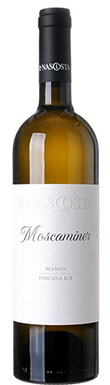

I was apprehensive about tasting this blend of white varieties in a warm climate; the wine would surely be clumsy, fat at 14%, and lacking...
2022
La NascostaToscana

Tenuta Sanoner, Aetos Orcia Rosato, Orcia, Tuscany, Italy, 2024
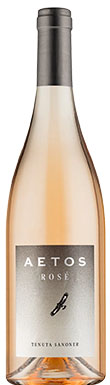
Fragrant notes of pink grapefruit, white peach and caper flower offer sweetness on the nose but the palate is dry and sapid. A grown up,...
2024
Tenuta SanonerOrcia
Fabbrica Pienza, Uni, Toscana, Tuscany, Italy, 2021
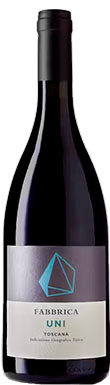
This is everything you desire from a Syrah; it's as glossy as Morticia's hair, haunting in its enticing aromatics, glossy in its deep purple colour,...
2021
Fabbrica PienzaToscana
Azienda Il Pero, Sangiovese, Orcia, Tuscany, Italy, 2022
Balsamic is a wonderful wine term that expresses perfectly this wine in terms of aroma, flavour and texture, but needs translation in English – it...
2022
Azienda Il PeroOrcia
Giacomo Baraldo, 0.0K Vineyard Ferment Sangiovese, Toscana, Tuscany, Italy, 2021
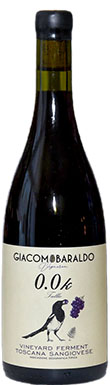
An energising, vital Sangiovese with a lightness of touch that is the defining character to all of Baraldo's wines. This wine is effortless to drink....
2021
Giacomo BaraldoToscana
Ultima Pietra, TQ, Toscana, Tuscany, Italy, 2021
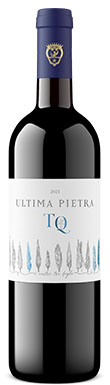
From a cool, windy site in Trequando arrives this international blend with a very Tuscan expression; a slim silhouette of a wine, nimble and elegant....
2021
Ultima PietraToscana
Azienda Atrium, Sangiovese, Orcia, Tuscany, Italy, 2021
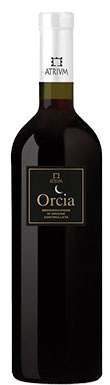
Located 150m outside the confines of Montalcino, this family-run farm is making Sangiovese – and Sangiovese blends with Ancellota and Petit Verdot – that are evocative and...
2021
Azienda AtriumOrcia
Poggio Grande, Sesterzo, Orcia, Tuscany, Italy, 2020
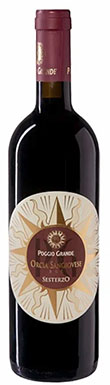
A delicious mix of black cherry, olive and roasted herb aromas and flavours, charming and sweet on the palate and drinking beautifully now next to...
2020
Poggio GrandeOrcia
