
Winemaking partnerships of Italy & America plus six wines to try
The history runs deep and personal between the west coast winelands of America and the great, long-established wine dynasties of Italy, as perfectly shown in the fascinating stories of these three significant partnerships.


Italy’s great wines are some of the most coveted in the world, and with good reason: they have incredible heritage and pedigree, are often capable of ageing for decades, and, above all else, they’re delicious.
Italian immigrants were largely responsible for the modern-day California and Washington wine industries, many of them bringing Old World winemaking techniques to the ‘New World’, as well as introducing Italian varieties to the American viticultural landscape.
This connection between the old and the new would serve as the beginning of an enduring, centuries-long collaboration – one that would bring American sensibilities to Italian wine brands, and Italian quality and heritage to American wineries.
That cross-cultural exchange is what we see here, in three wine labels that marry both Italian and American traditions. In one case, quite literally.
Scroll down for tasting notes and scores of six wines from Italian & American partnerships
Col Solare
Atop Red Mountain, wines echo Tuscany’s distinct sense of place
Washington state’s reputation in wine has steadily increased over the past 30 years. The state in the US far northwest is now known to produce wines of world-class quality.
One of Italy’s renowned wine pioneers saw its potential early on – its complex soils and particular climatic conditions – and made a serious investment in Washington and its future.
With its inaugural vintage in 1995, Col Solare – Italian for ‘sunny hill’ – began from a recommendation from one of the wine world’s most respected winemakers: André Tchelistcheff. And it remains a 50/50 collaboration between Tuscany’s Marchesi Antinori and Woodinville, Seattle-based Ste Michelle Wine Estates.
‘We started because Piero [Antinori] was invited to Taste Washington [wine and food festival] two years before, and we already had a very strong relationship with André Tchelistcheff,’ says Renzo Cotarella, CEO and chief oenologist of Marchesi Antinori. ‘He used to be the consulting winemaker of Ste Michelle and a good friend of ours.’
The Antinori family is one of the most famous names in wine. It has a storied history dating back many centuries, in addition to its role in the creation and production of Italy’s ‘SuperTuscan’ category.
The Antinoris have changed the face of Italian wine, and the family’s investment in Washington state has helped establish the region on the world stage.
‘We started at least 30 years ago, and what we did was unique,’ says Cotarella. ‘After focusing on understanding the character, quality and style of Washington wines, we decided on Red Mountain AVA.
There were very few wines, but the place was unique. The wines were really rich with a touch of finesse, a touch of elegance, and quite refined. We decided to plant a vineyard and build the winery, a joint venture.’
Ste Michelle, Cotarella emphasises, ‘doesn’t need to make another wine. Marchesi Antinori doesn’t need to make just another wine. We decided to do something together, not because of profit but because we wanted to communicate something different, which was the impetus of the partnership.’

Why Washington?
Even Stephanie Cohen, the winemaker for Col Solare, who has a stellar winemaking pedigree, wasn’t aware of Washington’s reputation for quality at first.
‘To be completely honest, when I first started in wine, I wasn’t familiar with eastern Washington,’ says Cohen. ‘I took a trip out here with my parents, and I was sort of working in between harvests and visited Walla Walla and Red Mountain, and I remember being completely blown away by Red Mountain.
‘I just knew the place had a distinct character. Wines from here are fruity and ripe, but there’s also an elegance and this perceivable acidity that I think is unique to Red Mountain, which I love,’ Cohen describes.
The Red Mountain AVA was blessed with a soil profile of sandy loess, as well as a southwesterly exposure, gusty winds and a large diurnal swing that really captured the Antinori family’s heart.
Those characteristics are great for Cabernet Sauvignon, the base variety for Col Solare, which is why the winery chose to plant and use predominantly this as well as Malbec, Merlot, Cabernet Franc, Carmenère and Syrah, instead of Italian varieties such as Sangiovese.
‘Italian varieties… can’t express the character of the place [planted] here,’ says Cotarella. ‘And it’s impossible to adapt Sangiovese to the state, so Cabernet, Cabernet Franc… we didn’t want to make an Italian wine in Walla Walla, we wanted to make a Washington wine. We never thought about planting Italian varieties [in Washington]. A great wine should respect place, variety and vintage.’
Wines to try:
Col Solare, Cabernet Sauvignon, Red Mountain, Washington, USA 2019
Col Solare, Cabernet Sauvignon, Red Mountain, Washington, USA 2018
Sori della Sorba
Just for love
Everyone loves a good love story, and the one between Carlo Mondavi and Giovanna Bagnasco is a tale of true romance.
Carlo is the third generation of Napa’s founding Mondavi family. He owns and operates his own Sonoma winery Raen; Bagnasco is owner and winemaker of Brandini, the Barolo producer in La Morra.
The two met while Bagnasco was doing a winemaking internship in California. A few years of dating that included plenty of intercontinental travel led to marriage. Perhaps naturally, a partnership in wine formed as well.
‘The most amazing thing is that Carlo and I had been [travelling] back and forth, so the last thing we wanted was to start a project together,’ she says.
The beginning
‘My favourite varieties are Pinot Noir and Nebbiolo,’ says Mondavi. ‘Gio has an incredible winery with her sister; how they farm their vineyards and vinify in botti. I joked with her and said if we ever have the chance to be a part of something like that, I’d love to.’ Serendipity would strike.
Property in Barolo is a hot commodity. Some of the most renowned vineyards in the world are situated within the Barolo zone.
The cachet and the singular viticultural and historical aspects of the region along with a scarcity of land – currently just 2,250ha under vine according to the Langhe consorzio, with expansion of about 22ha annually permitted – makes it hard to come by.
Inside the Barolo zone, vineyard land costs typically between €1m-€1.5m per hectare (Crea data, as reported in winenews.it, September 2022). However, just outside the DOCG zone, even with the same soil types and climatic profile, the price drops significantly.

‘We came across this vineyard – we weren’t out searching for it – it literally came to us; it called our name,’ says Mondavi. ‘It’s outside Barolo [just a few km northeast of Serralunga d’Alba] and it’s an amphitheatre, and we looked into it and had the opportunity to own a really great estate. I really feel like this is one of the grands crus.’
Bagnasco continues: ‘The most incredible thing about Barolo is that it’s extremely diverse, with geological formations from two different eras. So the soil in Serralunga [in the region’s east] is rockier, with clay, limestone and more earthiness, more spice [in the wines]; and the west is sandy soil, the youngest at five million years old.’
Sori della Sorba is dry-farmed and will receive permaculture certification later this year. Its 3.7ha of Nebbiolo, Dolcetto and Barbera vines sit on south-facing slopes, the vines own-rooted and up to 68 years old.
Cultural exchange
Working in two time zones, with your partner and two different cultures, is bound to come with some hiccups, but Mondavi and Bagnasco make the best of it and take it all in their stride.
‘It’s been beautiful to cross California and Italy in our traditions and family history,’ says Mondavi.
‘For me, it’s a dream to go back to Italy. My family left four generations ago. We didn’t want to leave, but it was a very difficult time. We came to America to have a better life for our family… the biggest thing for me is to be able to make wines that speak of the place, wines that are so special.’
Bagnasco agrees. ‘Carlo brought such a beautiful, diverse spirit to the winery, one that you’d never see in Piedmont. The Piemontese are very closed. It’s beautiful to see the cultures collide.
‘It’s an international exchange of ideas. Last year was the driest season of the century and hottest in recent memory. We know all about what to do to get the fruit ripe, because it gets very cold [here], but we’ve never dealt with heat or drought, and to have someone from California who knows how to deal with that is amazing.’
Wines to try:
Sori della Sorba, Nebbiolo, Langhe, Piedmont, Italy 2020
Sori della Sorba, Solo per Amore, Langhe, Piedmont, Italy 2020
DVO
Bicultural fusion
Tenuta dell’Ornellaia is a name that needs no introduction. Established in 1981, and one of the original ‘SuperTuscan’ producers, the Bolgheri estate sought to express the diversity of Italian terroir through international varieties. Ornellaia’s flagship wine is a blend of Cabernet Sauvignon, Merlot, Cabernet Franc and Petit Verdot.
After shifts in ownership involving founder Marchese Lodovico Antinori, Robert Mondavi Winery, Constellation Brands and ultimately full ownership under Tuscany’s Frescobaldi family, Ornellaia sought to establish itself stateside.
Doing so through DVO (Dalla Valle-Ornellaia), the implementation of this partnership began about 10 years ago, with the first DVO vintage being 2017.
Axel Heinz, estate director-winemaker for both Ornellaia and Masseto in Tuscany (Heinz will be stepping down from his role in summer 2023), and Maya Dalla Valle (winemaker for Dalla Valle) share many things in common. Through DVO they decided to create something that illustrated their mutual fondness for each other’s terroir.

‘In the earlier days of Ornellaia, they always had this history and connection to Napa,’ says Dalla Valle. ‘There was a desire for the team at Ornellaia to do a project here. Not just come in and start making wine, but do something with a deeper understanding of the nuances of Napa Valley.
‘Here, we have so many different kinds of climates and soils and vineyards. We have different ways of doing things than they do in Italy.’
Connections & reconnections
Dalle Valle interned at Ornellaia in 2013, then went back to Europe to pursue a master’s degree in 2014 at Bordeaux Sciences Agro in Bordeaux, which is, coincidentally, where Heinz himself had studied. Heinz even became a mentor for Dalla Valle’s thesis.
Both Dalla Valle and Heinz are themselves a blend of two cultures – Dalla Valle is Japanese and Italian while Heinz is German and French.
The bicultural exchange informs aspects of their winemaking together. ‘It came about very naturally,’ says Dalla Valle, ‘all the similarities that were produced along the way. Our winemaking styles are very similar.’
Why Napa?
‘There have been many opportunities to travel to Napa, and if you go there enough you end up wanting to make wine there,’ says Heinz.
‘We wanted to do something prestigious and it came to our minds to do something here.’ Many people in Napa Valley have tried their hand at planting Italian varieties with a distinctly Napa flavour. That is not the approach at DVO.

Both Ornellaia and Dalla Valle wanted to ensure that an authentic sense of place was reflected in the wines. DVO doesn’t source from its own vineyards, and instead chooses vineyards from many areas of the Valley that those involved think represent what Napa truly is.
They use grape varieties such as Cabernet Sauvignon, which, while integral to the Italian SuperTuscan blends, is also ‘Napa’s grape’.
‘Every year I find new vineyards that I never knew about, and I’m able to see the versatility of the site,’ says Dalla Valle. ‘We may narrow it down to a few areas [or go] as broad as possible.’
What’s in a name?
According to both Dalla Valle and Heinz, the name was the hardest thing to nail down. They spent a year and a half trying to brainstorm a perfect name that felt ‘natural’.
They settled on the acronym DVO, written in Roman numerals. The result looks like the word DUO, which perfectly sums up what this project is all about.
Wines to try:
DVO, Napa Valley Red, Napa Valley, California, USA 2019
DVO, Napa Valley Red, Napa Valley, California, USA 2018
This article has been updated since publication in the April 2023 issue of Decanter due to Axel Heinz’s appointment as estate director at Château Lascombes, the classified second growth in Margaux. DVO intend to continue the brand with whomever gets named to the Ornellaia winemaking post.
Italian & American wine partnerships: six wines to try
Related articles
Around Italy in 25 wines
Kiona Vineyards: Foundation and future on Washington’s Red Mountain
Crystal Springs of Napa Valley aims for appellation status
DVO, Napa Valley Red, Napa Valley, California, USA, 2019
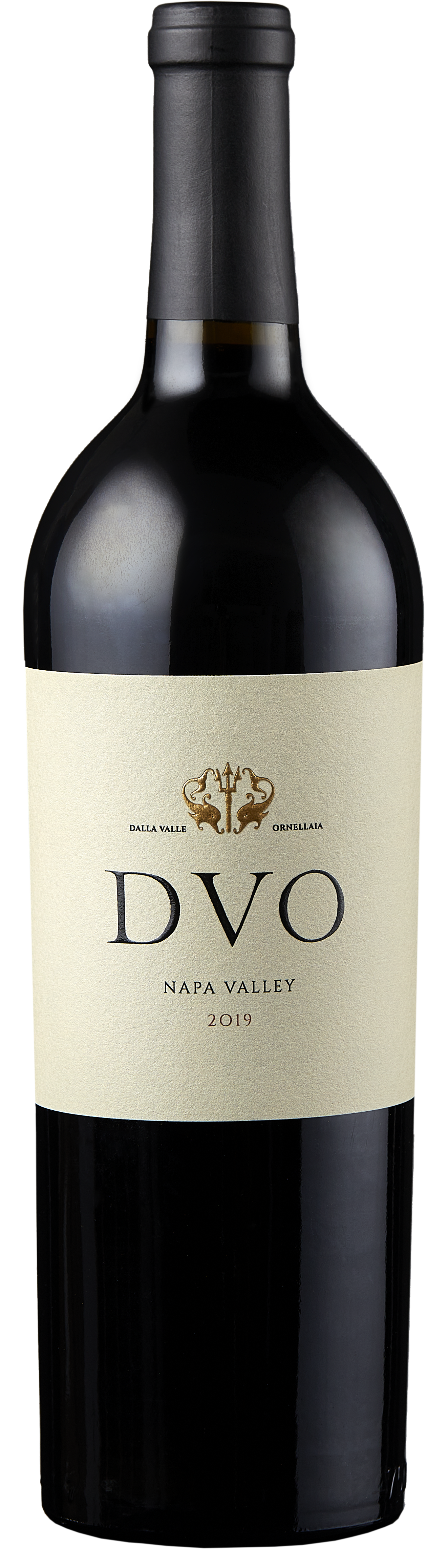

Only the second release of this collaboration project between Dalla Valle Vineyards of Napa Valley and Ornellaia of Tuscany. A glass-staining dark ruby colour. Gorgeous...
2019
DVONapa Valley

DVO, Napa Valley Red, Napa Valley, California, USA, 2018
An immaculately structured wine, contemplative and opulent at once. The maiden voyage of this collaboration between Dalla Valle Vineyards of Napa Valley and Ornellaia of...
2018
DVONapa Valley
Col Solare, Cabernet Sauvignon, Red Mountain, Washington, USA, 2019
A study in refinement and elegance, fruit takes a back seat to floral, savoury and mineral elements in the wine's aromatics of violet, lavender, sage...
2019
Col SolareRed Mountain
Sori della Sorba, Nebbiolo, Langhe, Piedmont, Italy, 2020
Somehow, this wonderful wine is only the second vintage from the winemaking and wine-growing couple Giovanna Bagnasco and Carlo Mondavi's Langhe property. From their steep...
2020
Sori della SorbaLanghe
Col Solare, Cabernet Sauvignon, Red Mountain, Washington, USA, 2018
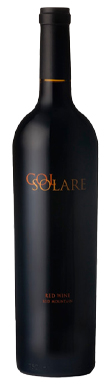
A pretty wine from this Antinori-Chateau Ste Michelle collaboration that has been a symbol of consistent excellence on Red Mountain since its founding. The aim...
2018
Col SolareRed Mountain
Sori della Sorba, Solo per Amore, Langhe, Piedmont, Italy, 2020
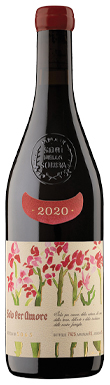
Beautifully bright and brilliant with effusive aromatics of strawberry and dusty red cherries, notes of anise and candied cherry. This blend of Dolcetto and Nebbiolo...
2020
Sori della SorbaLanghe
