
Anson: A masterclass in Napa Valley Cabernets
Jane Anson explores the history of Napa Valley Cabernet Sauvignon and evaluates ten different wines from across the region spanning 25 years.


Ten wines from 10 producers, 10 vintages spread over 25 years; 1991 to 2015. That’s a tough brief to perform well on, and I don’t think many regions would have been able to pull it off quite as impressively as Napa did during Decanter’s Fine Wine Encounter masterclass tasting on 3rd November.
The aim here was to tell the story of Cabernet Sauvignon in Napa Valley through a series of wine from seven of the region’s 16 AVAs. Inevitably just a snapshot, but a fascinating look at a grape that has come to define Napa ever since the 1976 Judgement of Paris established the region as a particularly happy marriage of site and grape variety.
Scroll down for Jane Anson’s Napa Cabernet tasting notes and scores
The climate patterns of Napa, with the hottest months in September and October, suit this late-ripening variety, and it dominates the physical and psychological landscape here in a way that it doesn’t quite manage in its home region of Bordeaux.As of 2018, Cabernet Sauvignon plantings in Napa stood at 9,730ha (24,045 acres), or 51% of all planted red and white varieties. To compare that with Bordeaux, there were 24,116ha of Bordeaux in 2016, but as a percentage of plantings it barely climbs over 22% of red grapes.Cabernet still makes up only 4% of overall plantings in California.This US State plays an integral part of the modern history of Cabernet. In 1997 researchers at UC Davis were responsible for the first identification of its parentage through DNA fingerprinting, showing it to be the offspring of Cabernet Franc and Sauvignon Blanc. The same research centre struck again in 2016, providing the first complete genome sequencing of Cabernet. This sets up future research that should help it withstand changing climate patterns. The same work has been done on Chardonnay, with both varieties made up of around 37,000 genes but with a variety of genetic differences that influence their taste and behaviour. This latest research also shed more light on its origins, suggesting it arrived no later than the 17th century. This is a little earlier than previously thought and is still believed to have been the result of spontaneous cross pollination in Bordeaux.Cabernet wasn’t the first grape to arrive in California. But it was well established by the end of the 19th century through work from both Bordeaux native Jean-Louis Vignes at his Los Angeles property in the 1830s to 1850s, and later Agoston Haraszthy, who brought 100,000 vine cuttings of 350 varieties back from Europe in the 1860s. By 1885 the most expensive wine in Napa was recorded as a Cabernet Sauvignon from Spring Mountain, called Miravalle, owned by San Francisco financier Tiburcier Parrot.We had another Spring Mountain Cabernet in the shape of Cain Five during this tasting. It provided a link to this earlier success, as well as an opportunity to talk about a footnote to California Cab at this time; much of it in the 1880s was being shipped back to Europe to try to stem losses from Pylloxera.Prohibition ripped through California Cabernet as it did all of the state’s wine industry. Over half of California’s wineries had disappeared by the mid-1930s, down to 350 from a high in 1919 of 700. Both Trefethen and Silverado were active before Prohibition but fell into disrepair before the current owners revived them, and Luc Morlet opened his in 2006 on the site of an estate that had suffered the same fate.
In 1933, at the end of Prohibition, John Daniel Jnr took over from his great uncle Gustave Niebaum. Niebaum had died in 1908, but his widow Susan had raised John Daniel and his sister at Inglenook. The following decades saw Daniel produce the legendary Cask Cabernets that became the standard bearer for the variety for many decades and remain a benchmark for serious Cabernet producers today. Inglenook was joined in the 1960s by the now legendary Robert Mondavi. Mondavi started at the Charles Krug winery and then moved to the To Kalon vineyard which he later chose as the site for his own winery in 1966.
In the tasting we paid tribute to To Kalon through the wines of Luc Morlet, who sourced part of his grapes for Passionément from the vineyard. This was also the decade that saw Caymus, Chappellet, Diamond Creek, Joseph Phelps, Shafer and Stag’s Leap all choose Cabernet Sauvignon as their dominant variety. A decision that was further rewarded in the 1976 Paris tasting that crowned it the ‘King of Napa’ grapes. The 1979 partnership between Baron Philippe de Rothschild and Robert Mondavi at Opus One ushered in the era of the ‘Icon Cabs’ of Screaming Eagle, Harlan, Colgin and others that arrived in the 1980s and 1990s.
Examining the evolution of winemaking from the early era of the restrained Cabernets to the more powerful icon style of extended hang time, high alcohol and concentrated fruits is not an easy task when looking at such different producers as we were not able to trace their own style evolution. But we had insights from various winemakers such as Christian Moueix at Dominus, who recorded how much earlier he harvested in 1991 than he did in later years, and we looked at the evolution from mountain sites to valley floor and the migration back up into the mountains.
I was very careful to avoid using the term ‘Bordeaux blend’. This is Cabernet on its own terms with Bordeaux acting only useful as a reference point for my own benchmarking. I had inevitably chosen estates that I personally admire, which meant properties that can be relied upon to show Cabernet’s elegance as well as its power, and it’s worth noting that I love cooler vintages like 2011 because they offer nuance to the generosity of Napa Cab. The clearest take away that I found was the extremely consistent quality across different sites and vintages, from hot years like 1997 to cooler vintages like 2011. Each wine told its own story and underlined that there is a reason Cabernet still dominates in Napa, even as it evolves and is challenged by new arrivals.
And finally, the best wines that we tasted were the ones came with at least a decade of bottle age. The younger ones will join them in time, no question, but the tasting underlined again that Cabernet Sauvignon wherever it is grown holds back its best character until it has developed complexity in bottle. And it’s worth the wait.
See Jane Anson’s Napa Cabernets notes
You may also like
Anson: Top five Bordeaux vintages ready to drink nowTasting Opus One: 1979 to 2016Napa Valley Cabernet 10 years apartCollectible California Cabernet
Diamond Creek Vineyards, Red Rock Terrace, Napa Valley, Diamond Mountain, California, USA, 2014
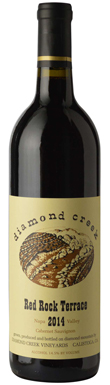

Red Rock Terrace is a north-facing 7-acre vineyard, producing here a wine that is striking for the purity and power of its cassis and blackberry...
2014
Diamond Creek VineyardsNapa Valley

Morlet Family Vineyards, Cabernet Sauvignon, Napa Valley, California, USA, 2012
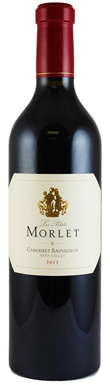
Fresh acidities and singing black fruits here, this has a beautiful mixture of power and elegance from 5th generation French winemaker Luc Morlet. It’s intense...
2012
Morlet Family VineyardsNapa Valley
Gallica, Cabernet Sauvignon, Napa Valley, Oakville, California, USA, 2010
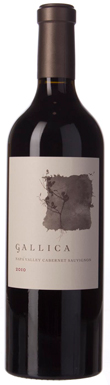
Rosemary Cakebread's home estate (winemaker at Spottswoode for many years), there is a clear smoky edge from the first nose. As it opens in the...
2010
GallicaNapa Valley
Long Meadow Ranch, Cabernet Sauvignon, Napa Valley, California, USA, 2004
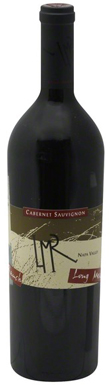
Plenty of classic Cabernet markers here, with menthol, truffle, black olive and cocoa, toasted cedar and still firm tannins. A great wine, still young at...
2004
Long Meadow RanchNapa Valley
Silverado, Solo, Napa Valley, Stags Leap District, California, USA, 2002
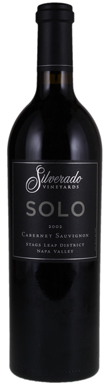
Clear spice here, a gorgeous mature Cabernet at 17 years old with real salinity and anise notes on the finish, more than many of the...
2002
SilveradoNapa Valley
Trefethen Family Vineyards, Cabernet Sauvignon, Napa Valley, Oak Knoll, California, USA, 1999
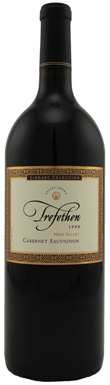
<p>This is gorgeous, drinkable, luscious, juicy and just so good. Easily one of the standouts of the line-up, it bursts out of the glass with...
1999
Trefethen Family VineyardsNapa Valley
Cain Vineyard & Winery, Cain Five, Napa Valley, California, USA, 1997
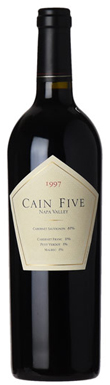
<p>We are at the perfect drinking moment for this beautiful Spring Mountain wine, packed with gentle autumn leaf beauty. It’s elegant and balanced with notes...
1997
Cain Vineyard & WineryNapa Valley
Dominus Estate, Cabernet Sauvignon, Napa Valley, California, USA, 1991
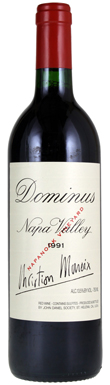
One of the first Napa wines that I fell in love with and still going strong at almost 30 years old, with a good long...
1991
Dominus EstateNapa Valley
