Anson: How Nicolas Jaboulet started again in the Rhône


Jane Anson speaks exclusively to Nicolas Jaboulet about how he started afresh in the region with so much history for his family, with tasting notes on Maison & Domaine Les Alexandrins wine available to Premium subscribers.
Go straight to the Maison & Domaine Les Alexandrins wine reviews
Walking across Hermitage Hill with Nicolas Jaboulet is a bit like I imagine walking into Selfridges with the descendants of Harry Gordon Selfridge must be.
There I was, enjoying what is one of my favourite walks in France, meandering along the tiny dirt track that winds around the hill just below La Chapelle, just up from a holiday house I rented a few summers ago, where my youngest daughter learned to swim.
I made a throwaway comment about the view from up by the chapel itself, and Jaboulet rejoined somewhat hesitantly that he doesn’t go there anymore, and how he remembers it as a child, walking the vines with his grandfather.
Nicolas Jaboulet is the 6th generation of one of the most famous winemaking names in the northern Rhône.
It doesn’t get much better, after all, than being the family behind wine legends such as the 1961 La Chapelle.
It was Nicolas’ great great great grandfather Antoine Jaboulet who first planted the vineyard of La Chapelle in 1834, next to a chapel that was built in 1235.
The vines were passed down from father to son until the business was fairly abruptly (at least so it seemed to observers) sold to the Frey family of Bordeaux’s Château La Lagune in 2006.
So what happens to the next generation after being displaced from a family business, especially one as well loved as Paul Jaboulet Ainé?
To move on from the loss, it probably helps to have a change of scene. For Jaboulet, who had worked in the family business since 1997, that took a few years.
He stayed in his role as export and marketing director until 2009 before leaving to join forces with the Perrin family of Château Beaucastel in the southern Rhône.
Together they set up the boutique négociant Maison Nicolas Perrin.
‘The idea was to use my knowledge of the northern Rhône, and my connections with local producers, and combine it with the winemaking expertise and production facilities of the Perrins,’ Jaboulet told me at the time, explaining that they would be buying wine from Hermitage, Côte Rotie and St-Joseph to begin with, and bottling them at the Perrin winery in Orange.
Within a few years they were offering wines from across the northern Rhône, from Condrieu down to St-Péray, and in 2011 bought their first plot of vines in Crozes-Hermitage, in the village of La-Roche-de-Glun.
At the same time, they began to buy in grapes rather than wine, to ensure a better control of the process from beginning to end.
I’ve been impressed with the wines from the beginning, and can honestly say that I’ve been waiting for the news that came last year – that the négociant business has finally become a bricks-and-mortar wine estate with vines attached, complete with a new winery in Tain l’Hermitage.
That winery, on the site of the former cellars of Michel Delas, is just drying its final coat of paint for the 2018 harvest, and Nicolas Jaboulet is once again part of a real winemaking family.
You can feel his pleasure at this as we meet up in the Rhône in early July.
We start out tasting at Domaine les Alexandrins in Mercurol, the estate that he is now part owner of, before heading out to visit the vineyards in Crozes-Hermitage and Cornas.
‘It happened naturally in the end,’ he says. ‘We began working with Alexandre Caso and Guillaume Sorrel for our négociant business in 2012, and increasingly felt that we all wanted the same thing, and had the same approach to making pure, fruit-focused and terroir-specific wines.
‘So we bought into Domaine les Alexandrins, that had been started by Guillaume in 2009. It’s a real team, and we are building this estate for the long-term.’
The Perrin family are still involved in the project, both as investors and as part of the winemaking team, but it is Jaboulet, Caso and Sorrel who are here full-time, all three fully versed in the northern Rhône.
Like Jaboulet, Sorrel is part of local winemaking lore, as his father is Marc Sorrel and fourth generation to work the prestigious Le Méal and les Rocoules vines on Hermitage hill, while Caso is a renowned viticulturalist and specialist in the region’s terroir.
All of the wines will now be bottled under the name Domaine et Maison les Alexandrins. As of 2018 these stand at 16ha in St-Joseph and Crozes Hermitage for the estate wines, with another 6ha due in 2019, plus 15ha of bought grapes for the négociant bottlings.
All is worked plot by plot, with biodynamic farming now introduced across their own vines.
‘Growing from here is a question of opportunities and by definition nobody knows when they arrive,’ says Jaboulet.
‘Our wish is certainly to add further plots of land to our domain wines from a prestigious appellation such as Cornas, Côte Rôtie or Hermitage.’
The hope is to double their holdings over the next five years. But for now it’s clear that the years of buying grapes rather than owning land has brought a fresh perspective.
Perhaps the most telling conversation that we had came right at the start of the day, as I was tasting through the wines with both Jaboulet and Sorrel, and the discussion turned to the public perception of the different parts of the northern Rhône.
‘These appellations offers some of the best values in French wine, on some of its most exciting terroirs. Because even places like Hermitage are often under-estimated despite their quality – there is no doubt that certain parts of the hill deliver wines equal to many of the best Burgundies, and often for a fraction of the price.’
And here they paused. ‘The problem could be that the established names have focused on their own brands, and not on promoting the appellation as a whole. Maybe what Hermitage needs is a few new entrants and a little disruption’.
I got the feeling that they weren’t saying this for my benefit so much as carrying on a conversation that they’d had many times before.
Because clearly there is life after a family business, after all. As there was, you’ll be happy to hear, for the Selfridge family. Harry’s grandson Oliver, who died in 2008, spent his career as a computer scientist, and became known as the godfather of Artificial Intelligence – a disruptive technology if ever there was one.
Quick facts
Domaine les Alexandrins estate:
Crozes Hermitage 7ha, with a further 6ha as of 2019.
St Joseph 4.5ha
Planted this year but not in production: 1 ha of Crozes and 4 ha of Vins de Pays (producing for the 2020 vintage).
Maison Les Alexandrins négociant;
15 ha of grapes from Condrieu, Hermitage and Cornas.
Read Jane Anson’s tasting notes and ratings for the wines:
See also:
Château Larrivet Haut-Brion: Best of the recent vintages
From the archive: Côte-Rôtie 2012 panel tasting results
Maison Les Alexandrins, Côte-Rôtie, Rhône, France, 2017
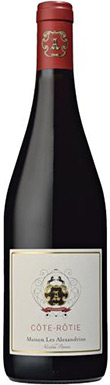

A bit of smoke, a touch of cracked black pepper, some brooding damson fruit, all draped across sinewy tannins. Definitely Northern Rhône and shows the...
2017
Maison Les AlexandrinsCôte-Rôtie

Maison Les Alexandrins, Blanc, Hermitage, Rhône, France, 2017
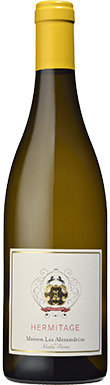
This is an even split of Marsanne and Roussanne from the Maison Blanche and Roucoules plots on the high eastern side of Hermitage – a...
2017
Maison Les AlexandrinsHermitage
Maison Les Alexandrins, Hermitage, Rhône, France, 2017
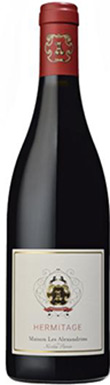
Darkly coloured, with savoury, brambly aromatics, measured and precise. A medium-bodied wine with a very dry impression on the palate and balanced acidity. Good, but...
2017
Maison Les AlexandrinsHermitage
Maison Les Alexandrins, Cornas, Rhône, France, 2017
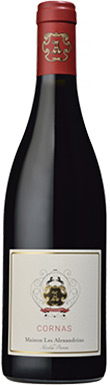
This is rich but extremely tightly knotted, and will take six to eight years to fully show off those Mediterranean spices and sweet plum fruits....
2017
Maison Les AlexandrinsCornas
Domaine Les Alexandrins, St-Joseph, Les Serines, Rhône, France, 2017
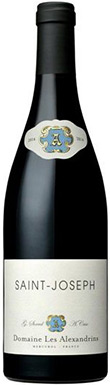
Wines like this, from vines that are up to 90 years old, are why St-Joseph is being taken increasingly seriously. It's made from vines growing...
2017
Domaine Les AlexandrinsSt-Joseph
Domaine Les Alexandrins, Crozes-Hermitage, Rhône, France, 2017
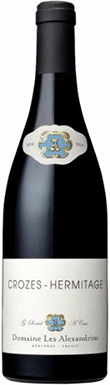
Domaines Les Alexandrins own 5ha of vines, up to 80 years of age, near the communes of Pont d’Isère and Beaumont Monteux. In this site,...
2017
Domaine Les AlexandrinsCrozes-Hermitage
Maison Les Alexandrins, Condrieu, Rhône, France, 2017
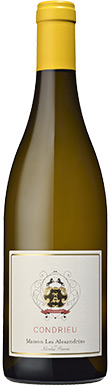
The winemaking team put the brakes on the rich fruity side of Viognier here, going for more sculpted and fine citrus zest, saffron and apricot...
2017
Maison Les AlexandrinsCondrieu
Maison Les Alexandrins, St-Joseph, Les Serines, Rhône, France, 2016
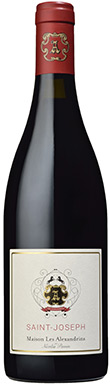
This is made from vines growing in St-Joseph’s northern granite soils, providing more evident minerality. It has extremely pure dark fruits and tightly spun tannins,...
2016
Maison Les AlexandrinsSt-Joseph
Maison Les Alexandrins, Crozes-Hermitage, Rhône, France, 2017
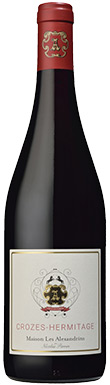
From young vines from the southern Terrace de Chassis section of Crozes-Hermitage on clay-limestone soils, aged in triconic oak vats. The focus of this wine...
2017
Maison Les AlexandrinsCrozes-Hermitage
Maison Les Alexandrins, Syrah, Collines Rhodaniennes, Rhône, France, 2017
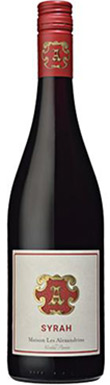
This wine tells you so much about Maison Les Alexandrin’s approach to winemaking – it’s marketed as 100% Syrah to keep things simple but in...
2017
Maison Les AlexandrinsCollines Rhodaniennes
Maison Les Alexandrins, Viognier, Vin de France, Rhône, France, 2017
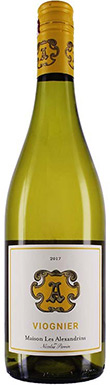
From vines located mainly around the Coteaux d'Ardèche, this 100% Viognier delivers plenty of rounded apricot and citrus notes. 2017 was a sunny vintage for...
2017
Maison Les AlexandrinsVin de France
