10 Spanish grapes to discover
Spain has a host of characterful grape varieties just waiting to be discovered. Steering clear of those well-known favourites Tempranillo and Albariño, pour yourself a glass and sit back as we recommend 10 of the best to explore.


Our story dates back more than a century, with the arrival of oidium (powdery mildew) and the phylloxera bug. When growers replanted, most avoided the susceptible and the awkward, and went for the more profitable, higher-yielding choices. It became a matter of the survival of the fittest. In the years that followed, particular clones came to dominate, removing many of the quirks and introducing a more consistent style. Rioja was a case in point. To be fair, consistency has its place, especially among large-volume wines. But wine drinkers thrive on diversity too.
Worldwide, growers took similar decisions. Pre-phylloxera (Pre-P), for example, in Sherry country there were any number of varieties, which were narrowed down to Palomino Fino, Moscatel and Pedro Ximénez post-phylloxera. Dedicated producers have campaigned to bring what remains of the Pre-P varieties back into the limelight. Be prepared to hear more about Mantúo Castellano, Mantúo de Pilas, Vijariego, Perruno, Cañocazo and Beba.
Regional strength
Spain can be proud of its best Cabernet Sauvignons, Merlots and Chardonnays. But what it can also offer the world is a range of historic varieties with a sense of place. They restore originality to our drinking choices. Yet identifying, recuperating and testing-out forgotten varieties takes commitment. Where to look? In the few sites where phylloxera never penetrated, of course. Beyond that, Catalonia, where Miguel Torres and his daughter Mireia have years of experience in their long-running Ancestral Varieties project, which seeks to resurrect old and forgotten grapes. Some of their ‘new/old’ discoveries now appear in blends, such as Querol in Grans Muralles. Recent releases as single varieties are the white Forcada and the red Pirene.
Galicia is a great hunting ground, in part for its geographical isolation, in part because of the sheer difficulty of farming in places such as Ribeira Sacra. Valencia offers the variety-hunter plenty, though many of its grapes disappear into blends: take Javier Revert’s Trepadell, Tortosí, Merseguera, Verdil and Arcos, for example. My selection reflects my love of Spain’s alternative reds: fresh, sometimes crunchy, occasionally rustic (in a good way), lower in alcohol and with little or no oak. The whites are also impressive, showing the potential of this remarkably diverse country.
• Source for vineyard planting figures to follow: Ministerio de Agricultura, Pesca y Alimentación, to 31 July 2021
Albillo Mayor

Plantings: Castilla y León 755ha, Extremadura 28ha, Asturias 6ha, La Rioja 4ha
In 2019, Albillo Mayor burst its chains and came out into the open, recognised as the white variety in that reddest of red wine denominations, Ribera del Duero. It’s not new, but had historically been used for claretes, the local rosado wines. White Ribera is still a small category; so far, about 30 producers out of more than 300 have launched whites. Formerly they had to appear under the Vino de la Tierra de Castilla category. The name Albillo appears in many guises and is used interchangeably across Galicia and Castilla y León. In particular, the variety most often confused with Albillo Mayor is Albillo Real, commonly found around Madrid, and in DO Cebreros.
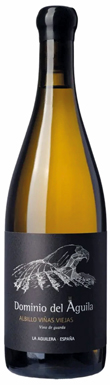
The fascinating discovery associated with Albillo Mayor is that it is a parent of none other than the ubiquitous Tempranillo. Like Tempranillo, it is relatively low in acidity. It produces compact bunches of thin-skinned grapes. The wines are not aromatic but do have a breadth and complexity that suggests the best will age well. The first releases have been really promising, notably Dominio del Aguila, Dominio del Pidio, Valduero Reserva and Valduero Gran Reserva.
Dominio del Aguila, Viñas Viejas Albillo, Castilla y León 2018
Blanco Lexítimo
Asturias 40ha, Galicia 22ha, Castilla y León 21ha
Who could fail to love a grape variety that proclaims itself ‘the legitimate white’, as if all other white grape varieties are irrelevant? I loved the name, but was completely unaware of its existence until I encountered it in May this year at a tasting in Betanzos, the former capital of Galicia. From a small sample of a dozen producers, it was clear that the variety has a future, and that it is made for our changing palates; its freshness is perfect for hotter summers. There was also a sparkling version which, given the acidity of the base wine, seemed promising; and there was obvious potential for lees ageing to make a richer style.
Consultant Dominique Roujou de Boubée of Terroir en Botella works with the variety at Ponte da Boga. ‘It’s not difficult to grow, but it is low-yielding,’ he says. ‘The small berries don’t give much juice but it’s very good quality. It lends itself to skin contact because it’s very rich in terpenes and because of its acidity.’ It is the same variety as Albarín Blanco of Asturias. Roujou de Boubée suggests that it may be a descendant of Savagnin and Traminer, and that it was spread along the pilgrim routes. That would account for its presence in Asturias and also in Tierra de León, Betanzos, Lugo, Barbanza e Iría, Ribeira Sacra…
Ponte da Boga, Blanco Lexítimo, Ribeira Sacra, Galicia 2021
Malvasía Volcánica

Canary Islands 926ha
The trail of Malvasía will lead you on an exotic and confusing dance through Spain’s vineyards, taking in Rioja, Catalonia, the Balearic Islands, Valencia, Castilla y León – and significantly the Canary Islands. Exotic, for the history and character of the grape; confusing, for the fact that it originated in Greece but has transformed over the centuries. In the Canaries, Malvasía Aromática is the speciality of La Palma, the site of recent volcanic eruptions. On the famous black soils of Lanzarote, Malvasía Volcánica dominates. It’s a cross between Malvasía Aromática and the local Marmajuelo.
Volcánica is the second most-planted white on the islands after Listán Blanco. Typically, it’s less aromatic than its parent and very well adapted to dry climates. It was familiar to tourists who buy the local wines, but was not widely known elsewhere. That’s until the recent opening of a winery in Gran Canaria, the Canaries’ third largest island – a spot better known for its beaches than its fine wines. What caught press attention was local man and legendary footballer David Silva’s investment. What caught the wine world’s interest was the fact that his winemaker was Jonatán García from Suertes del Marqués in Tenerife. García – along with Envínate – put Tenerife on the fine wine map.
Tamerán, Malvasía Volcánica, Gran Canaria 2020
Maturana Blanca
Rioja 43ha, Basque country 2ha, Navarra 1ha
Rioja is still a predominantly red region: white grapes account for less than 10% of the vineyard. Yet the interest in Rioja’s whites and their quality is growing. Viura takes the lead in white Rioja plantings, accounting for two-thirds. Maturana Blanca, on the other hand, makes up just 0.66% of white varieties grown, and only 0.06% of the total vineyard. Yet it’s actually the earliest recorded variety in Rioja (1622), when it was called Ribadavia.
Why is there interest in recuperating it now? Rodolfo Bastida at Ramón Bilbao currently has 2.5ha planted in the far west in Cuzcurrita. He says it’s early budding, hardy and adapts to different climate and soils; it is also drought resistant, with a low pH and high total acidity. On the downside, the compact clusters are susceptible to rot, the yield is only average and it’s sensitive to exposure to the sun. Bastida highlights its fresh citric and tropical aromas, and keynote acidity. Currently there are few single- varietal examples in Rioja. The most well known of them is Ad Libitum from viticulture pioneer Juan Carlos Sancha. Viña Ijalba and Bilbaínas both have one, and Alonso & Pedrajo make a version macerated on skins. Nivarius, specialists in white Rioja, use the variety both by itself – in Finca La Nevera – and in blends.
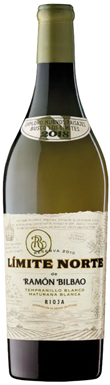
Ramón Bilbao, Límite Norte Reserva, Rioja 2018
Palomino Fino

Andalucía 2,899ha
In this line-up of varieties to discover in Spain, Palomino Fino is the sleeping giant. This is the grape behind the millions of litres of Sherry that the Marco de Jerez area produced in its heyday, yet it was rarely acknowledged with seriousness. It’s only now, with the interest in terroir, that we are talking positively about Palomino Fino. It had the lowest of reputations: as wine students, generations of us were taught that it was so low in aroma, flavour and alcohol that it needed the solera system to give it character. All change, thankfully. This has been driven by producers exploring Palomino Fino’s potential as a still wine, notably Ramiro Ibáñez and Willy Pérez, and the Equipo Navazos team. There’s a suggestion that the Listán Blanco of the Canary Islands is the same variety.
Jonatan García of Suertes del Marqués in Tenerife agrees, adding: ‘They are also starting to use the name Listán Blanco in Jerez again. It had fallen out of use but people like Ramiro Ibáñez and Willy Pérez are bringing it back into plain sight. Obviously, over the centuries in different soils and climates, the variety has mutated, so they are not identical. In fact, on Tenerife alone we have 10 different clones.’
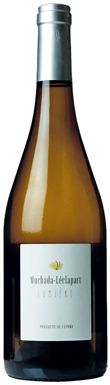
Muchada-Léclapart, Lumière, Marco de Jerez 2019
Brancellao
Galicia 46ha
With a Galician red, you can be certain of one thing: it will deliver freshness. It may not always be bold in colour, but the wine will certainly make itself felt. Looking at the statistics, the hectares of Brancellao vineyards don’t even reach three figures, and under the name Alvarelhão in Portugal it has been declining, too. That is a pity. Its cherry fruit, brisk freshness and mineral notes are very appealing.
Fernando González, working with his son Fabio at the family winery in Ribeira Sacra, is an enthusiast. ‘It makes wines that are different, individual, and very long-lived. They develop brilliantly over time.’ He admits that it can be an awkward plant, with its small bunches, many branches, a long cycle and late harvest date. ‘In contrast, our other ancestral variety, Merenzao, is much easier. With Brancellao, choosing the right moment to harvest is crucial. You have to get the perfect balance between texture, acidity and maturity to avoid excessive rusticity. That’s why we don’t use stems in fermentation as they would bring a green character.’
To explore the red grape varieties of Galicia, there are few better places to start than Adega Algueira; González also works with varieties such as Mencía, Caíño, Sousón and Merenzao.
Algueira, Serradelo, Ribeira Sacra, Galicia 2016
Prieto Picudo

Castilla y León 2,825ha, Castilla-La Mancha 5ha, Andalucía 2ha
To be perfectly frank, I first met Prieto Picudo (PP) about 15 years ago in Tierra de León, its home territory, and have been waiting for it to make a mark ever since. Surely its time will come soon? It’s a vine with thin-skinned berries in small bunches, that does not like drought or sun. What it delivers is deep colour, crunchy freshness, alcohol and firm tannin, with plenty of aromas and dark fruit flavours.
All those years ago, people were talking about its potential for rosado. The fact that it could make a full-flavoured, well-coloured, structured, characterful pink wine meant that it was going to be the Next Big Thing. Since then, the fashion has changed to Provence-style rosés, so the time to make its mark has come and gone, at least until the trend changes again. In the right hands, PP has the potential to produce characterful fresh reds, often with an enjoyably rustic edge. There is also some very old vine material.
This is a wine to enjoy with roast lamb and hard cheeses. For a thoughtful approach to the variety, it’s worth tracking down the in-demand wine of Raúl Pérez; also seek out Prieto Picudo if you are holidaying in the region.
Dominio Dostares, Estay, Castilla y León 2018
Sousón
Galicia 364ha
Galicia in Spain’s Atlantic northwest is a terrific source of wines for lovers of lesser-known grape varieties – in particular, of reds in a region where whites (the Godellos, the Treixaduras and the Albariños) dominate. Tucked away in the top left-hand corner of Spain, these red varieties have been able to develop in splendid isolation. Vines are no respecters of political boundaries, and so it is that Spain’s Sousón is also Portugal’s Vinhão and the Sousão of the Douro.
Spain’s Sousón is typically found in the DOs of Ribeiro, Rías Baixas and Valdeorras, where it has small clusters of small berries. It’s low in vigour, which explains its lack of popularity with growers. What it does have is plenty of colour in its skins, making for blue-black wines, and aromas of dark berry fruits. It can also produce high levels of alcohol and fresh acidity. All of this is perfect for Port, but is a useful addition to Galician red blends, too. There are fewer single-variety Sousóns to be found, and each of them is small-production. The pioneering José Luis Mateo in Galicia’s smallest DO of Monterrei has a fine example at Quinta da Muradella. Also try the fresh, dark-fruited Sousón from Cume do Avia in Ribeiro (2019, £30 Wanderlust Wine).
Coto de Gomariz, The Flower and the Bee Tinto, Ribeiro, Galicia 2020
Sumoll

Catalonia 200ha
Pronounced ‘sumoy’, Sumoll is made for those of us who favour fruity, crunchy, brightly rustic reds. It makes an ideal match for a selection of cured meats and has appealing floral and wild herb aromas. Today its home is Catalonia, specifically the DOs of Alella, Penedès, Pla de Bages and Tarragona. It is also found in the Canary Islands, as Vijariego Negro. Sumoll has a long history (with records dating back to the late 18th century), and is another of the varieties that was not popular with wine-growers in the replanting after phylloxera. According to Jordi Arnan of Celler Pardas in Penedès, ‘it’s the most masochistic grape there is’. Despite this, Arnan and his partner continue to dedicate themselves to this very late-ripening, fertile variety, and make a juicy, deep-coloured, structured rosado, in addition to 100% Sumoll reds such as Sus Scrofa (2020, £18-£18.95, Bottle Apostle, Highbury Vintners).
Sumoll is most widely found in blends; Heretat Mont Rubi (HMR) was the first to launch single- variety wines (available from Jeroboams in the UK). HMR’s speciality is a delightfully rich sweet wine with more than 200g/L of residual sugar. Expect to find Sumoll plantings increasing: its drought resistance makes it useful as the climate warms.
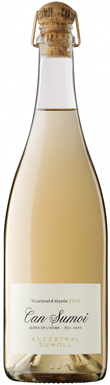
Can Sumoi, Ancestral Sumoll, Penedès 2018
Trepat
Catalonia* 1,297ha, Valencia† 102ha, Murcia 3ha
Regular drinkers of Cava rosado will be familiar with Trepat. It makes deep-coloured pink wines that are frequently a little simple. The first time I stood in a Trepat vineyard was with Ricard Rofes, and I was puzzled. I really like his wines at Scala Dei in Priorat and have learned so much from him as a winemaker, but I could not understand his enthusiasm for this unpromising-looking vineyard. Fast-forward almost 10 years, and I get the point.
Rofes has resoundingly transformed the image of Trepat, making an unusual, elegant red. In doing so, he has learned a few things. ‘It’s a variety that doesn’t produce sugars easily, so even in late October we are harvesting at 13 degrees [potential alcohol].
‘The good thing is that it’s resistant to botrytis, and it makes elegant wines because it’s not tannic. That’s why we add stems to give a bit more structure to the wine. It’s also low in colour, and fragrant. The result is a delicate wine, which we have to put into large-format oak so as not to drown it: 600 or 700 litres, or even 4,000-litre foudres.’ No wonder he is enthusiastic: ‘The more you work with Trepat, the more you enjoy it.’
*Particularly Costers del Segre and Conca de Barberà
†Known as Bonicaire in Valencia, where it is often found in blends
Abadía de Poblet, La Font Voltada, Conca de Barberà, Catalonia 2017
Sarah Jane Evans MW’s 10 wines to discover
Related articles
- Best Spanish wines under £20
- Spanish Verdejo: panel tasting results
- Investing in Spanish wine: a market waiting in the wings
Can Sumoi, Ancestral Sumoll, Penedès, Spain, 2018
91
Raventós i Blanc goes back a very long way in traditional-method sparkling wine production. Pepe Raventós is now in charge, and he has also taken on a new project, the wild and beautiful estate of Can Sumoi. From this comes the ancestral-method sparkler, Sumoll grapes with a fermentation begun in tank and finished in bottle. Dry, clean-cut, saline, refreshing. Organic.
2018
Can Sumoi
Dominio del Aguila, Viñas Viejas Albillo, Castilla y Léon, Spain, 2018
95
Dominio del Aguila’s Pícaro pink wine has been the perfect companion to my summer eating. Its Albillo Mayor is a year-round choice, and a keeper: white with texture, waxiness, nutty complexity, and a line of grapefruit freshness, drawing on Jorge Monzón’s experience in Burgundy. This is a great beginning for the Albillo Mayor variety in this northern region. Organic, foot-trodden, whole-bunch fermented over 10 months in neutral French oak, aged for 12-14 months without stirring or racking.
2018
Dominio del Aguila
Muchada-Léclapart, Lumière, Andalucia, Spain, 2019
95
The architect and the Champagne maker: could they really make a fine wine – still, unfortified – out of the Sherry grape, Palomino Fino? Would it taste of anything without flor and a solera? The answer is: yes. Lumière keeps developing each vintage, along with their understanding of the vineyard. This is not about fruit, but all about reflecting the mineral, saline character and cool elegance of the vineyard. Organic.
2019
Muchada-Léclapart
Bodegas Ramón Bilbao, Límite Norte, Rioja, Northern Spain, Spain, 2018
94
The second vintage of a new project, a cool-climate 50/50 blend of ‘Old’ Rioja (the historic rarity Maturana Blanca) and the ‘New’ (the Tempranillo Blanco grape discovered in 1988). Aged in concrete, amphorae and 600-litre French oak, followed by six months in French barriques and 12 months in bottle. Creamy, with notes of wild herbs, full and rich, but balanced by a crisp finish.
2018
Bodegas Ramón BilbaoRioja
Bodegas Tamerán, Malvasía Volcánica, Gran Canaria, Spain, 2020
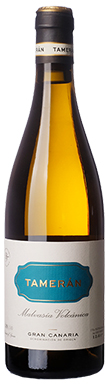

Tamerán’s recent launch (2020 is the first vintage) delivered an impressive snapshot of Canary Island specialities. Yet it’s so much more than a spotter’s guide....
2020
Bodegas Tamerán

Adega Ponte da Boga, Blanco Lexítimo, Ribeira Sacra, Galicia, Spain, 2021
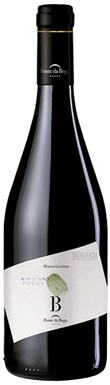
91
Ponte da Boga have recuperated this scarce variety, planting it on slate soils in Ribeira Sacra in 2010. After cold maceration, the grapes are pressed and fermented in stainless steel (a small proportion in barriques), with five months' ageing on lees in 500-litre French oak. Lively citrus aromas, with following citrus freshness, stone fruits and light smoky notes with a hint of minerality.
2021
Adega Ponte da BogaRibeira Sacra
Abadía de Poblet, La Font Voltada, Conca de Barberà, Catalonia, Spain, 2017
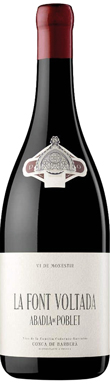
95
Trepat transformed: the grape known for its straightforward pink Cavas here delivers a delicate still red. The winery is within the historic Poblet Abbey and the vines are historic, too: planted in 1915. Fine still wines from Trepat are not common. This is a glorious showcase: aromatic with pomegranates and wild herbs, white pepper and mild tannin. Font Voltada refers to the 'fenced-in fountain’, an old feature on the site.
2017
Abadía de PobletConca de Barberà
Adega Algueira, Serradelo, Ribeira Sacra, Galicia, Spain, 2016
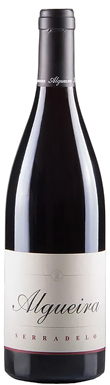
93
Fermented with wild yeasts and aged in old oak to enable the character of the variety (Brancellao) to express itself. Deceptively pale in colour but nevertheless intense in flavour with penetrating acidity and a line of savoury minerality underneath the cranberry, spicy fruit. Memorable.
2016
Adega AlgueiraRibeira Sacra
Coto de Gomariz, The Flower and the Bee, Ribeiro, Galicia, Spain, 2020
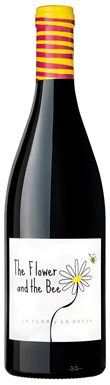
90
Made for summer drinking, this Sousón is a lovely, juicy, cherry-ish wine, with a typically spicy, crunchy finish. Made from the youngest Sousón vines of the winery, fermented in stainless steel and lightly oaked. Very refreshing, and just the wine to serve cool in Duralex tumblers.
2020
Coto de GomarizRibeiro
Dominio Dostares, Estay, Castilla y Léon, Spain, 2018
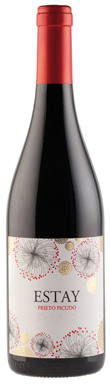
90
Dominio Dostares specialises in very old-vine Prieto Picudo, grown at about 800m in a continental climate. Estay is the entry-level wine – with its brief time in barrel it showcases the variety with its deep colour, bold dark fruit and savoury tannins.
2018
Dominio Dostares
