Get our daily fine wine reviews, latest wine ratings, news and travel guides delivered straight to your inbox.
You are now subscribed
Your newsletter sign-up was successful
An account already exists for this email address, please log in.
The mystery of the golden grape variety at the heart of Europe
Burdened with a bewildering array of aliases, one of the most planted grapes in Europe’s heart is barely known in western markets, but that’s now beginning to change, thanks to the arrival of a new generation of exciting wines
No one is sure what to call it, but everyone’s favourite grape in Central Europe can be appetisingly fresh and fruity, or richer, layered and complex – either way, the best wines are utterly delicious.
Today, producers across several countries are showing that it’s both incredibly versatile and well worth another taste – even if it does hide its light under a bewildering array of names.
It grows as Graševina in Croatia; Grašac or Rizling Italijanski in Serbia; Olaszrizling in Hungary; Riesling Italian (often just Riesling) in Romania; Riesling Italico in Italy (mainly in Oltrepò Pavese, Lombardy); Welschriesling in Austria; Laški Rizling or Grašica in Slovenia; Rizling Vlašský in Slovakia and Ryzlink Vlašský in Czechia.
It takes number one spot for vineyard area in Croatia, Slovenia and Serbia, but perhaps most surprisingly, it covers 3,000ha to 4,000ha in China, where it first arrived when an Austro-Hungarian consul was invited to be a winemaker in 1892 (its Chinese name 贵人香 means ‘noble fragrance’); there’s even some in Brazil.
No one is even sure where the grape originally comes from. One parent is a rare Italian grape called Coccalona Nera – the other remains unknown.
And some names either explicitly reference or imply an Italian connection – Olasz, Laski, Vlašský and Welsch all mean ‘Italian’ in their respective languages.*
So Italy may be the origin, although it wasn’t recorded there until the mid-1800s.
Decanter newsletter
Get our daily fine wine reviews, latest wine ratings, news and travel guides delivered straight to your inbox.
*Editor's note – Welsch/Welsh/Walloon/Vlach/Vlašský etc. are also cognate with the proto-Germanic 'Walhaz' meaning Roman/Romance-language speaker, later 'foreigner' or simply 'Italian'. Welschriesling's presence in the Illyrian border areas of the Roman Empire in contact with Germanic tribes may hint at a possible etymological origin.
A possible homeland
One twist in the unravelling of its origins comes from Serbia, where the grape (under the name Graschaz) appeared in an 1816 book called Soveršen Vinodelac (‘The Perfect Winemaker’) by Prokopije Bolić, the archimandrite, or head monk, of the Rakovac monastery on Fruška Gora mountain.
Even more important was the discovery of the world’s second-oldest grapevine herbarium in Sremski Karlovci grammar school in northern Serbia, and the only one with actual pressed grapes.
In 2017, researcher Dr Milica Rat uncovered some dusty, forgotten boxes with 75 samples of grapevine material, collected in around 1812-1824 on Fruška Gora – including a sample of Graschaz.
This gives Serbia current bragging rights as its most historic origin.
In many guises
Graševina vineyards in the Venje region in the heart of Slavonia, in eastern Croatia
(Image credit: Sasa Piranec)
The precise origin of the grape variety matters less than the fact that it has been widely adopted around the Danube basin.
It’s easy to grow and can be a generous yielder, which suited the previous, quantity-not-quality era, when it was often consumed daily from litre bottles and in spritzers (Hungarians in particular take spritzers seriously – always Olaszrizling).
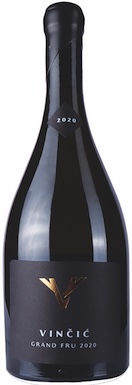
But it’s now proving that it has much more to offer, culminating in a DWWA 2023 Best in Show award for Vinarija Vinčić’s Grašac 2020 from Serbia, an unoaked version from 50-year-old vines.
The names that mention ‘Riesling’ or ‘Rizling’ are confusing because the variety is unrelated to Rhine Riesling and doesn’t taste similar to it – typically with a softer, rounder texture, but also appetising freshness.
Young versions can be light and fruity, with bright acidity and notes of lemon, green apple, white flowers, sometimes green herbs, and a mineral, grapefruit pith finish.
Or, it can be profound and complex, with ripe apple, poached pear, lemon zest, pineapple, quince and sometimes honey and marzipan, especially from old vines and low yields.
At the same time, it can also suit sparkling wines (a handful in Central Europe and even in Brazil), as well as some stunning skin-contact wines and the occasional, delicious, botrytis sweet wine.
Like many great grapes, it’s also capable of reflecting terroir; a fact supported by a recent study that found different levels of certain aromatic compounds in grapes from different regions.
Sadly, it’s only slowly regaining consumer recognition, though a competition called GROW du Monde ('GR' from Graševina/Grašac, 'O' from Olaszrizling and 'W' from Welschriesling), founded by three friends from Croatia, Serbia and Hungary, aims to unify its identity and rebuild awareness.
Time for some GROW in your glass?
Gilby’s pick: Six white Welschriesling from across Europe
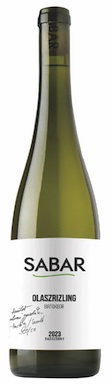
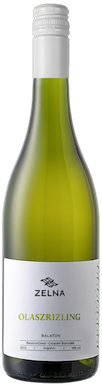
A super appetising example of Olaszrizling grown on volcanic soils near Lake Balaton. The nose is all about baked apple, cinnamon, quince and lemon oil....
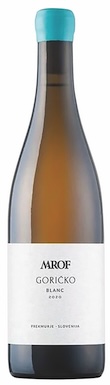
The calling card of this 22ha organic estate in Slovenia's far northeast. It shows inviting aromas of spiced peach and ripe pear with lightly flinty...
A great value example of fresh Graševina from the historic Kutjevo winery with a cellar from 1232. It begins with attractive aromas of apple blossom,...
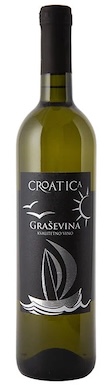
Whistle-clean, uncomplicated and approachable interpretation of Graševina from its Croatian heartland, expressing stone fruit and citrus with a bright saline finish.
Decanter Magazine, DWWA 2019 Regional Chair for North, Central & Eastern Europe
Caroline Gilby MW is a freelance writer and consultant, specialising in Central and Eastern Europe. Among others, she currently contributes to Hugh Johnson’s Pocket Wine Book, The Oxford Companion to Wine, and the World Atlas of Wine, and has previously written for Dorling Kindersley’s Wines of the World, The Wine Opus, and Tom Stevenson’s Wine Report. Prior to her career as a writer, Gilby spent seven years as a senior wine buyer at Augustus Barnet off-licences, where she became the first major buyer to import Hungarian wines to the UK. She initially studied plant biology, in which she holds a doctorate, but abandoned life behind the microscope for a career in wine soon after winning the Decanter-Macallan Malt Whisky Taster of the Year Award while still a student. Gilby passed her MW in 1992 and has been visiting and tasting the wines of Hungary, Czech Republic, Slovenia and Romania for over 20 years.