It’s not every winery visit that begins in a 13th-century church. In early February, Chiesa San Donato provides a welcome refuge from the chilly winds that wrap their way around the hilltop village of Lamole.
At this time of the year, there’s no one to be seen; a stray cat soaks up a shaft of sunlight on an old stone wall, but the road is quiet.
It's a stark contrast to the summer months, when Chiantigiana tourists flock to the hamlet’s lone restaurant, ‘Il Ristoro di Lamole’, to enjoy authentic Tuscan fare against a backdrop of magnificent views.
But for now, the small hilltop borgo is deserted, and winemaker Andrea Daldin and I have the ancient frescoes to ourselves.
Daldin explains that as recently as 1945, Lamole was a beating heart with 1,000 inhabitants. Today, in contrast, the number sits closer to 100.
Yet, the preservation of the little church and its 14th century altarpiece is remarkable; in the long summer evenings, the doors are flung open to host a throng of tourists for summer concerts.
Chiesa San Donato in Lamole
(Image credit: Claire Cocks/ Future)
Chianti Classico’s high altitude frontier
To reach this quiet haven, situated between Siena and Florence, you must take the road from the famed town of Greve, climbing to over 650 metres above sea level.
Decanter newsletter
Get our daily fine wine reviews, latest wine ratings, news and travel guides delivered straight to your inbox.
Lamole is both the smallest and one of the coolest UGAs (Unità Geografiche Aggiuntive) in Chianti Classico, sitting at the upper limit for growing Sangiovese in Tuscany.
Increasingly, this extreme geography is highly coveted. As summers get ever hotter, forward-thinking wineries are aggressively scouting for cooler sites.
Lamole’s altitude offers a welcome freshness that translates directly into the wines; at this elevation, vines benefit from cool evenings, excellent ventilation, and long sunlight hours.
Consequently, land prices here have soared to become among the highest in all of Chianti Classico.
A Venetian legacy
The driving force behind Lamole’s modern preservation is the entrepreneurial Marzotto family, whose wine group is currently managed by its eighth generation.
With ancestral origins as philanthropic Venetian textile merchants, the family has invested heavily in the village.
Their work includes financing the restoration of San Donato, driven by a philosophy that a good wine must also be 'good' in financial, environmental, and social terms.
This continues a wine legacy that first began in 1935, when Count Gaetano Marzotto established the Santa Margherita winery in the eastern Veneto, transforming reclaimed marshland and establishing schools, housing, and medical care for his workers.
Today, the group’s properties span from Alto Adige to Sardinia, and further afield in Oregon – but here, their Lamole di Lamole estate remains the area's largest, spanning 288 hectares with 37ha under vine.
(Image credit: Claire Cocks/ Future)
Stones and coins
The very identity of the region is etched into its geology. The village takes its name from lame (meaning 'blades') – the mineral-rich natural terraces that cut into the steep slopes.
This viticultural landscape traces its lineage back to Roman times, and ancient cart tracks are still used to navigate the vineyards today.
It was in these soils that Daldin once unearthed a Roman coin; a token he has kept in his pocket ever since as a talisman and a reminder of the area's rich past.
Even the flora nods to antiquity. The distinctive Florentine iris, or gaggiolo, has grown among the vines since the Roman era, its bloom reflected in Florence's symbolic fleur-de-lys.
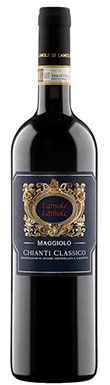
Highly prized by perfumiers for its orris root, this flower serves as the inspiration for the estate’s floral ‘Maggiolo’ Chianti Classico, named for its May (maggio) flowering.
Preserving this vertical landscape requires constant effort. The vineyards are situated on terraces supported by dry stone walls made from traditional Tuscan sandstone (macigno), an ancient structural craft recognised by UNESCO in 2018.
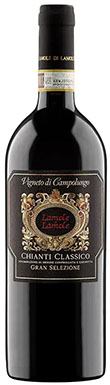
Lamole di Lamole has undertaken extensive restorations of these walls around its Campolungo vineyard, which yields the grapes for one of its flagship Gran Selezione wines.
Carbon
Managing the delicate balance between past and future falls to Daldin. Originally from Trentino, the winemaker moved to Siena to study oenology and has spent the last 30 years at Lamole di Lamole.
In this time he has overseen the conversion to organic farming, employing a meticulous, vine-by-vine approach utilising natural treatments based on aloe, algae, and propolis, alongside careful water management.
This ecological focus reached a milestone when Lamole di Lamole became the first Italian winery to be certified carbon neutral, backed by a dedicated full-time sustainability manager within the HERITA Marzotto Wine Estates group.
Pruning is not only a case of building the essential structure of the plant, but a way of helping develop the next generation of viticulturalists.
As Daldin explains, specialised pruning courses are hosted in these vineyards to preserve the alberello lamolese – a traditional bush-training method perfectly adapted to these steep slopes.
Testament to this, the estate boasts a historic plot of old vines planted in 1945, showcasing 30 different clones of Sangiovese trained using the alberello lamolese method, standing as a living museum of the town's heritage.
Lamole di Lamole, Vigna di Campolungo, Chianti Classico Gran Selezione, Tuscany, Italy 2021
My wines
This Gran Selezione is produced from fruit from one of the winery's best vineyards: Campolungo, where vines grow on schist and sandstone marl soils. There's...
Lamole di Lamole, Maggiolo, Chianti Classico, Tuscany, Italy 2024
My wines
Predominantly Sangiovese, with small percentages of Merlot and Cabernet Sauvignon making up the blend. Named after the iris or 'giaggiolo' that flower around the vineyard...
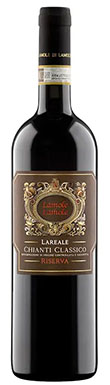
Lamole di Lamole, Lareale, Chianti Classico Riserva, Tuscany, Italy 2022
My wines
Gently dusty black fruit, this Riserva offers up a pleasant bitterness on the palate with a hint of dark chocolate, framed by well-balanced acidity. Matured...
Claire joined Decanter in 2024 with wide-ranging experience in the wine industry including auction, winemaking, communications and journalism. She holds the WSET Diploma in addition to the Italian Wine Scholar Guild and Vinitaly International Academy Wine Ambassador certifications. She enjoys hemisphere hopping: with two vintages under her belt in both Australia’s Yarra Valley and Vittoria in south-eastern Sicily. As Special Projects Editor at Decanter, Claire oversees all commercial content and bespoke projects. A qualified interpreter, she speaks fluent Italian and French and is working on her Spanish, Romanian and German.