Italy’s reverence for French bubbles runs deep, yet its own metodo classico (traditional method) wines tell a distinct story.
Crafted using the same method as in Champagne – but rooted in Italian soil – these wines showcase the country’s unique landscapes, native grapes, and centuries of tradition, delivering effervescence with unmistakable Italian character.
Historical spark
Metodo classico is produced across Italy, but its historic heart lies in the north – Trentino, Lombardy, and Piedmont – home to landmark regions such as Trentodoc, Franciacorta, Alta Langa, and Oltrepò Pavese, as well as Veneto’s Monti Lessini.
This wasn’t by chance. Northern Italy shares more than a border with France. It also shares centuries of exchange and ambition.
As Champagne rose to prominence in the 19th century, Italian producers studied its methods, imported Chardonnay and Pinot Noir cuttings, and adapted them to their own landscapes.
Long before climate change began reshaping Europe's vineyards, Northern Italy's cooler growing seasons allowed grapes to ripen slowly while preserving the vibrant acidity that traditional-method sparkling wines depend on.
That natural freshness gave the region an enduring advantage in producing elegant metodo classico wines.
Decanter newsletter
Get our daily fine wine reviews, latest wine ratings, news and travel guides delivered straight to your inbox.
Set against the Alps, a landscape shaped by elevation, glaciers, moraines, and alpine air creates ideal conditions for classic-method sparkling wine.
Wide temperature swings between day and night preserve acidity and allow grapes to ripen slowly, resulting in wines of finesse and structure.
Trentino-Alto Adige
(Image credit: Weingut Rohregger)
A century ago, Giulio Ferrari coaxed Chardonnay from mineral-rich Alpine soils, setting a benchmark for Trentodoc, Italy’s first DOC devoted to metodo classico.
Today, bottlings such as San Leonardo’s Marchesi Guerrieri Gonzaga Cuvée Pietra, or Rotari’s Flavio Riserva range from light and vivid to autolytic (toasty, reminiscent of brioche) and texturally rich.
Bright and focused, Trentodoc is defined by precision and energy.
Continuing north, Alto Adige’s metodo classico is naturally gaining ground.
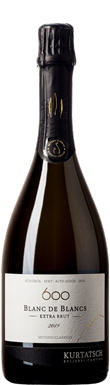
Against the Dolomites’ rugged peaks, producers including Kettmeir, Kurtatsch, Peter Sölva, and Praeclarus craft Alpine-spirited wines from Chardonnay, Pinot Noir, and Pinot Bianco – crystalline and taut.
Alta Langa
(Image credit: Marchesi di Barolo)
In Piedmont’s Alta Langa, steep, high-altitude hills with calcareous marl soils and wide temperature swings create ideal conditions for metodo classico.
Only Pinot Noir and Chardonnay are permitted, and every bottle is vintage-dated and aged for at least 30 months on the lees.
This gives Alta Langa its hallmark tension, crisp acidity, and savoury minerality, with layered notes of citrus, white flowers, and freshly baked bread.
Still a young DOCG, Alta Langa is rapidly earning acclaim, with both historic producers like Coppo and Enrico Serafino and dynamic newcomers such as Tenuta Santa Chiara.
Oltrepò Pavese
Crossing the Po River, Oltrepò Pavese remains Italy’s heartland for Pinot Noir.
Its history runs deep: in the 19th century, pioneers including Carlo Gancia and Count Augusto Giorgi di Vistarino helped establish Italy’s first metodo classico wines.
‘Engineer Domenico Mazza declared his first production of Pinot Noir Metodo Classico as “Champagne di Codevilla,”’ notes Attilio Scienza, professor and chief scientist at the Vinitaly International Academy.
Despite its finicky nature, Pinot Noir has found a natural home here, with the highest concentration of plantings in Italy.
In this landscape of chalky marl slopes, a cool stream of salinity rises from the Ligurian Sea, and Apennine breezes cool the vines.
Wineries are reviving the Pinot Noir metodo classico tradition, with the term ‘Classese’ now appearing on labels, linking the method ‘classic’ to the place ‘Pavese’, and introducing specific production regulations for the variety.
Conte Vistriano, Tenuta Mazzolini, Roccapietra, and La Genisia are producers worth seeking out.
Franciacorta
(Image credit: Michele Rossetti / Getty Images)
Also in Lombardy, vineyards sweep across morainic hills south of Lake Iseo, where careful site selection is yielding polished expressions of Franciacorta DOCG.
Detailed vineyard mapping led by cartographer Alessandro Masnaghetti defines a mosaic of vineyard areas, helping producers better understand their sites, even if those distinctions remain largely invisible to consumers.
This shift toward site expression has helped define Franciacorta’s identity within Italy’s sparkling landscape.
In the glass, this means layered, lees-aged wines where citrus and orchard fruit evolve into almond, bread crust, and a gentle creaminess.
Distinct styles such as Satèn – made from Chardonnay and bottled at lower pressure – offer a softer, silkier expression.
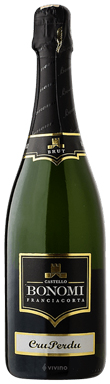
At the same time, estates such as Barone Pizzini and Castello Bonomi are reviving the obscure Erbamat grape.
Naturally high in acidity and late ripening, it adds freshness while offering a response to warm vintages.
Italy’s indigenous fizz
But Italy’s story doesn’t rest solely on international grapes. In Veneto’s Monti Lessini DOC, the indigenous and ancient grape Durella thrives in volcanic, fossil-rich soils, yielding food-friendly metodo classico wines with formidable acidity.
Think of minerals, crunchy green apples, and citrus.
‘Its high acidity makes sparkling wine an ideal vehicle for Durella’s charms,’ says D’Agata.In Piedmont, Luigi Ferrando is reimagining Erbaluce di Caluso as a sparkling wine with tension and longevity.
Around Lake Garda, metodo classico in Lugana made from Turbiana, like those from Perla del Garda, offer wines of brilliance from high-mineral soils, imparting structure and a saline edge with a vibrant, modern snap.
Further north, Prié, the oldest documented grape variety in the Valle d’Aosta, is grown at some of Europe’s loftiest vineyard sites.
Where altitude defines both place and profile, producers such as Cave Mont Blanc and Ermes Pavese are crafting wines that are brisk and finely etched, with mountain herbs and citrus woven through a lively, persistent mousse.
This focus on native grapes is reshaping Italy’s sparkling identity.
From Emilia to Etna
Mt Etna
(Image credit: Johnny_Fotografico / Pixabay)
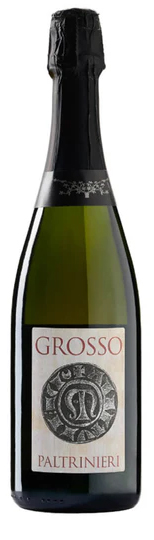
In Emilia-Romagna, Paltrinieri’s ‘Grosso’ draws attention to Sorbara’s singular character.
A grape that cannot self-pollinate, it depends on interplanted Salamino vines. This leads to uneven ripening, which, paradoxically, heightens its natural acidity.
‘Sorbara’s acidity doesn’t come from picking early,’ says fourth-generation Giovanni Paltrinieri. ‘When fully ripe, they are full of acidity.’
The wines are shimmering, vibrant, and expressive – driven as much by character as by precision.
In Sicily, before Etna became known for its reds and whites, sparklers were already made using the traditional method.
In the mid-19th century, the Spitaleri family presented Etna sparkling wines at international exhibitions, reportedly winning top prizes over Champagne.
Production then declined for much of the 20th century before re-emerging in recent years as a small but growing focus among Etna producers.
Grown on Etna’s black volcanic soils, Nerello Mascalese and Carricante are producing bubbles of notable freshness and structure.
A formal category for sparkling wines is set to be introduced into the denomination in the coming years, reflecting growing momentum behind the style.
Key references include Benanti and Terrazze dell’Etna, alongside Tenute Nicosia and Murgo.
More focused projects are also emerging from producers such as Iuppa, Firriato, and De Bartoli Etna, with Tenute Mannino also exploring this space.
‘It’s fascinating to see what indigenous grapes are capable of, particularly Nerello Mascalese,’ says Kirk Peterson, wine expert and owner of US distributor Copfina Nevada.
An open invitation
For wine lovers, Italy’s metodo classico is an invitation to explore.
Italy's traditional method wines are linked by technique but uniquely distinguished by terroir.
In broad strokes, Franciacorta tends toward ripe yellow orchard fruit and breadth, Trentino is known for its steely precision, while Monti Lessini showcases the remarkable acidity and individuality of its native grape, Durella.
Peterson says: ‘For anyone interested in exploring the differences between Montagne de Reims and Vallée de la Marne should also welcome the opportunity to taste metodo classico from Alta Langa to Mount Etna.’.
After all, would you compare Parmigiano Reggiano to Comté?
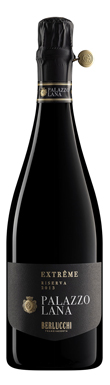
Berlucchi, Palazzo Lana Extrême, Extra Brut Riserva, Franciacorta, Lombardy, Italy 2014
My wines
Named after Palazzo Lana, the family’s historic residence, this blanc de noirs opens with a deep golden hue edged by a coppery glimmer. Aromas unfold...
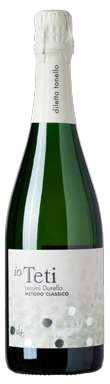
Fresh from the hills of Monti Lessini, a compelling volcanic zone between Verona and Vicenza, this lively sparkling wine made of indigenous Durella/Durello, captures the...
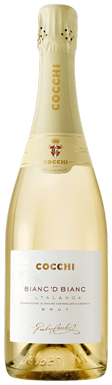
Cocchi, Bianc 'd Bianc, Alta Langa, Piedmont, Italy, 2019
My wines
A historic house with deep Vermouth roots, now speaking in bubbles rather than botanicals. Youthful and flirtatious, the wine opens with a lifted, multilayered nose...
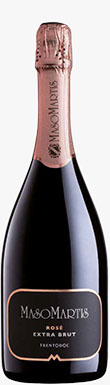
Maso Martis, Rosé Extra Brut, Trento, Trentino-Alto Adige, Italy 2022
My wines
A sophisticated sparkling rosé with a pale pink hue, this wine opens with a bramble of small wild berries - currants, raspberries, and strawberries -...
Paltrinieri, Grosso, Lambrusco, di Sorbara, Emilia Romagna, Italy 2022
My wines
The colour of faded rose petals pressed between pages sets the tone, unfurling notes of ruby grapefruit, tangerine, and orange blossom, edged by hints of...
Marisa Finetti is an award-winning writer specializing in wine, food, and travel. Besides Decanter, she has contributed to leading U.S. publications such as Wine Enthusiast, Full Pour, The Tasting Panel,Modern Luxury, among others.
Marisa’s passion for Italian wine shines through her storytelling and creative projects. She is the author and illustrator of Marisa’s Wine Doodles, a whimsical book of narrated illustrations celebrating grapes, wines, pairings, origins, geology, and history. Her most recent work, Tiny Tales of Umbria, is a collaboration with Madrevite Winery, highlighting the rich traditions and stories of Umbria’s wine culture.A dedicated student of wine, Marisa holds an Advanced Level 3 certification from the Wine & Spirits Education Trust (WSET) and is a certified Piedmont Food & Wine Specialist through 3iC. She is also an Italian Wine Scholar through the Wine Scholar Guild, underscoring her deep knowledge and appreciation for Italy's diverse and historic wine regions.