
Alsace: Top Riesling terroirs
The varied grands crus of Alsace produce sublime Rieslings – if you know where to look. Stephen Brook takes you on a tour of the best sites from south to north and recommends some stellar bottles to buy…

Standing in one of Alsace’s 51 grands crus, the owner nodded towards his parcel and explained: ‘As you can see, the soil here is granite,’ before adding unhelpfully, ‘but of course it’s a different granite from the hill behind it.’
Scroll down for Stephen Brook’s pick: the best of Alsace Grand Cru Riesling
That’s the problem with Alsace. Its grand cru system is admirably based on terroir, but Alsace simply has too many of them. Burgundy, the model for the Alsace system, is relatively uniform: limestone soils and east-facing sites, with the mid-slopes offering the best and most consistent quality. Alsace’s slopes, in contrast, are composed of limestone, clay, sandstone, marl, volcanic soils, schist and more.

Nor is there widespread agreement on how those soils influence the flavour or structure of the wines. Terroir consists of more than soil type: exposition and elevation – not to mention the human contribution of individual viticulturists and winemakers – all play a part too. Yet there is almost a recognition that, at least for Riesling, the most transparent of grape varieties, it is possible to identify the supreme sites. Such sites are often shared with other grape varieties, although some are better suited to Pinot Gris and Gewurztraminer than Riesling. Alsace isn’t simple.It has to be pointed out that many grands crus are far too large and not of uniform quality. Moreover, many grand cru wines are produced by cooperatives, some aiming high, others humdrum. So the presence of a famous name on the label is no guarantee of quality. That said, the crus highlighted on the following pages do produce some of the world’s greatest Rieslings, and the competition for dry styles from Germany, Austria and Australia, has forced the top producers to ensure their wines are not left trailing in their wake.
Rangen
If Schoenenbourg is bafflingly complex, Rangen is simple: a very steep volcanic slope overlooking the southerly town of Thann. There used to be hundreds of hectares of vines in Thann, however urban sprawl disposed of all but Rangen, making this the only town in Alsace with nothing but grand cru vines.
Rangen is renowned for two great Rieslings: Clos St Urbain from Zind-Humbrecht and Clos St Théobald from Schoffit, each about 6ha. The Eguisheim cooperative Wolfberger also owns more than 4ha. Rangen voluntarily reduced its maximum yield to 50hl/ha, so it’s not surprising that the wines have great concentration, and natural springs ensure the vines are rarely stressed. The site is the steepest in Alsace, and dry stone walls contribute further to its warmth. The soils are deep and it can take 15 years for root systems to develop and transmit the mineral grandeur of Rangen. These are mighty Rieslings, greatly prized and invariably expensive.
Kitterlé
This moderately sized grand cru in the southerly town of Guebwiller is mostly owned by the Schlumberger estate, which first named the vineyard on its labels in 1830. The sandstone terraces are partly south-facing, but as the site is horseshoe-shaped there are numerous exposures. Only one-third is planted to Riesling, mostly on the higher slopes, but the wines show smoky aromas – perhaps derived from volcanic elements in the soil – and exceptional elegance.
Saering
Saering, like Kitterlé, lies close to Guebwiller. Whereas Thomas Schlumberger rates Kitterlé very highly, he sees Saering, with its marl and sandstone soils, as ‘an approachable, beginner’s grand cru, delivering Rieslings that age well in the medium term’. Jean Dirler of Dirler-Cadé is more enthusiastic, though, noting that it excels most in top vintages and that its wines are citric and not especially powerful.
Vorbourg: Clos St Landelin
Vorbourg is a very large southerly grand cru planted to many varieties. Its most exceptional terroir is this 15ha Clos, a monopole of the biodynamic Domaine Muré. It’s south-facing, dry and sunny, planted to a high density, and its stony clay-limestone soil has good drainage. The Rieslings are not especially mineral, but they do have richness, texture and complexity. The lower sectors can attract botrytis, and in the past the Muré wines often had residual sugar, but today they are essentially dry and all the better for it.
Eichberg
This large grand cru sprawls southwest of Eguisheim along gentle slopes. The soil is decomposed sandstone over clay and limestone, and can be quite stony. Although climatically very dry, hydric stress is rare, and the drainage is good. Christian Beyer of Emile Beyer says that Eichberg Rieslings have good acidity and salinity, but also ample body and elegance. Kuentz-Bas also produces good Rieslings from here that it defines as tight and mineral.
Hengst
In Wintzenheim, also close to Colmar, is another large grand cru that delivers wines in a different style to Brand. Its soils are composed of stony marl and limestone with clay, which is why Gewurztraminer is the dominant variety planted. The late Jean Meyer of Josmeyer once described them to me as ‘powerful wines that cling to the palate’. His daughter Céline elaborates: ‘The soils retain moisture so they don’t suffer from stress, and they give wines with amplitude. They are long-distance runners that are not too accessible when young. Yet they have less acidity than wines from Brand.’
Brand
Not far from Colmar is the village of Turckheim, which is flanked by the large grand cru of Brand. It’s a sunny, early-ripening site with soils of granite and mica, and a thin loess topsoil that can lead to hydric stress in very hot years. Olivier Humbrecht MW says there are mineral elements in the soil, but they lie deep and vines need to be mature to extract them. Another biodynamic producer, Josmeyer, also makes fine Riesling from Brand. According to Céline Meyer, ‘the wines are linear and pure, quite austere and saline, like an arrow in style’. Jean Boxler, however, says the warmth of Brand can mean that some wines lack acidity.
Sommerberg
Close to Colmar, Sommerberg is a steep curvaceous site composed of granitic sand that’s rich in mineral deposits. Jean Boxler is the principal producer, who notes that the wines are quite open when young, and always elegant. He bottles two parcels within Sommerberg separately, the airy Eckberg and the dense Dudenstein, so there are clearly variations in exposition and terroir.
Schlossberg
This great terraced hill looms over the villages of Kaysersberg and Kientzheim and is mostly granite, with some loess on the lower slopes. Philippe Blanck of Domaine Paul Blanck notes that Schlossberg was already recognised as a top site in the 1920s. Terraces are supported by dry stone walls that retain the soil and warm the vines. The forest above the hill both protects the vines from cold air and funnels water to them. ‘Granite is a perfect match for Riesling in a Chablisien style,’ says Blanck.
Jacky Barthelmé of Domaine Albert Mann observes: ‘It’s not a site that likes too much heat as it can suffer from hydric stress. Yields shouldn’t exceed 45hl/ha and you should get full ripeness at 12.5%. I’d describe the wine as dry and flinty, spicy and long: slender wines with great finesse that age well.’
Weinbach is the other great domaine here, producing Rieslings in a variety of styles, as the richer, lower slopes are ideal for lightly sweet wines. ‘It’s an unforgiving site,’ says owner Catherine Faller, ‘and we often have to declassify some lots.’ Curiously, there is a separate parcel of Schlossberg that is southeast-facing and called Kirrenbourg. ‘It’s high up and there’s a lot of clay,’ says Blanck, ‘but with global warming its elevation is advantageous and the site is much prized.’
Schoenenbourg
This large, well-drained site in Riquewihr is a geological nightmare, composed of clay, marl, gypsum, limestone and sandstone. It’s not uniform and faces both south and southwest. Lower down, the soil has too much vigour and its wines are less distinguished. Despite being impossible to define as a single terroir, Schoenenbourg is renowned for rich, succulent Rieslings, in sweeter as well as dry styles.
It’s significant that Hugel, an estate that never labelled its wines as grand cru despite owning parcels in two of them, changed tack in 2007, inaugurating ‘Schoelhammer’, a Riesling from mid-slope marl parcels within Schoenenbourg that are planted with lowvigour massal selections. It’s a splendid wine, as is its second wine Grossi Laüe (no, I can’t pronounce it either). There are countless proprietors here, including the iconoclastic Jean-Michel Deiss and Dopff au Moulin.
Rosacker
Although documented from the 15th century, Rosacker is not that well known. A well ventilated site, it faces east and southeast, and its soil is composed of fossil limestone and clay. Half the site is planted with Riesling. It owes its fame to Alsace’s most prestigious wine, Trimbach’s Clos Ste Hune, a wine that’s chiselled, pure and very long-lived. This 1.67ha parcel has been in the Trimbach family for more than two centuries, and many vines date from 1953 or earlier. A single vineyard worker is employed just to care for the Clos.
Geisberg
One of the smallest grands crus, Geisberg is located in Ribeauvillé. The soil is stony but geologically varied, with fossil limestone over clay and sandstone. It’s refreshed by cool winds at night and is almost entirely planted with Riesling. According to Jean Trimbach: ‘Geisberg has breadth on the palate but becomes more mineral with bottle-age.’ André Kientzler was the first grower to demonstrate the quality of this site, and Trimbach followed more recently. Both make splendid Rieslings here.
Kanzlerberg
This tiny grand cru in Bergheim is divided between two principal owners: Gustave Lorentz and Sylvie Spielmann. A 12th-century house at the foot of the vineyard suggests it was probably planted by that time. It’s a cool site as it doesn’t face due south and has heavy clay soils that give slow maturation. Slabs of gypsum, often embedded with semi-precious fluorite slivers, have been unearthed here. These are not the easiest or most approachable Rieslings: they demand ageing yet always retain freshness. Spielmann says: ‘They aren’t that aromatic or fruity, but they have substance on the palate, with volume and minerality.’ They are worth sourcing and cellaring.
Muenchberg, Kastelberg, Wiebelsberg
These grands crus are in northern Alsace. Kastelberg and Wiebelsberg are side by side in Andlau but geologically separate. The very steep Kastelberg looms over the town and its schist and granite soils deliver stylish Rieslings that age very well. It performs best in hot years. The larger Wiebelsberg is composed of weathered sandstone over schist. It’s more precocious than Kastelberg, and its Rieslings have finesse but lack the tension and intensity of the best wines from Kastelberg. Kreydenweiss and Gresser are the best-known producers.
Muenchberg shouldn’t be confused with Moenchberg, a third grand cru in Andlau, although that’s easily done. It’s a spacious and sheltered site in Nothalten that resembles a shallow bowl. From top growers such as Ostertag, it produces concentrated, spicy and structured Rieslings.
Stephen Brook has been a contributing editor to Decanter since 1996, and is a widely published and awarded wine journalist, author and judge
See Stephen Brook’s pick: the best of Alsace Grand Cru Riesling
Wines are ordered, as in the main text, south-to-north according to the location of each grand cru, and then by point scores
You may also like
From the archive: Refreshingly dry Alsace Riesling 2012 – panel tasting resultsAlsace Riesling: Comparing grand cru sitesOn rocky ground: The science of soil and wine tasteSouth American Riesling: Expert’s ChoiceDry German Riesling Grosses Gewächs: Panel tasting results
Domaine Zind-Humbrecht, Clos St Urbain Riesling, Grand Cru Rangen de Thann, Alsace, France, 2015
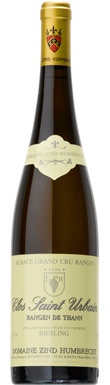

The apple and apricot fruit nose is now becoming more reserved, but the palate remains evidently rich and weighty, with great power and concentration that’s...
2015
Domaine Zind-HumbrechtGrand Cru Rangen de Thann

Schoffit, Clos St Théobald Riesling, Grand Cru Rangen de Thann, Alsace, France, 2016
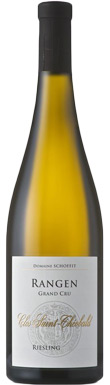
Exceptionally lush, smoky nose, packed with stone fruits and mandarin aromas. The attack is lean, precise and fiery, the mineral tone highlighted by fine acidity....
2016
SchoffitGrand Cru Rangen de Thann
Schlumberger, Riesling, Grand Cru Kitterlé, Alsace, France, 2015
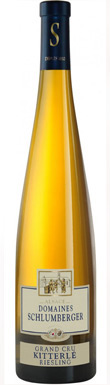
There’s rich apple and apricot fruit on the nose, though it’s still subdued. It’s fully ripe, but still youthful, with a vigorous linear character, a...
2015
SchlumbergerGrand Cru Kitterlé
Dirler-Cadé, Riesling, Grand Cru Saering, Alsace, France, 2016
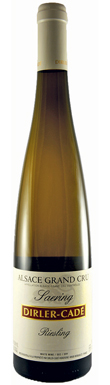
The pear-scented nose is stern and inexpressive at this stage, but the palate is more open, showing rich juicy fruit and a slight hint of...
2016
Dirler-CadéGrand Cru Saering
Muré - Domaine du Clos St Landelin, Clos St Landelin Riesling, Grand Cru Vorbourg, Alsace, France, 2014
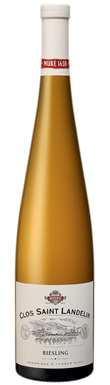
The nose is delicate and fragrant rather than powerful, with refined apricot aromas. It’s more citric, with grapefruit and lime flavours, on the palate, which...
2014
Muré - Domaine du Clos St LandelinGrand Cru Vorbourg
Emile Beyer, Riesling, Grand Cru Eichberg, Alsace, France, 2016
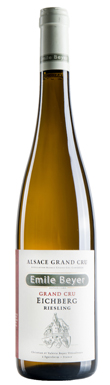
Still closed, though less so than the almost austere 2017. The nose is discrete and citric, and very restrained. But there’s more breadth on the...
2016
Emile BeyerGrand Cru Eichberg
Domaine Barmès-Buecher, Riesling, Grand Cru Hengst, Alsace, France, 2015
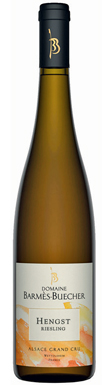
The apricot-scented nose is mellow yet precise and elegant. This is fresh and crisp, lively for a 2015, concentrated and silky, with taut structure, and...
2015
Domaine Barmès-BuecherGrand Cru Hengst
Josmeyer, Riesling, Grand Cru Hengst, Alsace, France, 2014
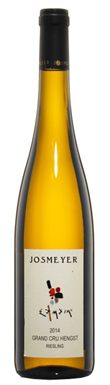
Exuberant on the nose, with spicy, tangy, smoky aromas, then rich and rounded on the palate without being plump or heavy. It’s spicy, concentrated and...
2014
JosmeyerGrand Cru Hengst
Domaine Zind-Humbrecht, Riesling, Grand Cru Brand, Alsace, France, 2014
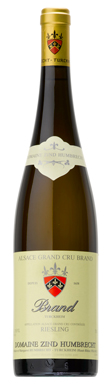
This has a firm and brooding, appley nose. Although from a tricky vintage, it’s broad and creamy, rich and ripe, yet there’s ample spice on...
2014
Domaine Zind-HumbrechtGrand Cru Brand
Cave De Turckheim, Riesling, Grand Cru Brand, Alsace, France, 2013
Pear-scented nose, smoky, perfumed and very elegant. With its fresh attack, this shows little sign of age and remains sleek, concentrated and quite racy, with...
2013
Cave De TurckheimGrand Cru Brand
Albert Boxler, Eckberg Riesling, Grand Cru Sommerberg, Alsace, France, 2013
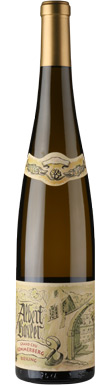
The nose is all about delicacy and poise, with lifted apricot aromas. Yet the palate shows the admirable ripeness of the wine, delivering a suave...
2013
Albert BoxlerGrand Cru Sommerberg
Domaine Weinbach, Vendanges Tardives Riesling, Grand Cru Schlossberg, Alsace, France, 2015
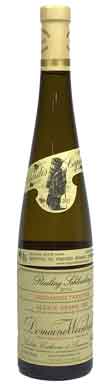
The nose has an immediate richness and spiciness, is both assertive and stylish, with bright lime, apricot and mandarin. Distinctly sweet on the attack, but...
2015
Domaine WeinbachGrand Cru Schlossberg
Albert Mann, Vendanges Tardives Riesling, Grand Cru Schlossberg, Alsace, France, 2016
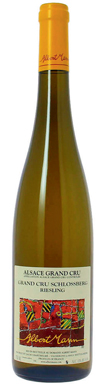
Delicate, perfumed apple and mandarin nose, oozing charm. Good attack, fresh and poised, concentrated but elegant, with character and finesse. There’s a nutty mineral tone...
2016
Albert MannGrand Cru Schlossberg
Hugel, Schoelhammer Riesling, Grand Cru Schoenenbourg, Alsace, France, 2008
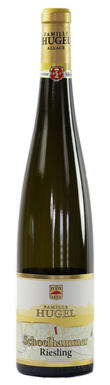
Nose subdued but intense, with dashing pear and quince aromas. Spicy and rich yet has a strong mineral character and striking acidity that gives it...
2008
HugelGrand Cru Schoenenbourg
Dopff au Moulin, Riesling, Grand Cru Schoenenbourg, Alsace, France, 2014
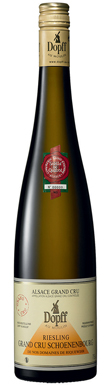
Waxy yet charming nose, with aromas of melon, apple and apricot. The attack is zesty and lean, fresh and concentrated, with a tangy and lightly...
2014
Dopff au MoulinGrand Cru Schoenenbourg
Trimbach, Clos Ste Hune Riesling, Grand Cru Rosacker, Alsace, France, 2012
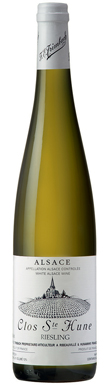
The nose is still discreet, with muted apple and apricot aromas. The attack is linear and pure, fresh and lean, and very concentrated. The palate’s...
2012
TrimbachGrand Cru Rosacker
Trimbach, Riesling, Grand Cru Geisberg, Alsace, France, 2012
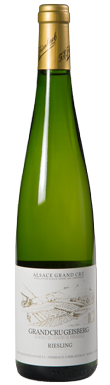
Like some other major producers, Trimbach opted to ignore the grand cru system. But once it leased a 2.6h parcel in Eichberg in 2009, it...
2012
TrimbachGrand Cru Geisberg
Domaine Sylvie Spielmann, Riesling, Grand Cru Kanzlerberg, Alsace, France, 2011
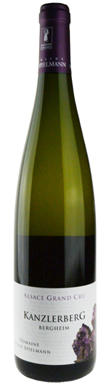
There was some botrytis here in 2011, and it shows on the voluptuous nose. Yet there is a fine attack, and a surprising minerality and...
2011
Domaine Sylvie SpielmannGrand Cru Kanzlerberg
Gustave Lorentz, Riesling, Grand Cru Kanzlerberg, Alsace, France, 2011
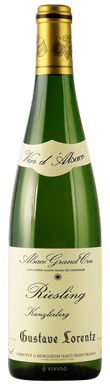
Kanzlerberg can produce a broad style of Riesling, as here, where the nose is lush and opulent with stone-fruit aromas. The palate is plump, full,...
2011
Gustave LorentzGrand Cru Kanzlerberg
Domaine Ostertag, Riesling, Grand Cru Muenchberg, Alsace, France, 2016
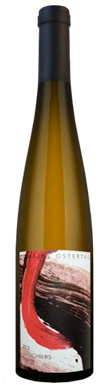
Broad and appley on the nose, this has fine concentration and a silky texture. There’s ample acidity but this is a gentle style of Riesling...
2016
Domaine OstertagGrand Cru Muenchberg
Domaine Marc Kreydenweiss, Riesling, Grand Cru Kastelberg, Alsace, France, 2016
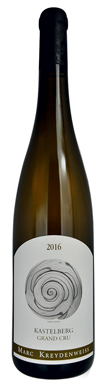
The nose is spicy and tight, with lime and apricot aromas. This is mirrored on the palate, which is taut and tangy, with vibrancy and...
2016
Domaine Marc KreydenweissGrand Cru Kastelberg
Gresser, Riesling, Grand Cru Wiebelsberg, Alsace, France, 2013
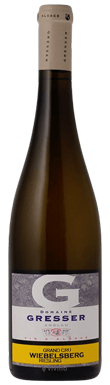
Surprisingly inexpressive on the nose, and the palate is discreet too. Yet there is intensity and good acidity in a wine that’s slender but graceful,...
2013
GresserGrand Cru Wiebelsberg
