
Anson: L’Eglise Clinet moves into the future
Jane Anson meets the next generation of the Durantou family at Château L'Eglise Clinet in Pomerol and tastes the recently-bottled 2018 vintage wines from the family's Bordeaux estates, also including Les Cruzelles and Montlandrie.


It might not surprise you to learn that Denis Durantou of Château L’Eglise Clinet left detailed archives behind him after his death in May of last year. ‘Monumental’ is how his daughter Noémie describes them.
Many were notes that Durantou had written to himself or his team over the years – planting plans, rootstock choices, soil profiles, blending archives.
I’d seen dozens of them over time, and I even have a few in my office; hand-drawn plans of the vineyards of Pomerol, Lalande-de-Pomerol and Castillon with individual plots marked out and grape varieties, rootstocks and soil types set down in differently coloured pens.
Scroll down to see Jane Anson’s tasting notes and scores for the Durantou 2018 vintage wines in bottle
‘It helps that we have these,’ says Noémie Durantou as we taste through L’Eglise Clinet’s 2018 wines.
‘Not only for our own decision-making process, but for remembering how he thought and approached his work. He was always meticulous in the vineyard, and took the same approach in his writings, so we have a huge amount of information to look at now.’
The new generation
Noémie is a trained oenologist and was already working at the estates alongside her father. She is now full-time winemaker with Olivier Gautrat, who had been Durantou’s cellar master for more than 20 years.
Her sister Constance is also studying wine and is key to the team, but she has a separate project in mind that will run alongside the vineyard to build on another part of their father’s long-term plans.
L’Eglise-Clinet has always been a place where you don’t get handled by PR people or brand ambassadors or technical directors. In the past it was Durantou himself who would be waiting at the door of any tasting, happy to discuss at great length the choices that he had made through the vineyard year, and how they impacted on the wines.
Sometimes he would share where he thought he had gone wrong, and would unsparingly point out what could be better. So it was reassuring, if bittersweet, to see his daughters and Gautrat stepping in to the same role.
It’s still early days, of course, but the plans begun under Durantou and now taken up by the next generation will ensure that this remains an estate that sets agendas rather than follows them.
Having said that, it can’t be easy to step into the shoes of a man who was so thoroughly associated with his wine, and their youth (both are in their 20s) might be another challenge in the traditional world of Bordeaux.
‘We have been asked, rather depressingly, if the wine is going to become more feminine now that we are in charge,’ says Noémie.
Read Jane’s full Bordeaux 2018 in bottle overview plus top scoring wines
Leaving aside the sexism inherent in the question, I would say those asking are looking at things back to front.
Durantou was meticulous, precise, intuitive and confident without needing his wines to raise their voices. Part of his brilliance lay in the contradiction of his results – wines that have concentration and power while being subtle and nuanced.
His management style suggested precision and patience as the best way to achieve success. Do these sound like qualities that are the sole domain of male winemakers?
‘Our father never defined us by gender, either as winemakers or as people,’ says Noémie. ‘He just encouraged us to be our best. Our approach to winemaking is that it is about character, belief, and philosophy, not the gender of the person behind it.’
Future plans
So what can we expect across the Durantou estates over the next few years?
One of the most exciting projects, which will be headed up by Constance, is not to do with wine at all, but olive oil from Château Montlandrie.
‘Plans are still ongoing,’ Constance tells me. ‘But we now have 359 olive trees – along with some truffle oaks – planted on the property. The first were planted in 2013, and the most recent in April 2019, and produced their first crop in 2020.
‘We also have trees in a nursery which will be planted in the coming years, from two different varieties Aglandau and Picholine. Both were selected by Denis, as they have good resistance to humidity and cold temperatures and pollinate one another.’
Olives are harvested later than grapes, usually in November, and they require fast processing and bottling to avoid oxidation. And this being a Durantou project, you can expect the same low-impact, low-intervention style – so no industrial centrifugation to extract the oil but the traditional method of pressing and decanting.
They have just been accredited ‘Moulin conditionneur’ by France Agrimer, and Constance is studying olive grove management.
Montlandrie is the subject of other plans to0, with an arts centre, an outdoor amphiteatre stage (in the shape of an omega to reflect the grafting of vines) and an artist’s residence.
This is something that was championed by Durantou but started by the sisters and their mother, the artist Marie Reillhac. Noémie has her own theatre company, where she works as both actor and director, and will be integral to the development.
‘We hope this will be ready in the next five years,’ says Noémie. ‘But our priority right now is replanting the wine estates.
‘The plot [that is used for] Petite Eglise won’t be replanted until 2022, and although extensive drainage and soil work has bene carried out, we are still considering the best choices of rootstocks and [whether to use] massal or clones for the Merlot, working with Vincent Dupuch as our father did for so many years.’
Constance adds, ‘Denis always liked to keep things simple. Unfussy, unfettered, always asking questions, testing out options.
‘For example, we still just use two barrel makers, Darnajou and Taransaud. We have done tests with others to see if we should widen our circle of suppliers, but so far we haven’t found any that add to the depth and character of the wine. But we will keep questioning, testing, pushing further. If we simply follow that rule, we will be okay.’
See Jane Anson’s in-bottle tasting notes for L’Eglise Clinet 2018 and other Durantou family wines
More articles by Jane Anson:
Interview and tasting with L’Eglise Clinet owner Denis Durantou (2018)
The brilliance of 1996 Pauillac wines (2021)
Top Pomerol 2018 wines retasted in the bottle (2021)
Château L'Eglise-Clinet, Pomerol, Bordeaux, France, 2018
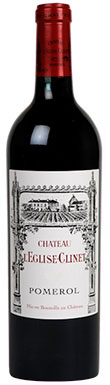

This is plush, with touches of chocolate shavings, olive paste, clove, rosemary and sage right from the opening beats. Blackberry and raspberry layer up flavours...
2018
Château L'Eglise-ClinetPomerol

Château L'Eglise-Clinet, Petite Eglise, Pomerol, Bordeaux, France, 2018
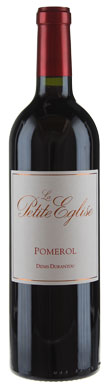
This is powerful and tingly with great minerality on show, but a large-framed Petite Eglise - a pretty hedonistic take on 2018, and certainly more...
2018
Château L'Eglise-ClinetPomerol
Château Les Cruzelles, Lalande-de-Pomerol, Bordeaux, France, 2018
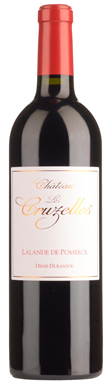
A deeper and slightly more tannic expression than La Chenade, you can see the difference between the two more distinctly than in some vintages, as...
2018
Château Les CruzellesLalande-de-Pomerol
Château Montlandrie, Castillon Côtes de Bordeaux, Bordeaux, France, 2018
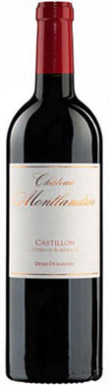
The slight austerity of limestone is evident, in a vintage where this was an effective balance to the hot and dry summer. The fruit is...
2018
Château MontlandrieCastillon Côtes de Bordeaux
Château La Chenade, Lalande-de-Pomerol, Bordeaux, France, 2018
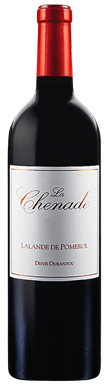
This is thoroughly enjoyable, dense but light on its feet offering a ton of Pomerol character in a Lalande wine, but supple and pretty open...
2018
Château La ChenadeLalande-de-Pomerol
Saintayme, St-Émilion, Grand Cru, Bordeaux, France, 2018
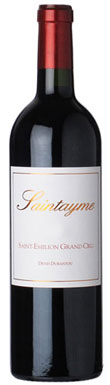
Plump raspberry and blueberry fruits, this has lift and sculpted tannic hold, a good reflection of the success of St-Emilion in 2018, with touches of...
2018
SaintaymeSt-Émilion
