
Baudains: ‘Natural wines don’t stink’, part 2
‘We should not expect stinky wines from natural winemakers today, but ones which are transparent expressions of their terroir,’ says Richard Baudains.


In April last year I went to the annual show of the VinNatur association at Gambellara in northern Italy to test a quote from a biodynamic producer in Puglia that ‘natural wines don’t stink’ and I came away substantially persuaded by the affirmation.
Had I been over-enthusiastic, perhaps uncritical? I went back this year to double check.
Scroll down for Richard’s pick of more low intervention wines
To set my parameters, I attended a workshop on identifying wine faults, organised by VinNatur. There was a mixed audience, which included producers and other wine professionals, as well as visitors to the show.
The tests we did together confirmed that I have an average threshold of perception for volatile acidity and brettanomyces, and a comparatively high threshold of tolerance for both these faults.
On the other hand, I realised that I have a heightened sensitivity and zero tolerance towards goût de souris – ‘mousiness’.
After the refresher on wine faults, I then went to taste and to talk to producers.
Best of the best
Over two days, I tasted just under 150 wines, with some truly outstanding examples: VinNatur brings together many of Italy’s top natural winemakers.
There are historic figures such as Filippo Filippi from Soave, who was making wines naturally long before anyone thought to call them ‘natural’, and the president of VinNatur, Angiolino Maule, one of the founding fathers of the natural wine movement in Veneto.
Marinella Camerani’s Corte Sant’Alda estate in the Val di Mezzana was one of the first (possibly the very first) to adopt biodynamic viticulture in the Veneto, while Camillo Donati was one of the first producers in Emilia to demonstrate that Lambrusco could be both natural and serious.
In Alto Adige, PIWI pioneer Thomas Niedermayr is recognised as one of the country’s leading experts on disease-resistant grape varieties, and in Piedmont, the association counts among its members Fratelli Barale, one of Barolo’s longest established and most respected traditional producers.
And iconic Marsala producer Marco de Bartoli was at the show with the first vintages from its new estate on Mount Etna.
Producers of this calibre make wines which stand up in any context – one approaches them with high expectations, and it is rare for them not to be met. However, VinNatur is not only about the big names of the natural wine world.
One of the association’s most important roles is to offer a platform to micro-producers who would have difficulty gaining visibility in other contexts.
There were just over 200 exhibitors at this year’s show, and I counted 90 who work with less than 6ha of vines. Among these are guardians of heritage such as Etnella, which nurtures 100-year-old vines on Etna, and Pasquale Bonamici from Mamoaida, who is saving rare native Sardinian varieties from extinction.
Others have achieved cult status for highly sought after productions, like the 16,000 bottles of Alto Adige whites made by Rock in the Val d’Isarco.
Small demands more
Small can be beautiful, but it is also more demanding. If there were technical inconsistencies, it was mainly among the small artisan producers that they tended to emerge.
The vast majority of the wines I tasted in this category were faultless, some were very exciting, but I also found a certain number which, to a greater of lesser degree, I considered to be spoiled.
Some had what I thought was excessive volatile acidity, and others had a bit more brettanomyces than I could cope with.
‘We have moved on from the days when faulty wines could be justified as natural’
Cases of mousiness were rarer, but for me they were the most insidious. There were bottles that I thought were imperfect but had redeeming qualities, and a handful where I found glaring faults which masked everything else.
There were also a number of ‘difficult’ wines, which were complex and multi-layered but had unfamiliar flavours and aromas within the folds that either intrigue or alienate (for the most part, I found them intriguing).
Take up the challenge
I discussed these impressions with Maule.
He is not an apologist, and when I put it to him that on the evidence of my tastings, natural wines need not stink – but some do – his response was that the association recognises that there are areas for improvement, and it works with producers to reduce the incidence of the most common problems.
This is achieved on one hand by offering technical support to its members, and on the other by funding programmes of research into specific areas related to natural winemaking.
As Maule says: ‘It is ten times more difficult to make natural wines’.
Working with spontaneous fermentation, with minimal manipulation and without additives (beyond perhaps limited doses of sulphites) exposes wines to more risks than those made following conventional oenological protocols, but we have moved on from the days when faulty wines could be justified as ‘natural’.
We should not expect stinky wines from natural winemakers today, but ones which are transparent expressions of their terroir, with the kind of vitality that inspires producers to take up the challenge of making them in the first place.
Italy’s natural wines: 12 more to try
Related articles
- Baudains: Wines from the Tuscan coast
- Etna’s star winemakers
- Where to drink wine in Verona: Eight top venues
San Lurins, Malvasia Frizzante, Venezia Giulia, Friuli-Venezia Giulia, Italy, 2021
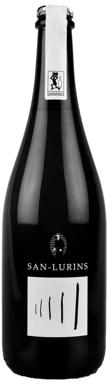

Fruit and floral scents are superbly balanced by the delicate biscuity quality that comes from bottle refermentation. It's a round, creamy mouthful, with a fine,...
2021
San LurinsVenezia Giulia

Cantina Filippi, Bra Roccolo, Veronese, Veneto, Italy, 2021
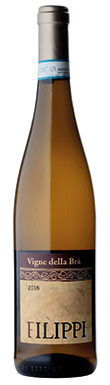
Aromas of sweet herbs with delicate touches of citrus open on the nose, which never shouts but is long and beautifully poised. The palate slowly...
2021
Cantina FilippiVeronese
Thomas Niedermayr, Bronner, Vigneti delle Dolomiti, Trentino-Alto Adige, Italy, 2019
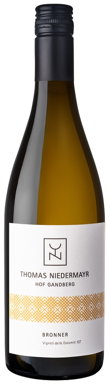
The aromas are all orchards and summer meadows, with a succession of wild flowers, hay, apple and pear. On the palate it starts round and...
2019
Thomas NiedermayrVigneti delle Dolomiti
La Biancara, Sassaia, Veneto, Veneto, Italy, 2023
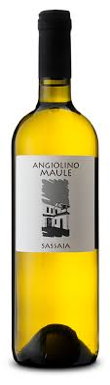
Subtle, but amazingly complex and articulate aromas, with a string of sensations from camomile through sage and jasmine to lemon rind and bergamot. Light and...
2023
La BiancaraVeneto
Emilio Sciacca, Giallomiccio, Terre Siciliane, Sicily, Italy, 2023
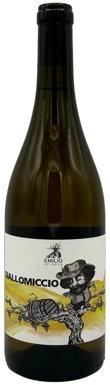
On the nose there are sweet, late-picked fruit aromas of fleshy peach and melon, candied peel and dark blossoms. The palate is soft, with relatively...
2023
Emilio SciaccaTerre Siciliane
Dalle Ore, Acronia, Veneto, Veneto, Italy, 2021
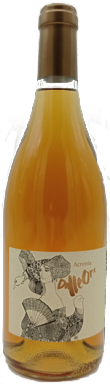
The full-on orange shade announces the style of this wine. There's an intensity and freshness in the pressed flowers, candied peel and mellow fruit aromas...
2021
Dalle OreVeneto
Etnella, Notti Stellate, Terre Siciliane, Sicily, Italy, 2021
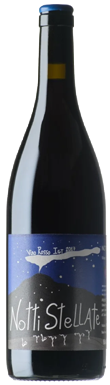
Complex dark berry aromas with touches of newsprint and liquorice at the front and slightly smoky nuances in the background. The palate is still quite...
2021
EtnellaTerre Siciliane
Pasquale Bonamici, De Vidda, Cannonau di Sardegna, Sardinia, Italy, 2022
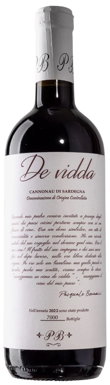
The nose bursts with prunes, dark chocolate, cooking spices, and a Vermouth-like array of herbal aromas. It's equally big on the palate, with dollops of...
2022
Pasquale BonamiciCannonau di Sardegna
Corte Bravi, Valpolicella, Classico Superiore, Veneto, Italy, 2022
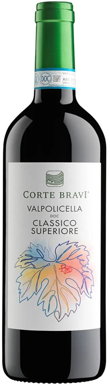
Brilliant, pale ruby shade. On the nose the fruit is like freshly crushed redcurrants, with a touch of peppery spice around the edges. Bone-dry on...
2022
Corte BraviValpolicella
De Bartoli, Contrada Rampante, Etna, Sicily, Italy, 2021
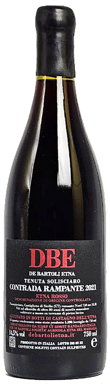
Classic Nerello Mascalese; pale and luminous with varietal aromas of mulberry and fresh tobacco leaf, and with earth, wet leaf and moss in the background....
2021
De BartoliEtna
Oliverio Pastoris, La Cucca Nebbiolo, Canavese, Piedmont, Italy, 2021

An intense, fresh, varietal nose with great aromatic definition of raspberry, violets and fresh tobacco leaf, with the classic touches of sage and white pepper....
2021
Oliverio PastorisCanavese
Daniele Portinari, Tai Rosso, Colli Berici, Veneto, Italy, 2021
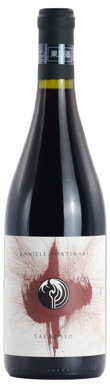
Open and immediate on the nose, with rosehips and pressed flowers, a little spicy orange peel, and in the background a phenolic note of raw...
2021
Daniele PortinariColli Berici
