
Anson: How the 1985 Bordeaux first growths taste now
Jane Anson reports on a rare tasting of 1985-vintage wines from Châteaux Lafite Rothschild, Mouton Rothschild, Margaux, Latour and Haut-Brion, created during a decade of renewal for Bordeaux.


On September 1 1985, Frank J Prial wrote a column in the New York Times entitled ‘Wine; the Baron’s Story’.
In it, he talks about Milady Vine, the autobiography of Baron Philippe de Rothschild at Mouton that was published the year before (easily my favourite book about Bordeaux by the way), and recounts a story about Baron Philippe being stopped for speeding in California and being asked for his driving licence.
‘Don’t have one,’ he told the astonished policeman (recounts Prial). ‘Never did. You see, I am Philippe de Rothschild.’
Scroll down to see Jane Anson’s tasting notes and scores for the 1985 Bordeaux first growths
This is the kind of story that makes drinking a 35-year-old Château Mouton Rothschild extra special.
It was being headed up by one of the most charismatic characters of 20th century Bordeaux, still attracting headlines in what was his 63rd harvest.
At this point we were just 12 years on from Mouton’s promotion to first growth status, but subsequent years had given them little opportunity to really show off.
The 1970s barely supplied a good vintage besides, at a push, the 1978, and it was only in 1982 that things really started to deliver more consistently.
The 1980s
The mid-1980s saw things looking up for the first growths in general. The rising market after 1982 meant they all had more money to invest and were finally able to put the impact of the oil crisis in the 1970s behind them.
This may be why Mouton had expanded into California with Opus One a few years before, and also why Lafite bought Rieussec in 1984 and Haut-Brion bought La Mission in 1983.
The first growths were also busy expanding their vineyards by buying up plots of land across their appellations – except for Haut-Brion, which was hemmed in by its location.
Winemaking in general had taken a step towards modernity, with temperature control widely installed in the cellars, and a higher proportion of new oak used for ageing.
However, selection for the second and third wines was still way behind what it would be a decade later, and yields remained high; both things that have left their impact on the wines today.
Taking charge
Behind the scenes, it was a very different era. Baron Philippe’s next-door neighbour at Lafite was his cousin Baron Eric de Rothschild, who had taken over in 1973, and relations were finally thawing after the more fraught exchanges between Philippe and Eric’s uncle, Baron Elie.
Over at Haut-Brion, Joan Dillon, the Duchess de Mouchy, was in charge – granddaughter of Clarence Dillon and daughter of C Douglas Dillon, who was treasury secretary under John F Kennedy and US ambassador to France under president Eisenhower.
The English were still installed at Latour, with Lord Cowdray heading up the Pearson Group in the last years before selling on to Allied-Lyons in 1989. Wine writer Hugh Johnson was appointed to Latour’s board in 1986.
Of the five first growths in the era, only Château Margaux still has the same person in charge today, with Corinne Mentzelopoulos taking over in 1980. Paul Pontallier had arrived two years before and together they oversaw a wholesale investment programme in Château and vineyard.
Previous owner Bernard Ginestet had in fact expressed cautious disapproval of the ‘power of money’ and the ‘startling rapidity’ of the changes in his 1985 book on the Margaux region.
In 1985, they had an unusual vintage on their hands – the best since 1982 for sure, but not without its challenges.
1985 weather
Winter in 1985 had been extremely cold, as cold as 1956, with -10 degrees Celsius for a full five days straight in January, going down to -14.5C on 16 January Pauillac.
The vines were dormant at this point, though, making it far less destructive than the 1956 frost, and by spring things had returned to normal with good, even flowering.
July saw temperatures that were just a tiny bit above average. August was cool but dry, with temperatures two degrees Celsius below the average and 40mm less rain than average.
But it was the harvest that really marked the wines, with a brilliant September that saw barely a drop of rain – just 4mm in total, 64mm less than average, and temperatures that were two degrees Celsius hotter than the average.
Only 1959, 1961, 1958 and 1964 had similarly hot Septembers, but this was the driest on record. Things continued into October, with 60mm less rainfall and temperatures up by 1.2 degrees on the average.
The well-drained gravels of the Médoc suffered a little from this drought, giving wines that had exuberant fruit but some drying tannins, and certainly they are not as dense in texture and fruit character at this point than the 1986s.
The appellation that was most impacted by the drought was Sauternes, as botrytis refused to arrive. That’s why for this tasting we chose to open the Yquem 1989, the best vintage of the decade in the appellation and a resounding success even 32 years on.
Ready to drink
The reds are fully in their drinking window, but none are ready to quit.
And they each remain true to their character – savoury elegance at Lafite, muscular depth at Latour (if a little disappointing on this showing), opulent generosity at Mouton, seductive finesse at Margaux and balanced fruits and smoky aromatics at Haut-Brion.
They lack the depths of the very best years perhaps, but these remain impressive bottles.
See Jane Anson’s tasting notes and scores for the 1985 Bordeaux first growths, plus Yquem 1989.
You may also like
Anson: The brilliance of 1996 Pauillac winesAnson: L’Eglise Clinet moves into the futureBordeaux 2018 in bottle: full overview plus top scoring wines
Château Margaux, Margaux, 1er Cru Classé, Bordeaux, France, 1985
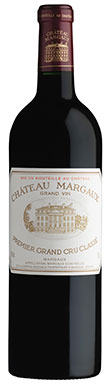

My clear standout wine from the Singapore masterclass and even better than it tasted three years before at Decanter's New York Encounter which just goes...
1985
Château MargauxMargaux

Château Lafite Rothschild, Pauillac, 1er Cru Classé, Bordeaux, France, 1985
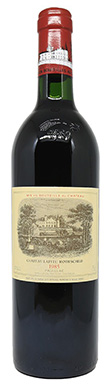
Last tasted in 2018 at the Lafite 160th anniversary supper, and it is delivering just as much pleasure a few years later - this is...
1985
Château Lafite RothschildPauillac
Château Haut-Brion, Pessac-Léognan, 1er Cru Classé, Bordeaux, France, 1985
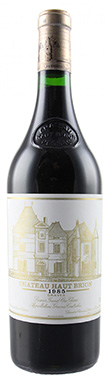
Haut-Brion always has a deliciously seductive smoky quality that becomes clearer with age, and it is on full display here - campfire, cold ash, sandalwood,...
1985
Château Haut-BrionPessac-Léognan
Château Mouton Rothschild, Pauillac, 1er Cru Classé, Bordeaux, France, 1985
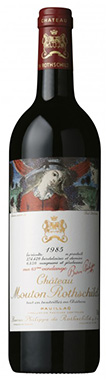
The customary glamour of Mouton is on display here, with softened but welcoming blackberry, bilberry and raspberry fruits, still offering texture and juice through the...
1985
Château Mouton RothschildPauillac
Château Latour, Pauillac, 1er Cru Classé, Bordeaux, France, 1985
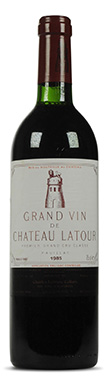
At 35 years old this still tastes like a young wine, even with evident sweet oak notes that make you almost do a double-take and...
1985
Château LatourPauillac
Château d'Yquem, Sauternes, 1er Cru Classé Superieur, Bordeaux, France, 1989
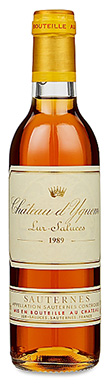
A remarkable, profound example of how top Sauternes wines age, with intense notes of marmalade on the nose. Although it seemed there were some hints...
1989
Château d'YquemSauternes
