
Borgogno’s makeover: A decade of change
Borgogno's makeover began in the early 2010s under young winemaker and manager, Andrea Farinetti, yielding a fresh yet sympathetic perspective on its traditional winemaking philosophy...


Borgogno, one of Piedmont’s oldest wineries, boasts a proud history. The estate was founded in 1761, and it was a Borgogno wine that was served at the official dinner to celebrate the unification of Italy a century later, in 1861.
Cesare Borgogno was a key character in the estate’s story. He took control of the winery in 1920 and, by the time of his death in 1968, Borgogno’s wines were exported around the world.
The estate’s reputation, founded upon long cellaring, is something that Cesare instigated, holding back half of the annual production of Barolo for extended ageing of at least 20 years. A direct consequence of his programme is that Borgogno claims the largest library collection of Barolo in the region.
Cesare left the estate to his niece, Ida Boschis, who ran Borgogno with her husband, Franco before passing it to her two sons, Cesare and Giorgio.
Scroll down to see tasting notes and scores for six Borgogno wines
When the Farinetti family, of Eataly fame, purchased the estate from Cesare and Giorgio in late 2007, they were committed to continuing the traditional legacy of this historic estate. This included long macerations (up to 50 days in the case of the Barolo Riserva) and long ageing in large Slavonian oak.
Cesare and Giorgio continued making the wines under the Farinettis until 2009, while Oscar Farinetti’s son, Andrea, attended the oenological school in Alba.
It may have seemed crazy to some onlookers that Oscar handed over the management of such an historic winery to 20-year-old Andrea, following his graduation in 2010. At the time he had little experience other than what he had learnt at the oenological school and from time working alongside the Boschis brothers.
A decade of change at Borgogno
Andrea’s youthful perspective and enthusiasm, combined with his sympathetic approach to the traditions of the estate, led to some important changes for Borgogno.
The estate’s first white wine, a Riesling named Era Ora, was released in 2012.
Then, in 2013, Andrea reverted to the exclusive use of traditional concrete fermentation vessels. From then on, the wines would also rely on spontaneous fermentation rather than inoculation.
In 2015, Andrea began the conversion of all the estate’s vineyards to organic certification. He also acquired 3ha of vines in Tortona which would soon go on to produce an experimental Timorasso.
In 2016, the historical cellars were restored, including some of the original concrete fermentation vats. That same year, 11ha were purchased in Madonna di Como, near Alba, taking the estate’s holdings to around 40ha (30ha of which are planted to vines).
Andrea believes in long macerations for his range of Barolo, with the Liste cuvée spending up to three months on skins. He says that the longer contact time, rather than extracting more, actually allows compounds to leach back into the skins.
Liste forms around 70% of the blend for the Barolo Riserva, Borgogno’s flagship wine. Today, its historical style not only contrasts but complements the energy and innovation Andrea has injected into the estate.
Derthona Timorasso
‘Timorasso is better in the hot vintages than the fresh vintages,’ explains Andrea at a tasting hosted by UK importers, Oeno. ‘And the Colli Tortonesi is three degrees warmer than the Langhe.’ This is where he purchased 3ha in 2015, which he planted with the indigenous yet rare Timorasso.
Andrea recalls a dinner with other producers in the Langhe, ‘like La Paulée in Burgundy.’ Bringing experimental bottles of his new white when his peers were bringing back vintages of their top reds was a brave move, but it seems he judged it right. ‘Because it was white, it was the first wine to be served, so I immediately had their attention!’
Although Andrea was not the first to produce Derthona Timorasso (that accolade goes to Walter Massa, who spearheaded its revival in the 1980s), Andrea proudly jokes that it wasn’t long after tasting his version that his neighbours started buying land in the Colli Tortonesi.
The 2019 vintage is Borgogno’s first Timorasso to be made with 100% estate-owned grapes – previous vintages had used grapes from growers with whom the winery has longstanding relationships.
Spontaneous fermentation in concrete is followed by 10 months on its lees in stainless steel tanks with no batonnage, then at least seven months in the bottle before release.
No Name
The No Name project arose as a protest against what Andrea describes as the ‘bureaucracy’ that forced the estate to declassify a cask of 2005 Nebbiolo destined for its Barolo.
Andrea points out that Barolo’s stereotype as a heavily tannic wine which needs time to become drinkable can put people off – No Name’s aim, therefore, is to introduce (or reintroduce) drinkers to Nebbiolo without any label prejudice.
The blend is 60%-70% Langhe Nebbiolo, plus portions from the estate’s five Barolo vineyards, including those in Cannubi, Fossati and Liste. It’s fermented in concrete and matured for two years in wood, as opposed to the longer maceration times and four years in wood for the estate’s array of Barolo. This makes for a more immediately accessible wine.
‘We don’t want a wine like our Barolo,’ explains Andrea.
Selezione Cesare
Selezione Cesare is the beneficiary of the ageing programme Cesare Borgogno implemented in the 1920s, holding back 20,000 bottles of each important vintage for at least 20 years of ageing.
A century later, Borgogno is now blessed with enviable library stocks which enables the estate to makes wines such as this.
A blend of three vintages, Selezione Cesare is an extremely rare wine in the Borgogno range (only 60 bottles of the current release have been allocated to the UK) and in the wine world overall.
Other notable examples of a multi-vintage blend include Vega Sicilia and Penfold’s G3. The 82-03-14 is the fourth edition to be released, making use of the fantastic 1982 Riserva, which I tasted separately.
If you’re lucky enough to spot this on a restaurant list, snap it up and worry about the bill later!
‘I want to make the perfect Barolo,’ states Andrea; he’s not far from achieving his goal.
A taste of Borgogno: six wines going back to 1978
Related content:
Renato Ratti: producer profile
Barolo in depth: Castiglione Falletto
Barolo in depth: Serralunga
Borgogno, Derthona Timorasso, Piedmont, Italy, 2019
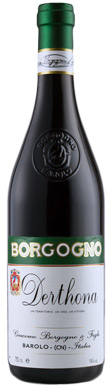

The first vintage from 100% estate-owned grapes, grown in Colli Tortonesi and macerated for three days in stainless steel then cold-settled, before fermentation in cement....
2019
Borgogno

Borgogno, Selezione Cesare, Piedmont, Italy
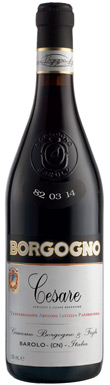
<p>A multi-vintage blend of 1982, 2003 and 2014, this fourth edition of Selezione Cesare is only made in tiny quantities. Able to delve deep into...
Borgogno
Borgogno, Riserva, Piedmont, Italy, 1982
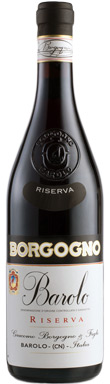
Benefitting from impressive reserves of back vintages, Andrea has opened the 1982 Riserva on a number of occasions and claims it often shows even better...
1982
Borgogno
Borgogno, Liste, Barolo, Barolo, Piedmont, Italy, 2016
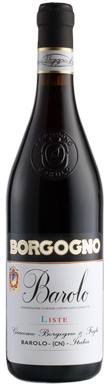
Liste in the commune of Barolo forms the backbone of the estate's Riserva but it is also presented as this cru bottling. Bordered by woodlands...
2016
BorgognoBarolo
Borgogno, Riserva, Piedmont, Italy, 1978
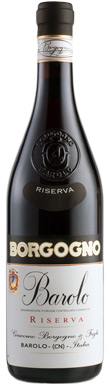
A long-lived vintage, this 1978 is showing well for its age with its still-fresh acidity and intense yet delicate, savoury flavours of caramelised nuts, dried...
1978
Borgogno
Borgogno, No Name, Langhe, Piedmont, Italy, 2017
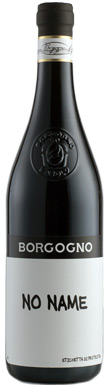
A blend of 60-70% Langhe Nebbiolo, with the remainder made up from the estate's prestigious Barolo cru holdings, No Name undergoes 36 months ageing in...
2017
BorgognoLanghe
