
Burgundy: Premier cru status, grand cru quality
Things change, even in stately Burgundy, and producers in the region are free to apply for a vineyard’s status to be upgraded, if the quality justifies it. But what are their chances? Stephen Brook assesses the promotion prospects of the seven most likely premier cru candidates, north to south, recommending two wines from each...


The French love rules, and even try to regulate their language through the Académie Française. Agriculture is less well adapted to rules and stratification, yet vineyards across France are assessed and regulated. The Burgundy hierarchy of vineyards is less rigid than the Bordeaux classification of 1855 that identified the top brands.
But just because a particular vineyard is capable of producing wines that can reach grand cru quality does not mean it will be a shoo-in for promotion.
Scroll down for Stephen Brook’s top Burgundy Premier Cru picks
INAO (Institut national de l’origine et de la qualité) is the body that decides, and it takes that mission very seriously. Marsannay has been waiting for 13 years to find out whether some village vineyards have been promoted to premier cru. To the best of my knowledge, of the premiers crus discussed below, only les St-Georges in Nuits-St-Georges and Pommard Rugiens have petitioned INAO for promotion – and success is not assured.
Any discussion about whether any of the sites in the following pages are worthy of promotion may be seen as largely irrelevant, as their quality and consistency are already recognised and rewarded by the market. Amoureuses and Malconsorts don’t come cheap: you can expect to pay between £200 and £800 for a bottle of the former. So for the owners it’s of no great consequence whether the vineyard is designated as premier cru or grand cru. But it’s worth knowing whether that premium is justified.
Clos St-Jacques, Gevrey-Chambertin
Gevrey-Chambertin is packed with grands crus, although some question the quality of certain parcels. But most independent observers agree that the 6.7ha premier cru Clos St-Jacques should be up there with the stars. Unlike most Burgundy vineyards it’s easy to understand, as it consists of five strips of south-facing vines descending the full length of the slope, each with a different owner. The Clos was a monopole (controlled by a single owner) of the Comte de Moucheron until 1955, when he sold the vineyard, currently owned by Rousseau, Fourrier, Jadot, Bruno Clair and Sylvie Esmonin.
The top of the slope here gives wines with finesse, whereas the bottom has more clay and gives wines of greater power. All producers blend the two. For Sylvie Esmonin, this character gives the wines a resemblance to grand cru Clos de Bèze.
Cool air courses through the gap in the hills called the Combe de lavaux. Bruno Clair explains the consequences: ‘The cold air from the Combe meets the warm air from the plain, and this delays maturation but gives great finesse. The Clos is picked a week later than the top part of Cazetiers next door, as Cazetiers doesn’t get the cool air from the Combe. The exposition is identical.’ Twenty years ago INAO was tempted to promote the Clos – nobody disputes its potential – but eventually decided that Gevrey really didn’t need a 10th grand cru. With all the proprietors being of exceptional quality, you won’t find a disappointing bottle of Clos St-Jacques.
Les Amoureuses, Chambolle-Musigny
Chambolle-Musigny, like Gevrey, is rich in grand cru sites, embracing Le Musigny and most of Bonnes-Mares. Yet the 5.4ha Les Amoureuses is hugely admired too. It may help that most of its owners are among the region’s finest estates: De Vogüé, Roumier, Groffier, Mugnier, Drouhin and Faiveley.
Christophe Roumier is certain it’s of grand cru quality: ‘It adjoins Musigny and the wine is similar, except that Musigny has more power.’ It’s a view seconded by Erwan Faiveley. Frédéric Mugnier, who when I requested a visit, responded that he didn’t find the idea interesting, told me on a previous stroll through the vineyard: ‘Amoureuses has a more gentle, discreet attack, and then a very long finish, a fugitive quality that creates its complexity. It’s graceful and airy, more floral. It’s never a static wine but always has mobility, and offers a succession of impressions.’
It’s not a uniform site, as the lower sector has richer soils. Yet the character of the wine seems consistent. For Frédéric Drouhin: ‘It marries the depth and elegance of Musigny and the grip and austerity of Bonnes-Mares. Its most remarkable characteristic is its cashmere texture.’ François Millet, technical director at De Vogüé, muses whimsically: ‘It’s the first lady of Chambolle, but never frivolous.’
Aux Malconsorts, Vosne-Romanée
Standing in Vosne-Romanée Malconsorts, it’s hard not to be impressed. This gently sloping 6ha premier cru is tucked between Nuits-St- Georges to the south and the great grand cru La Tâche to the north. ‘Malconsorts is not the same as La Tâche,’ opines Jeremy Seysses of Domaine Dujac, ‘but it shares the same mid-slope and the same exposition. The grands crus of Vosne-Romanée can be divided into two types: those with incomparable finesse, such as Romanée-St-Vivant and Romanée-Conti; and those with more power and opulence, such as Richebourg and La Tâche. Malconsorts, stylistically, is close to the latter.’ Etienne de Montille agrees: ‘Malconsorts gives volume without heaviness.’
A parcel of 1.66ha is owned by Bichot through its Clos Frantin estate in Nuits-St- Georges, and other producers such as Lamarche, Cathiard and Hudelot-Noëllat have parcels here. But it’s Dujac and De Montille who now have the lion’s share. Knowing that the Moillard firm in Nuits was selling some of its top sites, the two estates put together a successful offer in 2005. I’d like to have been a fly on the wall when Etienne de Montille and Jeremy Seysses looked at the wonderful parcels they had acquired and decided how to carve them up between them.
It’s worth noting that this deal would be inconceivable now. The acquisition by France’s richest men, François Pinault (Château Latour) and Bernard Arnault (Cheval Blanc, Yquem), of two of Burgundy’s grands crus has increased the valuation of great sites by, it’s estimated, up to fivefold. There is no way, Montille and Seysses admit, that they could finance this kind of purchase today.
Since the Moillard wines, which I tasted often, were usually mediocre, the profile of Malconsorts has been raised, deservedly, since 2005. The Lamarche daughters and Bichot are now making excellent wines here, and the newcomers have risen to the challenge of making wine from this superb site. Probably its only rival premier cru for promotion would be Cros Parantoux, which is tiny and has just two owners, Rouget and Méo-Camuzet: a gorgeous wine, but, with its associations with the late Henri Jayer, all but unobtainable and only produced in tiny quantities.
Les St-Georges, Nuits-st-Georges
Many villages have no grands crus because when the hierarchy was established some of them declined to participate, for a variety of reasons. In the case of Nuits-St-Georges, the growers feared having to pay higher taxes from sites designated grand cru. Nuits is a large and varied village, but it’s generally agreed that Les Vaucrains and, especially, the 7.5ha Les St-Georges, are capable of producing wine of outstanding quality. Les St-Georges lies on a gentle slope with water-retentive clay soils that prevent hydric stress.
Erwan Faiveley definitely believes so. ‘Les St-Georges can make wines that are masculine yet have tension and finesse, and they can have a wild quality to them,’ he says. ‘The tannins are silky despite this slight animal character, and the wines age extremely well.’ Other owners of Les St-Georges include Thibault Liger-Belair, Chevillon and Gouges.
Beaune Grèves, Beaune
If the Côte de Nuits is well endowed with grand cru sites for red wines, the same cannot be said of the Côte de Beaune. Beaune, Volnay and Pommard contain no grands crus.
When I asked half a dozen leading Beaune producers which premiers crus they considered outstanding, many were named, but Beaune Grèves was the only one that appeared on everyone’s list. It’s a large vineyard, with 31ha planted – white as well as red – located in the centre of the band of Beaune sites, facing southeast and stretching from the top to the bottom of the slope. Its stony, reddish soil lies over a limestone base, and, as usual in Burgundy, the top of the slope has little topsoil, while the base probably has too much. However, it’s at these extremities that the white vines tend to be planted, while Pinot occupies the prized and well-drained mid-slope.
Perhaps the finest sector is the 3.52ha monopole of Vigne de l’Enfant Jésus that has belonged to Bouchard Père et Fils since 1791. Technical director Philippe Prost says it’s mineral and complex, and although enjoyable young, does age extremely well. De Montille’s vines lie close by.
Since Beaune as a whole is underrated, Beaune Grèves, which has many owners, can be a relative bargain.
Epenots and Rugiens, Pommard
Pommard is petitioning INAO to promote Epenots and Rugiens. Neither campaign seems likely to succeed, since Epenots is quite large, and Rugiens is divided into Rugiens Bas and Hauts, and also has a section with a lowly village appellation as it faces northeast. While De Courcel is the best-known producer of Rugiens, the Beaune négociants also have holdings here. Rugiens Bas (5.8ha) tends to be rated more highly than the more elevated Rugiens Hauts (6.8ha). But Philippe Prost finds the latter more refined, with slightly better acidity. Of course producers tend to sing the praises of the sector in which their vines are located, but by any account it’s an impressive vineyard, with reddish, ferrous, stony soils that are well drained.
Yves Confuron, winemaker at De Courcel, knows the site better than most. ‘Bas is the most homogenous sector, though there isn’t a huge difference between Hauts and Bas. Hauts is steeper, while Bas has more clay and less sand. Hauts has little soil and the limestone rock is clearly visible.’ All agree that this is a wine that demands bottle age in order to shed some of its firmness and to acquire what in some vintages are gloriously truffley aromas. Structured and robust, it can be a wine that lacks charm, even finesse. Etienne de Montille recalls: ‘Rugiens was my father’s favourite wine as it was so consistent. It has depth and ageing capacity, masculinity and substance.’ In contrast, Erwan Faiveley, who has 0.5ha in Rugiens Hauts, is unconvinced: ‘Sometimes it’s hard to get round those rustic tannins.’
I tend to agree with Faiveley, although a mature Rugiens can be immensely impressive.
Les Caillerets, Volnay
Volnay lies next door to Pommard, but its wines are utterly different, with a refinement not often found in Pommard. It’s hard to pinpoint just one exceptional premier cru, as some estates have their own monopoles, such as Angerville’s Clos des Ducs, though these tend to be very small, if unquestionably of fine quality. Many agree that Les Caillerets is the top site, though a strong case can also be made for Taillepieds. Angerville produces both, and although I tend to rate his Caillerets higher, it’s just by a whisker, and in some vintages it’s not clear cut. Clos des Chênes and Santenots are also first rate.
Caillerets is a large site (14.3ha) and the best sector lies on the mid-slope on stony soil that retains heat and sometimes allows the grapes to ripen precociously. Exposed to the south and east, it is exceptionally sunny. Frédéric Lafarge explains: ‘It’s on poor, stony reddish soil with some iron content. The limestone rock is close to the surface, and the roots go down deep. It’s on a light slope on three levels, but there’s no great difference between them. I find it the most mineral of Volnays, with supple tannins.’ Philippe Prost of Bouchard praises its concentration rather than its complexity. ‘While delicate, the wine has extract too, and aromas of violets.’
As always in Volnay, the best wines have perfume and elegance, but Caillerets has structure and ageability. A 2.4ha monopole within Caillerets, the Clos des 60 Ouvrées is owned by Domaine de la Pousse d’Or.
Stephen Brook has been a contributing editor to Decanter since 1996 and is regional chair for Piedmont at the DWWA
Stephen’s Burgundy Premier Cru wine picks:
You may also like:
Best Burgundy premier cru wines from 2017
Burgundy 2017: Full En Primeur report
Good value red Burgundy: 32 wines to seek out
Best white Burgundy: Top-rated & top value
Domaine Bruno Clair, Gevrey-Chambertin, 1er Cru Clos St-Jacques, Burgundy, France, 2005
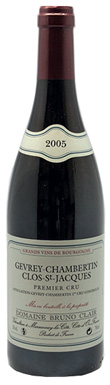

Deep in colour for Pinot Noir, and still reserved on the nose, with firm cherry fruit. Dense and chewy, this has heft and power, showing...
2005
Domaine Bruno ClairGevrey-Chambertin

Louis Jadot, Gevrey-Chambertin, 1er Cru Clos St-Jacques, Burgundy, France, 2016
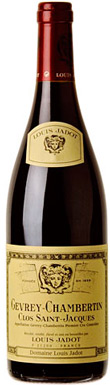
The nose is fabulous, packed with sumptuous cherry and raspberry fruit, exuding flamboyance, exuberance. Rich and plump, superbly concentrated and sustained by bold, ripe tannins....
2016
Louis JadotGevrey-Chambertin
Domaine Joseph Drouhin, Chambolle-Musigny, 1er Cru Les Amoureuses, Burgundy, France, 2015
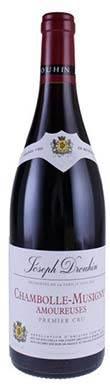
A sweet, intense, explosive red-fruit nose with a hint of boiled sweets – a complex bouquet with floral and liquorice tones. It's initially very ripe...
2015
Domaine Joseph DrouhinChambolle-Musigny
Domaine Faiveley, Chambolle-Musigny, 1er Cru Les Amoureuses, Burgundy, France, 2016
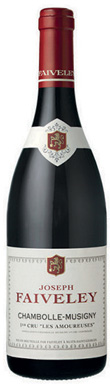
Immediate flamboyance on the cherry-scented nose. The attack is sweet and gentle but very concentrated, and it shows lift and elegance even though the fruit...
2016
Domaine FaiveleyChambolle-Musigny
Domaine Dujac, Vosne-Romanée, 1er Cru Malconsorts, Burgundy, France, 2010
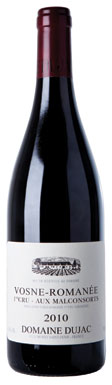
<p>Gorgeous opulence, lavish ripe raspberry coulis nose. Limpid, fresh attack, possibly due to a high proportion of whole clusters; tannins are firm but well integrated....
2010
Domaine DujacVosne-Romanée
Albert Bichot, Clos Frantin, Vosne-Romanée, 1er Cru Malconsorts, Burgundy, France, 2016
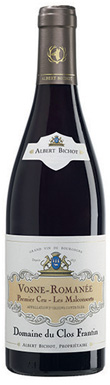
The nose is intense but still severe, with minty, oaky aromas wrestling the cherry fruit. It’s very concentrated and powerful, and has swagger and energy,...
2016
Albert BichotVosne-Romanée
Domaine Faiveley, Nuits-St-Georges, 1er Cru Les St-Georges, Burgundy, France, 2016
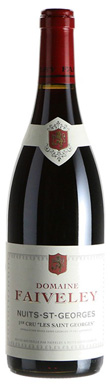
The nose displays rich plum and cherry fruit that’s a bit wild but undoubtedly intense. Very rich, powerful, compact yet luminous, with fine acidity. A...
2016
Domaine FaiveleyNuits-St-Georges
Domaine Thibault Liger-Belair, Nuits-St-Georges, 1er Cru Les St-Georges, Burgundy, France, 2013
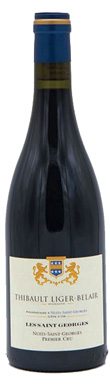
Sweet and seductive nose, cherry and blackberry aromas given elegance by stylish oak. Perfumed, but not to excess. Fine acidity delivers vibrancy and lifts the...
2013
Domaine Thibault Liger-BelairNuits-St-Georges
Bouchard Père & Fils, Vigne de l’Enfant Jésus, Beaune, 1er Cru Grèves, Burgundy, France, 2015
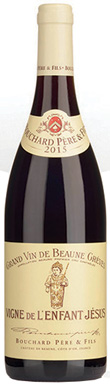
Unusually deep in colour, with a brooding nose of intense black fruits. Broad and fleshy, opulent and flamboyant, but also spicy and lively, showing energy...
2015
Bouchard Père & FilsBeaune
Domaine de Montille, Beaune, 1er Cru Grèves, Burgundy, France, 2016
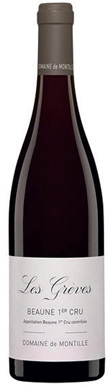
An upfront cherry nose has a touch of mint, and is spicy and lifted. Sprightly on the attack, it is concentrated with firm tannins, spicy...
2016
Domaine de MontilleBeaune
Domaine de Courcel, Pommard, 1er Cru Rugiens, Burgundy, France, 2009
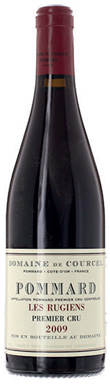
Some bottle age has led to a lush, opulent bouquet with exuberant ripe fruit. It’s full-bodied, sumptuous but compact, and still tannic on the mid-palate....
2009
Domaine de CourcelPommard
Louis Jadot, Pommard, 1er Cru Rugiens, Burgundy, France, 2016
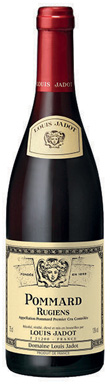
Very ripe cherry nose with a hint of boiled sweets but not jammy. Rich, rounded and full-bodied, this has shoulders and density but lacks some...
2016
Louis JadotPommard
Bouchard Père & Fils, Ancienne Cuvée Carnot, Volnay, 1er Cru Les Caillerets, Burgundy, France, 2010
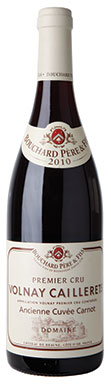
<p>Attractive, perfumed, ripe nose of summer fruits. Firmly tannic but plenty of ripe fruit to back it up. Good precision and depth, with spicy oak...
2010
Bouchard Père & FilsVolnay
Domaine Michel Lafarge, Volnay, 1er Cru Les Caillerets, Burgundy, France, 2011
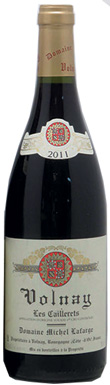
Robust cherry nose. Rich and suave, this is concentrated, a forceful and structured Volnay with grip and spice. It’s still youthful, with a tannic though...
2011
Domaine Michel LafargeVolnay
