
Burgundy: Meet 10 exceptional winemaking talents
The complexities of Burgundy, its appellations, walled slopes and dynastic stories are a source of fascination for many wine lovers. Inspired by research for her latest book, Jeannie Cho Lee MW highlights 10 personalities leading dynamic change in the region...


On a rainy Friday afternoon in March 2020, the second day of the Zachys Burgundy auction at Le Bernardin Privé New York was in full swing. Champagne flowed from 10am, and by lunchtime, grand cru red and white Burgundy wines were being generously shared among 150 registered bidders in the packed room. This was a hardcore Burgundy wine lovers’ gathering in celebration of the La Paulée weekend – even as Covid-19 was wreaking havoc around the world, with the US confirming 550 cases that weekend and only two weeks before the city-wide lockdown.
Scroll down for Jeannie Cho Lee MW’s Burgundy ‘winemaking talent’ tasting notes and scores
For the past 10 years, as other wine regions including Bordeaux gained and then lost favour among fine wine lovers, Burgundy has been on a steady, steep, upward trajectory. Charles Antin from Zachys auction house says: ‘2016 was the first year we saw Burgundy surpass Bordeaux in terms of annual sales dollars. In 2018, Burgundy was 35% of lots and 54% of value, and in 2019 it was 38% of lots and 55% of value.’
This growing consumer demand around the world coincides with seven consecutive years of small yields in Burgundy (starting in 2010), mostly due to various climatic challenges. As prices crept up, so did the ambition and pressure to produce consistently high-quality wines, fuelling the motivation among producers to compete with the likes of Domaine de la Romanée-Conti, Domaine Armand Rousseau and Domaine Leroy. The new younger generation and a bevy of sought-after micro-négociants are giving star domaines a run for their money.
Riding high
When I started my research on The 100 Burgundy back in 2014, Burgundy fever had already struck wine collectors in Hong Kong, Singapore and Taiwan; though not yet at the frenzied level it is now. Japan was already way ahead and was selling much of its allocation to collectors in Hong Kong and China through retailers such as Enoteca. It was fascinating to discover the dynamic changes that were well underway, combined with increasing momentum as wines commanded higher prices. Jean-Marie Fourrier, from Domaine Fourrier, laments: ‘We can’t just be farmers any more. We are constantly being asked to host dinners and entertain around the world.’
Dedicated vignerons such as Fourrier inspired me to write a book that is as much about the people as the wines themselves. The 100 wines included in my book are a very personal selection, chosen for my daughter’s Burgundy ‘dream cellar’.
The 10 personalities selected for this article are, in my view, producing the most exciting wines at the highest calibre and quality for their respective regions. These producers are incredibly talented, dedicated and driven to continually improve their wines.
Some, like Cécile Tremblay and Arnaud Ente, are already on a rising trajectory, while Pierre Duroché and Charles Lachaux are just starting. What they have in common is that they have not yet reached their peak.
When the Zachys auction ended, I asked its president Jeff Zacharia what he thought of the results, given the jittery financial markets and the Covid-19 pandemic. He seemed pleased with the US$9.9 million (£7.4m) raised, with most wines selling at the high estimate and 40% of the buyers being Asian. ‘It’s Burgundy,’ he said with a shrug and a big smile.
Charles Lachaux
Domaine Arnoux-Lachaux

An intense young man, Charles Lachaux is determined to follow in the footsteps of some of the greatest vignerons in Burgundy, including Madame Lalou Bize-Leroy. Since taking over his family estate, based at Vosne-Romanée, in 2014 (it was formerly Domaine Robert Arnoux), he has converted this 14.5ha domaine to biodynamics, with full conversion taking place in 2018. He is slowly changing the vineyards to resemble those of Domaine Leroy, with no hedging or trimming but rather the canes arched and tied to the wires. Yields are dropping as well, and he proudly declares that even in the abundant 2018 vintage, the yield was only 25-30hl/ha.
The changes in wine style have been fairly dramatic since 2015, with greater refinement, more intensity and concentration from lower yields and better farming. Even in the cellar, there have been changes, with greatly reduced sulphur dioxide additions and employing only those who share Lachaux’s ambition to make the greatest wines of Burgundy. ‘I want the people who work with me to work every day with passion. They should care about the quality of what they do, whether I am there or not. When you work with passionate people, there is a different atmosphere, and the energy is expressed in the wine.’
Grégory Gouges
Domaine Henri Gouges
No other appellation in Côte de Nuits has benefited more from climate change and better farming techniques than Nuits-St-Georges. The elevated, chewy tannins that used to mark the wines from this region have dramatically softened since the new millennium. Henri Gouges, who founded the family domaine, was the mayor of Nuits and played a key role in estate-bottling and in the creation of the AC system in the 1930s. This historic property is now managed by Grégory Gouges, the fourth generation of his family, who has refined the wines without taking away either the vineyard’s character or its ageing potential.
Gouges makes a beautiful range of premier cru Nuits-St-Georges reds that in recent years are approachable earlier and have suppler textures. Tannin management is more sophisticated now and, combined with warmer vintages and more precise winemaking, the wines are ample, velvety and can be quite fruity. The holdings of Nuits-St-Georges parcels total 14.5ha and the vineyard has been farmed organically since 2008. My favourite in the line-up is always the 1ha Les St Georges; however in 2018, half of this parcel was devasted by hail.
Pierre Duroché
Domaine Duroché

Emerging as a vigneron to follow, Pierre Duroché is reserved and humble – his silky wines from Gevrey-Chambertin are vastly different from those made by his father and grandfather. His father Gilles, who made the wines from the late 1980s until 2003, made good, solid wines, but not at the potential of the great vineyards he farmed. It is only after Pierre took over in 2005 that there were whispers about the 8ha estate finally making the most of its four grand cru and three top premier cru vineyards.
Since 2014, there is a wonderful purity and authenticity to Pierre’s wines that allows the vineyards to express themselves more precisely. There have been hundreds of small, minor refinements such as gentle extraction and minimal new oak that have turned good wines into great wines. Like many in his generation aged in their 30s and 40s, Pierre is nonchalant about the use of whole clusters: ‘I use it when I need it,’ he says and shrugs his shoulders. Pierre’s open-mindedness and a desire to make the best-quality wine possible, with purity and precision, make him one of Burgundy’s most exciting vignerons to watch.
Jean-Marc Pillot
Domaine Jean-Marc Pillot
The past decade has seen some amazing Chassagne-Montrachet producers energise this appellation, which has long lived in the shadows of Puligy-Montrachet. Although a dozen Chassagne producers could easily have been included in my book, due to space constraints I chose Jean-Marc Pillot. Jean-Marc has been at the forefront of the quality movement in the region since 1991, when he took over the domaine from his father Jean.
Jean-Marc expanded the estate, from 5ha to 11ha, and changed the wine style. Both his red and white wines have more tension, a seamless harmony and greater depth. Over the past 15 years, Jean-Marc moved away from new oak to capture more mineral notes and retain as much freshness as possible. These refinements since the early 2000s are now in bottle and the results are striking. The reds are pure, balanced and elegant, while the whites are taut and display great precision and detail. Now Jean-Marc’s son Antonin is poised to take over, continuing and refining his father’s style and spending equal time and energy on the red and white wines.
Arnaud Ente
Domaine Arnaud Ente
He is Meursault’s yin to Domaine Coche-Dury’s yang, but before Arnaud Ente refined his style, he used to make much bigger, more powerful wines influenced by his time working at Coche-Dury. Over the past 15 years however, his wines have become slimmer, razor-sharp, and they sizzle with tension, life and energy. There is minimal new oak used here and the focus is on the ancient vines that Ente feels fortunate to be in a position to farm.
With less than 5ha, mostly in Meursault, it is no wonder that his wines fetch crazy prices, when they can be found. Maturation takes place in a variety of vessels, from 600-litre to smaller 228-litre barrels, with little new oak.
Ente’s two Bourgognes are a testament to his skill and ability to extract the most from even modest vineyards: the Aligoté is always the best Bourgogne Aligoté that I taste in nearly every vintage, while the Bourgogne Chardonnay is a layered, minerally powerhouse that can compete with top village and even premier cru wines. Ente’s two sons, who are currently working with him, seem to be following in their father’s footsteps.

Cyprien Arlaud
Domaine Arlaud
Although this estate at Morey-St-Denis dates back to 1942, the wines were under the radar until the younger generation fully took over in 2013. Changes were happening even before then, with the estate starting to farm organically in 2004, then becoming certified biodynamic in 2014. Cyprien Arlaud, together with his younger brother Romain and sister Bertille, manage this 15ha domaine that farms four grand cru and eight premier cru vineyards. Cyprien says: ‘I believe quality really improved when we started biodynamics. With extreme weather conditions, the vines are able to cope better because of biodynamics.’
In the late 1990s, the wines were chunkier and richer. One only needs to taste a vertical of any of their wines to note that, starting with 2010, the wines reveal greater finesse and refinement in recent years. Vintages such as 2015 and 2016 show the intensity, stature and energy that this vineyard can offer, and prices for their premiers crus are still fairly reasonable. I also recommend their grand cru Bonnes-Mares as well as their Morey premiers crus, especially the Les Ruchots.
Charles van Canneyt
Domaine Hudelot-Noëllat
Very soon after Charles Van Canneyt arrived at his grandfather’s Vougeot-based domaine in 2008, eyebrows were raised, as this sleepy estate suddenly piqued the interest of importers and wine writers.
The wines presented by Van Canneyt have greater finesse, more definition and intensity than in the past. He insists that he has only made minor adjustments in the vineyard and winery: ‘We are decreasing yields, carrying out more careful sorting and using a small percentage of whole clusters for certain wines in vintages that can support it.’ These and a hundred other small refinements have elevated this domaine and Van Canneyt to rising-star status.
In just 10 years, Van Canneyt has turned this domaine around, and prices have risen in tandem with the higher quality. The estate farms just 10ha, and increasing demand has led him to create his eponymously named négociant range.
Although the parcels at the domaine are small, it holds great vineyards including Richebourg and Romanée-St-Vivant. Unlike many young Burgundy vignerons who eschew new oak, Van Canneyt embraces it, ageing his grands crus in mostly 50% new oak and the premier cru wines in one-third new oak.
Mathilde Grivot
Domaine Jean Grivot
This is a historic domaine that has been revitalised since 2017 when Etienne and Marielle’s young daughter Mathilde took over from her father, becoming the fourth generation in the family to manage the 15ha estate. Tasting at Jean Grivot is a study on the terroirs of Vosne-Romanée. There are six premiers crus and two different bottlings of village Vosne-Romanée, plus no fewer than three grands crus (two from Vosne-Romanée and one from Vougeot).
Mathilde is extremely articulate, thoughtful and charming. She is clear about where she wants to take the domaine: ‘We are looking for refined tannins and less new oak.’ The result is greater precision and clarity of flavours in recent vintages. The most noticeable difference between the wines of Mathilde and her father Etienne is in the texture of the tannins – Mathilde’s wines, starting with the 2017 vintage, have a silkier texture and finer- grained tannins. All of her wines in 2018 are simply gorgeous.
Pierre-Yves Colin
Pierre-Yves Colin-Morey
The launch of this estate in 2001 was the coming together of two illustrious wine families: Pierre-Yves Colin (the eldest son of Marc Colin) and Caroline Morey (the daughter of Jean-Marc Morey). In 2001, the couple decided to launch a négociant business, starting out with just six barrels of wine from purchased grapes.
Given their connections and family reputation, the word quickly spread and by 2005, they had about 35 barrels. By 2006, Pierre-Yves left his family’s estate and dedicated himself to building his own estate, bringing with him nearly 6ha of vines.
The last five years have brought a big evolution for the estate. It has stopped buying grapes from vineyards that it doesn’t control, evolving from a négociant model to a domaine. The vineyards have increased from 6ha to 13ha. Caroline inherited 7ha in 2014 and has created her own eponymous estate. Pierre-Yves makes the white wines under her name, while Caroline makes the reds. Pierre-Yves is a talented vigneron whose wines crackle with energy and tension. The wines are still relatively affordable – his village St-Aubins are my go-to wines at restaurants.
Cécile Tremblay
Domaine Cécile Tremblay
This domaine was only established in 2003 and since then has taken the fine wine world by storm – the wines are hugely sought-after, rare and sadly very expensive. Cécile Tremblay’s family ties extend to the Confurons, Noëllats and the Jayers. The late, great Henri Jayer was nephew to her great- grandfather, Edouard Jayer.
By 2010, Tremblay established a reputation for making wines of amazing concentration and finesse. The family vineyards that she took over to start her 4ha estate were good plots with potential, but had not been well looked after. Her philosophy was to treat the vineyards (two grands crus, four premiers crus, four village wines) like her garden, adopting organic and biodynamic viticulture and striving to reveal their character through ripe, healthy grapes.
What is remarkable about her wines is that they are sumptuous and plush, yet also possess clarity and elegance. Tremblay comments on the recently released 2018 vintage, which had both high quality and good yields: ‘The grapes were perfectly ripe and naturally reached 13.5° to over 14° potential alcohol in early September. I am very happy with this vintage.’
Jennie’s latest book is The 100 Burgundy: Exceptional wines to build a dream cellar (published by Assouline, £65/€75)
See Jeannie Cho Lee MW’s Burgundy ‘winemaking talent’ tasting notes and scores
You may also like
Exploring quality at Maison Albert Bichot plus 17 wines worth seeking outFive fine wine trends for collectors to knowBurgundy 2018 en primeur: Full reportTop red Burgundy comparative tasting: 2003 & 2004
Domaine Arnoux-Lachaux, Vosne-Romanée, 1er Cru Les Suchots, Burgundy, France, 2018
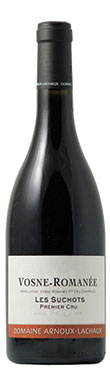

<p>All of the estate’s Vosne-Romanée premiers crus are beautiful in 2018, but Les Suchots (0.43ha) has slightly more intensity and minerality. This is a lovely...
2018
Domaine Arnoux-LachauxVosne-Romanée

Domaine Henri Gouges, Nuits-St-Georges, 1er Cru Vaucrains, Burgundy, France, 2018
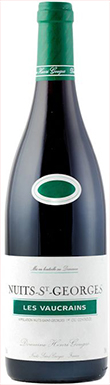
This nearly 1ha premier cru vineyard is among my favourites from Gouges, year after year. In 2018 the wines have wonderful purity and freshness, despite...
2018
Domaine Henri GougesNuits-St-Georges
Domaine Duroché, Les Jeunes Rois, Gevrey-Chambertin, Burgundy, France, 2018
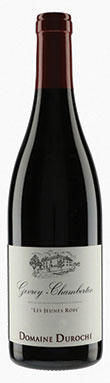
A lively, delicious village Gevrey-Chambertin from lieu-dit Les Jeunes Rois. Impressive precision, detail and freshness in this vintage with a linear, mineral finish. The mid-palate...
2018
Domaine DurochéGevrey-Chambertin
Domaine Jean-Marc Pillot, Chassagne-Montrachet, 1er Cru Vergers, Burgundy, France, 2018
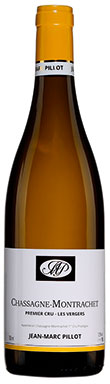
Pillot makes nine different Chassagne-Montrachet premiers crus, with most of them being under one-third of a hectare. The Vergers vineyard is nearly half a hectare....
2018
Domaine Jean-Marc PillotChassagne-Montrachet
Domaine Arnaud Ente, Bourgogne, Aligoté, Burgundy, France, 2018
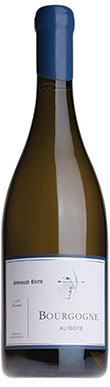
This Aligoté vineyard was planted in 1938. The yields are small, as with all of Ente’s wines. In this warm vintage, the Aligoté did very...
2018
Domaine Arnaud EnteBourgogne
Domaine Arlaud, Morey-St-Denis, 1er Cru Les Ruchots, Burgundy, France, 2015
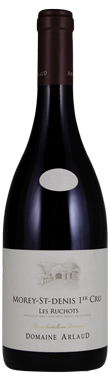
Filled with exuberant flavours of sweet jasmine flowers, violets and spices along with wild strawberries. The tannins are suave and firm with a plushness coming...
2015
Domaine ArlaudMorey-St-Denis
Domaine Hudelot-Noëllat, Vougeot, 1er Cru Les Petits Vougeots, Burgundy, France, 2018
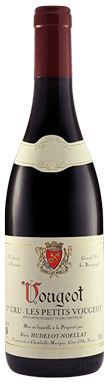
A beautifully perfumed Petits Vougeots with lifted red flowers, raspberries and sweet spices. A wine of great finesse, refined tannins and a supple, lingering length...
2018
Domaine Hudelot-NoëllatVougeot
Domaine Jean Grivot, Vosne-Romanée, Burgundy, France, 2018
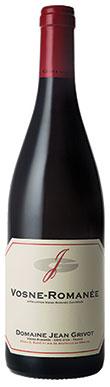
Even at the village level, the 2018 wines from Grivot are intense and beautiful. Enticing nose with ripe raspberries, cherries and crushed violets. Suave on...
2018
Domaine Jean GrivotVosne-Romanée
Pierre-Yves Colin-Morey, St-Aubin, 1er Cru En Remilly, Burgundy, France, 2017
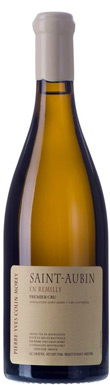
One of my favourite St-Aubin whites, this has wonderful intensity, precision and sizzling minerality. The palate is lean and focused with fresh herbs, pear and...
2017
Pierre-Yves Colin-MoreySt-Aubin
Domaine Cécile Tremblay, Bourgogne, Côte d'Or, Burgundy, France, 2018
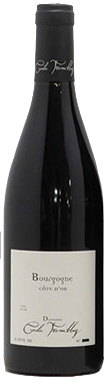
A stunning Bourgogne red with impressive depth and energy for a generic Bourgogne. The palate is plush and velvety with juicy red berries, cloves and...
2018
Domaine Cécile TremblayBourgogne
