
Chardonnay from Oregon’s Dundee Hills
Oregon's famed Pinot Noir has its roots in the red soils of the Dundee Hills, where exceptional Chardonnay is now being produced. This appellation nestled between Oregon's Coast Range to the west and the Chehalem Mountains to the northeast, is moderately warmer than the Willamette Valley's other sub-regions.


When David Lett came to the Willamette Valley in the 1960s, he found cool, forested hills along the Willamette River. It was here in 1965, that he would plant some of the valley’s first vines. He would soon be joined by the Sokol Blossers and Dick Erath, who also planted vines on these foothills of Oregon’s Coast Range.
Just over 10 years later, a blind tasting in Paris, the 1979 Gault-Millau French Wine Olympiad, would change Oregon and American wine forever. Lett’s Eyrie Vineyards Pinot Noir from 1975 would be among the top wines tasted (of 330) from around the world.
Scroll down to see tasting notes and scores for 18 Chardonnay wines from the Dundee Hills
These results, and the consistent quality of wines produced by Lett and his contemporaries, inspired Domaine Joseph Drouhin to eventually plant vineyards in the Dundee Hills in the late 1980s. Thus validating the ‘New World’ upstarts and their commitment to Oregon’s viticultural potential in the eyes of Burgundy.
These days Chardonnay is on the rise, with the Willamette Valley producing some of the best examples of the variety in the United States and beyond.

Special Soils
The Red Hills of Dundee is the official name of the hills as a geological entity, according to the US Geological Survey. However, the Red Hills moniker can’t be used by the AVA or wineries because of the term being used in a Southern Oregon AVA: Red Hill Douglas County.
The rust-coloured hue of the soils in Dundee comes from the iron-rich basalt bedrock and its degradation, forming the soils of the Dundee Hills over aeons.
The origin of the Jory soils series, which can be found throughout western Oregon, came from ancient lava flows from the eastern part of the state 15-17 million years ago. The origin of these red soils predates the Missoula Floods, which shaped so much of the Pacific Northwest’s geology.
The impact on winegrowing is owed to Jory soil being more acidic than alkaline and its ‘Goldilocks’ qualities when it comes to water drainage and temperature regulation. Well-draining but with enough water retention that dry-farming is viable. The soil’s insulating properties keep the vines’ roots warm enough through the winter and cool them down in the hot summers in the Willamette Valley.
Dundee Hills at a glance
AVA Established: 2005
Original Vines: David Lett pioneered the Willamette Valley from the Dundee Hills planting vines on 22 February, 1965
Vineyards in the AVA:98
Wineries in the AVA: 28
Total hectares planted to vines: 900ha
Soils: The Dundee Hills is uniformly comprised of the Jory soil series. A red soil of degraded basalt
Key wine varieties: Pinot noir (69.5%), Chardonnay (5.75%), Pinot gris (2.23%)
Climatic conditions
The Dundee Hills range from 60-325m (200-1067ft), a series of foothills of the Oregon Coast Range. Pacific Ocean winds are buffeted by the Coast Range to the west.
The Columbia Gorge acts as a wind tunnel to the north of the Willamette Valley, funnelling hot air from eastern Oregon and Washington in the summer and cold air in the winter. These winds are largely blocked by the Chehalem Mountains to the northeast of the Dundee Hills. Keeping things steadier than many surrounding parts of the Willamette Valley.
These moderating factors include the Willamette River just to the east, which creates a cooling effect during the hot summer. As a result, vineyards in the Dundee Hills tend to have a more moderate, steady growing season.

Six Dundee Hills Chardonnay producers
Anderson Family Vineyards
Cliff and Allison Anderson own an 8ha (20 acre) parcel atop a steep, ancient basalt slide on the northeastern edges of the Dundee Hills. Sitting at around 92 metres with some of the slopes in excess of 40% gradient. The 30-year-old vines of two Dijon clones, (76 and 96) on these steep slopes create wines of serious complexity. Most of their fruit is contracted to some of the Willamette Valley’s top growers (but they don’t let go of any of the 96 clone Chardonnay).
Chardonnay from their ‘South Block’ has gone to Bergstrom’s Sigrid and the Antica Terra Chardonnays. They select specific parcels for their proprietary label and use strictly gravity, seriously old barrels (many over 15 years) and patience. The ultra-small production Anderson Family wines fly under the radar except with those really in the know in the Willamette Valley.
‘An important part of our fermentation regime relates to the life cycle of yeasts,’ Cliff Anderson tells me. ‘With our slow ferments, the yeast goes through many iterations. The old cells autolysize, and new cells are born. As the old cell membranes break down, they release complexing elements into the wine, similar to a late-disgorged Champagne: toasty, brioche and hazelnut. The long exposure to yeast cells is a major component of a wine’s texture. Where it gains density and viscosity. We want our Chardonnays to have weight.’
Bergström
Swedish immigrant John Bergström came to the Portland area as a 17-year-old hailing from agricultural roots in a northern Sweden logging outpost. He and his wife Karen Bergström both had successful medical careers and sought a family legacy that was a return to John’s farming roots. The Bergströms bought just over 5ha in the Dundee Hills in 1996. Their son Josh, along with his parents, would go on to establish Bergström Wines upon his return from Beaune, where he completed his studies in viticulture and oenology.
The Bergström approach is based on biodynamic and regenerative farming in the vineyards and crafting vineyard and single-block bottlings that give their wines a real sense of place. ‘Singular fine wines should speak volumes in their regional expression,’ says winemaker Josh Bergström. ‘This is achieved, for us, through natural, healthy, and non-industrial practices.’

Cameron
Cameron Winery’s renowned vineyard is known as Clos Electrique, a nearly 1ha site of mostly own-rooted Pinot Noir, which was planted in 1984 and Chardonnay, which owner John Paul planted in 1987.
Paul developed a relationship with Chardonnay after meeting Dominique Lafon in Napa Valley in 1980 (where Paul was the assistant winemaker at Carneros Creek). ‘When I went to visit the cellars of Lafon the next year, Dominique pretty much blew my mind with the wines that I tried. Several years later, I was able to visit the cellar of François Jobard, and my deal with Chardonnay was sealed.’
‘I had, with the help of Mary Edwards (then at Matanzas Creek), collected a large number of old white Burgundy clones around California,’ Paul continues. ‘Ones that UC Davis had not destroyed, as well as some “suitcase clones” bestowed on me by notable growers in California. One of the defining attributes of these old clones, besides miserable cluster sizes and yields, is their high acidities at ripeness.’
‘This gears them to the methodology of Jobard and Lafon,’ Paul continued. ‘Which is allowing the ambient yeast from the vineyard to do the fermentations and then leaving the wines on the yeast for almost two full years. In the case of Jobard, leaving them completely untouched. Which is the method that I follow. At bottling, we select the most outstanding barrels from the lot for inclusion into the Clos Electrique designation.’
Domaine Drouhin
Robert Drouhin’s daughter Véronique arrived in Oregon in 1986, perhaps chasing her father’s obsession with that 1975 Eyrie South Block Reserve Pinot Noir. Which had placed in the top 10 in the 1979 Gault-Millau French Wine Olympiad. Robert recreated the tasting the following year at his home using several of his own wines. The pesky Oregon Pinot placed second, beaten only by one of Drouhin’s own 1959 bottlings.
Véronique would work the harvest in 1986 with three of the most important families in the Willamette Valley today. The Letts of Eyrie of course, the Casteels of the Eola-Amity Hills Bethel Heights estate and the Adelsheims.
Just prior to arriving at the first International Pinot Noir Celebration in 1987, Robert purchased a plot of land atop the Dundee Hills. Among the 53ha of vines, there are only five or so of Chardonnay. Véronique remains the winemaker, and her brother Phillipe Drouhin manages the Oregon estate vineyards.

Domaine Serene
The Evenstad family came to the Willamette Valley in the late 1980s, purchasing a 17ha piece of high-elevation property in the Dundee Hills. They would plant Pinot Noir vines in 1993 at the estate Mark Bradford vineyard, at an elevation of 200m. In 1997, the Côte Sud Vineyard was purchased; the site, planted in 1990, gave Domaine Serene its oldest vines and first Chardonnay. This would also be the first vintage of Chardonnay made by Domaine Serene.
Eyrie Vineyards
Eyrie Vineyards is the legacy brand for the Dundee Hills, the Willamette Valley and really all of the Pacific Northwest. David Lett’s pursuit of cool-climate varieties like Pinot Noir and Chardonnay that stand toe-to-toe with Old World expressions launched an entire region. The legacy has since been passed onto his son Jason. Their old-vine Chardonnay comes from the oldest vines in the Willamette Valley a Draper selection field blend on their own roots. A collection of vines that no longer really exist anywhere else.
In many ways, the wines of Eyrie Vineyards are historic in their own right; these bottles represent the beginning of it all.
Jason makes two Chardonnays – both are barrel selections. The ‘top wine’, The Eyrie, is chosen from barrels which show the greatest potential for ageability. At the same time, the Estate Chardonnay is a selection of barrels that may show a more immediate drinkability. The Chardonnay ferments one year in the cellar on its own yeasts. Since each barrel moves at its own pace, on its own lees, they can show up very distinct from one another after fermentation.
Oregon Chardonnay from the Dundee Hills:
Wines are listed alphabetically by producer in score order
Related content
Willamette Valley 2021: Chardonnay report and top-scoring wines
American Chardonnay: The top bottles worth seeking out
Premier Cru Chablis 2022: Top-scoring wines
Anderson Family Vineyards, Chardonnay, Willamette Valley, Dundee Hills, Oregon, USA, 2019
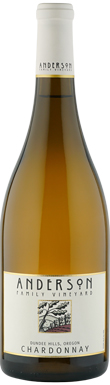

The cool 2019 vintage meets the steep slopes and intense character of the Anderson Family Vineyard site. Rich and smoky aromas of grilled pineapple, savoury...
2019
Anderson Family VineyardsWillamette Valley

Anderson Family Vineyards, Chardonnay, Willamette Valley, Dundee Hills, Oregon, USA, 2020
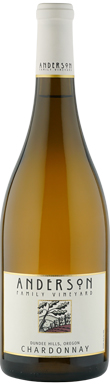
This Chardonnay from the ‘lost vintage’ of 2020 shows that not all is lost. Forged on the steep slopes of the Anderson Family estate, this...
2020
Anderson Family VineyardsWillamette Valley
Anderson Family Vineyards, Chardonnay, Willamette Valley, Dundee Hills, Oregon, USA, 2017
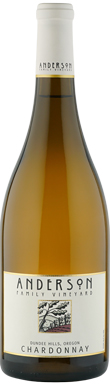
Aromas of hazelnut, English hawthorn and hints of lemon verbena. The palate is gorgeously elegant. Lemon cream and stone come to the fore, followed by...
2017
Anderson Family VineyardsWillamette Valley
Bergström, Bergström Vineyard Chardonnay, Willamette Valley, Dundee Hills, Oregon, USA, 2020
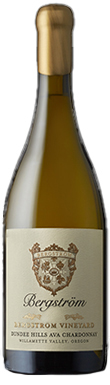
2020 stands out as the vintage of lost red wines in the Willamette Valley owing to smoke taint, but several white wines are worth being...
2020
BergströmWillamette Valley
Bergström, Bergström Vineyard Chardonnay, Willamette Valley, Dundee Hills, Oregon, USA, 2019
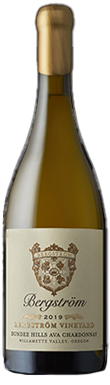
The Bergström Vineyard is five hectares planted in the Dundee Hills in 1999, but only a fraction is planted to Chardonnay. The fruit delivers a...
2019
BergströmWillamette Valley
Bergström, Bergström Vineyard Chardonnay, Willamette Valley, Dundee Hills, Oregon, USA, 2018
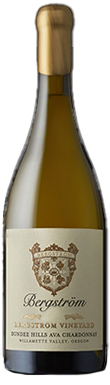
Planted in 1999, the 5ha vineyard with south-southeast oriented vine rows, this 2018 vintage marks the winery's 20th anniversary and this particular bottling's inaugural debut....
2018
BergströmWillamette Valley
Cameron, Clos Electrique Blanc, Willamette Valley, Dundee Hills, Oregon, USA, 2020
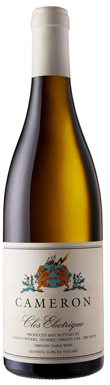
There are real gems to be found in the Chardonnays of the lost vintage of 2020, where wildfire smoke damaged the Pinot Noir crop almost...
2020
CameronWillamette Valley
Domaine Drouhin Oregon, Arthur Chardonnay, Willamette Valley, Dundee Hills, Oregon, USA, 2021
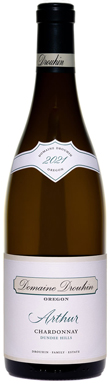
A wonderfully complex and contemplative Chardonnay, comprised of estate Dijon clones planted in 1990. The wine was whole-cluster pressed with a portion fermented in French...
2021
Domaine Drouhin OregonWillamette Valley
Domaine Serene, Clos du Soleil Chardonnay, Willamette Valley, Dundee Hills, Oregon, USA, 2019
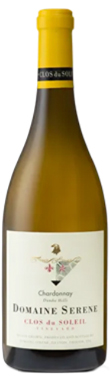
While the texture is dialled back a fraction, the mineral and smoky elements of this wine from Chardonnay vines planted in the 1990s are sterling...
2019
Domaine SereneWillamette Valley
Domaine Serene, Evenstad Reserve Chardonnay, Willamette Valley, Dundee Hills, Oregon, USA, 2020
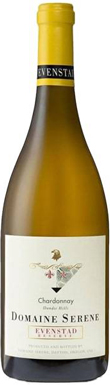
A gorgeous bottle from Domaine Serene, the Evenstad Reserve bottling is a masterclass in building texture in Oregon Chardonnay. The 2020 vintage was challenging for...
2020
Domaine SereneWillamette Valley
Domaine Serene, Etoile Vineyard Chardonnay, Willamette Valley, Dundee Hills, Oregon, USA, 2019
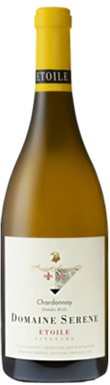
The Etoile Vineyard sits between 250-300m on the west-facing slopes of the Evenstad estate at Domaine Serene. The aromas are effusive and beguiling with hints...
2019
Domaine SereneWillamette Valley
Domaine Serene, Triple Crown Vineyard Chardonnay, Willamette Valley, Dundee Hills, Oregon, USA, 2019
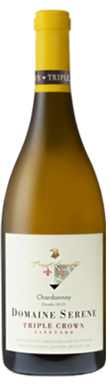
From vines planted in 2014, the Triple Crown Vineyard is dry-farmed, sits at higher elevations (250-310m), and plays well with the cool 2019 vintage. Plenty...
2019
Domaine SereneWillamette Valley
Domaine Serene, Côte Sud Vineyard Chardonnay, Willamette Valley, Dundee Hills, Oregon, USA, 2019
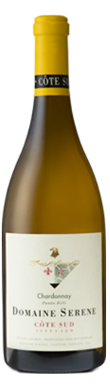
The Côte Sud Vineyard is 2.5ha and planted at 150-250m in 1986. The aromas demure a bit on this cooler, throwback 2019 vintage Chardonnay. Fine...
2019
Domaine SereneWillamette Valley
Domaine Serene, Triple Crown Vineyard, Willamette Valley, Dundee Hills, Oregon, USA, 2021
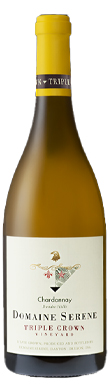
From a high elevation site atop their Dundee Hills property from 250-300m, the Triple Crown Vineyard creates wines of clarity and depth. Altogether delicious lemon...
2021
Domaine SereneWillamette Valley
Eyrie Vineyards, Estate Chardonnay, Willamette Valley, Dundee Hills, Oregon, USA, 2019
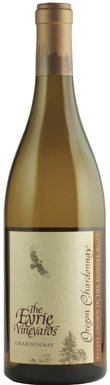
The Estate Chardonnay from the cool 2019 is a home run, marrying the more generous and immediate gratification with the vintage's cooler, more elegant nature....
2019
Eyrie VineyardsWillamette Valley
Eyrie Vineyards, The Eyrie Chardonnay, Willamette Valley, Dundee Hills, Oregon, USA, 2021
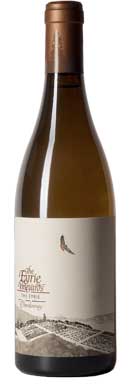
This flagship Chardonnay is one of Oregon's best-in-class year after year. From the oldest vines in the Willamette Valley and among the last surviving remnants...
2021
Eyrie VineyardsWillamette Valley
Eyrie Vineyards, The Eyrie Chardonnay, Willamette Valley, Dundee Hills, Oregon, USA, 2019
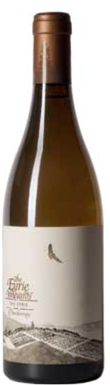
Winemaker Jason Lett calculates the % of new oak influence on the 2019 Chardonnay to 11.5%. This is an intellectual experience that is just beginning...
2019
Eyrie VineyardsWillamette Valley
Eyrie Vineyards, Estate Chardonnay, Willamette Valley, Dundee Hills, Oregon, USA, 2021
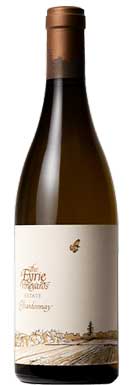
A blend of young and old vines, only one new barrel in the wine's entire production. Wente and the Sterling Clone total 39% of the...
2021
Eyrie VineyardsWillamette Valley
